Red Wine Spilled on an Area Rug

Clara Townsend
Red wine on an area rug is one of those heart-sink moments that can make even the most seasoned host freeze in place. I have been there. The trick is to move quickly, but gently, so you lift pigment up and out instead of pushing it down into the backing and rug pad.
This is my no-drama, fiber-aware routine for getting red wine out of an area rug, plus the one sneaky thing people miss: pad re-wicking, when the stain comes back like a ghost the next day.
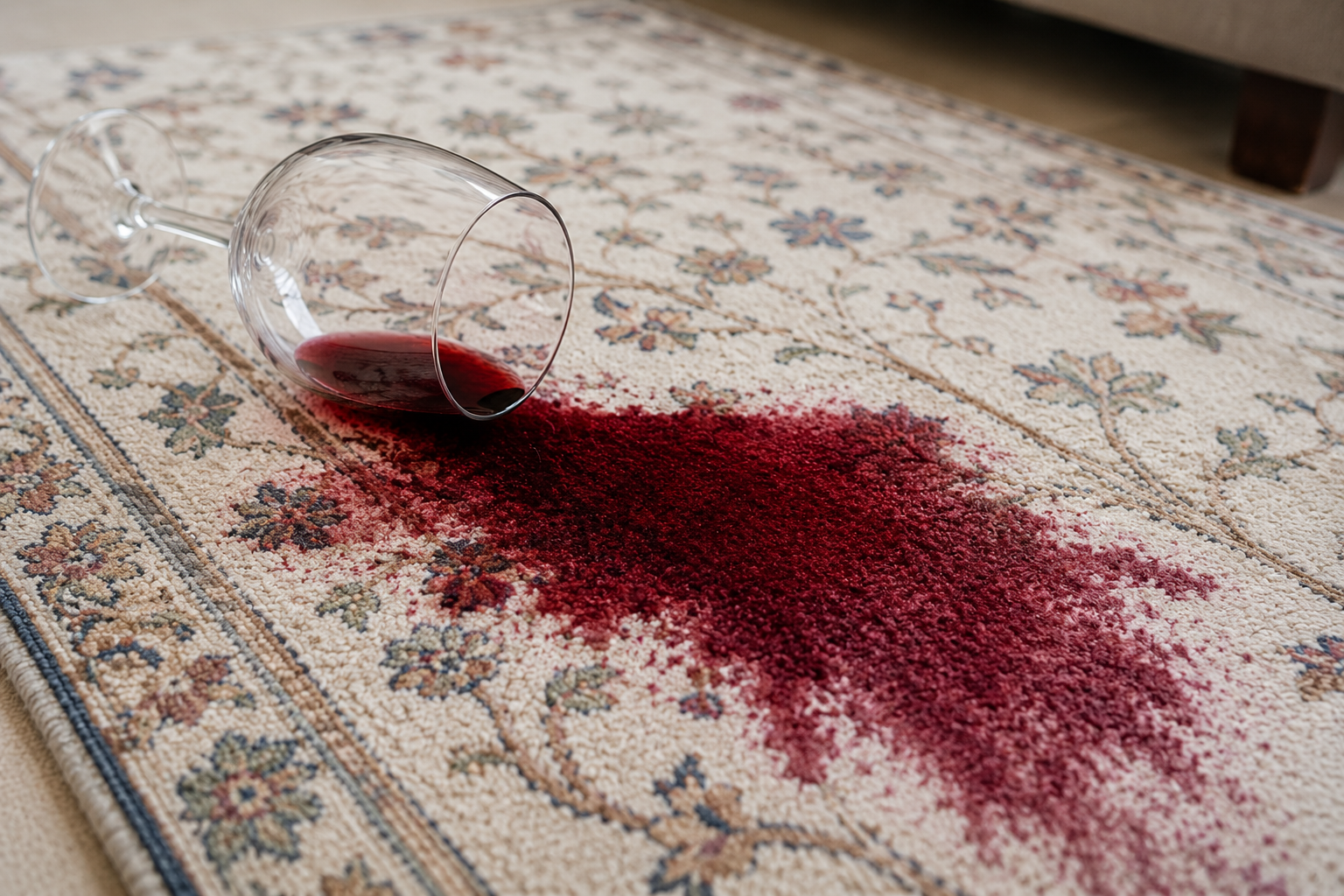
First 2 minutes
Your goal is to remove as much liquid as possible before you start any wet cleaning.
- Blot, do not rub. Use plain white paper towels or a clean white cotton cloth. Press down firmly, then lift. Keep switching to a dry spot so you are not re-depositing wine.
- Work from the outside in. This keeps the wet edge from creeping outward and creating a larger ring.
- Use your body weight. Stack several towels and stand or kneel on them for 10 to 20 seconds at a time. This pulls more wine up than quick dabs.
- If there are solids (fruit, cork bits), lift them with a spoon first. Do not grind them in.
If the spill is large, grab towels first, then immediately move to the rinsing step below. Every minute the dye sits, it has more time to grab onto fibers.
The safest basic method
This method is designed to remove pigment without leaving sticky residue behind. It uses what I call a controlled rinse, not a soak.
What you need
- White towels or white cotton cloths
- Cool water
- A small bowl
- Mild dish soap (clear, grease-cutting, no bleach)
- Optional: a wet dry vacuum
Quick safety note: If your rug is valuable, vintage, or you do not know the fiber or dye stability, test any solution on an inconspicuous spot first and let it dry fully before judging. Also, go light on liquid if the rug is on wood floors or near seams where moisture can sneak underneath.
Step-by-step
Blot again. Even if you already blotted, do one more strong press with fresh towels.
Apply cool water sparingly. Lightly dampen a cloth with cool water and blot the stain. You are trying to dilute what remains and pull it up into your towel.
Use a tiny amount of soap. Mix a few drops of dish soap into a cup of cool water. Dampen a cloth with the solution and blot. Avoid pouring the solution directly onto the rug.
Rinse out the soap. Blot with a cloth dampened with plain cool water. This matters because leftover soap can attract soil later and can also contribute to wicking.
Dry aggressively. Press with dry towels until they come up mostly dry. If you have a wet dry vacuum, extract moisture after each rinse step. Extraction is your best defense against the stain reaching the backing and pad.
If your towel starts picking up rug dye (not wine, but the rug color itself), stop. That is a dye bleed warning, and continued DIY cleaning can turn a spot problem into a bigger one.
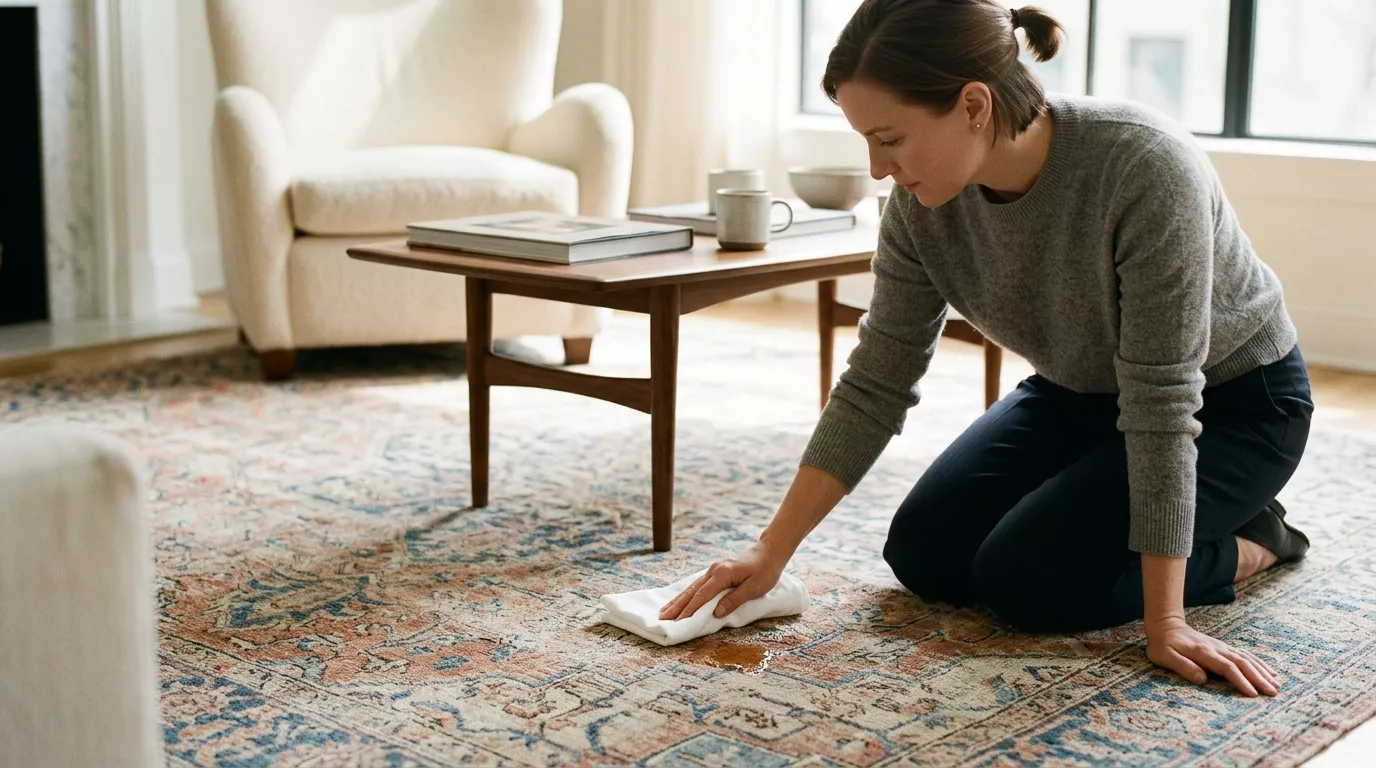
Fiber limits
If you know what your rug is made of, you can avoid the classic over-cleaning mistake: treating every fiber like it can handle the same products and agitation.
Wool
- Use cool water only. Hot water can encourage dyes to penetrate deeper and can also shrink or distort wool fibers.
- Keep soap minimal. Wool holds onto residue. Too much soap can leave a dingy patch that attracts dirt.
- Avoid strong alkalines and harsh oxidizers. Strong products can strip dye or lighten areas unevenly, especially in vintage or hand-dyed wool.
- Be gentle. No scrubbing. Blotting is your friend.
Nylon (and many synthetic blends)
- Often forgiving. Nylon generally tolerates mild detergent and cool water well.
- Still avoid soaking the rug. Even if the fiber can handle it, your backing and pad might not.
- Rinse thoroughly. Residue plus incomplete extraction is a common reason a spot looks better at night and then shows up again the next day.
Viscose (often labeled bamboo silk or art silk)
- Handle like a diva. Viscose is prone to water marks, fiber distortion, and permanent texture change.
- Use as little moisture as possible. Blot with barely damp cloths. Do not pour water onto viscose.
- No scrubbing, no brushing. Pile can go flat or fuzzy and stay that way.
- Consider calling a pro early. If the rug is viscose and light-colored, professional cleaning is often the safer choice than repeated DIY attempts.
If you are unsure of the fiber, treat it as delicate: cool water, minimal solution, blot only, and focus on extraction and drying.
Backing and construction
Fiber is only half the story. Rug construction matters because over-wetting can create problems below the surface.
- Tufted rugs with latex backing can be sensitive to heavy moisture and high-pH cleaners, which may weaken adhesives over time.
- Jute backings and natural pads can hold onto liquid, wick stains back up, and develop odor or mildew if they stay damp.
- Layered rugs and thick pads make drying slower, which is why I prioritize extraction and airflow.
What not to pour on it
I know the internet loves a dramatic pantry fix. Some of them work in certain situations, but many create new problems on rugs, especially anything with a backing, a pad, or a fiber that water-stains.
- No bleach. It can strip color, damage fibers, and cause yellowing over time. Even color-safe bleach can be risky on dyed rugs.
- No hydrogen peroxide unless you are sure it is colorfast. Peroxide can lighten rug dyes, not just the wine. If you choose to test, do it on an inconspicuous spot first, blot, and wait until fully dry to judge.
- No vinegar dumps. A small amount in a controlled solution can be fine on some synthetics. The bigger risk is saturating the backing and pad with any liquid, which can lead to lingering odor, slow drying, or mildew.
- No club soda floods. The bubbles are not magic. The main benefit is dilution, and you can do that with plain cool water without soaking the rug.
- No baking soda paste on delicate fibers. Powder can lodge into the pile and backing, and gritty pastes can abrade fibers. Baking soda is better used as a light deodorizer after the area is mostly clean and mostly dry, not as the main remover.
- No rubbing alcohol as a first move. Alcohol is sometimes used strategically (usually with testing) on certain stains and synthetic fibers, but it can also spread dye or affect some backings. If you are tempted, test first and use a light blotting approach, not a pour.
If it reached the backing
Pad re-wicking is the reason people swear they got the stain out, then wake up to a faint pink shadow. The liquid sinks through the rug, into the pad, then slowly travels back up as it dries.
How to tell
- The stain keeps reappearing as a lighter version after it dries.
- The rug feels damp underneath even after you have blotted the top.
- You smell wine when you put your face close to the rug, especially the next day.
What to do
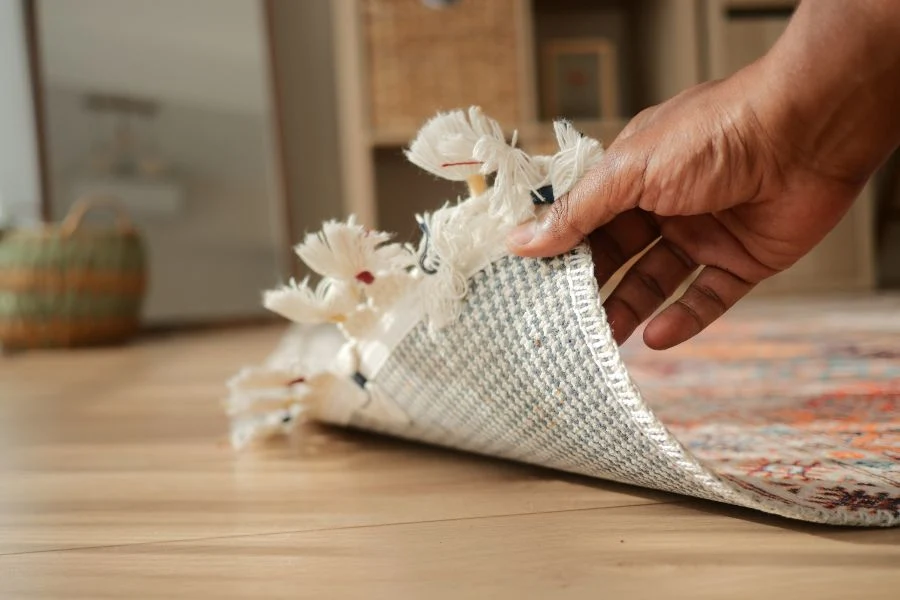
Lift the rug. Carefully peel back the rug at the stained area. If it is large or furniture-heavy, lift just enough to slide a towel underneath.
Blot from both sides. Press towels on top and underneath if you can reach. This is the moment where a wet dry vacuum really shines.
Remove or isolate the wet pad. If the pad is saturated, the best solution is to pull it out from under that section and let it dry separately. In a pinch, wedge dry towels between rug and pad and swap them frequently.
Weight it while it dries. Once the area is mostly dry, place a thick layer of dry towels on top and weigh them down with a heavy book or a flat board with weight on it. This keeps pulling moisture up, not letting it travel back to the surface.
Use airflow. Aim a fan across the surface so it skims over the damp area and carries moisture away. Blasting air straight down can sometimes push moisture deeper and can make the surface feel dry while the pad stays wet.
If the spill soaked into the pad or subfloor, drying speed matters. Keep air moving, consider a dehumidifier, and check underneath within a few hours. A rug that stays damp underneath is where odor and mildew problems begin.
Dried red wine
If you found the stain the next morning, you can still improve it. It just takes patience and repeated, controlled blotting.
- Rehydrate first. Lightly dampen a cloth with cool water and press it onto the stain for 30 to 60 seconds, then blot. Do not soak.
- Work in small rounds. A few gentle cycles of solution, blot, rinse, blot often beats one aggressive scrub session.
- Dry between rounds. If you keep the rug wet for too long, you invite backing issues and pad wicking.
If the stain is old, large, or on a valuable wool or viscose rug, professional cleaning is often worth it. Dye stains can migrate and set in ways that are hard to reverse with home tools.
Quick troubleshooting
The stain looks bigger
That is usually the wet edge spreading, not the stain multiplying. Use fewer liquids, blot more, and work from the outer ring toward the center.
I see a ring
Rings come from uneven moisture. Lightly dampen the area just beyond the ring with plain cool water, then blot across the whole damp zone to even it out. Dry thoroughly.
The spot feels stiff
That is typically soap residue. Rinse with a cloth dampened with cool water and blot dry, repeating until the stiffness relaxes.
When to call a pro
I love a DIY save, but I love not ruining rugs more.
- Viscose or silk rugs, especially light colors
- Hand-knotted wool, antique rugs, or anything with sentimental value
- Wine soaked through into pad and subfloor
- Any sign of dye transfer, like your towel picking up the rug color
- A persistent odor after drying
FAQ
Should I use hot water?
No. Hot water can encourage dye to penetrate deeper and is risky on wool and many dyed rugs. Stick with cool water and blotting.
Can I use white wine?
I would not. The main benefit people think they see is dilution. Use cool water instead so you are not adding more sugars and acids to the rug and pad.
Is it okay to use salt?
Salt can absorb some liquid if applied immediately, but it can also grind into the pile and make cleanup messier, especially on textured rugs. If you already have towels, skip the salt and blot instead.
Why does the stain come back?
Most often it is pad re-wicking. The stain is sitting in the backing or pad and traveling upward as it dries. Lift the rug, blot underneath, and dry with airflow and weight as described above.
What about ink stains?
Ink is a different chemistry and the safest approach depends on the ink type and rug fiber. For that, use our dedicated ink stain guidance rather than using wine steps on ink.