Jute and Sisal Rug Spills: Low-Moisture Cleaning That Won’t Ruin the Weave

Clara Townsend
Clara Townsend is an interior stylist, vintage furniture enthusiast, and the creative voice behind Velvet Abode. With over a decade of experience transforming both cramped city apartments and sprawling fixer-uppers, she believes that a beautiful home is built on personal stories rather than massive budgets. When she isn't hunting for the perfect brass sconce at a local flea market, she can usually be found rearranging her living room for the third time this month.
Jute and sisal rugs are the linen-shirt friends of the flooring world. Beautiful, textured, relaxed, and a little fussy about getting wet. If you have ever watched a simple spill turn into a dark halo on a natural-fiber rug, you already know the rule: less moisture, more patience.
This page is specifically for spills and spots on jute and sisal, where heavy shampooing and machine deep-cleaning can backfire. If you are looking for general guidance on deep-cleaning a typical area rug, we already cover that elsewhere on Velvet Abode. This one is the natural-fiber playbook.
Quick note before you start: check the care tag (and any manufacturer guidance) if you have it. Some natural-fiber rugs are sealed, dyed, bound, or backed differently, and those details change what is safe. Whatever method you use, spot-test in a corner first.
Why they stain differently
Jute and sisal are plant fibers. They are absorbent, often loosely woven, and many are finished with latex, adhesives, binding tape, or a backing that does not love repeated wetting (construction varies, so it is worth checking).
Too much water can:
- Wick stains outward and create a larger ring than the original spill.
- Swell fibers, raising the texture and making the spot feel rough.
- Cause browning or yellowing as natural compounds, impurities, or even backing residues migrate to the surface.
- Warp or loosen backing on certain constructions.
So the goal is not “wash it clean.” The goal is lift the spill, bind residue, then dry fast.
The low-moisture spill order
If you remember one thing, make it this sequence. It is boring. It works.
Step 1: Remove solids, scoop, don’t smear
For food, mud, or anything chunky, use a spoon or dull edge to lift solids straight up. No scrubbing. Scrubbing drives particles between fibers like sand in a sweater knit.
Step 2: Blot from the outside in
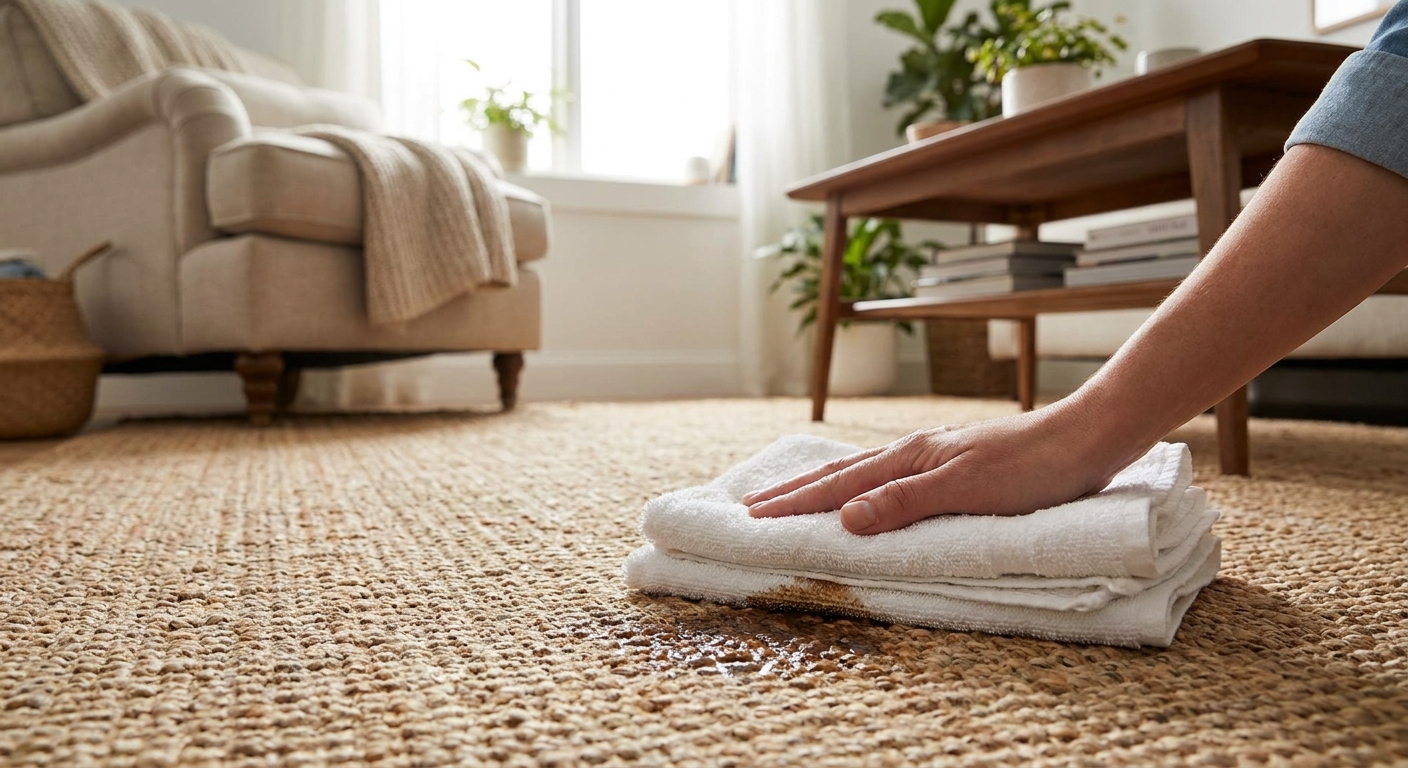
Use plain white paper towels or a clean white cotton cloth. Press down firmly, lift, rotate to a clean area, repeat. Work from the perimeter toward the center so you do not chase the spill into a bigger circle.
Step 3: Use a dry absorbent before you reach for liquids
This is where jute and sisal care differs from most rugs. You want a dry compound to pull what is left out of the fibers with minimal added moisture.
- Good options: cornstarch (especially for oily spots), baking soda (odor support), or a store-bought dry carpet spot absorbent designed for natural fibers.
- How: sprinkle a generous layer, gently press so it contacts the fibers, then let it sit 20 to 60 minutes.
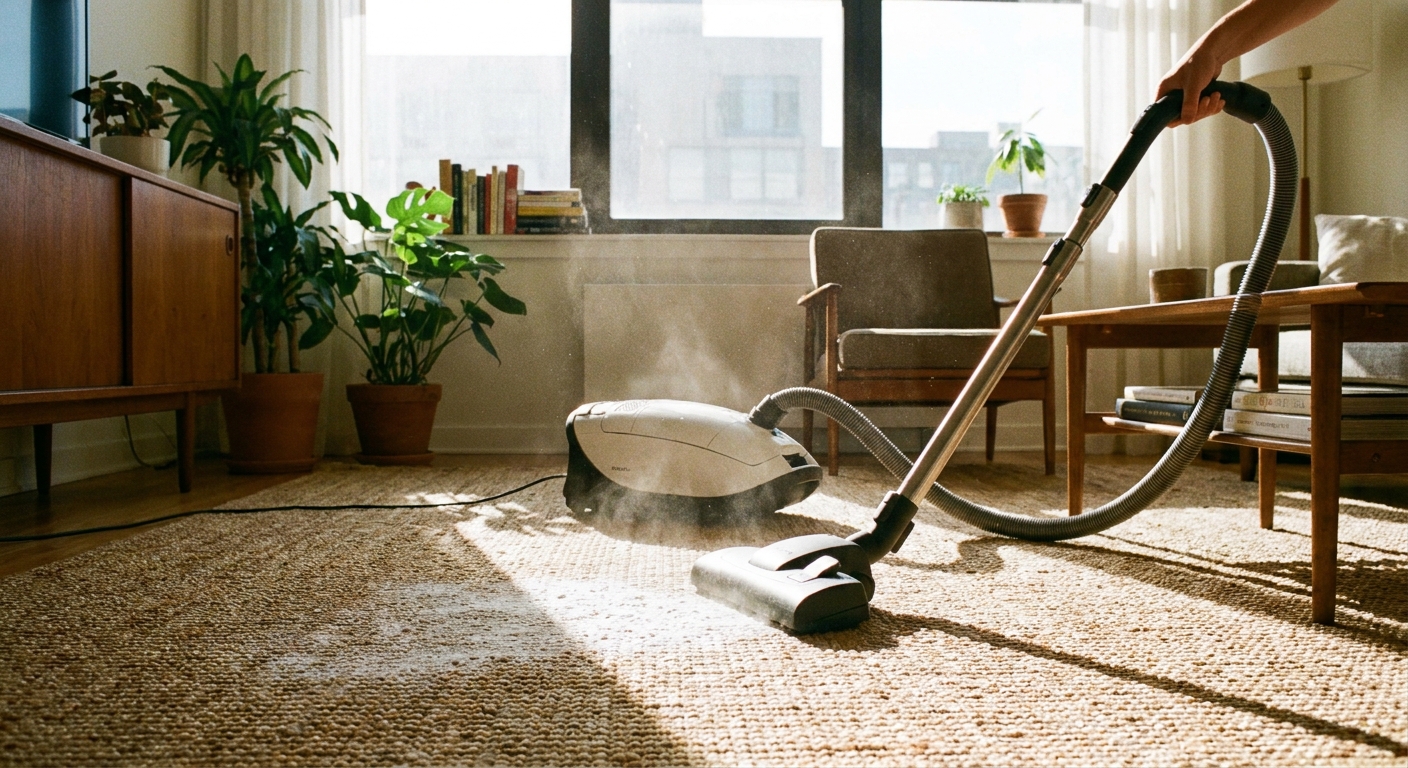
- Finish: vacuum slowly and thoroughly in multiple directions.
Dry vs damp
Think of it like this: dry first, damp last.
Dry compounds (best first step)
- Best for: fresh spills, oily foods, tracked-in grime, mystery spots where you do not want to risk water rings.
- Why it works: the powder binds to residue and lifts it out when vacuumed.
- Watch-outs: do not leave powder for days. Vacuum well so you do not end up with a dusty rug.
Minimal liquids (only if residue remains)
If you still see stickiness, color, or odor after dry absorption, use the tiniest amount of liquid possible.
- Mix: a few drops of clear, dye-free dish soap in a cup of cool water.
- Method: dampen a cloth, do not pour onto the rug. Blot gently. Then blot again with a cloth dampened with plain water to remove soap residue.
- Less suds, better results: too much soap leaves residue that attracts soil.
- Dry immediately: press with dry towels, then aim a fan across the area.
Skip hot water. It can set protein stains (think milk, egg, blood) and can also increase browning risk on plant fibers.
Specific spill protocols
1) Coffee, tea, red wine, juice
These are the “dye” family, and they spread fast in natural fibers.
- Blot immediately, outside-in.
- Apply a dry absorbent (cornstarch or a dry spotter), wait, vacuum.
- If color remains, use a barely damp cloth with the mild soap mix, blot, then rinse-blot with plain water.
- Dry with towels and a fan. Fast drying matters more than heroic scrubbing.
2) Grease, butter, salad dressing, makeup
Oil is where jute and sisal can actually behave nicely if you go dry first.
- Blot up excess with a dry towel.
- Cover with cornstarch (or a grease-absorbing powder), press lightly, wait at least 30 minutes.
- Vacuum slowly.
- If you still feel residue, repeat the powder step before considering any damp blotting.
Avoid strong solvents unless a rug-care professional tells you exactly what is safe for your rug’s fiber and backing.
3) Mud and wet footprints
This is my least favorite because it tempts you to mop. Do not.
- Let mud dry completely.
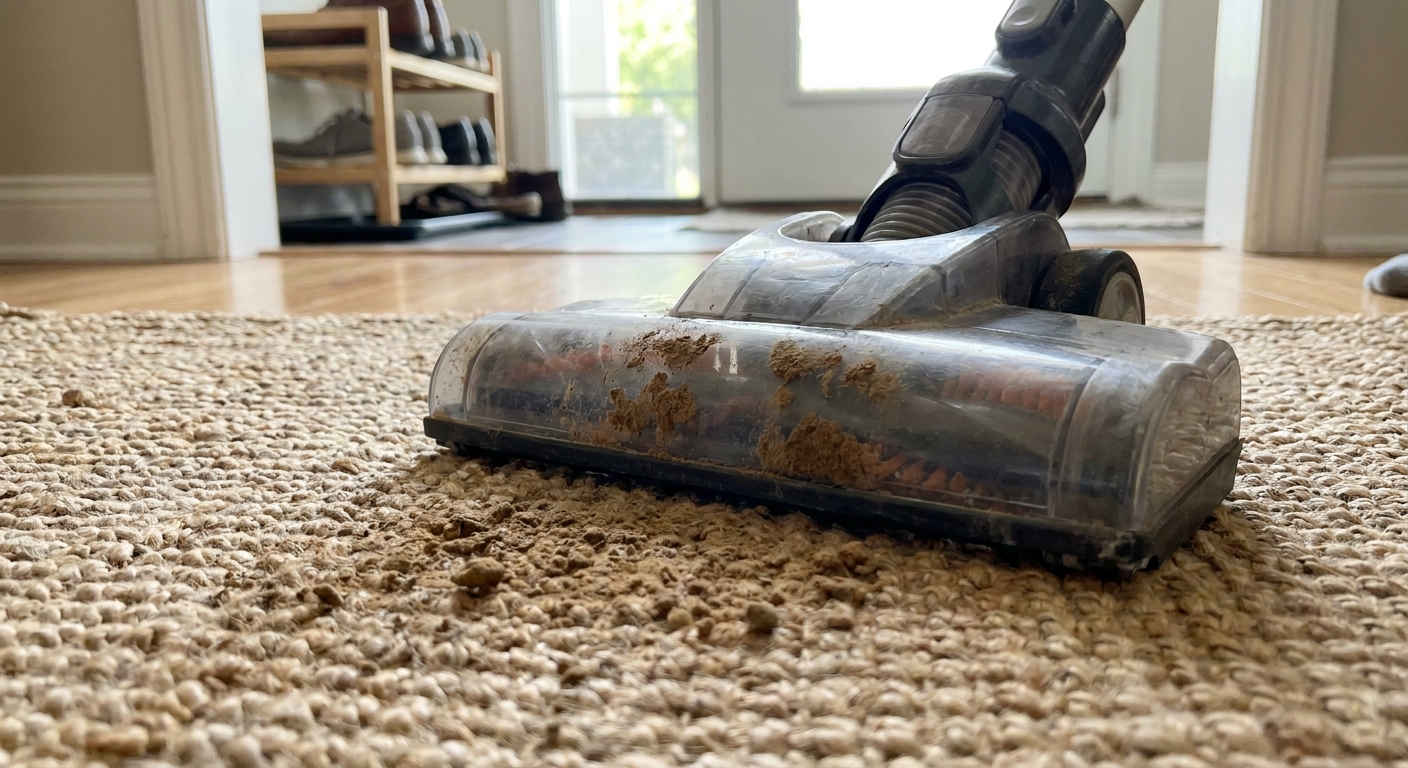
- Vacuum thoroughly.
- If a shadow remains, use dry absorbent, then vacuum again.
Pet accidents
Pet urine is tough on natural-fiber rugs because it can soak down into the weave and (depending on construction) into backing, binding, or the pad below. The best move is immediate absorption and rapid drying, then a realistic assessment of whether it needs professional help.
What to do right away
- Blot, do not rub. Use thick white towels and press firmly. Stand on the towel if needed.
- Dry absorbent layer. Apply baking soda or a dedicated dry absorbent and let it sit 30 to 60 minutes, then vacuum.
- Airflow. Set a fan to blow across the area. If you can, lift the rug edge slightly so air can move underneath.
Enzyme cleaner: use caution
Enzyme cleaners are great on many surfaces, but on jute and sisal they can introduce a lot of moisture and sometimes leave a tide mark. If you choose to use one:
- Test in an inconspicuous corner first.
- Apply to a cloth, not directly to the rug.
- Use the smallest amount possible, blot, and dry aggressively.
If odor persists after the rug is fully dry, or if the accident soaked through, the smell can live in the pad or subfloor. That is typically a call-a-pro situation. Repeated wetting tends to make wicking worse, not better.
Old stains
Dried, set-in stains are where natural-fiber rugs can get a little… unforgiving. You can try the same dry-first routine, but expectations should be realistic.
- Start dry: vacuum, then use a dry absorbent and vacuum again.
- If you go damp: keep it minimal, blot only, and dry fast to reduce ringing.
- When in doubt: if the stain is large, dark, or old, professional low-moisture cleaning is often the kindest route.
When a pro is the kindest choice
I love a DIY moment, but jute and sisal punish overconfidence. Call a professional rug cleaner who has experience with natural fibers if:
- The spill is large or has soaked through to the backing.
- You see browning spreading after cleaning attempts.
- There is pet urine with lingering odor after fully drying.
- The rug is an expensive custom cut, bound sisal, or has a specialty backing you are unsure about.
- You already tried liquid cleaning and now the area looks darker, stiff, or wavy.
When you call, say “natural fiber, low-moisture only” and ask what method they use. You are listening for dry compound cleaning or controlled, minimal-moisture techniques, not a soak-and-extract routine.
What not to do
- Do not steam clean jute or sisal at home.
- Do not shampoo like wall-to-wall carpet and then rinse repeatedly.
- Avoid vinegar-heavy DIY soaks. Even mild acids plus too much liquid can increase the risk of discoloration, dye instability, ringing, or browning. If you insist on experimenting, spot-test first and keep moisture minimal.
- Do not scrub with stiff brushes. You can fuzz the weave and make the spot permanently “different” in texture.
- Do not let it dry slowly. Slow drying invites odor and browning.
My spill kit
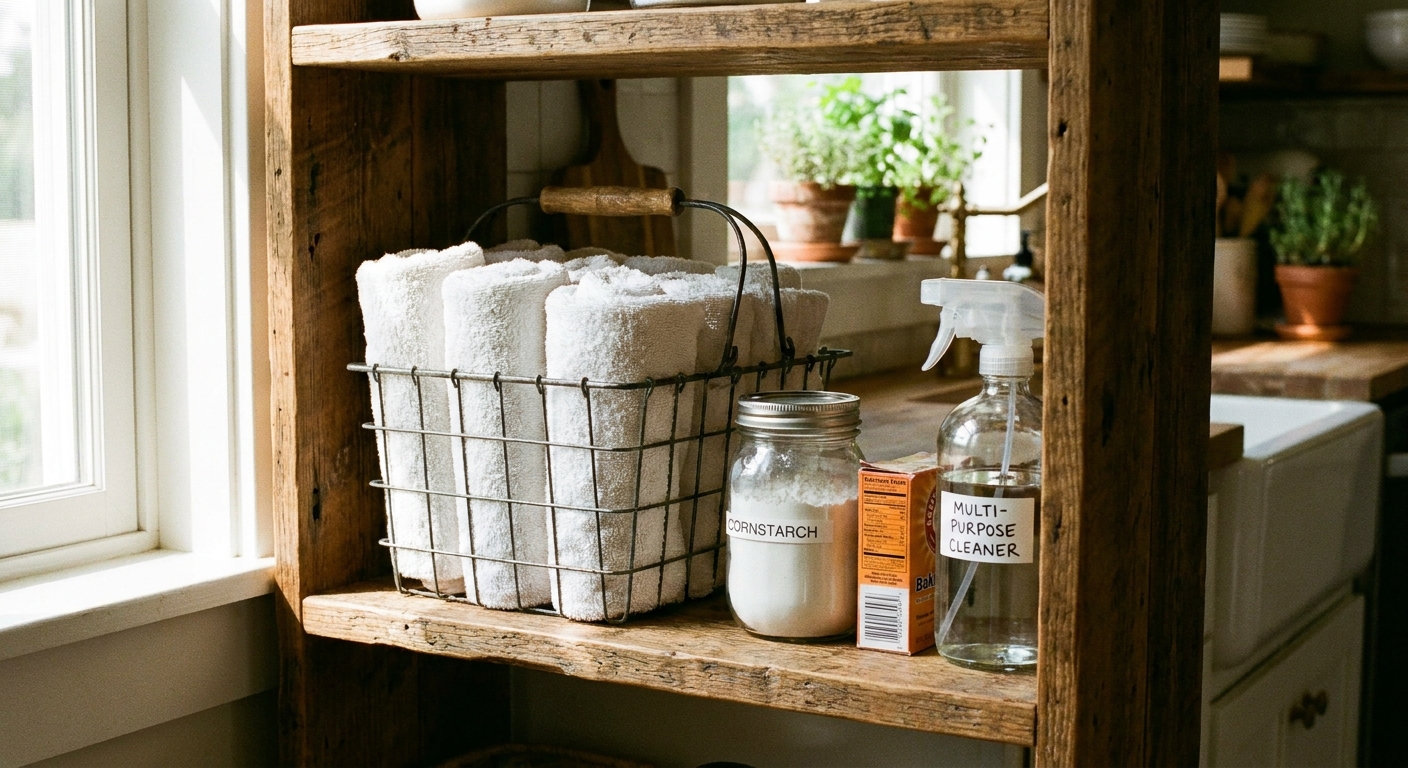
I keep a small basket in a closet because spill panic is real. Here is what earns its keep:
- White cotton towels or plain white paper towels
- A spoon or dull scraper for solids
- Cornstarch (great for oil)
- Baking soda (odor support)
- A small spray bottle with water (for dampening a cloth, not soaking the rug)
- Clear, dye-free dish soap
- A small fan (or at least easy access to one)
Quick FAQ
Can I use a carpet cleaner machine on jute or sisal?
Usually, no. Machines are built to push water in and pull it back out. Natural fibers tend to hold onto moisture and show water marks. For jute and sisal, spot cleaning should stay low-moisture, and whole-rug cleaning is best left to professionals who offer the right method.
Why does the spot look darker after I cleaned it?
Common reasons are leftover moisture, wicking from underneath, or residue that is still in the fibers. Blot again with dry towels, add airflow, and give it time to dry fully. If the darkening spreads or turns yellow-brown, pause and call a pro.
Is sisal more durable than jute for spills?
Sisal is typically stiffer and wears well, but both fibers are sensitive to moisture. In spill terms, they are both “dry-first” rugs.
What vacuum should I use?
Use strong suction, but be mindful with aggressive beater bars. If you notice snagging or fuzzing, switch to suction-only, turn the brushroll off, or raise the height setting.
One last styling note
If you love the look of jute or sisal but you live with toddlers, pets, or a household that treats coffee like a food group, consider layering. A small vintage wool rug on top of a larger sisal gives you the texture you want, and it puts the more cleanable piece in the splash zone.
Your rug is allowed to look lived-in. The goal is a home that feels like a comforting hug, not a museum that makes you eat standing up.