Sour or Soapy Smell After Cleaning an Area Rug

Clara Townsend
The fastest way to ruin the cozy, grounded feeling of a room is a rug that smells like a wet dog, a sour gym bag, or, weirdly, a bubble bath gone wrong. And if that odor only showed up after you shampooed your area rug or ran a rental machine over it, you are not imagining things.
In my styling work, I have seen this exact storyline play out in otherwise immaculate homes: the rug looks fine, no big brown tide lines, but the air around it feels… off. The good news is that post-cleaning odors usually come down to a few fixable culprits: leftover detergent trapped in the pile, moisture hanging out in the backing or pad, or bacteria having a little party in warm, damp fibers.
Let’s troubleshoot it step by step, without panic-cleaning your way into a bigger problem.
First, identify the smell
Different odors point to different fixes. Take a slow sniff test right at rug level, then again a few feet away. If the smell is strong or makes you cough, open windows and ventilate the room first.
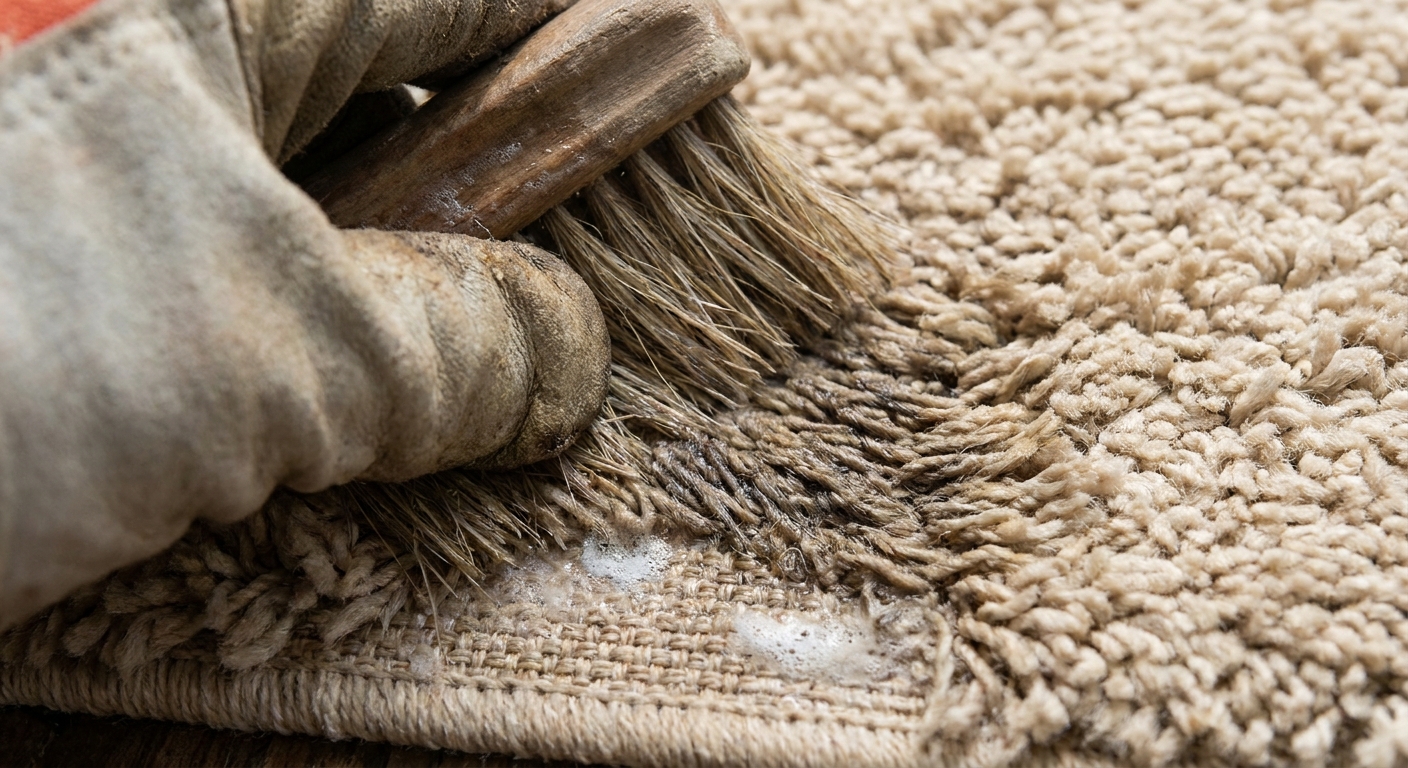
- Soapy, perfumey, or “chemical clean” smell that lingers: Usually too much detergent or detergent not fully extracted. This can also feel slightly sticky underfoot.
- Sour, musty, or mildew-adjacent smell: Often moisture trapped in the backing, fringe, or rug pad, which encourages microbial growth even if you do not see staining.
- Sharp ammonia or “cat pee” vibe after cleaning: Often means old urine was re-wetted and is wicking up. Even if you do not see rings, the odor can bloom with moisture.
- Burnt or plasticky smell: Can come from warmed synthetic fibers, but also from a hot machine motor, backing adhesive, or a rug pad heating up during cleaning and drying.
If the rug smells worse when the room is warm or humid, moisture is likely involved.
The two most common causes
1) Detergent left in the pile
Rental machines and home shampooers are notorious for this because they spray cleaner deep into the rug, but they do not always pull it all back out. Any soap left behind becomes a dirt magnet. It can also smell “fresh” at first, then sour as it mixes with the gunk it keeps attracting.
Clue: The rug feels a little tacky, stiff, or crunchy once dry. Or it smells strongly of cleaner days later.
2) Something stayed wet for too long
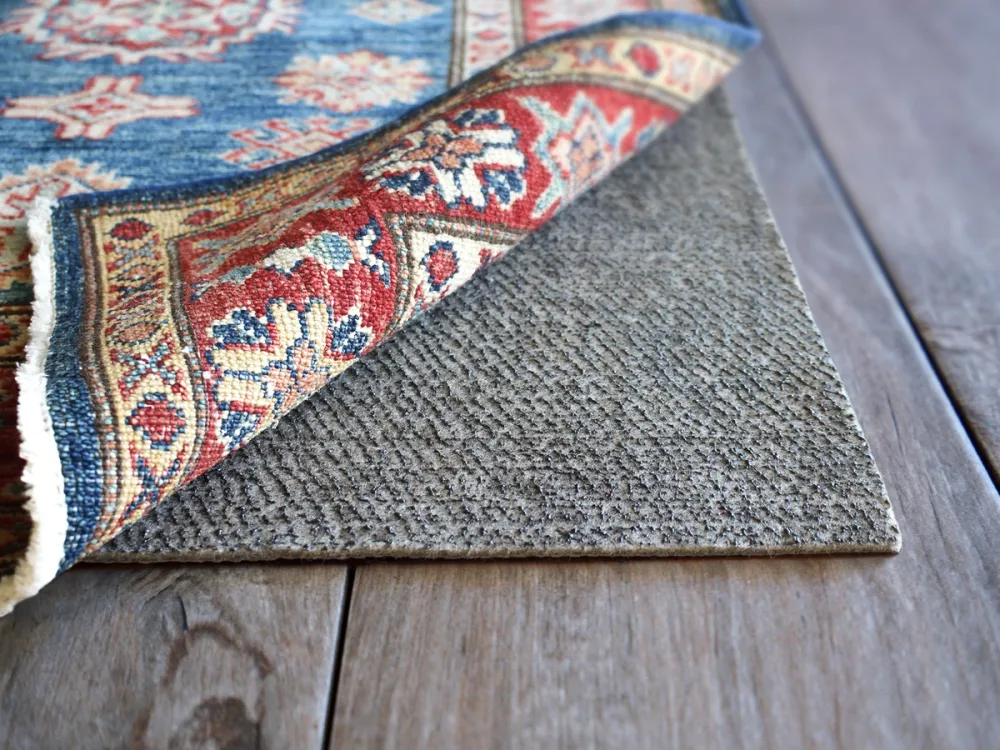
With many rugs, the surface can feel dry while the base, backing, fringe knots, or pad underneath is still damp. If a rug pad stayed wet, the odor can rise up into the fibers without leaving obvious marks.
Clue: The smell is strongest first thing in the morning, in humid weather, or right after you close the windows and turn the heat on.
Quick check: pad and floor
Before you do anything else, lift a corner.
- Back of rug: Does it feel cool, clammy, or slightly tacky?
- Rug pad: Does it feel damp or smell stronger than the rug?
- Floor beneath: Any moisture, slickness, or odor trapped at floor level?
This is the sneaky spot people miss, and it is often where the odor is actually living.
Stop adding cleaner (seriously)
This is the part that saves rugs.
If your instinct is to “clean the smell out” by adding more shampoo or more scented solution, pause. When the problem is residue or trapped moisture, additional detergent usually makes the odor last longer, and it makes drying harder.
A better rule: Once you have cleaned a rug and the smell appears, switch your mindset from “cleaning” to “rinsing and drying.”
Fix a soapy smell
If you suspect detergent residue, you want to dilute it and pull it out. The goal is not bubbles. The goal is removal.
What to do
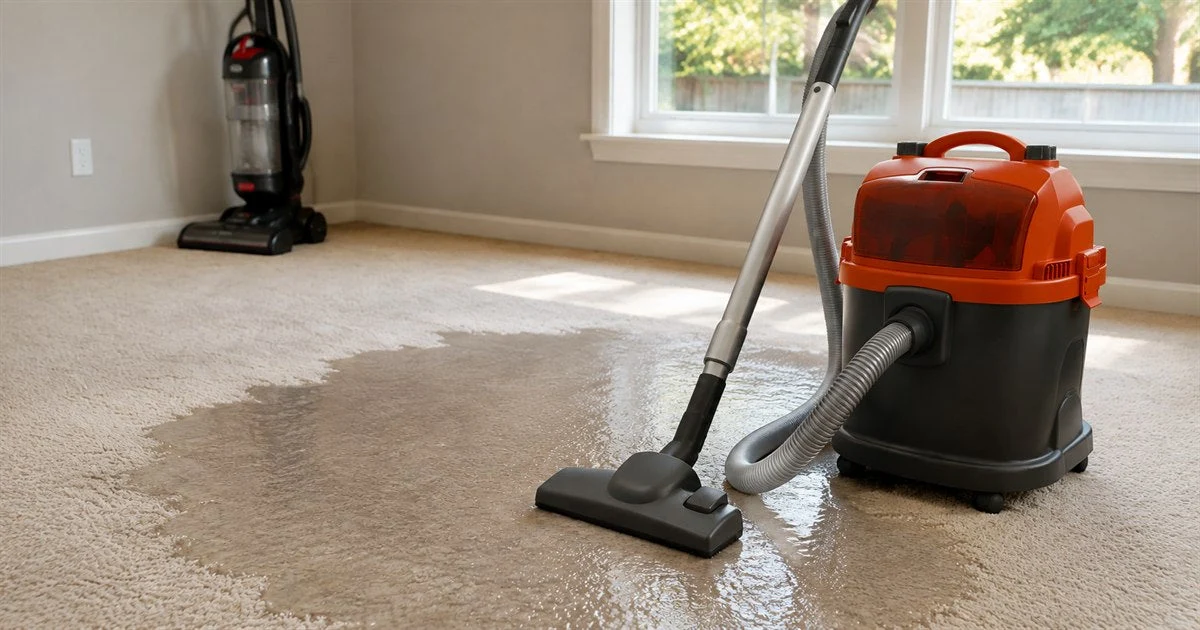
- Vacuum only if it is not sopping wet. If you only have a standard vacuum, wait until the rug feels dry to the touch on top. If you have a wet-dry vac, you can use that for extraction sooner.
- Rinse with plain cool water, not more detergent. You can do this with a spray bottle, a clean sponge, or the rinse setting on your machine if it has one.
- Blot and extract as much moisture as possible. If you have a wet-dry vacuum, this is its moment. Otherwise use thick white towels and body weight. Stand on the towel like you mean it, then switch to a dry one.
- Repeat a second light rinse if you still feel tackiness.
Important: Do not flood the rug. Over-wetting is what turns a residue issue into a sour, damp issue.
What not to do
- Do not add vinegar to a rug that is actively soapy. If there is leftover alkaline cleaner in the fibers, vinegar can react with that residue and shift the odor in a way that is not always better. On some rugs, especially those with natural dyes, vinegar can also increase the risk of dye movement.
- Do not use hot water on wool, silk, or viscose. Heat can tighten fibers, distort the pile, or cause dye migration.
Fix a sour or musty smell
Sour odor after cleaning is often microbial growth feeding on tiny bits of soil left behind in damp fibers. You do not need a stronger fragrance. You need speed and airflow.
Drying reset
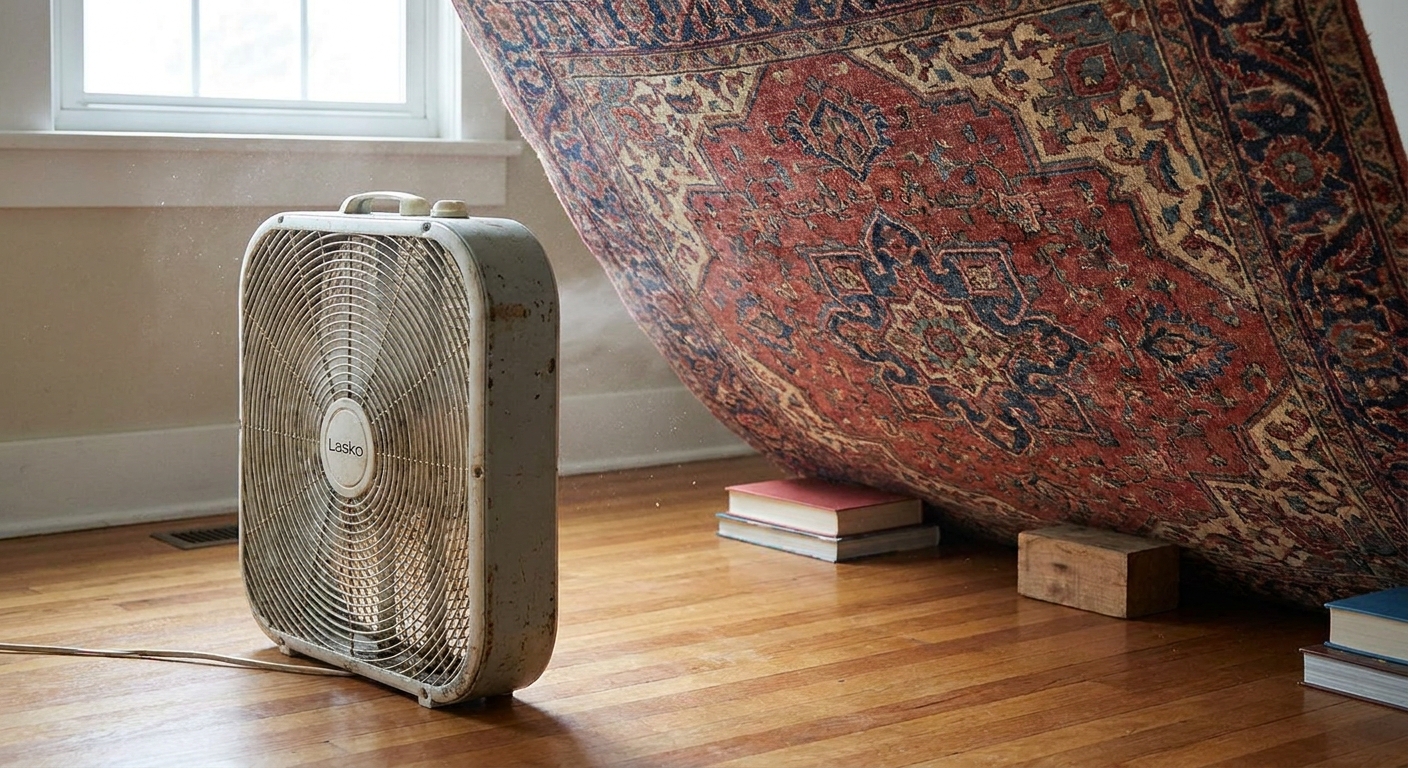
- Lift the rug. If possible, drape it over a sturdy railing, a few chairs, or a drying rack so air can reach both sides. If the rug is large, fold it back in sections so the underside can breathe, rotating every few hours.
- Remove the rug pad and dry it separately. If the pad smells sour even after drying, it may need to be replaced.
- Use fans, not heat. Aim a box fan so it moves air across the rug surface and along the fibers. Avoid blasting straight down into the pile.
- Dehumidify if you can. In a humid climate or rainy week, a dehumidifier in the room is often the difference between “fine by tomorrow” and “why is it still funky?”
- Flip the rug once the surface feels dry. The backing is where moisture likes to hide.
If the smell is mild and purely damp-related, drying alone often solves it within 24 to 48 hours.
How to tell it is really dry
The top lying to you is the whole problem.
- Back-of-rug test: Lift a corner and press the backing with a dry paper towel or white cloth. If it picks up moisture, keep drying.
- Cool-to-touch clue: If the backing or pad feels noticeably cool compared to the room, it can still be damp.
- Optional tool: A basic moisture meter (the kind people use for wood) can be helpful if you are dealing with repeated odor or a wood floor underneath.
Fiber cautions
This is where I put on my vintage-rug-protective hat. Some fibers react badly to DIY deodorizing hacks.
Wool
- Wool can hold odor when damp, but it also hates being over-wetted.
- Skip harsh deodorizers and heavy vinegar use.
- Prioritize extraction and drying. Cool water only.
Viscose and bamboo silk
- These are the drama queens of the rug world. They are prone to water marks, pile distortion, and color change.
- Avoid repeated wetting. Avoid scrubbing.
- If the smell is strong, consider stopping and calling a professional before you create permanent texture changes.
Jute, sisal, seagrass
- These really do not like water. Dampness can create a swampy odor fast.
- If you used a wet machine on these and now they smell sour, focus on aggressive drying and airflow. Do not re-wet.
- If the odor persists, professional drying or replacement may be the most realistic path.
Synthetics
- More forgiving with water, but very prone to detergent residue because the fibers can hold onto soap down at the base.
- Rinsing and extraction are usually effective.
No stains, still smells off?
That can actually be a helpful clue. Browning and tide lines tend to involve wicking and discoloration. A smell without visible marks often points to:
- Residue: Cleaner trapped in the lower pile.
- A wet pad: The rug face looks fine, but odor rises from underneath.
- Dirty water left behind: The machine extracted some, but not enough, leaving a damp mix of detergent and soil.
In other words, you can have an odor issue without a cosmetic issue, and the fix is still mostly about rinsing and drying.
When baking soda helps
Baking soda can be useful for light odor control once the rug is truly dry, especially on synthetics. But it is not a cure for trapped moisture.
Use it if
- The rug is dry to the touch on top and you have lifted a corner to confirm the backing does not feel cool or damp.
- The smell is faint and general, not actively sour.
Skip it if
- The rug is still damp anywhere. Baking soda can clump and get pasty in the pile.
- You have a delicate fiber like viscose or an older rug with unstable dyes.
If you do use it: sprinkle lightly, let sit 30 to 60 minutes, then vacuum slowly and thoroughly.
If pet accidents are involved
Old urine can re-activate when it gets wet, even years later. If the odor reads as ammonia-like, “catty,” or sharply pungent after shampooing, standard rug shampoo is usually not the solution.
- Do not keep shampooing. You can keep re-wetting the contamination and spreading it.
- Dry first, then reassess. Dampness amplifies odor temporarily, so you want an honest baseline.
- If the odor persists once dry, an enzymatic cleaner is often what people reach for, but only if it is fiber-safe for your rug and used exactly as directed. On wool, vintage rugs, viscose, and plant fibers, I lean conservative here and recommend a professional who can treat urine contamination without damaging the pile or dyes.
- Do not forget the pad and floor. If urine reached the pad or subfloor, the rug can smell perfect and the room can still smell wrong.
One more culprit: the machine
If you used a rental or older home machine, it is worth considering that the smell might be coming from the equipment itself. Dirty recovery tanks, hoses, and damp brushes can hold onto funky water and redeposit it right back into your rug.
If the odor appeared immediately and has a “old water” or “wet towel” vibe, flush and clean the machine thoroughly before doing any more passes. Otherwise you can keep reintroducing the same problem.
Call a pro if you see these
I love a confident DIY moment, but rugs are not all created equal. Stop experimenting and bring in help if:
- The rug is viscose, silk, or very high-pile wool and the smell is not improving after drying.
- The backing feels stiff, rippled, or bubbled. That can indicate delamination or adhesive issues.
- You smell strong mildew and the rug stayed wet for more than 24 to 48 hours, or you see any visible mold growth.
- The odor is coming from the floor beneath (especially wood subfloors), suggesting moisture got trapped underneath.
- You see dye transfer onto towels or notice color bleeding.
Professional rug cleaners who specialize in area rugs (not just wall-to-wall carpet) can flush out residues and dry properly, which is often cheaper than replacing a rug you love.
Prevention for next time
If you plan to shampoo again in the future, this tiny checklist prevents most post-cleaning smells:
- Use less detergent than the bottle suggests. Most DIY machines work better with a lighter hand.
- Do an extra water-only pass to rinse.
- Extract longer than you think you need to. Slow passes, overlapping lines.
- Get air underneath. Even pro cleaners prioritize drying both sides.
- Never put a damp rug back on a damp pad. Dry them separately.
A rug should smell like… nothing. Maybe a whisper of clean fiber. If it smells like a product aisle, it is often a sign something is still sitting in the pile.
FAQ
How long should a rug smell after cleaning?
A mild “damp fiber” smell for a few hours is normal. A sour or soapy smell that lingers beyond 24 to 48 hours usually means residue or trapped moisture.
Why does my rug smell worse the day after cleaning?
Because the rug is often still damp underneath. As it warms up and dries slowly, odor compounds can become more noticeable. Focus on lifting the rug, removing the pad, and increasing airflow.
Can I use vinegar to get rid of the smell?
Vinegar is not a universal fix. It can help with some mild odors, but it is not ideal on delicate fibers and it does not solve a wet pad problem. If the rug smells soapy, prioritize rinsing with plain water first.
What if the rug feels sticky after it dries?
That is classic detergent residue. Rinse lightly with plain water and extract thoroughly. Avoid adding more cleaner.