Ink Stains on Area Rugs

Clara Townsend
Clara Townsend is an interior stylist, vintage furniture enthusiast, and the creative voice behind Velvet Abode. With over a decade of experience transforming both cramped city apartments and sprawling fixer-uppers, she believes that a beautiful home is built on personal stories rather than massive budgets. When she isn't hunting for the perfect brass sconce at a local flea market, she can usually be found rearranging her living room for the third time this month.
Ink on an area rug has a special talent for looking small at first, then suddenly blooming into a fuzzy, inky cloud the moment you add the wrong liquid or rub in the wrong direction. The goal is not to “wash” it out. The goal is to lift it out of the pile while keeping dye, backing, and fibers stable.
Below is my Velvet Abode method for blotting without spreading, plus the solvent cautions that matter most for wool, silk blends, and synthetics.
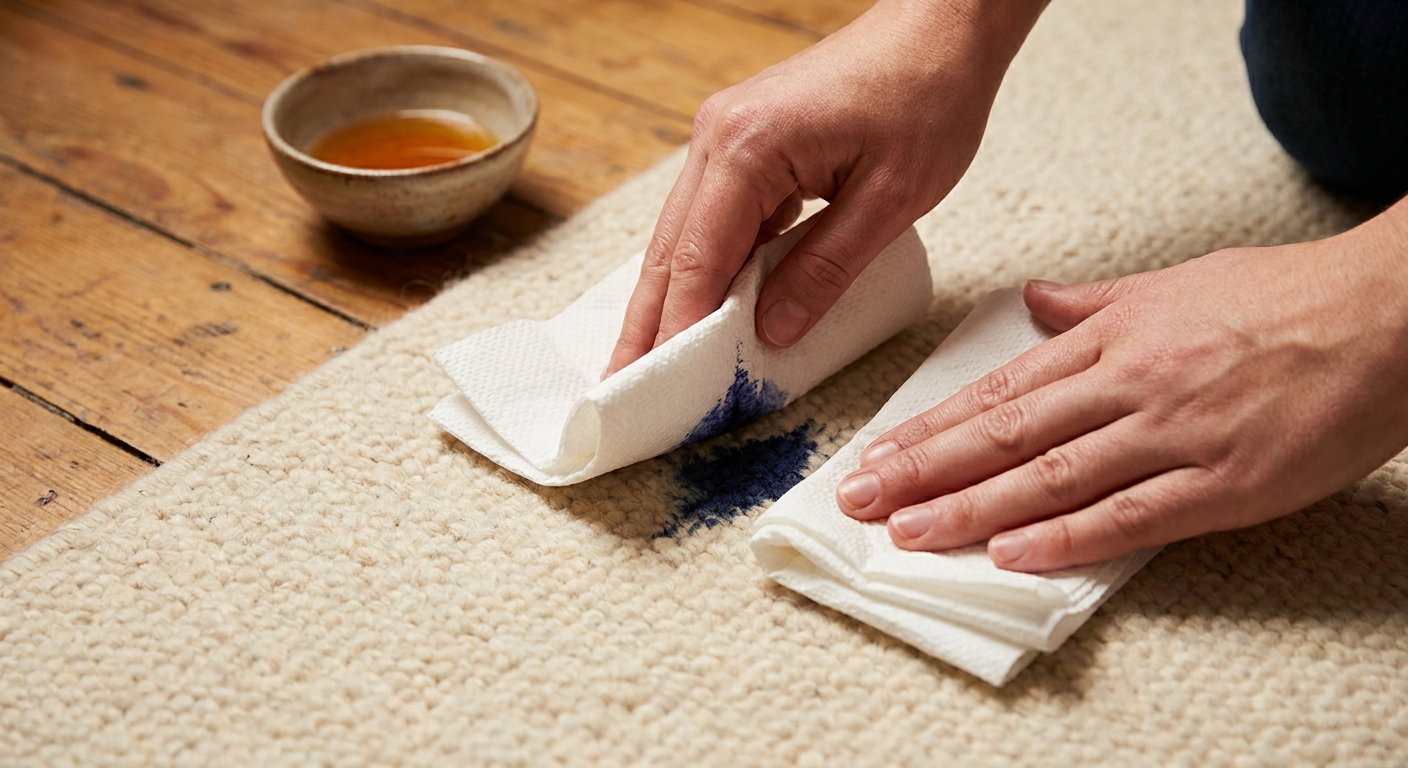
First, pause and set yourself up
If you do one thing right, let it be this: slow down. Ink moves fast when it meets moisture and friction.
- Do not rub. Rubbing pushes ink deeper into the pile and spreads it sideways.
- Do not flood. Too much liquid can drive ink into the backing and cause dye migration.
- Do not reach for bleach. Bleach can strip rug dye, weaken fibers, and create a pale halo that is impossible to blend back.
Grab these basics:
- White paper towels or clean, white, lint-free cotton cloths (skip colored towels, they can transfer dye)
- A spoon or dull knife for lifting any gummy ink residue (if present)
- Isopropyl alcohol (70% is a good starting point), plus a small bowl
- Mild dish soap
- Cool water
- A small fan or hair dryer with cool setting
- A heavy book and extra paper towels for pressing dry
Identify what you are dealing with
1) What kind of ink?
- Ballpoint pen: Often oil-based. Alcohol can help, but you may need patience and repeated blotting.
- Gel pen: Often water-based, but formulas vary (some are pigment-heavy and some include solvents). Treat it as “unknown” until you see how it reacts.
- Felt-tip markers: Many are dye-based. Some lift with alcohol, some with gentle detergent, some barely budge.
- Permanent marker (Sharpie-style): Alcohol is one of the most common first choices at home, but permanent ink on wool or silk blends is a “call a pro” situation more often than people expect.
2) What fiber is your rug?
If you still have a tag, check it. If not, use common clues:
- Wool: springy, slightly coarse, often sheds a bit, warms quickly under your hand.
- Silk or silk blend: very smooth, luminous sheen, feels cool and fine. Treat as delicate.
- Nylon/polyester/olefin: often very even, less shedding, can feel slicker or more uniform.
- Viscose (art silk): shiny like silk but far more fragile when wet. Low moisture only.
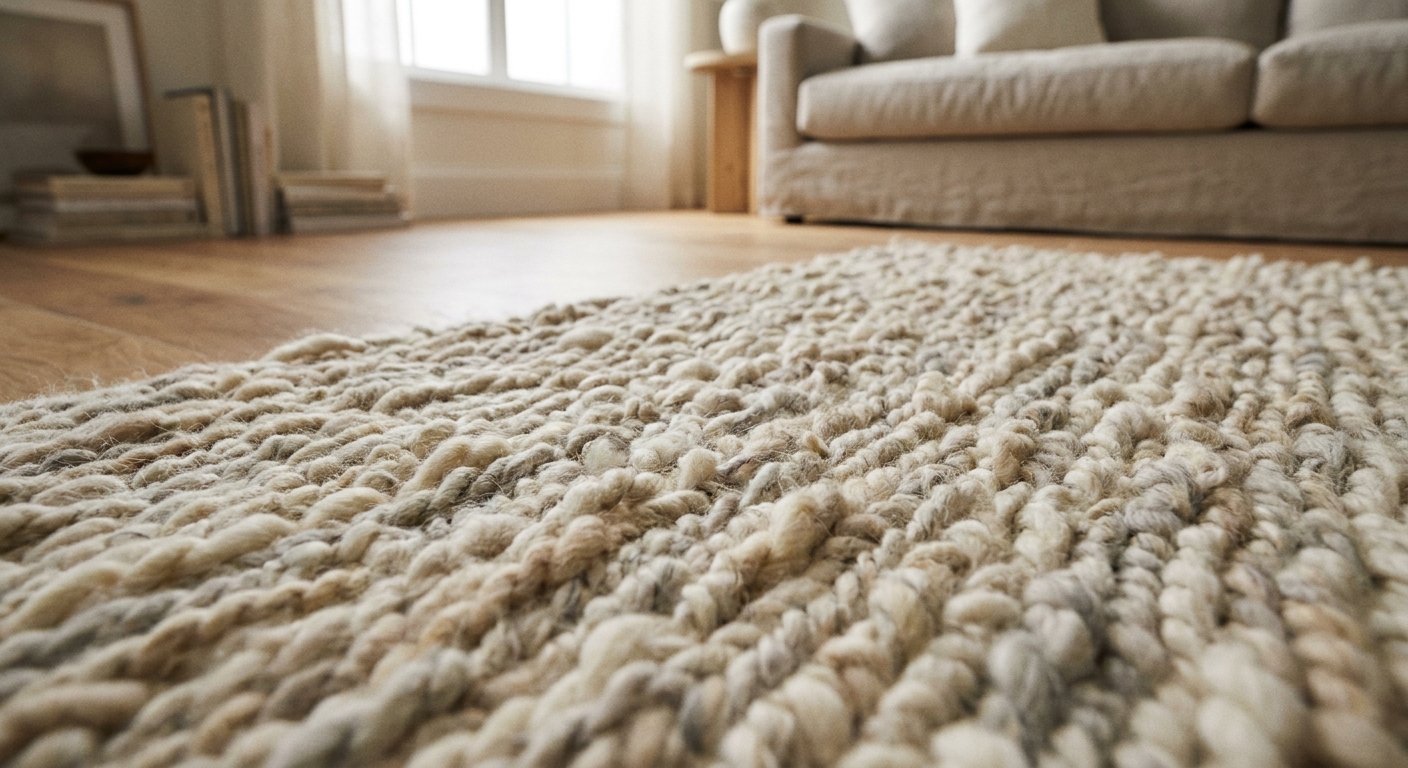
Test for dye bleed
This is the unglamorous step that saves rugs. Choose a hidden corner or the edge that sits under furniture.
How to test
- Dab a tiny amount of your chosen liquid (start with plain cool water, then alcohol if needed) onto a white cloth.
- Press the cloth to the hidden area for 10 to 15 seconds. Do not rub.
- Lift and check the cloth for rug dye transfer.
If you see color on the cloth, stop and switch to a gentler approach with less moisture. For wool, silk, viscose, or any rug that bleeds, professional cleaning is often the safest move.
Wet ink vs. set ink
- If the ink is still wet: your best chance is fast, dry blotting and controlled solvent work before it bonds.
- If the ink is already dry: do not be fooled by the lack of transfer. Set ink can still release slowly with solvent, and it often needs more time, more rounds, or professional extraction.
The blotting order
Think of this like building a tiny dam around the stain. You are always working from the outside toward the center, and you are always lifting, not scrubbing.
Step 1: Blot dry first
Place a folded paper towel on the spot and press firmly. Lift straight up. Repeat with fresh towels.
One nuance that matters: you might reach a point where the towel looks “clean,” but the stain is still there. If discoloration remains, move on to the solvent step (after testing), even if you are not seeing obvious ink transfer anymore.
Step 2: Contain the edge (optional)
This can help prevent a tide line, but it is not always the right move. If the ink looks water-soluble, smeary, or actively wicking outward, skip this and stick to dry blotting plus controlled alcohol.
If the stain is stable and you have already done a thorough dry blot, you can lightly blot the outer ring with a cloth that is barely damp with cool water. Minimal moisture only.
Step 3: Use alcohol in tiny, controlled amounts
For many pen and marker accidents on synthetic rugs, isopropyl alcohol is a practical at-home starting point.
- Safety first: ventilate the room, keep alcohol away from heat and flame, and keep pets and kids out of the zone.
- Pour a small amount of alcohol into a bowl. Do not apply from the bottle.
- Dampen a corner of a white cloth with alcohol. It should be barely damp, not wet or dripping.
- Blot from outside toward the center, rotating to a clean area of cloth every few presses.
- Follow each round with a dry blot to pull loosened ink up and out.
If the stain starts to spread, you are using too much liquid or pressing too hard. Back off and return to dry blotting.
Step 4: Rinse lightly
Once the ink lightens, mix a few drops of mild dish soap in cool water. Dampen a clean cloth and blot to remove solvent and ink residue. Then blot again with a cloth dampened with plain cool water.
Keep the rinse step stingy. Your cloth should be barely damp, not wet. Over-rinsing is how you get a pale halo that looks worse than the original spot.
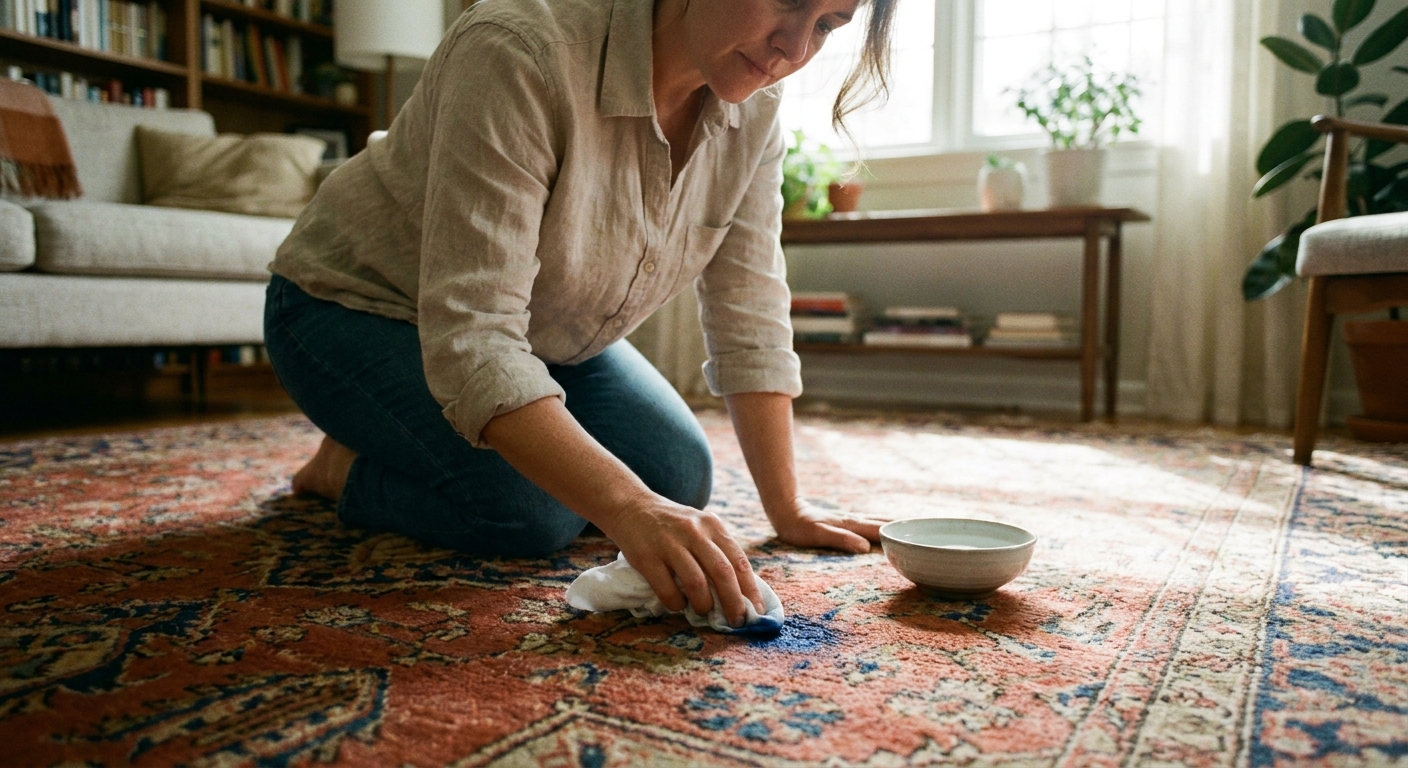
Solvent cautions by fiber
I wish there was one universal “safe” product. There is not. Fiber, dye type, and construction matter.
Wool rugs
- Proceed with caution: wool can felt and distort if over-wet, and some wool rugs have dyes that migrate.
- Avoid: heavy saturation, hot water, aggressive scrubbing, bleach, and high-alkaline cleaners.
- Try: minimal alcohol blotting only after a bleed test, then a very light rinse and quick drying.
- Know when to stop: if dye transfer appears on your cloth, or the pile starts to look fuzzy or matted, it is time to call a pro.
Silk and silk blends
- Best advice: do not experiment. Silk is delicate, prone to watermarking, and easily damaged by solvents.
- At home: very gentle dry blotting only (light pressure, no twisting), then consult a professional rug cleaner, especially for permanent marker.
Viscose (art silk)
- High risk: viscose weakens when wet and can develop permanent texture changes.
- At home: extremely low moisture blotting only. If ink remains, seek professional help.
Synthetic rugs (nylon, polyester, olefin)
- Most forgiving: these usually tolerate controlled alcohol blotting and mild detergent rinses.
- Still avoid: soaking through to the backing and aggressive brushing that frays the pile tips.
Check the backing and pad
If the ink has reached the backing or the rug pad, it can re-wick as the area dries. That is when you clean “successfully,” then the stain politely returns like it pays rent.
- If the underside feels damp, keep drying efforts going longer than you think you need.
- If the pad is stained or smells, plan on replacing it. Pads hold onto ink and moisture and can cause odor or reappearing discoloration.
- If ink reached wood or subfloor, clean and dry that surface too (carefully), or you may get lingering odor.
Drying (do not skip)
Even if the ink is gone, a damp rug can dry with a ring, a stiff patch, or a lingering odor. Drying is part of stain removal.
- Press dry: stack paper towels over the spot and press with a heavy book for 10 to 20 minutes. Replace towels and repeat.
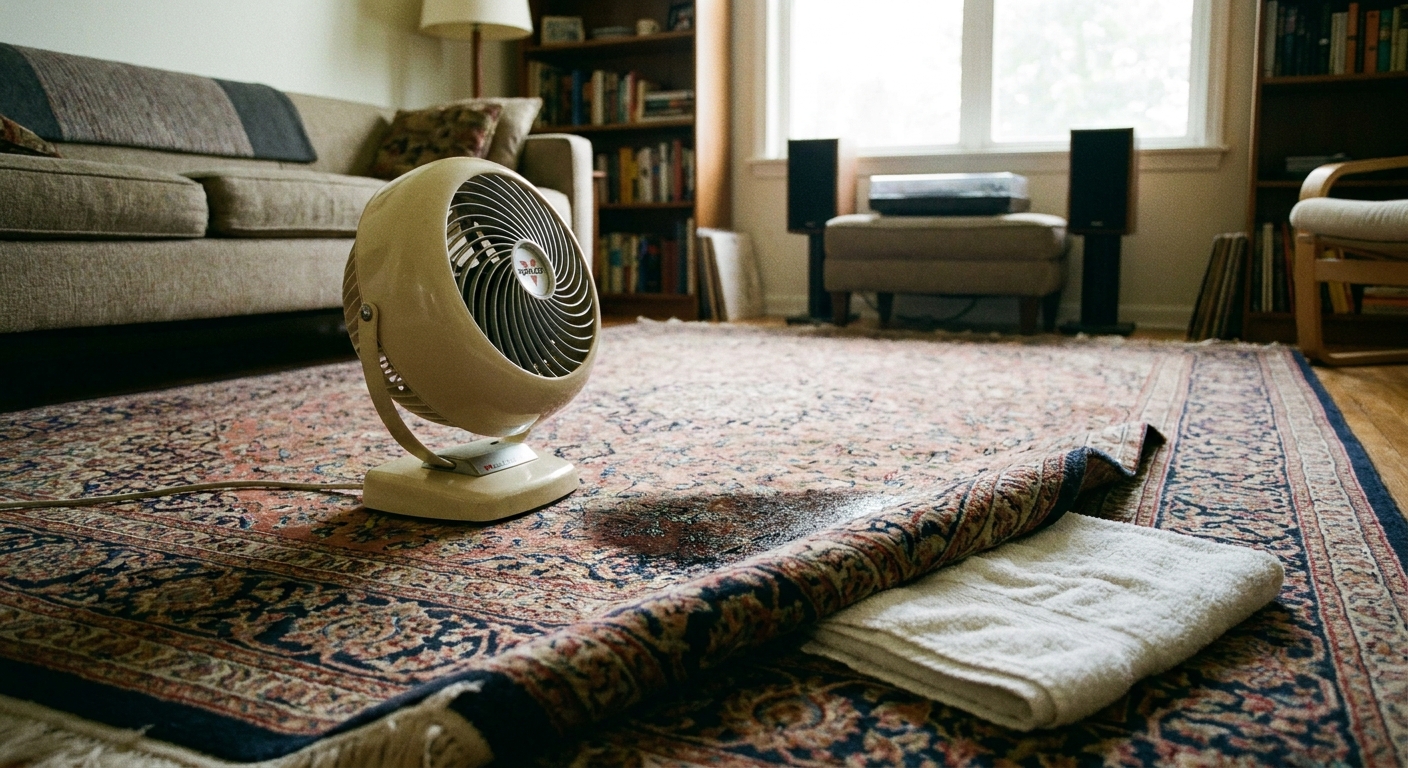
- Airflow: aim a fan across the surface for at least an hour.
- Cool only: if you use a hair dryer, keep it on a cool setting and keep it moving.
- Lift if possible: for small rugs, prop the cleaned area slightly so air can reach the underside. Place a towel underneath to protect the floor.
Troubleshooting
The ink is lighter but smeary
You are dissolving it, but not lifting it fast enough. Use less liquid, blot more often with a fresh dry towel, and work slower.
A faint halo appeared
This is usually residue or moisture spread. Lightly dampen a cloth with plain water and blot the outer edge to feather it, then press dry and fan. Keep it minimal.
The stain comes back as it dries
That often means ink traveled deeper into the pile, backing, or pad. At-home blotting may not reach it. This is a strong sign you need professional extraction, and possibly a new pad.
When to call a pro
I am all for confident DIY, but I am even more for not sacrificing a rug you love.
Call a professional rug cleaner if any of these are true:
- The rug is wool, silk, viscose, or a blend, especially if it is hand-knotted or vintage.
- You see dye transfer during your hidden-corner test.
- The ink is a permanent marker on a valuable rug.
- The stain is large, has soaked through, or the rug has a thick pad underneath that is now damp.
- You have tried two careful rounds and the stain is not improving, it is spreading, or it keeps reappearing as it dries.
Ask the cleaner specifically whether they offer rug immersion washing (for certain constructions), or controlled solvent treatment and extraction for ink. A reputable pro will ask about fiber and dye before they promise results.
A quick prevention note
If you have kids, roommates, or a personal habit of journaling on the floor, keep a simple “ink kit” nearby: white cloths, alcohol, dish soap, and a fan. The faster you blot, the less ink has time to bond with the fibers.
And if you are styling a space like I do, consider this permission to choose rugs with pattern and texture. A softly mottled vintage-inspired design is not just pretty. It is forgiving, which is the most luxurious feeling of all.