Road Salt Stains on an Area Rug

Clara Townsend
Every winter, I swear my entryway rug becomes a tiny science experiment. One day it is cozy and moody, the next it has that ghostly white crust from road salt, plus those stubborn brown outlines that make it look like the stain has a border. The good news: salt is one of the more forgiving rug problems, as long as you treat it like what it is: a mineral residue that needs to be dissolved and extracted, not scrubbed deeper.
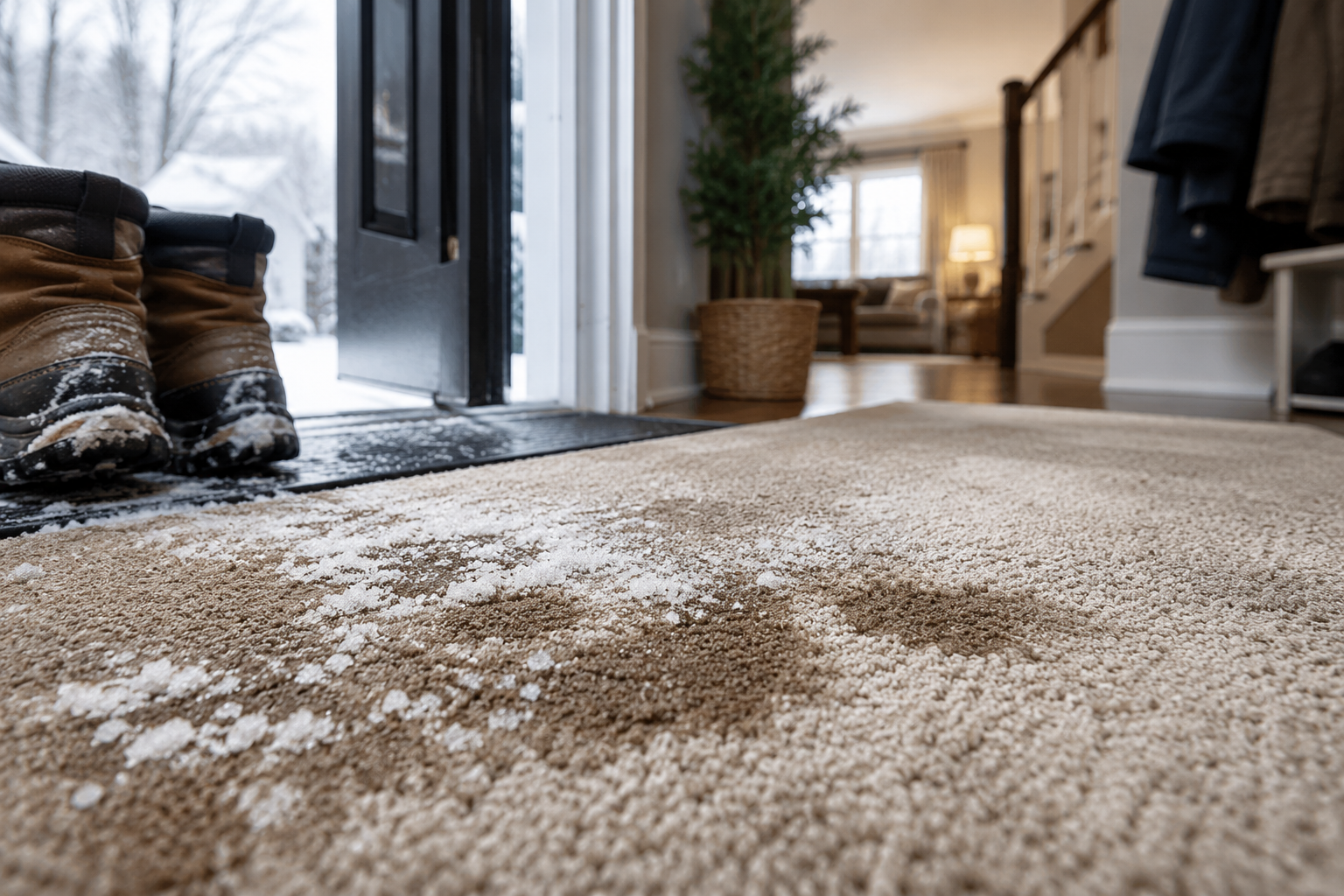
Below is exactly how I handle road salt stains on an area rug, how to tell salt from mold and from detergent tide lines, and how to dry everything so the salt does not sneak back up from the rug pad.
First, identify what you are looking at
Winter rug stains tend to look similar at a glance. A fast diagnosis keeps you from using the wrong approach.
Salt residue
- Look: White or gray crusty patches, sometimes sparkly. Can feel stiff or crunchy.
- Pattern: Boot prints, arcs, or a “spray” where slush melted.
- Reaction: A drop of plain water often makes the white haze temporarily disappear because the salt dissolves.
Detergent tide lines
- Look: A pale outline or ring after cleaning, sometimes slightly sticky or dull, not crusty.
- Pattern: A perimeter line around where you scrubbed or spot cleaned.
- Reaction: Water alone can make it look better while damp, then the line returns as it dries because leftover soap is reappearing.
Mold or mildew
- Look: Gray, green, or black spotting or shading. Not usually white and crusty.
- Smell: Musty or earthy, especially when the rug is damp or you lift it.
- Cause clues: A wet rug sitting on a pad or floor with no airflow for days.
If you suspect mold, do not just wet-clean and hope for the best. See the FAQ question “If I suspect mold, what should I do?” at the end.
What not to do
- Do not scrub hard. Scrubbing grinds gritty salt and street dirt into the fibers and can fuzz delicate pile.
- Do not pour hot water over the spot. Cool to lukewarm is fine. Hot water can increase dye bleeding in unstable rugs and can distort some backings.
- Do not use lots of soap “to cut the grime.” Detergent residue is a magnet for dirt and can create tide lines that look like browning.
- Do not ignore the rug pad. Salt water loves to sink into the pad, then re-wick right back up as everything dries.
Supplies you actually need
You likely have most of this already.
- Vacuum with suction control if possible
- Dry, white towels or clean cotton cloths
- Two buckets or bowls
- Spray bottle
- Soft brush or a clean microfiber cloth
- White vinegar (plain distilled, optional)
- Cool to lukewarm water
- A fan, plus something to lift the rug (paint stir sticks, thin slats, or even clean jars)
The best method for salt stains
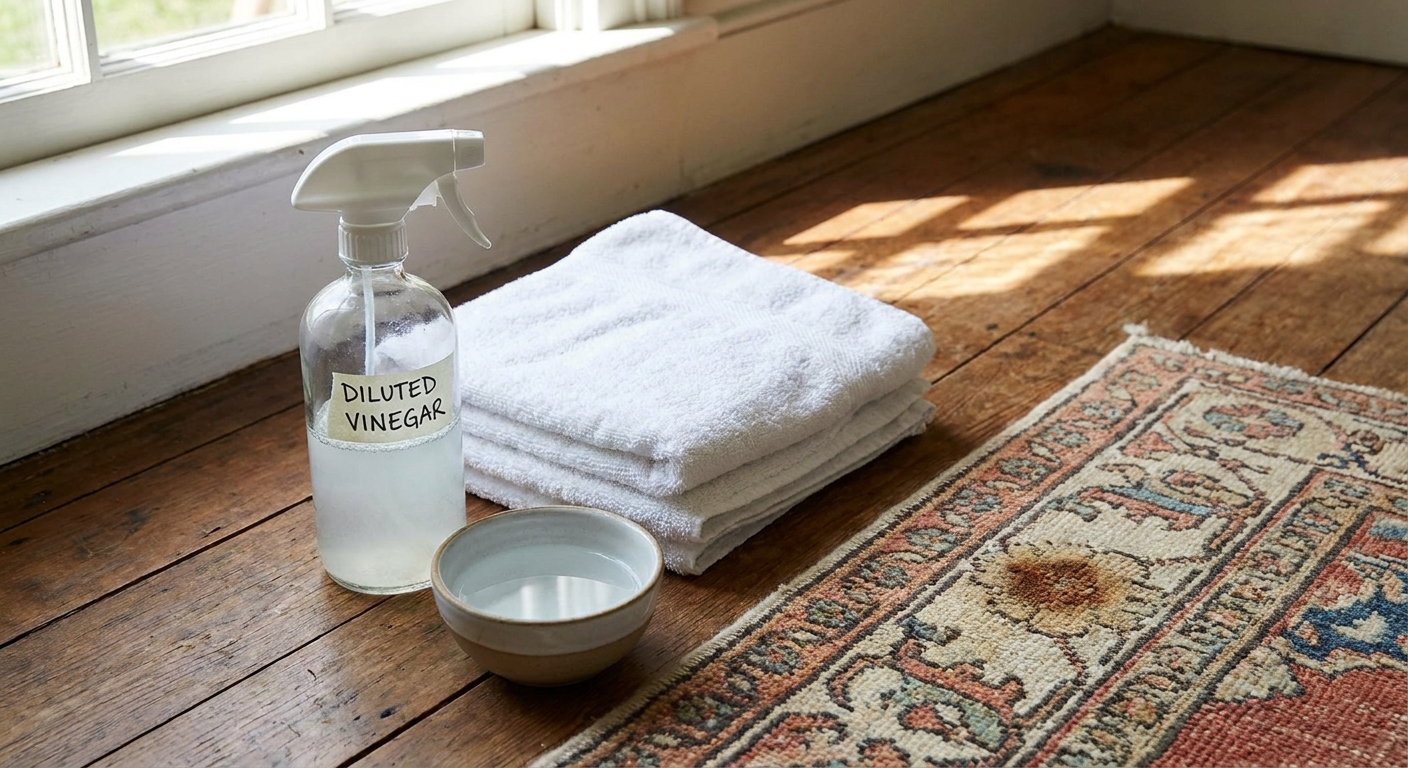
Salt is water-soluble. Your goal is to dissolve it and then pull it out of the rug, without over-wetting the backing and pad. In most cases, plain water does the heavy lifting. A mild vinegar mix is a helpful add-on when you are dealing with de-icing chemicals, alkaline residue, or a crusty film that is hanging on.
Step 1: Let it fully dry, then vacuum
If the salt area is still wet or slushy, blot first and let it air-dry. Once dry, vacuum slowly to remove the gritty particles sitting on top. This prevents that sandpaper effect when you start dabbing.
Step 2: Do a quick colorfast test
Before you mist anything, test in an inconspicuous spot. Dampen a cloth with plain water (or your vinegar mix if you plan to use it), press it to the rug for 10 to 15 seconds, and blot with a white towel. If you see color transfer, stop. That is a pro-cleaning situation, especially on hand-knotted, antique, or richly dyed rugs.
Step 3: Start with plain water
Lightly mist the stained area with cool to lukewarm water so it is evenly damp, not soaked. Wait 1 to 2 minutes for the salt to dissolve, then blot firmly with a white towel. Switch to a clean section of towel often.
Repeat mist and blot until the white residue stops transferring and the stiffness is gone. Patience beats pressure here.
Step 4: If residue persists, use a mild vinegar solution
If you still see a white haze or feel crunchiness, mix this in a spray bottle:
- 1 cup water
- 1 tablespoon white vinegar
Mist lightly, wait 1 to 2 minutes, then blot. I keep it mild and repeat rather than escalating fast.
If you are tempted to go stronger, keep in mind that more vinegar is not automatically “more effective.” Strong mixes can be rough on certain constructions, and the smell can linger if you do not rinse and dry well. If you do increase strength on a sturdy synthetic rug, test first, avoid soaking the backing, rinse thoroughly, and ventilate the room.
Step 5: Rinse with plain water
Whether you used vinegar or not, do a quick rinse so nothing dries into the fibers. Mist plain water lightly, then blot again with a fresh towel.
Step 6: Press-dry with towels
Stand on folded towels over the damp area for 30 to 60 seconds at a time. This pulls moisture from deeper in the pile and helps prevent wicking.
Fiber and backing limits
Before you go full steam ahead, check your rug material and backing. If you do not know, treat it like it is delicate.
Wool rugs
- Good news: Wool often releases salt nicely with careful, low-moisture cleaning.
- Be careful with: Over-wetting and aggressive brushing. Wool can felt, fuzz, and hold onto water in the foundation.
- Best practice: Minimal moisture, lots of blotting, and thorough drying with airflow.
Viscose rugs
- Proceed with extreme caution: Viscose is famous for water marks, pile distortion, and browning if it stays damp.
- Avoid: Scrubbing, heavy spraying, and any attempt to “rinse thoroughly” by saturating.
- Safer approach: Vacuum well, then use a barely damp cloth and blot immediately. Keep the damp zone as small and even as possible. Dry fast with a fan.
- When to call a pro: If the rug is viscose and the salt stain is larger than a dinner plate, professional cleaning is often the least risky path.
Synthetics
- These are typically the most forgiving for salt stains.
- You still want to avoid soaking the pad, because wicking can make even an easy rug look worse.
Jute and glued backings
- Natural backings (like jute): They can brown or stain if they stay wet, and they hold water longer than you want.
- Glued or latex backings: Too much moisture can contribute to warping, bubbling, or adhesive breakdown.
- Best practice: Keep moisture light, do extra towel-pressing, and prioritize fast drying. If the underside is getting damp, stop and reassess.
Brown edges and rings
The brown outline after snow and ice melt is usually one of three things:
- Soil migration: Dirt in the slush moves outward as the wet area spreads, then dries at the edge.
- Wicking from beneath: Salt water and grime sink into the foundation or pad and travel back up as the rug dries.
- Tannin or dye movement: More common in natural fibers and certain backings.
To treat brown edges, use the same salt removal steps above, then add one extra move: work slightly beyond the ring.
Feather the damp zone
After blotting the main spot, lightly mist a wider halo of plain water around it and blot. The idea is to soften that hard edge so it does not dry with a sharp outline. Keep it light. You are blending, not flooding.
If it looks like detergent, do rinse-only
If the brown edge appeared after you cleaned with soap, skip vinegar and do repeated light mists of plain water with thorough blotting to remove residue. Soap left behind can look like browning and will keep attracting dirt.
Drying so it does not come back
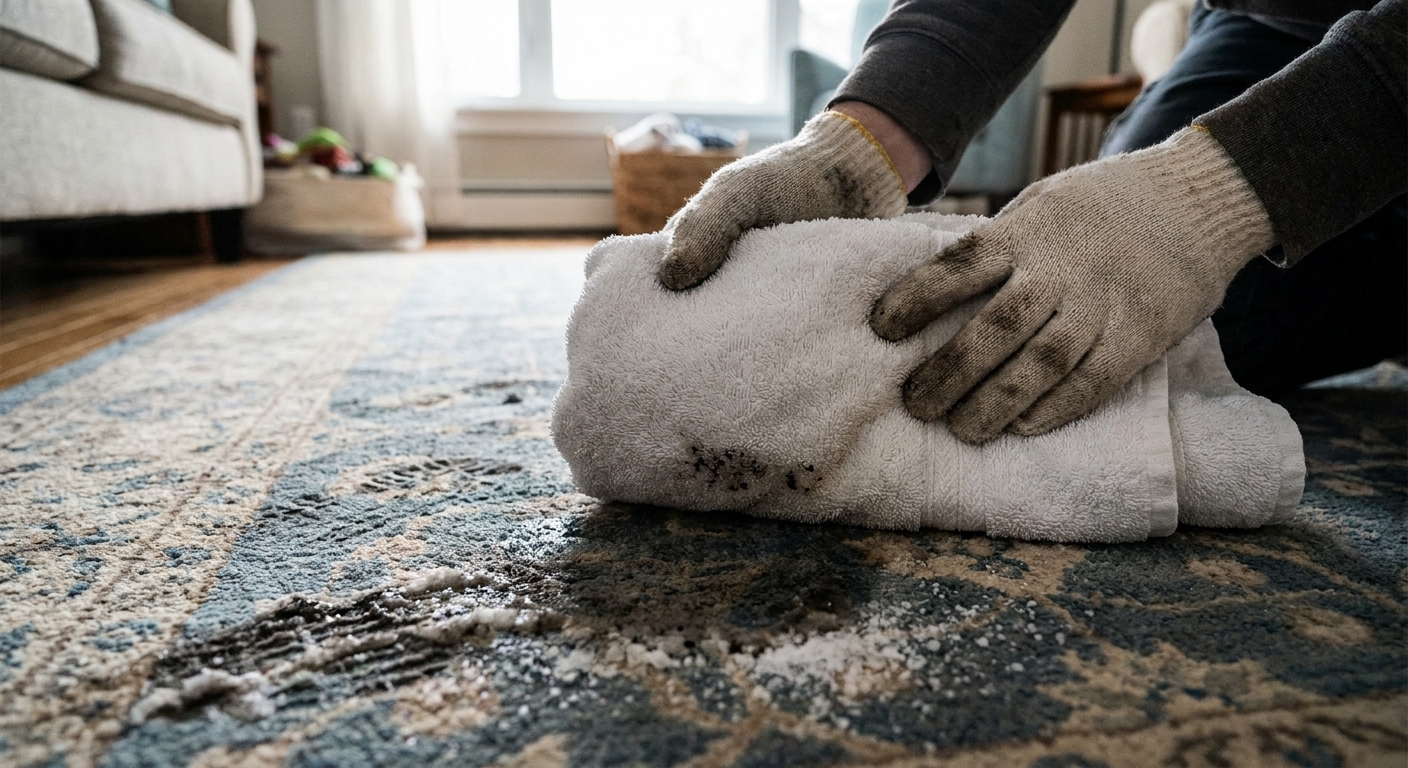
This is the part most people skip, then the stain comes back and everyone feels cursed. You are not cursed. Your rug is just acting like a candle wick.
My goal is simple: get the area dry within a few hours if possible. Overnight can be fine if you have strong airflow. If it is still damp after 24 hours, assume the pad or subfloor is holding moisture and fix that, or the stain (and smell) can return.
1) Lift the rug for airflow
If the rug is on a pad, lift the damp section and slide something underneath to create a small air gap. Even a few paint stir sticks spaced out makes a difference.
2) If the pad is wet, separate them
For bigger salt accidents, roll back the rug and check the pad. If the pad feels damp or looks discolored, you need to dry it separately. Otherwise, it will keep feeding moisture and minerals back into your clean fibers.
3) Use moving air
A fan aimed across the surface speeds evaporation. If you can, open a window a crack for fresh airflow. In humid weather, a dehumidifier helps.
4) Dry from both sides when possible
If the rug is small enough to flip or drape over a railing safely indoors, drying the back as well can prevent that lingering dampness in the foundation where wicking starts.
5) High-pile and shag need extra time
Thick pile hides moisture. Do extra towel press-drying, keep the fan running longer, and do not put furniture back on the spot until it is fully dry.
6) Vacuum again when fully dry
Once the rug is completely dry, vacuum to lift the pile and remove any remaining loosened grit.
When to call a professional
I am all for a confident DIY, but I also love a rug enough to know when to stop.
- The rug is viscose and the stain is larger than a dinner plate.
- The rug is antique or hand-knotted and you see dye bleeding when you blot (color transferring to the towel).
- The rug smells musty, the underside is damp, or you suspect mold.
- The stain keeps returning after proper drying, suggesting deep contamination in the pad or subfloor.
Prevention
Winter-proofing an entryway does not have to look like a utility closet. A few low-effort habits help a ton.
- Doormat outside, rug inside. A tough scraper mat outdoors plus a washable runner inside is the dream duo.
- Shoes-off zone. Even a small tray and a stool makes it feel intentional.
- Midweek vacuum. In salt season, quick vacuum passes prevent mineral grit from building up.
- Pad check. If your rug pad is old and spongey, it can hold onto winter mess. A fresh pad can be a surprisingly big reset.
FAQ
Will vinegar discolor my rug?
On many rugs, a mild vinegar dilution is safe and helpful for stubborn de-icer residue, but it is not always necessary for simple salt. The real risk is not vinegar, it is over-wetting, scrubbing, and dye instability. Always test in an inconspicuous corner first and blot with a white cloth. If you see dye transfer, stop and consider professional cleaning.
Is road salt the same as ice melt?
They behave similarly on rugs because both leave mineral residue. Some ice melts include additives that can leave a slightly oily or dirty-looking film along with the white crust. The dissolve and blot method still applies, but you may need a few extra rinse and blot rounds.
My rug has a white haze after it dried. Did I miss something?
That is usually leftover salt that dried back into the fibers, or salt that wicked up from the pad. Repeat the light mist and blot process, then focus on drying with airflow and lifting the rug so moisture cannot pull minerals upward again.
How do I tell salt from mold for sure?
Salt tends to be white or gray and crusty, and it often disappears when damp then reappears when dry. Mold tends to look like gray, green, or black spotting, and it comes with a musty odor. If you lift the rug and the pad or floor underneath is damp, that is a red flag for mold risk.
If I suspect mold, what should I do?
Separate the rug from the pad immediately and dry both quickly with strong airflow. If you see visible mold growth, the smell persists after drying, or the affected area is large, it is wise to contact a professional cleaner or remediation service. If anyone in your home is immunocompromised, has asthma, or is sensitive to mold, do not experiment with extended DIY wet-cleaning. In some cases, depending on the rug type and how deep the growth is, disposal may be the safest option.
Can I use a carpet cleaner machine on salt stains?
You can, but it is easy to over-wet an area rug and saturate the pad, which invites wicking and browning. If you use a machine, use minimal water, do extra dry passes, and still lift the rug to dry with airflow underneath.