Choosing the Right Rug Pad for Hardwood, Tile, and LVP

Clara Townsend
Clara Townsend is an interior stylist, vintage furniture enthusiast, and the creative voice behind Velvet Abode. With over a decade of experience transforming both cramped city apartments and sprawling fixer-uppers, she believes that a beautiful home is built on personal stories rather than massive budgets. When she isn't hunting for the perfect brass sconce at a local flea market, she can usually be found rearranging her living room for the third time this month.
There are a few home decisions I will happily overthink, like paint undertones at 9 p.m. with a cup of tea. Rug pads are not one of them. The right pad is basically invisible, but it makes your rug feel softer, stay put, and age better. The wrong one can trap grit, scoot around, or leave you with a sticky mess you never asked for.
Let’s make this easy: you’re going to pick a pad based on your floor (hardwood, tile, or LVP), your rug type, and your real-life constraints like doors that swing and kids that sprint.
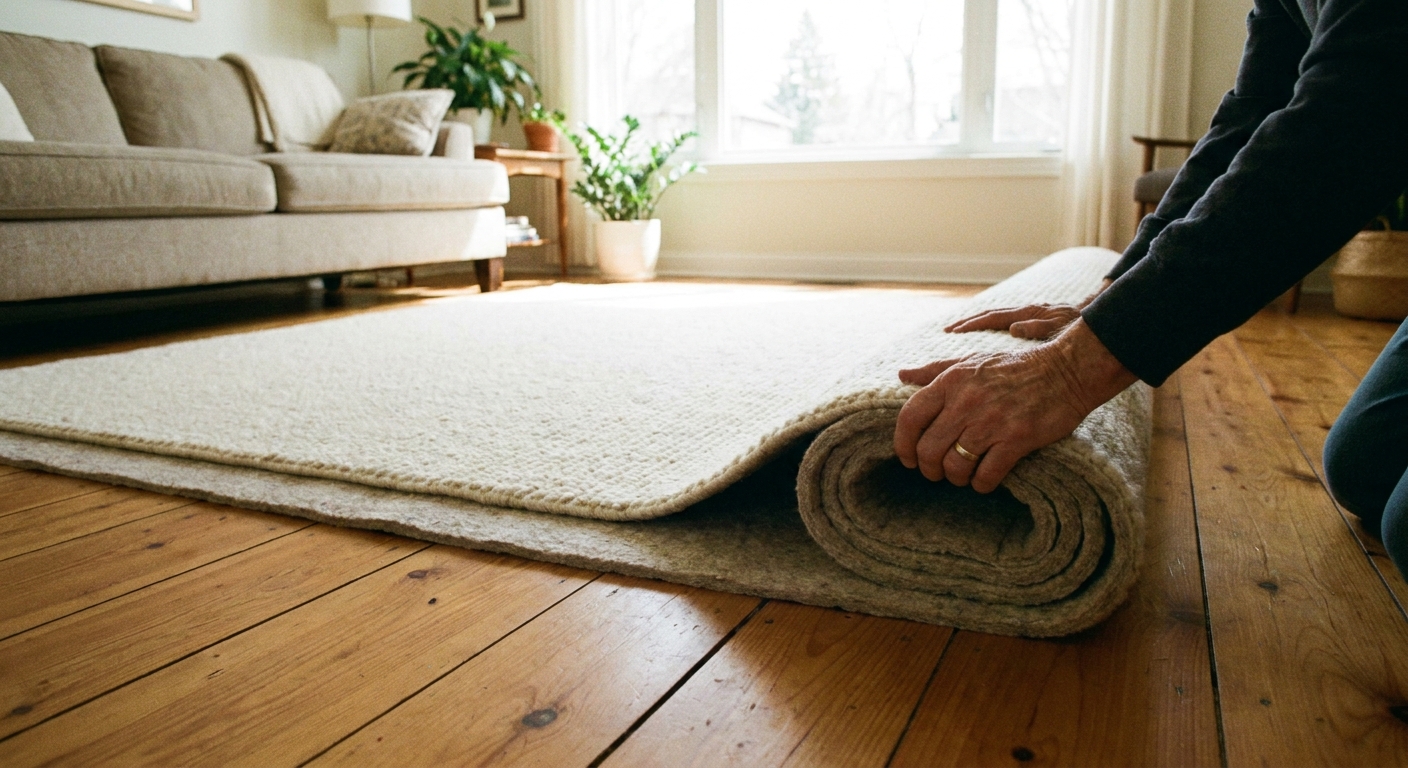
Rug pad materials in plain English
Most rug pads fall into three camps. If you remember nothing else, remember this: felt adds cushion, rubber adds grip, and combo pads (felt + rubber) do both.
Felt pads
- Best for: Adding plushness, protecting floors from grit, making thin rugs feel expensive.
- Not great for: Preventing slip on slick floors unless the felt is paired with a grippy backing.
- What it feels like: Quiet, soft, and slightly “hotel hallway” in the best way.
Rubber pads
- Best for: Keeping rugs from sliding on smooth surfaces like tile or sealed hardwood.
- Not great for: Thick cushioning, and some types can cause issues on sensitive finishes if they are low-quality or not labeled as floor-safe.
- What to look for: Clear “floor-safe” language for your exact surface, plus a brand that spells out compatibility.
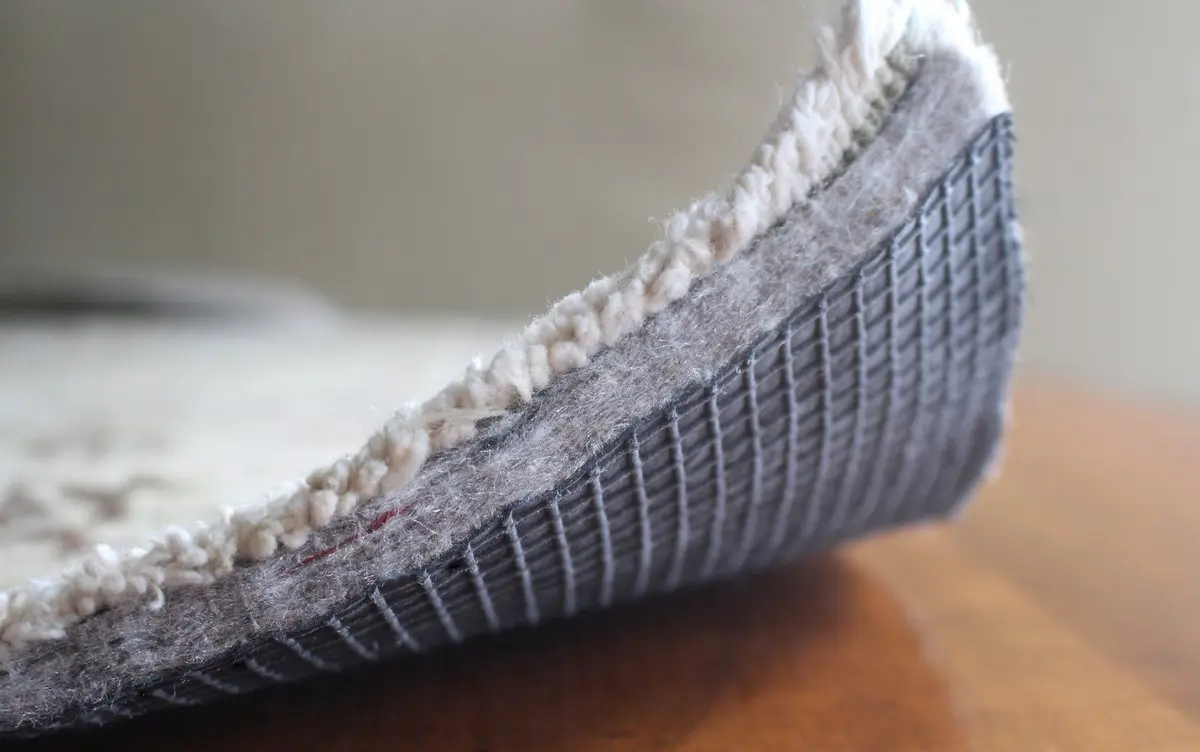
Combo pads (felt + rubber)
- Best for: Most living rooms and bedrooms on hard surfaces. You get comfort plus traction.
- How they’re built: Felt on top (touching the rug), rubber on bottom (touching the floor).
- Stylist note: If you want one pad to handle most situations, combo is usually it.
Micro summary: Want cozy? Felt. Want no sliding? Rubber. Want both and no drama? Combo.
Choose by floor type
Hardwood floors
Hardwood is the “I want it pretty, but I also want it protected” floor. A good pad keeps the rug from inching forward and keeps tiny grit from acting like sandpaper underfoot.
- Best pick: Combo pad (felt + rubber) for most area rugs.
- If your rug is heavy (like a thick wool or large 9x12): A dense felt pad can work if the rug doesn’t slip. If it does, go combo.
- Avoid: Super cheap PVC or mystery-foam pads that do not clearly state they are safe for sealed hardwood.
Quick hardwood shopping checklist: Look for “safe for sealed hardwood” and “non-staining.” If the product page is vague, skip it. Your floors deserve better.
Tile floors
Tile is slick and unforgiving. Rugs slide, corners curl, and suddenly you are doing a tiny ice dance in socks. Traction matters here.
- Best pick: Rubber or combo pad with a solid, grippy underside.
- If the tile has texture or wide grout lines: A slightly thicker combo pad can help the rug bridge the unevenness so it lies smoother.
- Big win: A pad that grips without feeling tacky. You want traction, not glue.
LVP (Luxury Vinyl Plank)
LVP is a little special. It is durable, yes, but it can be sensitive to certain rubberized materials, plasticizers, and adhesives over time. Translation: you want a pad that’s explicitly approved for vinyl by the pad brand and ideally aligns with your flooring manufacturer’s guidance.
- Best pick: Combo pad labeled safe for vinyl/LVP or a felt pad with a vinyl-safe grip backing.
- Vinyl-safe materials to look for (when the label actually lists them): pure felt, EVA foam, and specialized vinyl-safe polymer grip layers (often described as TPR or similar). Always default to what your specific floor brand approves.
- What to avoid: Pads that do not specify compatibility with vinyl, and anything with an adhesive-like backing unless it is specifically rated for vinyl. Some manufacturers also caution against certain latex or rubber formulations, so check your flooring paperwork if you still have it.
- Extra note: If your LVP manufacturer has a care guide, follow it. Some warranties get picky about what sits on top of the floor long-term.
Micro summary: For LVP, don’t guess. Look for “vinyl-safe” plus a material list you recognize, then cross-check your floor brand if possible.
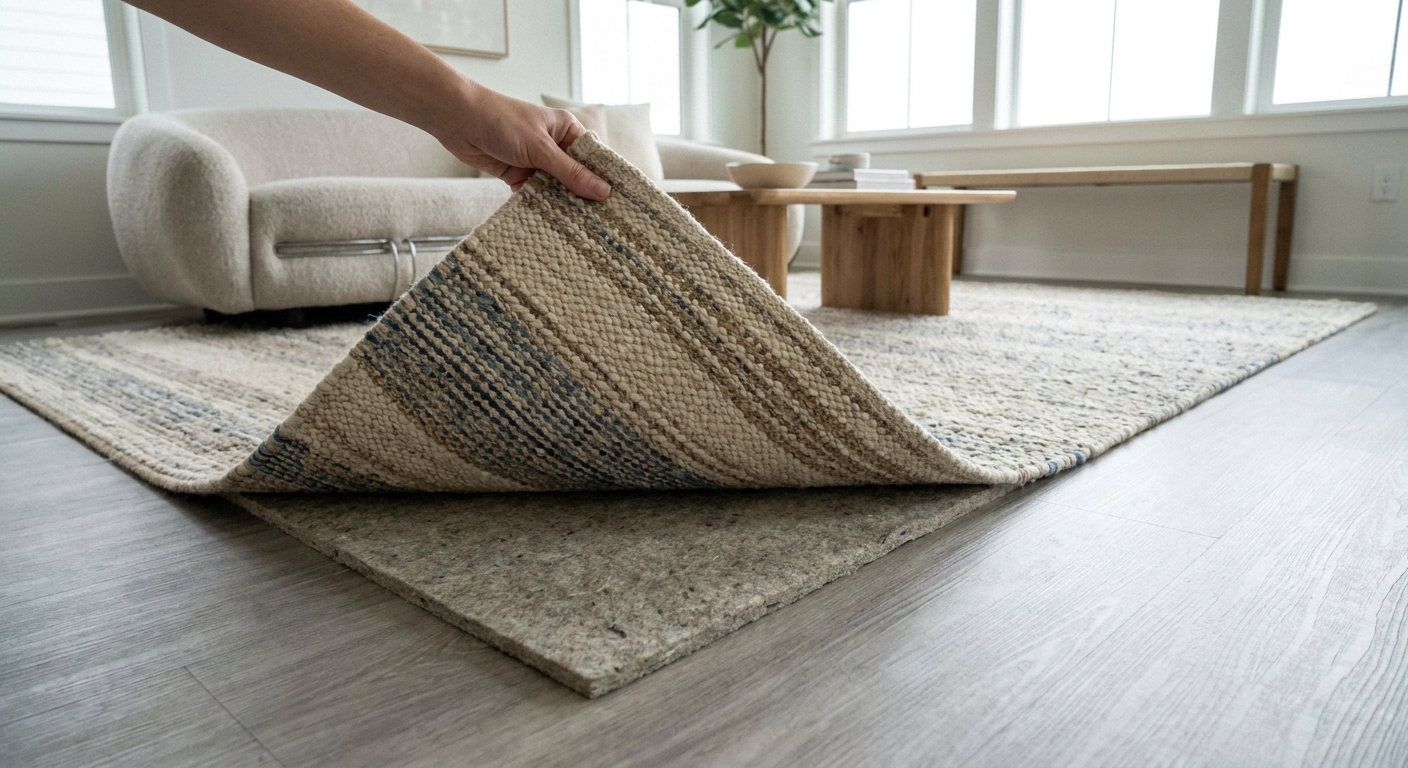
Thickness: door clearance check
The plushest pad in the world is useless if your bedroom door bulldozes your rug every morning. Before you buy, do a quick clearance check.
A simple way to measure
- Open the door and slide a stack of coins or a thin book under it until it just touches.
- Measure that stack. That is your max “rug + pad” thickness.
Common thickness ranges
- 1/8 inch to 1/4 inch: Great for tight door clearance, entryways, and low-pile rugs.
- 3/8 inch: A sweet spot for living rooms where you want comfort but still need furniture to sit stable.
- 1/2 inch and up: Cozy and cushy, best when doors clear easily and your rug is big enough to handle the loft without rippling.
Furniture tip: If you have a coffee table or dining table sitting on the rug, avoid overly squishy pads. A denser felt or a firm combo pad keeps chair legs from wobbling.
Open-weave vs solid backing
This is the detail most people skip, and it’s the detail that can save you from frustration later.
Open-weave rubber
- Pros: More airflow, often easier to lift and reposition.
- Best for: Most hardwood setups, especially if you live in a humid climate where extra airflow helps.
Solid rubber backing
- Pros: Maximum grip on slick floors like tile.
- Watch-outs: Less breathable. If you are placing rugs in moisture-prone spots, prioritize ventilation and dry floors.
My rule: If your floor is slick and you need serious hold, go more solid. If your main goal is floor protection and gentle grip, open-weave combo pads are usually plenty.
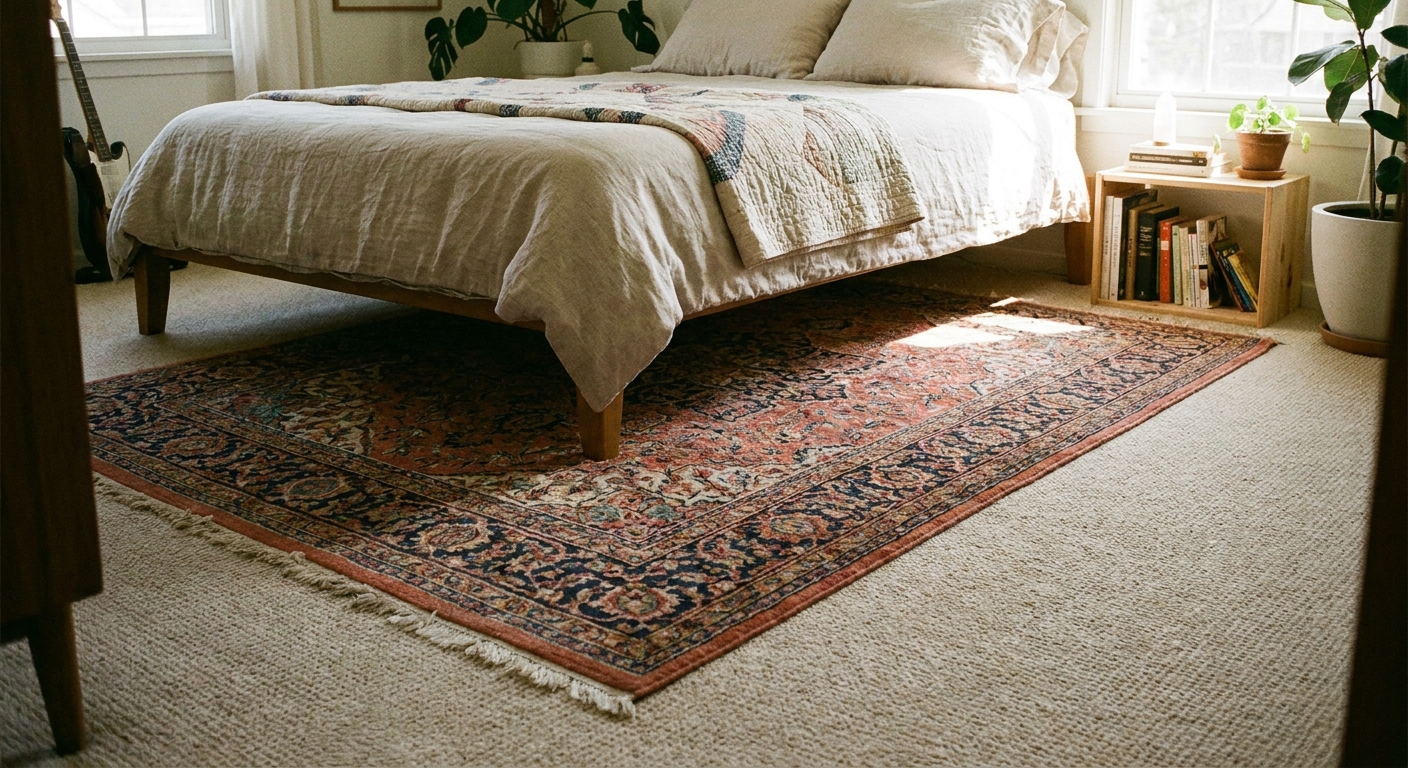
Rug on carpet setups
Layering a rug over carpet can be wildly cozy and visually grounding, especially in rentals with blah wall-to-wall. But a typical non-slip pad made for hard floors is often the wrong tool here. Carpet compresses, rugs creep, and the pad that was magic on hardwood suddenly feels pointless.
What works better
- Felt-only pad: Adds structure and a little cushion, helps the top rug look less floppy.
- Rug-on-carpet pad: Some pads are designed to grab carpet fibers. Look for that exact wording (or “waffle-style” pads made for carpet).
- Furniture anchoring: Even one or two front legs of a sofa on the rug can keep everything from creeping.
Style note: If the top rug is smaller, choose a denser pad so the edges don’t look like they are floating.
When tape beats a pad
I love a rug pad, but sometimes a pad is not the cleanest solution. Tape can be the better buy when you are trying to control an edge, not cushion a whole room.
When tape makes sense
- Small rugs: A bath mat sized rug in front of the sink or a tiny runner that bunches.
- Problem corners: Your rug lies flat except for two annoying corners that like to flip up.
- Very low door clearance: Where even a thin pad causes dragging.
Shop tape without residue
- Look for products labeled removable and floor-safe for your exact surface (hardwood, tile, or vinyl).
- Test first in an inconspicuous spot, especially on LVP.
- Avoid ultra-aggressive adhesives for long-term placement. Adhesive can cure over time, which makes removal harder.
- If you rent or you like to rearrange, replace tape periodically instead of leaving it down for years.
Important: Tape is for targeted control. It will not make a thin rug feel plush, and it will not protect your floor from grit the way a full pad does.
Avoid sticky residue problems
Residue problems are usually the result of a mismatch: the wrong material for the floor finish, heat and pressure over time, or a low-quality pad that breaks down. Preventing it starts at checkout.
Buyer-proofing steps
- Match the pad to the floor: Especially for LVP, only buy pads that explicitly state vinyl compatibility. If your flooring manufacturer provides an approved list, use it.
- Treat strong chemical smells as a caution flag: Odor is not a perfect quality test, but if something smells harsh, I do not want it pressed into my floors for years. Choose a better option if you can.
- Prioritize reputable materials: Dense felt, natural rubber, EVA, or clearly labeled “non-staining” and “floor-safe” pads with floor-type guidance.
- Mind sunlight and heat: In a bright, hot patch of sun, pads can age faster. If your rug lives in that spot, opt for higher-quality materials and lift the rug occasionally to let everything breathe.
- Do a tiny test: If you’re nervous, place a small cut piece of pad in an out-of-sight area for a few days and check for any finish change.
Think of this like buying skincare: if the brand can’t tell you what’s in it and what it’s for, it doesn’t get to live on your floors.
Extra watch-outs
Radiant heat
If you have radiant heated floors, only use a rug pad that is explicitly rated for radiant heat. Heat can amplify odors and speed up breakdown in pads that are not designed for it.
Delicate rug backings
Some rug backings and fibers (latex-backed rugs, jute, certain vintage pieces) can be sensitive to rubber or adhesives. If your rug is delicate, vintage, or shedding fibers like it is going through something, a felt-only pad or a pad designed for delicate rugs is often the safer choice.
Shedding and dust
Some recycled-fiber pads can shed or dust a bit, especially early on. If you have a very thin rug, that can show up as grit or fuzz at the edges. A denser felt usually sheds less.
Fast picks by room
Living room
- Hardwood or LVP: Combo pad, medium density, 1/4 inch to 3/8 inch (vinyl-safe for LVP).
- Tile: Combo or rubber with strong grip, usually 1/4 inch.
Bedroom
- Hardwood or LVP: Combo pad, prioritize comfort, but check door swing first.
- Wall-to-wall carpet: Felt-only or rug-on-carpet pad.
Dining room
- Any hard surface: Lower profile and firmer. Think 1/8 inch to 1/4 inch, dense felt or firm combo pad, so chairs move without catching.
Entryway and runners
- Tile: Rubber or grippy combo pad, thin enough that the door does not snag.
- Hardwood or LVP: Thin combo pad labeled safe for the floor, or removable tape for extra-stubborn edges.
Sizing rule: keep it hidden
Trim your rug pad so it sits about 1 inch inside the rug on all sides (up to 2 inches inside if your rug is prone to shifting). This keeps the pad from peeking out and prevents the rug edge from sitting on a hard lip. Most pads cut easily with household scissors or a utility knife.
Once it’s down, give your rug a gentle smoothing from the center outward, like you are making a bed. It should feel anchored, not glued.
Quick maintenance
Every so often, lift the rug, vacuum underneath, and make sure the floor is dry before you put everything back. If a spill gets under the rug, dry the floor fully and let the pad air out before resetting it. Rugs are cozy, but they are not meant to marinate.
Rug pad shopping list
- Floor type: Hardwood, tile, or LVP and does the pad clearly list it?
- Goal: More cushion, more grip, or both?
- Thickness: Door clearance plus furniture stability.
- Backing style: Open-weave for airflow, more solid for extra grip on slick tile.
- Materials: Dense felt, rubber with clear floor guidance, or a labeled vinyl-safe layer for LVP (EVA or vinyl-safe polymers are common).
- Flexibility: If you rearrange often, choose a pad designed to lift cleanly and avoid aggressive adhesives.
- Heat: Radiant heat rated, if applicable.
If you want the cozy, settled feeling of a finished room, a good pad is one of the cheapest ways to get there. It is not glamorous, but it is quietly doing the work so your rug can be the star.
If you buy only one thing: A medium-density combo pad around 1/4 to 3/8 inch, clearly labeled floor-safe for your surface, trimmed to sit about 1 inch inside the rug.