Clean a Shag Rug Without Matting

Clara Townsend
Clara Townsend is an interior stylist, vintage furniture enthusiast, and the creative voice behind Velvet Abode. With over a decade of experience transforming both cramped city apartments and sprawling fixer-uppers, she believes that a beautiful home is built on personal stories rather than massive budgets. When she isn't hunting for the perfect brass sconce at a local flea market, she can usually be found rearranging her living room for the third time this month.
Shag rugs are basically little forests. Every soft strand is doing its own thing, and that is exactly why they need different care than a flatweave. The goal is not just “clean.” The goal is clean and still cloud-like, with the pile standing up instead of clumping together like wet hair.
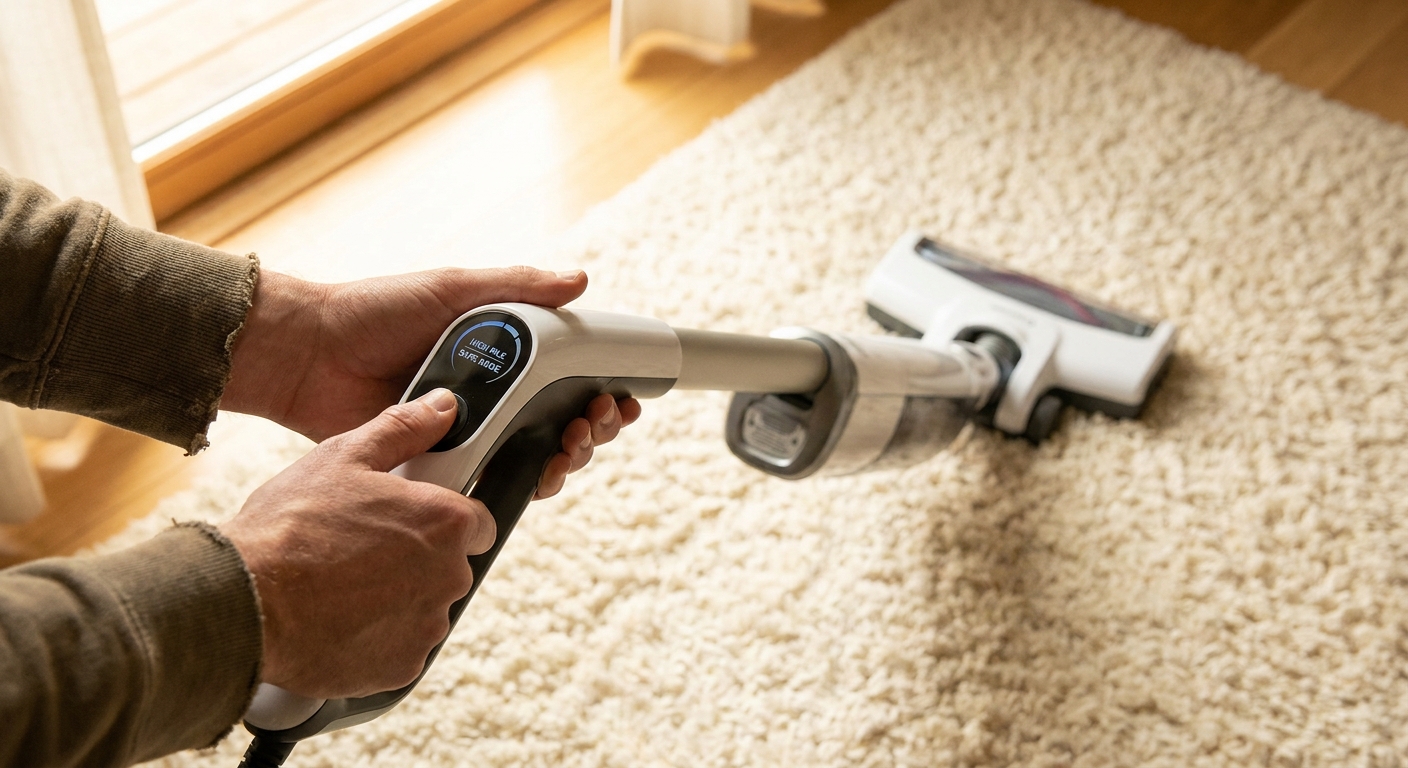
Below is the Velvet Abode method: low stress, low moisture, and very pile-friendly, with renter-safe options for the spills that happen in real homes.
Why shag needs different care
Flatweaves are like a tightly woven jacket. Shag is more like a knit sweater with a fringe. When you scrub too hard, soak it, or use aggressive suction, those long fibers can:
- Mat and clump (especially if they get damp and are walked on before they’re fully dry).
- Twist and tangle (beater bars can act like a mini hair curler in the worst way).
- Hold onto grit deep at the base, which slowly abrades the fibers and makes the rug look dull.
The trick is to remove dry soil gently, then spot-clean with as little water as possible, then dry fast enough that the pile never has time to collapse.
Before you start: a 60-second rug check
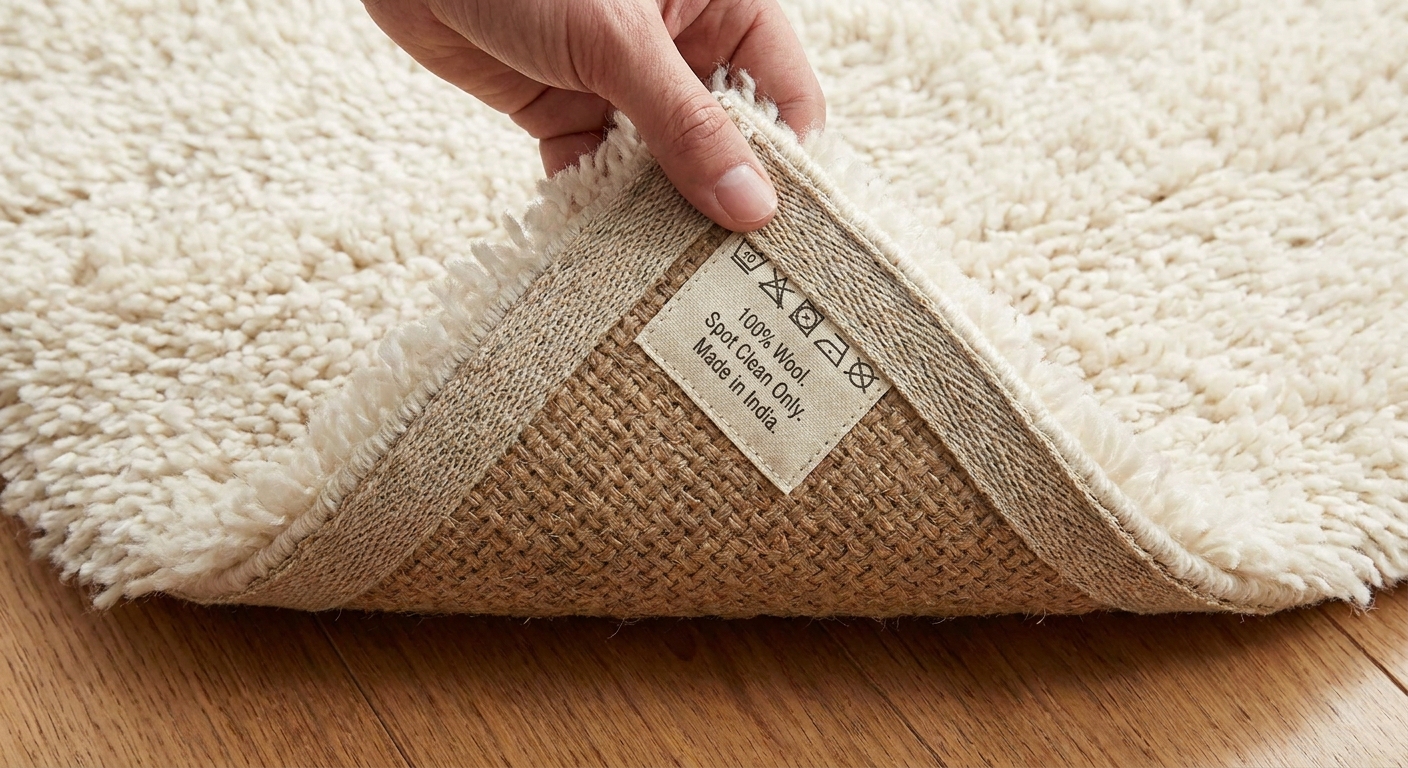
- Check the label for fiber content (wool, polypropylene, polyester, acrylic) and any “dry clean only” notes.
- Color test: dab a hidden corner with a barely damp white cloth. If dye transfers, keep moisture to an absolute minimum and consider a pro for anything bigger than a small spot.
- Shake out crumbs if the rug is small enough. Outside, quick and gentle. No dramatic rug-whipping, unless you want your neighbors to learn your entire snack history.
Extra caution: if your shag is wool, viscose, “silk-like,” vintage, or heirloom, default to professional guidance for anything beyond light vacuuming. These fibers and backings can be less forgiving with moisture and agitation.
Vacuuming shag without flattening it
A lot of shag rug damage happens during vacuuming, not stain removal. Think “lift debris” not “scrub the rug.”
1) Turn off the beater bar when you can
If your vacuum has a brush roll or beater bar, set it to off for high-pile rugs whenever possible. Brush rolls can tangle long fibers and pull them into knots, especially on very plush shag.
- Best setup: suction-only mode or a hard-floor attachment.
- If you can’t turn it off: raise the height to the highest pile setting and use a lighter touch. Don’t linger in one spot.
2) Vacuum in the direction the pile wants to lie
Run your hand across the rug. One direction feels smooth, the other feels a bit resistant. Vacuum the smooth direction first to remove debris without roughing up the fibers.
- Make slow passes.
- Overlap slightly, like mowing a lawn.
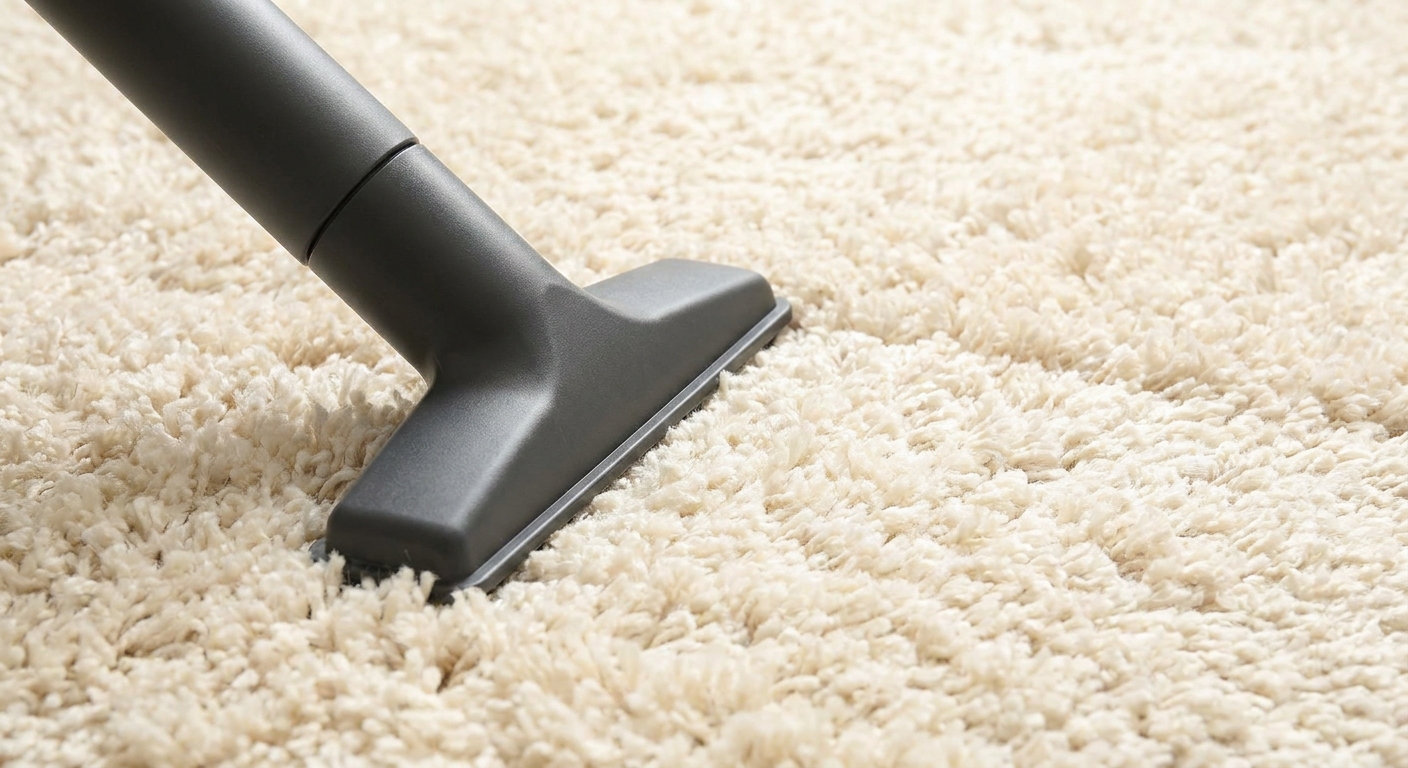
- Glide lightly. Use the edge of the nozzle and don’t mash the head down into the pile.
3) Use the “float” method for extra fluffy results
For rugs that look a little tired, do a second pass with minimal downward pressure. Let the head float over the pile so suction does the work, without compressing the fibers.
4) Don’t forget the underside and the floor
Debris tends to settle deep at the base of the pile and can work down toward the backing. If the rug is movable, flip it and vacuum the backing, then vacuum the floor beneath. Less grit underneath means less grinding at the base of the fibers.
Low-moisture spot cleaning (the shag-safe approach)
With shag, moisture is a fluff thief. You want to clean the spill, not drench the rug.
What you need
- White microfiber cloths or paper towels
- A bowl of cool water
- A tiny amount of mild dish soap (no bleach, no heavy degreasers)
- A spoon for mixing
- A soft brush or a clean hairbrush (for fluffing once dry)
- Optional: a handheld fan or a hair dryer on cool
Step-by-step: blot, don’t scrub
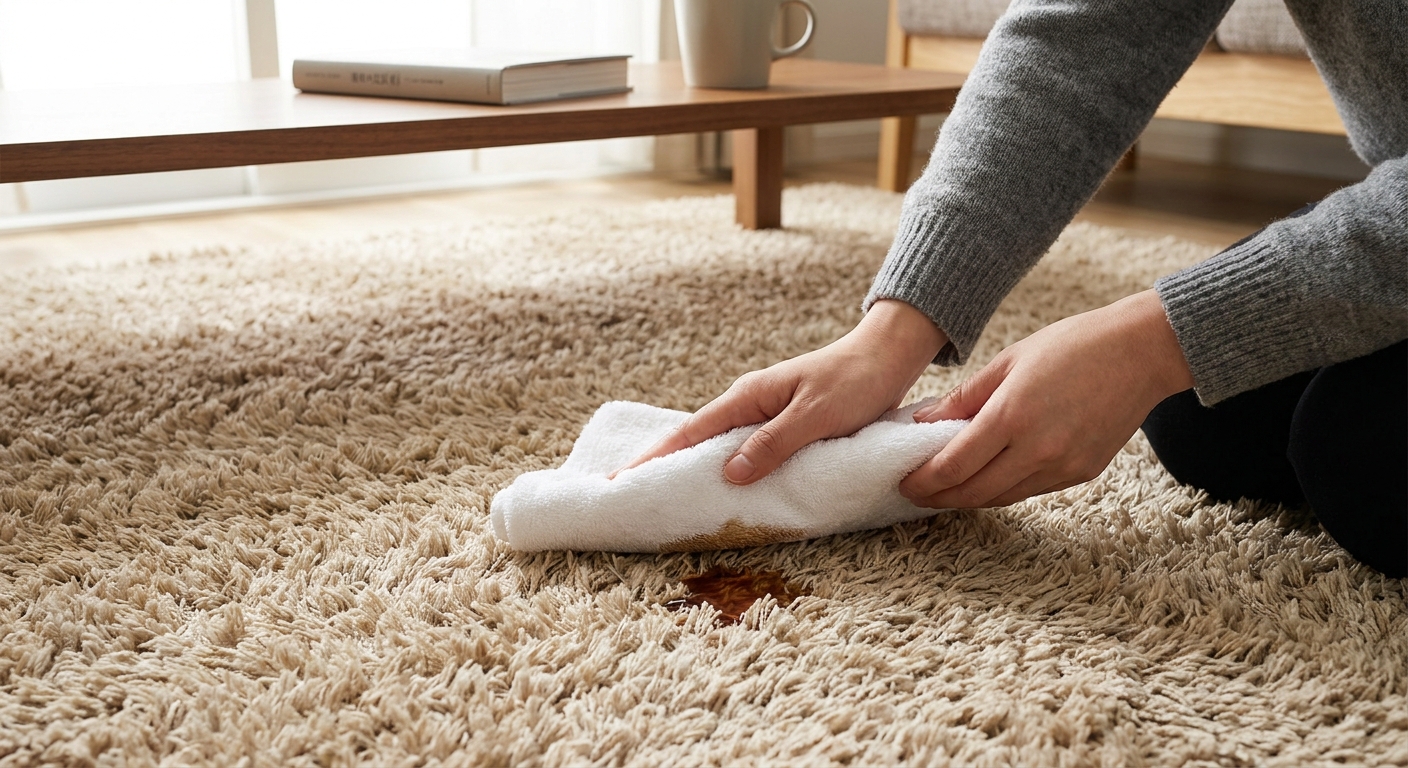
- Blot immediately. Press straight down, lift, repeat. Don’t rub.
- Mix a gentle solution: 1 to 2 cups cool water with a few drops of dish soap.
- Dampen, don’t soak: lightly wet a cloth, wring it out hard, then dab the stain from the outside in.
- Rinse-dab: dab with plain water using a clean cloth that’s wrung out well.
- Dry by pressing: put a dry towel over the spot and press to pull out moisture.
Ring prevention tip: after you’ve treated the center, lightly feather your rinse-dab just beyond the stain boundary, then towel-press. That soft edge helps prevent water lines.
Once the area is fully dry, fluff the fibers gently with your fingers or a clean brush.
Velvet Abode rule: if your cleaning cloth is dripping, your shag is about to have a bad day.
Renter-friendly spill fixes
If you rent, you need methods that are effective, gentle, and unlikely to leave behind rings or crunchy residue. Here are my go-tos.
Red wine
- Blot immediately.
- Dab with cool water (wrung-out cloth) to dilute.
- Use a tiny amount of dish soap solution to lift remaining color.
- Rinse-dab, then towel-press dry.
- Dry fast with a fan so the pile doesn’t collapse.
Coffee or tea
- Blot, then dab with cool water.
- Use dish soap solution sparingly.
- Rinse-dab thoroughly to avoid sticky residue that attracts dirt.
Grease or oily food
- Lift solids with a spoon.
- Blot with a dry cloth.
- Apply a small amount of baking soda or cornstarch to the spot, let it sit 15 to 30 minutes to absorb oil, then vacuum gently (no brush roll if possible).
- Follow with minimal dish soap solution only if a mark remains, then rinse-dab and dry.
Mud
- Let it dry fully. This feels wrong, but it’s right.
- Once dry, gently break up the mud with fingers and vacuum in the direction of the pile.
- Spot clean any remaining discoloration with minimal water.
Pet accidents
- Blot first, thoroughly. Use multiple towels. Your goal is to remove as much liquid as possible before you add anything.
- Rinse-dab with cool water (wrung-out cloth), then blot again.
- Use an enzymatic cleaner made for pet urine on carpets and rugs, following the label exactly. This is the part that actually breaks down the proteins and uric acid that dish soap can’t fully handle.
- Keep it low-moisture: apply to your cloth first when possible, dab from the outside in, and avoid saturating the base.
- Dry fast with airflow. Keep pets and shoes off the area until it’s completely dry.
Important: if the accident soaked through into a rug pad or the backing, odor can get trapped underneath. Lift the rug to dry the underside if you can, and consider replacing the pad if it’s holding the smell.
Note: if odor persists after enzyme treatment and fast drying, that often means moisture reached the base or padding. That’s a good moment to call a pro, because lingering odor can turn into a permanent memory in the fibers.
How to dry a shag rug so it stays fluffy
Drying is where matted pile is born. The two big mistakes are leaving the rug damp for too long and walking on it while it’s still drying.
Do this instead
- Press, don’t rub with dry towels to pull out moisture.
- Increase airflow: open windows, turn on ceiling fans, aim a small fan across the surface.
- Speed up carefully: if you use a hair dryer, keep it on cool or low heat and keep it moving.
- Lift the pile as it dries: gently separate clumped strands with fingers once the area is just barely damp, then let it finish drying untouched.
Avoid
- Heat blasting one spot for too long (can distort synthetic fibers or shrink some backings).
- Closing the room up to “let it dry overnight.” Trapped humidity is matting’s best friend.
- Setting heavy objects on a damp area.
Deep cleaning at home
Most shag rugs do best with frequent gentle vacuuming plus quick spot cleaning. Full-on washing is where things can go sideways.
If you’re considering a carpet cleaner
- Check the manufacturer guidance first. Some shag rugs and many viscose or specialty blends shouldn’t be wet-cleaned.
- Use the lowest moisture setting you can.
- Do a test patch in a hidden area.
- Make fewer passes. Over-wetting is the biggest risk.
- Extract as much water as possible, then dry fast with airflow.
Backing note: some latex or glued backings don’t love heavy moisture. Water can also get trapped between rug and pad, so if you’ve had a bigger spill or cleaning session, lift an edge and let the underside breathe while it dries.
A safer refresh: powder-and-vacuum
For a light refresh between deeper cleanings, sprinkle a small amount of baking soda, let it sit 15 to 30 minutes, then vacuum gently. It’s not a miracle, but it can help with mild odors without soaking the pile.
How to fluff a shag rug after cleaning
If your rug looks slightly flattened after cleaning, don’t panic. Most pile can bounce back with a little coaxing.
- Finger rake: use your hands to lift and separate fibers in small sections.
- Soft brush: a clean, gentle hairbrush can help loosen clumps once the rug is completely dry.
- Suction-only pass: vacuum in the direction of the pile to lift without tangling.
Give it a day. Shag often looks better after it’s fully dried and relaxed back into place.
When to call a professional
Professional cleaning isn’t a design-world flex. Sometimes it’s the cheapest way to avoid replacing a rug you love.
- Large spills that soaked deep into the pile or padding.
- Persistent odor after careful blotting, enzyme treatment (for urine), and fast drying.
- Natural or delicate fibers like wool shag, viscose, or anything “silky,” where moisture can cause distortion, browning, or sheen changes.
- Vintage or heirloom rugs, especially if colors aren’t colorfast.
- Visible rippling, backing issues, or shedding that seems to worsen with cleaning.
When you book, ask whether they’ve handled high-pile or shag specifically, and what their drying process looks like. Fast, controlled drying is the whole game.
Quick routine
- Weekly: vacuum suction-only (or brush roll off) in the direction of the pile.
- Monthly: rotate the rug if it’s in a traffic path, and vacuum the underside and floor if possible.
- As needed: spot clean immediately using low moisture, then dry fast.
If you do just one thing, do this: turn off the beater bar and keep water to a minimum. Those two choices alone prevent most of the matting heartbreak.
FAQ
Can I use vinegar on a shag rug?
Sometimes, cautiously, and mostly on colorfast synthetics. Vinegar can shift color in some dyes and the smell can linger in thick pile, so it isn’t my first choice. If you try it, do a hidden test spot, use minimal moisture, rinse-dab with plain water, and dry quickly. Also, never mix vinegar with bleach products. For pet urine, an enzymatic cleaner is usually the better move.
Why does my shag rug feel crunchy after spot cleaning?
Usually residue. Too much soap or not enough rinse-dabbing leaves a film that dries stiff and attracts dirt. Re-dab with plain water (wrung out well), towel-press dry, then fluff once it’s fully dry.
Is steam cleaning safe for shag?
Steam and hot-water extraction can over-wet high pile and slow drying, which is where matting happens. Some manufacturers do allow professional hot-water extraction with controlled moisture and strong extraction, but DIY steamers can be risky. If your rug is valuable, delicate, or the stain is large, professional cleaning is often the safer option.