New Rug Arrived Damp and Musty? Do This First

Clara Townsend
The best rugs have a way of changing a room in ten seconds flat. So when you slice open that delivery box and get hit with a damp, basementy smell, it is such a mood-killer.
I have styled enough rentals and fixer-uppers to know this: “new rug smell” is one thing, but a rug that feels damp or smells musty out of the box is another. Musty usually means moisture got trapped somewhere in shipping or storage, and time matters because mildew can start to develop quickly depending on how wet the rug is, the backing, and the humidity in your home.
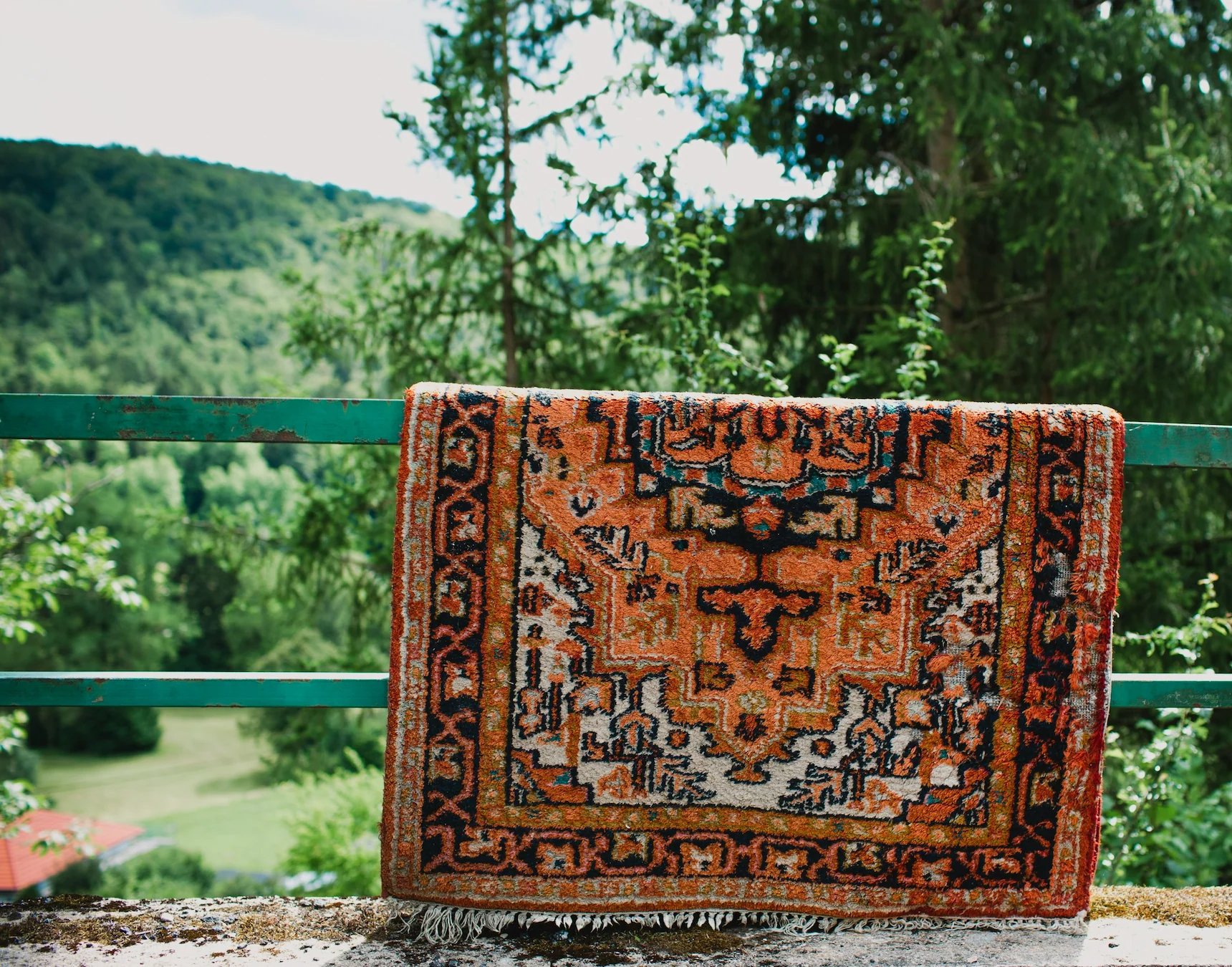
First, decide: refuse, return, or dry?
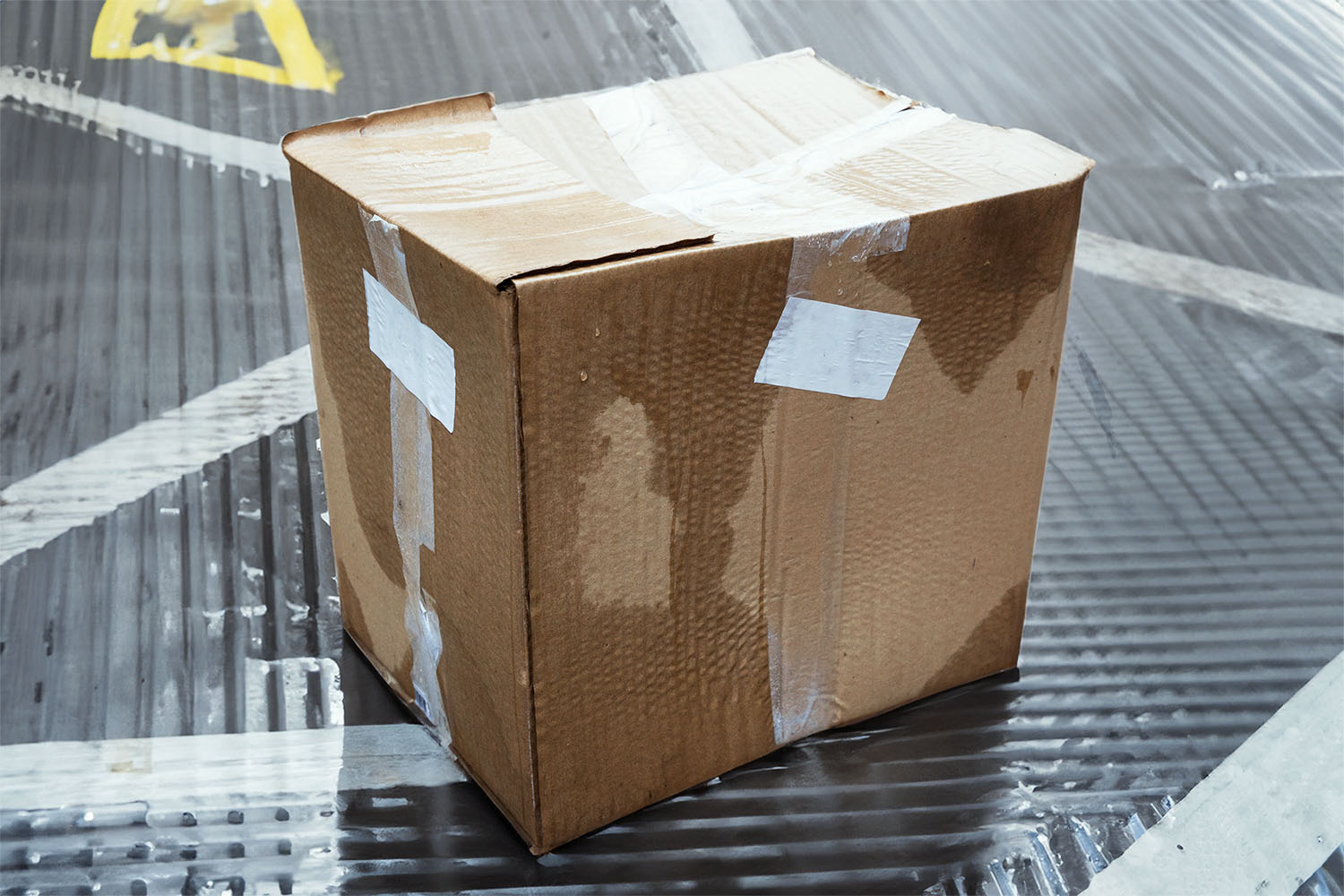
Before you do anything else, check the condition of the outer packaging and the rug itself. This quick triage helps you decide whether to refuse delivery, start a return, or attempt careful drying.
Refuse delivery (best option) if you notice:
- Box is visibly wet, collapsing, or has water stains that seep through to inner wrapping.
- Active water inside the plastic, or water drips when you tilt the roll.
- Strong mildew smell right away, plus damp rug backing or fibers.
- Visible mold (spots, fuzzy growth) on the rug, inner wrap, or cardboard core.
If you can refuse at the door, do it. It is much easier than trying to prove later that moisture damage happened before it entered your home.
Mold safety note: If you see visible mold, do not shake it out or vacuum it indoors. Keep it contained (plastic bag or wrap it back up carefully), move it to a ventilated area if you can do so without spreading debris, and contact the seller for a return or replacement.
Start a return or replacement if:
- The rug is damp in multiple areas or the backing feels wet or tacky.
- The musty odor persists after 24 to 48 hours of proper drying and airflow (timing varies with humidity and how saturated the rug is).
- You see any discoloration, wavy rippling that does not relax as it dries, or bleeding dyes.
- You have allergies, asthma, or kids and pets who will be on the rug daily. In that case, do not gamble on “maybe it will be fine.”
Dry it at home only if:
- The box is mostly intact and dry, and the rug feels only slightly cool or mildly damp, especially near the outer layers of the roll.
- The smell is mild and reads like “stored in a warehouse” rather than “something is growing.”
- You can dry it fully off your wood floors with strong airflow.
Important: If you plan to seek a return, take photos immediately, including the shipping label, any wet spots on the carton, inner packaging, and close-ups of the rug backing and pile.
Musty vs chemical: what are you smelling?
A lot of people panic at any odor from a new rug. But there are two common “new rug” situations, and they call for different fixes.
Factory odor (off-gassing) usually smells like:
- Plasticky, rubbery, or “new shower curtain”
- Latex or adhesive
- New paint or varnish
This is common with synthetic fibers, rug backings, and packaging. It is usually strongest in the first day or two and improves with ventilation.
Transit moisture or mildew smells like:
- Damp towels left in a heap
- Basement, wet cardboard, or old book smell
- Earthy, sour, or “funky” air
Musty odor is your clue that water got into a sealed box. Even if the rug is technically “new,” moisture in transit can turn into a mildew problem quickly, especially if the rug was rolled tight in plastic.
Keep it off your floors
This is the part I say in my bossiest stylist voice: keep that rug off your floors until it is fully dry.
Moisture trapped under a rug can:
- Stain or cup hardwood and damage finishes
- Warp engineered wood and swell seams
- Cause issues with LVP by trapping moisture at seams or edges and creating odor, hazing, or underlayment and adhesive problems (depending on the product and what is underneath)
- Create odor and mildew in wall-to-wall carpet and pad
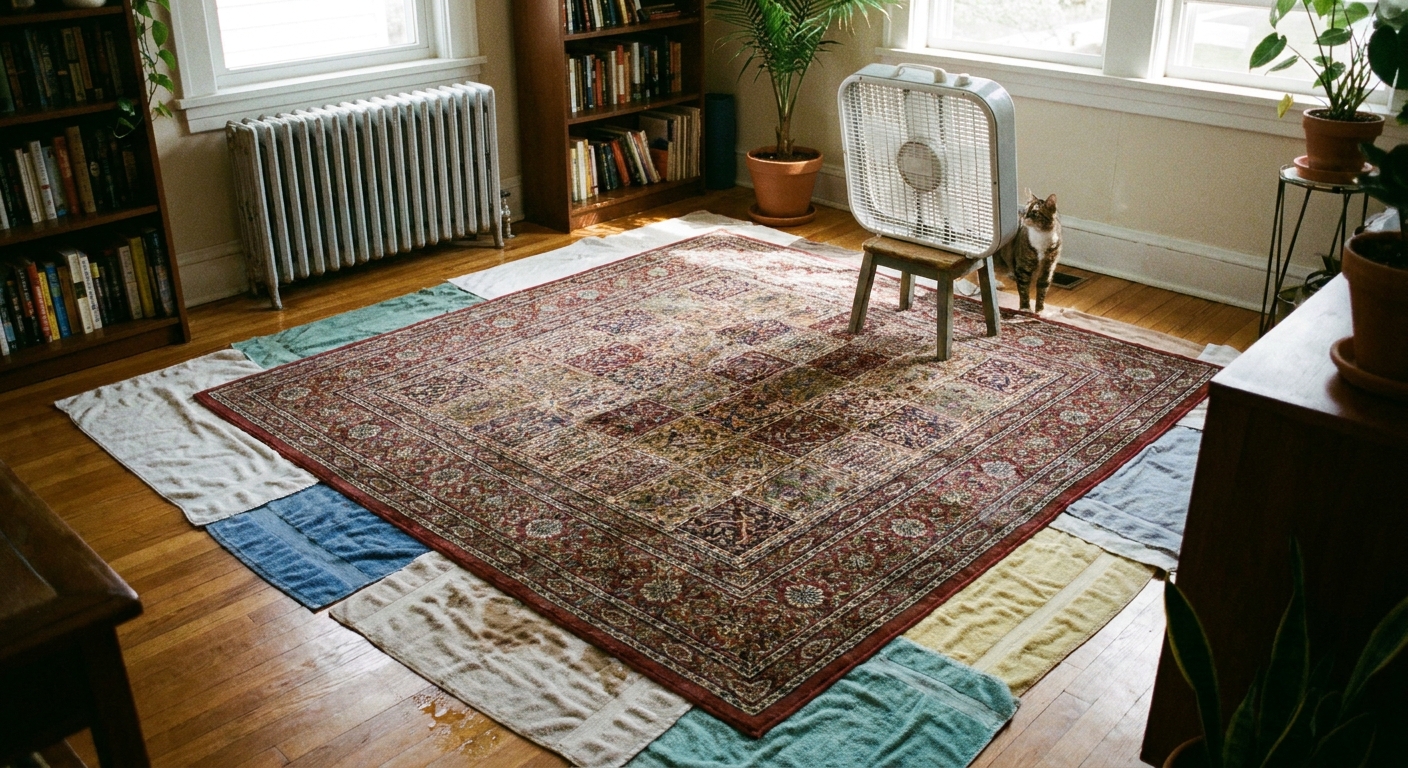
If you only have one space to open it, create a barrier first. Think: towels, a waterproof layer, then breathable support so air can move.
How to dry it safely
Drying is about two things: airflow and time. Heat can help, but too much heat can also set stains, distort some backings, or cause rippling.
Before you use anything on the fibers: check the care label or the manufacturer instructions. If your rug is delicate (viscose, “silk” blends, specialty dyes), even common household approaches can be risky.
Step 1: Unroll it now
The tight roll is the enemy. Unroll the rug as soon as you can so moisture does not stay trapped in the layers.
Step 2: Pick a safe drying spot
- Best: garage, covered patio, enclosed porch, or a tiled room with good ventilation.
- If indoors: lay down a waterproof drop cloth or plastic sheet, then place thick towels on top of it. Put the rug on the towels.
Avoid direct contact with wood floors, and avoid leaving plastic directly against the rug backing for long periods since it can trap moisture. The goal is protection plus breathability.
Step 3: Blot, do not scrub
If you see damp patches, press clean towels into them and lift. Scrubbing can fuzz fibers and push moisture deeper.
Step 4: Move air on both sides
- Set up a fan to blow across the rug surface.
- If possible, flip the rug after a few hours and fan the backing side.
- If it is a thick pile rug, gently lift and “tent” a section over a chair or drying rack for a bit so air can reach underneath, then lay it flat again.
Step 5: Add dehumidifying
If you are in a humid climate or it is raining outside, run a dehumidifier in the room. This can be the difference between “dry by bedtime” and “still musty tomorrow.”
Step 6: Use a simple dampness test
If you are debating whether it is truly damp or just cool from transit, try this:
- Paper towel press: press a dry paper towel firmly onto the rug and backing for 15 to 30 seconds. If it comes away damp, treat the rug as wet and keep drying.
- Optional upgrade: a moisture meter (the kind used for floors) can help you avoid guessing, especially with thick backings.
Step 7: Plan a realistic window
Light dampness often improves within 8 to 24 hours. Thicker rugs or wet backings can take 24 to 72 hours depending on airflow and humidity. If you are still getting a true mildew smell after about two days of good airflow, that is a strong argument for returning it.
Large rug problem: if you cannot flip it
If the rug is too big to flip solo, you still have options:
- Use two fans from different angles to move air across the surface.
- Fold back in sections (like turning a page) to expose the underside, then rotate which section is lifted every couple of hours.
- Elevate the rug slightly on clean, dry supports so air can reach underneath, then move the supports around as it dries.
Deodorize without making it worse
When a rug arrives musty, the temptation is to throw every scent product you own at it. Resist. Your job is to remove moisture and odor, not perfume over it.
What helps (low risk)
- Fresh air and sun, briefly: A couple hours of indirect sun can help, but avoid baking it all day, especially if it is wool, dyed, or has a latex backing.
- Baking soda, once the rug is fully dry to the touch: Lightly sprinkle, let sit 4 to 8 hours, then vacuum thoroughly. If the care label warns against powders, skip this.
- Activated charcoal nearby: Place a charcoal bag or open container of activated charcoal in the same room. It can help clean up odor in the air, but it will not magically remove odor that is still embedded in damp fibers.
What to avoid
- Soaking with vinegar or water on a new rug you may return. You can create dye issues, shrinkage, or backing damage.
- Steam cleaning a brand-new rug that arrived damp. You are adding more moisture.
- Heavy fragrance sprays. They often leave residue that attracts dirt and can be very hard to remove from rug fibers and backings.
Material notes
Because rugs are a whole world of their own, material matters when you are deciding how brave to be.
Wool
Wool is naturally odor-retentive when damp, but it also hates being stored wet. Prioritize fast drying and airflow. Avoid harsh chemicals or long periods in direct sun.
Jute, sisal, seagrass
These are the least forgiving when they arrive damp. Natural plant fibers can discolor, stiffen, or develop a persistent musty smell. I lean toward returning if a natural fiber rug is clearly damp out of the box.
Synthetic (polypropylene, polyester)
Synthetics are often more tolerant of a little transit dampness, but the backing can still trap moisture. They can also have stronger factory odor, so use the smell test: chemical is one thing, mildew is another.
Viscose or bamboo silk
These can watermark and show shading easily. If it arrived damp, document it and consider a return unless it is extremely minor and you can dry it quickly and evenly.
What to document for a claim
If there is any chance you will return the rug, treat your phone like your witness.
- Photo of the box on arrival, including any dents, punctures, or wet areas
- Close-up of shipping label
- Photo of inner packaging, especially if damp
- Photo of rug backing and edges right after unrolling
- Short video showing dampness or water droplets, if present
- Notes: delivery date, when you opened it, and what it smelled like
FAQ
How long should I wait before deciding it is mildew?
If you unrolled it right away and gave it solid airflow, you should often notice improvement within 24 hours. If it smells just as musty after around 48 hours of good drying conditions, or you see spotting, I would stop troubleshooting and start the return process. Wetter rugs, humid rooms, and dense backings can all stretch the timeline, but they also increase risk.
Can I put it outside to dry?
Yes, with a little care. Choose a dry day, keep it off wet grass, and avoid leaving it in intense direct sun for long stretches. A covered patio with moving air is ideal.
Is it normal for a rug to feel cool or slightly damp from the box?
Coolness can be normal from temperature changes in transit. True dampness feels like moisture in the fibers or backing, or you can detect it with a paper towel press test. If the towel picks up moisture, treat it as a damp rug.
What if the rug smells musty but does not feel damp?
It can still be from humidity trapped during shipping. Unroll it, ventilate aggressively, and reassess the next day. If the smell persists or intensifies, that is your cue to return it.
Can I lay it on a rug pad to protect my floor while it dries?
Not if there is any moisture. Rug pads can trap dampness against the floor, which is exactly what you are trying to avoid. Dry it fully first, then introduce the pad.
My rule of thumb
If a rug arrives damp and musty, I treat it like produce. You do not want to “wait and see” in a dark corner.
Unroll it immediately, keep it off your floors, get airflow going, and give it a day or two to prove it is improving. If it cannot, you deserve a replacement that starts its life in your home clean, dry, and ready for bare feet.