New Area Rug Smell and Off-Gassing

Clara Townsend
Clara Townsend is an interior stylist, vintage furniture enthusiast, and the creative voice behind Velvet Abode. With over a decade of experience transforming both cramped city apartments and sprawling fixer-uppers, she believes that a beautiful home is built on personal stories rather than massive budgets. When she isn't hunting for the perfect brass sconce at a local flea market, she can usually be found rearranging her living room for the third time this month.
If you have ever unrolled a brand-new rug and thought, Oh no, my living room smells like a shipping container, you are not alone. That “new rug smell” is usually a mix of trapped packaging odors and something called off-gassing , which sounds scary but is often just the rug releasing small amounts of leftover manufacturing and finishing compounds into the air.
The good news: in most cases, it fades quickly with the right setup. The better news: you do not need to do anything wild with harsh sprays or soaking your rug to get there.
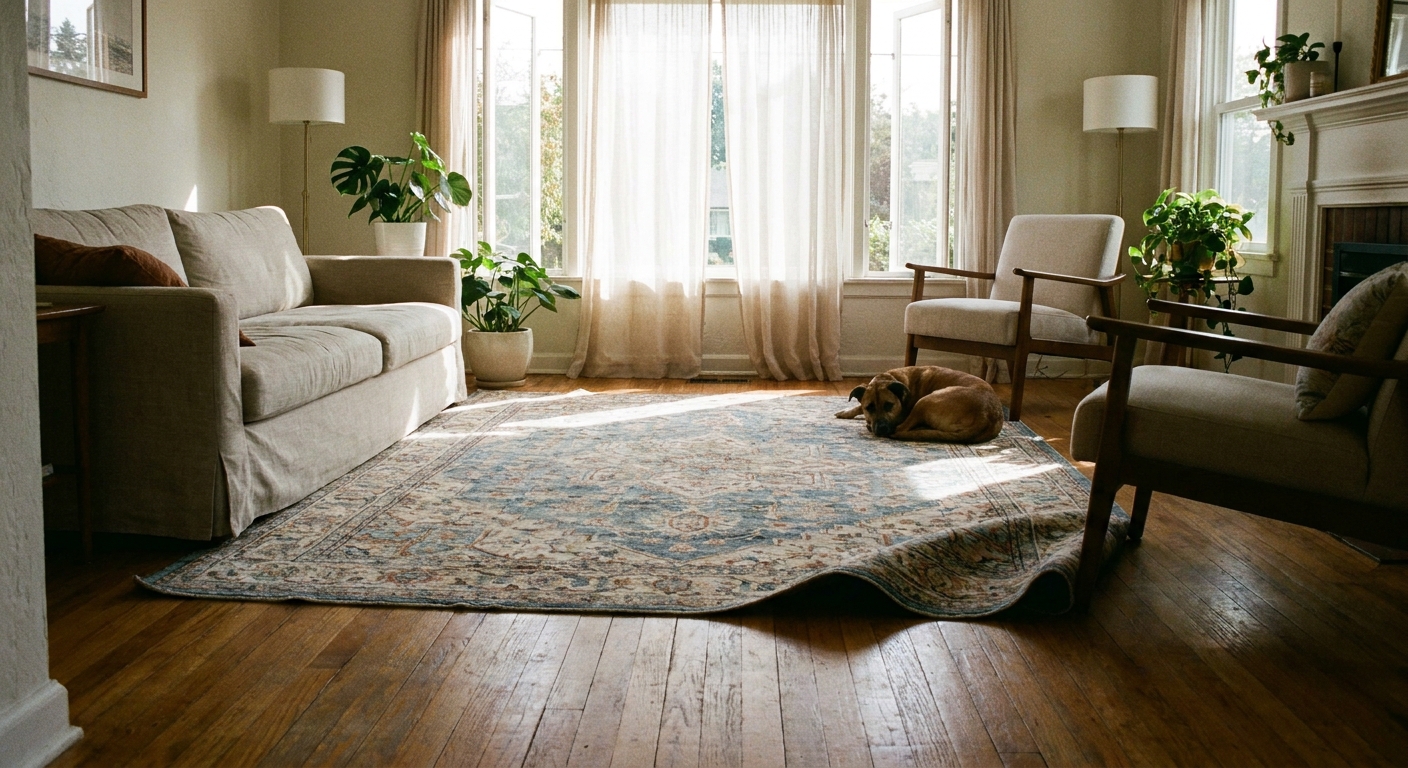
Why new rugs smell
A new rug can smell for a few overlapping reasons. Knowing which one you are dealing with helps you pick the lowest-risk fix.
1) Synthetic backings and adhesives
Many modern rugs use latex, rubber, or synthetic adhesive systems to hold the backing together, attach a non-slip layer, or secure the fibers. These materials can release VOCs (volatile organic compounds) at low levels, especially right after unwrapping, but levels vary widely by brand, materials, and any third-party certifications.
2) Dyes, stain treatments, and finishing agents
Some rugs are treated for stain resistance, water repellency, or colorfastness. Even when these finishes are industry-standard, they can have a noticeable odor while they dissipate and air out.
3) Shipping wrap and warehouse smells
Plastic wrap, tight rolling, and long transit times can trap odors like a time capsule. Sometimes the smell is less “chemical” and more like plastic, cardboard, or a musty warehouse. That is often the easiest type to fix with simple ventilation.
4) Natural fibers can smell, too
Wool and jute rugs can have an earthy, barn-like, or grassy scent at first. That is not necessarily off-gassing in the chemical sense. It is often lanolin in wool or the natural aroma of plant fibers, plus humidity picked up during shipping.
Off-gassing, explained
Off-gassing is the slow release of tiny amounts of compounds into the air from new materials. It is common with lots of home items: paint, mattresses, sofas, vinyl flooring, and yes, some rugs.
Most rug odors fade as air movement carries the compounds away and the most volatile compounds dissipate. Your job is to speed up that process without damaging the rug or adding new fumes on top of the old ones.
If the smell makes your eyes water, triggers headaches, or causes coughing, treat it as a “pause and reassess” moment. A normal new rug smell can be noticeable. It should not feel like you are breathing in a solvent.
If symptoms are severe, persistent, or escalating, consider checking in with a clinician. And if your home suddenly smells “chemical” in a way that does not track with the rug, rule out other causes (like a gas issue) before you blame the decor.
Ventilation schedules
Think of airing out a rug like airing out a winter coat that has been in storage. Fresh air and time do most of the heavy lifting. Here are simple schedules that fit real life.
The first 2 hours
- Unwrap the rug outdoors if you can (patio, balcony, garage with door open). Dispose of plastic wrap right away so it is not continuing to stink up the space.
- Let the rug breathe flat if possible. If you must keep it rolled, unroll it loosely so air can reach more surface area.
- Open windows in the room where the rug will live, even if the rug is not in there yet. Start exchanging the air.
The first 24 hours
- Cross-ventilate: open windows on opposite sides of the home to create a gentle draft.
- Add a fan aimed across the rug (not directly down into the fibers). Air movement helps odors disperse faster.
- Keep HVAC circulating if you have it. A clean filter helps. If your system has a “fan only” mode, running it can help move air throughout the home.
Days 2 to 7
- Ventilate for 30 to 60 minutes twice a day if weather allows.
- Rotate the rug once during the week so the underside and edges get equal airflow.
- Vacuum gently (with suction only, no beater bar on delicate or looped rugs) to remove loose fibers and dust that can hold smells.
If you live somewhere very humid, prioritize airflow (fans, dehumidifier) over simply opening windows. Damp air can make odors linger longer.
Outdoor airing note: Avoid leaving rugs outside in damp weather, fog, or overnight dew. Moisture can trade a “new rug smell” for a musty one.
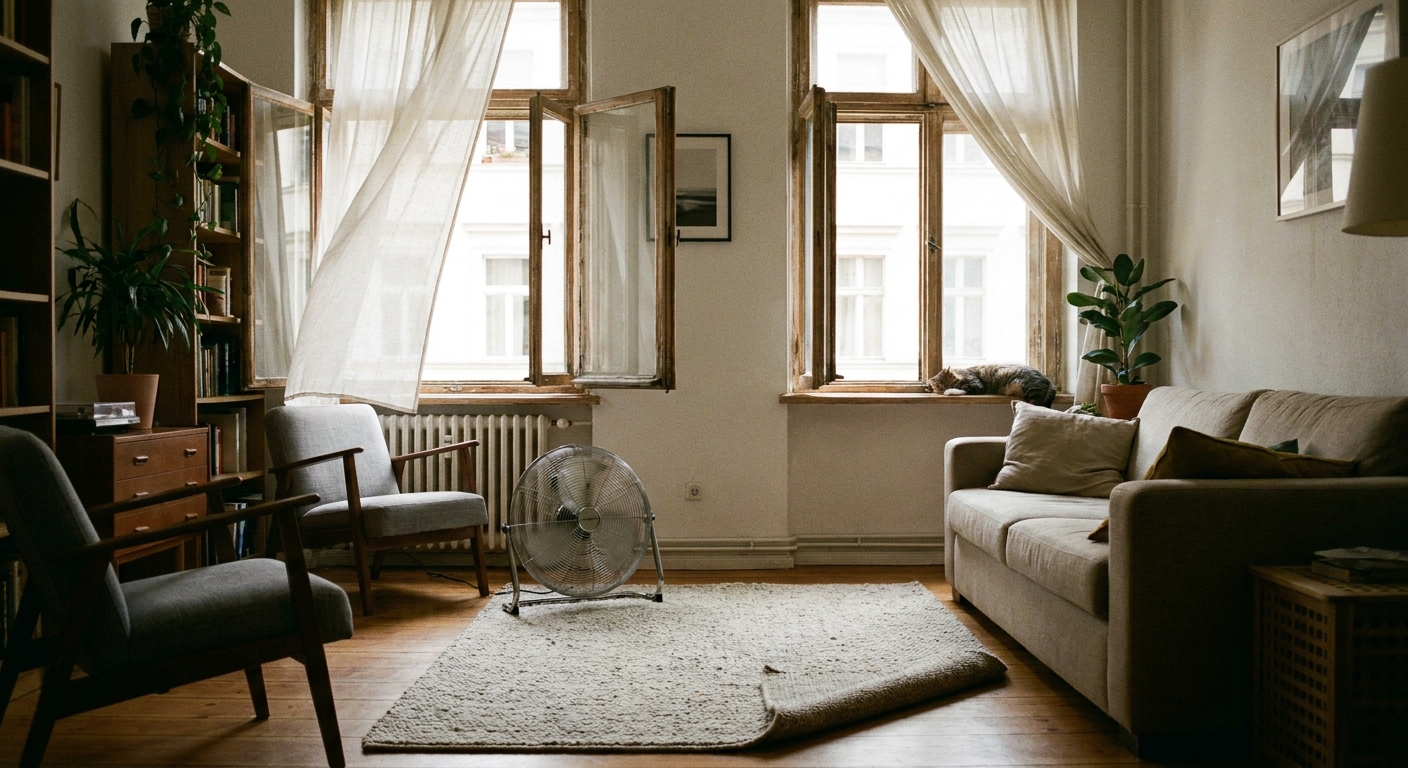
Placement tips
If you have one main room and the rug is for that room, you might not have the luxury of banishing it for a week. These placement tricks help reduce how much you notice the smell while it fades.
- Start in a low-traffic, well-ventilated spot for 24 to 48 hours. A spare room with windows, a covered porch, or a garage with the door cracked open works well.
- Avoid intense heat and direct sun through glass like south-facing windows, radiators, and fireplaces. Heat can increase odor release, and strong sun can fade or discolor some fibers.
- Do not trap the smell by placing the rug immediately under a heavy coffee table with no airflow. Let it breathe for a day, then style it fully.
- Use an appropriate rug pad . Some inexpensive PVC or strong rubber pads have their own odor. If you are sensitive, look for low-odor felt and natural rubber blends, or pads labeled low-VOC.
Kids and pets
My rule of thumb is simple: if you can smell it clearly, your smaller family members are closer to it than you are.
When it is usually fine
- Mild “new” scent that is noticeable only when you are right on top of the rug.
- Improving day by day with ventilation.
- No irritation symptoms for anyone in the home.
Extra caution timing
- If you have babies who crawl, I would aim to air out the rug for 48 to 72 hours before letting them spend long stretches on it.
- If you have pets who nap nose-down on rugs, keep the rug in a well-ventilated room and encourage a different nap spot for the first few days.
- If anyone in the household has asthma, migraines, or chemical sensitivities, extend the airing-out period and prioritize strong ventilation plus airflow.
If you cannot air it out elsewhere, set up a “fresh air lane” in the room: open two windows (or a window and door) and run a fan across the rug for a couple of hours while kids and pets are in another room.
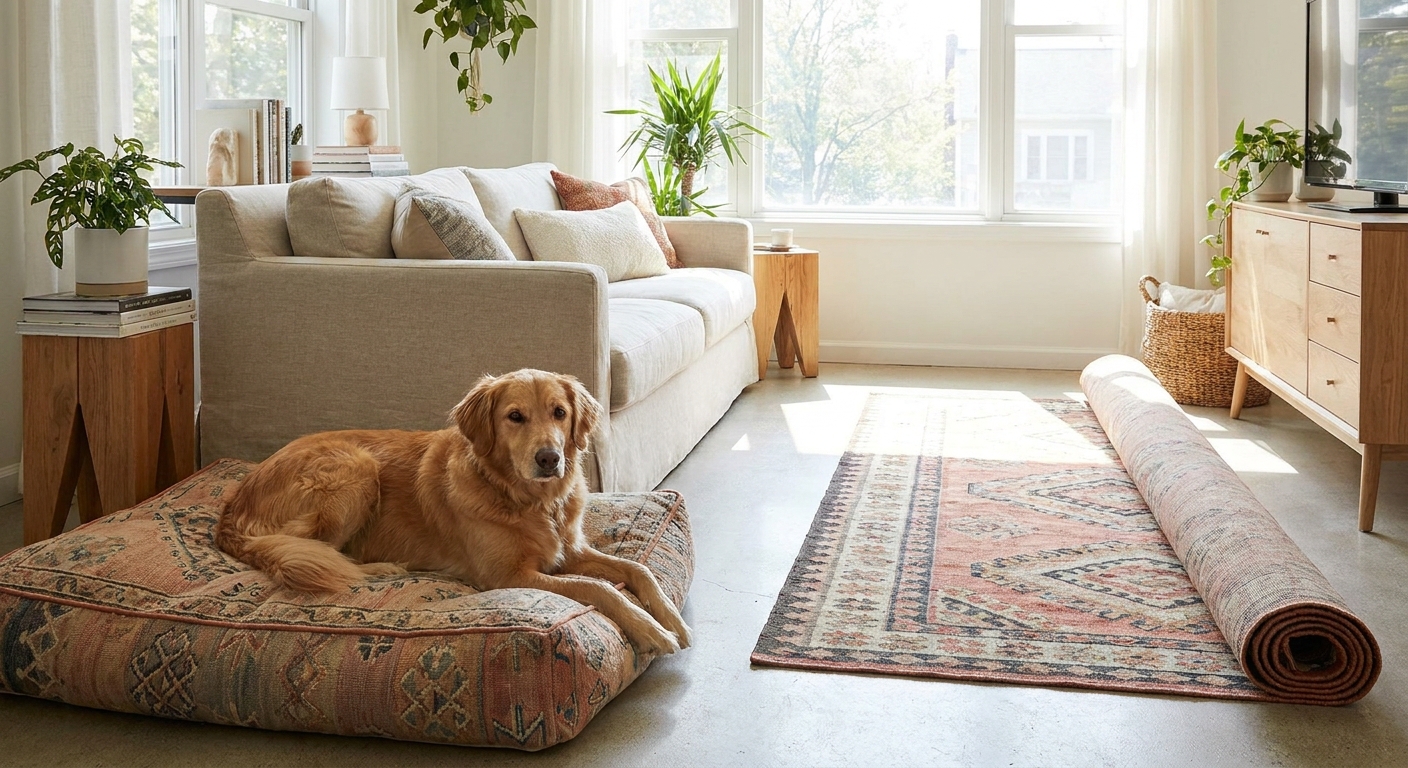
Fiber notes
Not all rug smells come from the same place, and not all fibers should be treated the same way. Here is what to expect and what to avoid.
Wool rugs
What the smell is: Wool can smell “sheepy,” warm, or slightly barn-like due to natural lanolin and the way wool holds onto humidity from shipping.
- Best fix: Airflow, gentle vacuuming, and time. Wool responds beautifully to fresh air.
- Avoid: Over-wetting, steam cleaning right away, or heavy deodorizing powders. Wool can hold onto moisture and develop a musty smell if it does not dry quickly.
- Helpful tip: If the scent is earthy (not chemical), a dry, breezy day is your best friend. Lay it flat indoors near open windows or in a shaded outdoor spot.
Jute rugs
What the smell is: Jute often smells grassy, like dried hay or burlap. It can also smell musty if it absorbed moisture in transit.
- Best fix: Dry air, airflow, and keeping it away from damp basements or steamy bathrooms.
- Avoid: Water-based cleaning or “rinse it off” solutions. Jute hates moisture and can stain, warp, or mildew.
- Helpful tip: Use a dehumidifier in the room for a couple of days if you live in a humid climate. Jute odor improves dramatically when the fiber dries out.
Polypropylene rugs (and other synthetics)
What the smell is: Polypropylene is often relatively low-odor, but the backing, binding, dyes, and finishing treatments can create that classic “new plastic” scent.
- Best fix: Ventilation plus airflow. If weather is mild, airing it outside in the shade for several hours can knock the smell down quickly.
- Avoid: Spraying fragrance to cover the smell. It often becomes “chemical plus perfume,” which is not exactly relaxing.
- Helpful tip: Check your rug pad. Sometimes the pad is the real culprit, especially if it is new and rubbery.
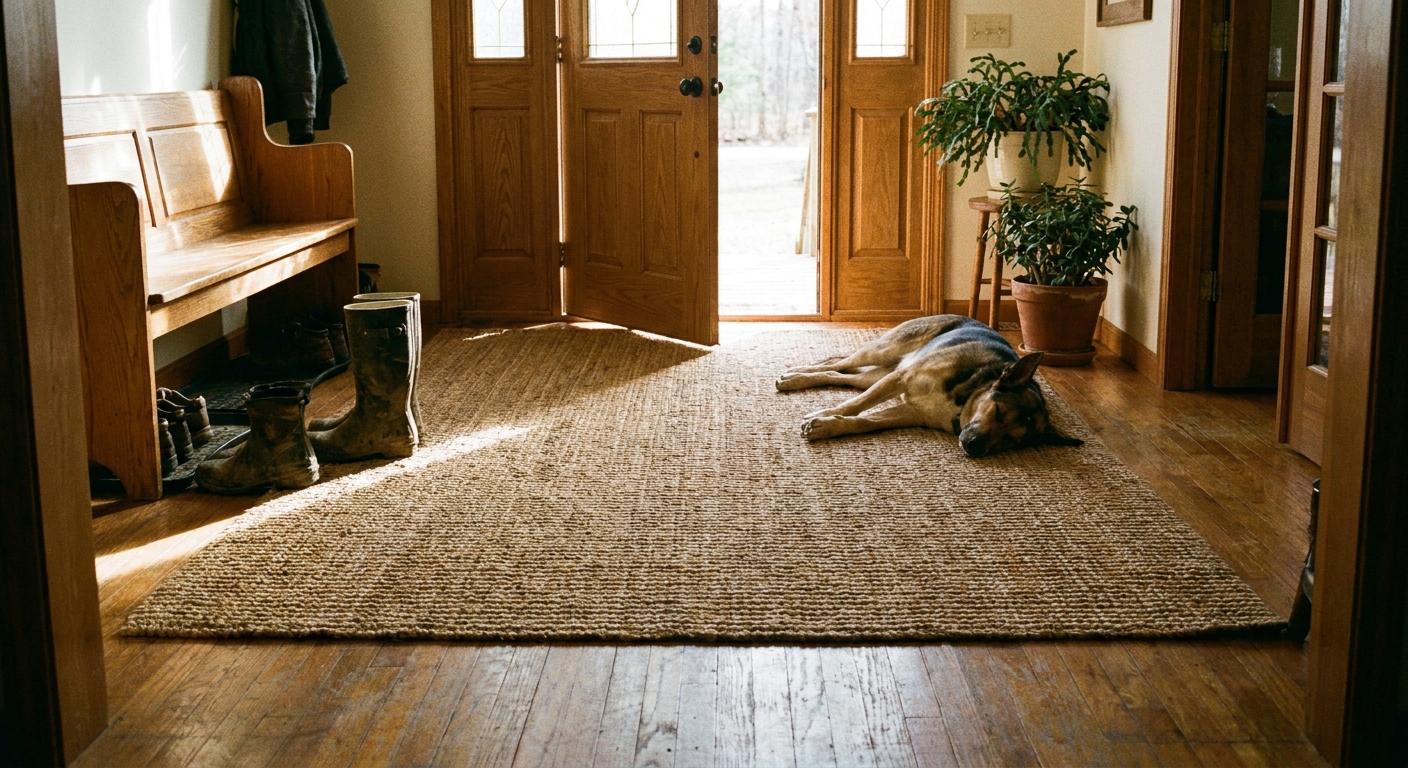
Odor reducers
Do: gentle options
- Fresh air and fans: boring, effective, low-risk.
- Vacuum: removes packaging dust and loose fibers that can hold odor.
- Activated carbon air purifier: If you cannot open windows (winter, wildfire smoke, apartment life), an air purifier with a true activated carbon or carbon pellet filter can help scrub odors and some VOCs from the air. Put it in the same room and keep doors as closed as practical so it can actually do its job.
- Activated charcoal nearby: A mild helper for some households. Place an open container near the rug (not on it) to absorb ambient odors without adding fragrance.
- Baking soda, used carefully: If your rug is sturdy and not a delicate antique, you can sprinkle a light layer, let sit for 30 to 60 minutes, then vacuum thoroughly. Patch test first. Go easy on high-pile rugs since powder can be harder to remove, and overuse can dull the look of some fibers. Some manufacturers also discourage powders, so if you have warranty language, it is worth a quick check.
Skip: advice that backfires
- Soaking, hosing down, or steam cleaning a brand-new rug : moisture can lock in odors, loosen backing adhesives, or cause rippling and mildew.
- Vinegar sprays: can leave their own lingering smell and is not ideal for some dyes and natural fibers.
- Heavy “odor eliminator” sprays: many are fragrance plus solvents. If you are trying to reduce chemicals, adding more usually is not the win.
Labels and certifications
If you are sensitive to smells or you are shopping with off-gassing in mind, take 60 seconds to check the label or listing. Certifications are not magic, but they can be a helpful signal that a product has been tested for certain emissions.
- GREENGUARD or GREENGUARD Gold: indicates testing for chemical emissions, often used for indoor air quality-conscious shoppers.
- OEKO-TEX: focuses on harmful substances in textiles (helpful, but not the same thing as “no odor”).
- CRI Green Label Plus: common in the carpet world, indicating low emissions testing for certain products.
Even with certifications, a rug can still smell “new” from packaging and transit. Think of certifications as “lower-likelihood of strong emissions,” not a guarantee of zero scent.
Normal smell vs return
A break-in period is normal. A truly alarming smell is your cue to stop troubleshooting and protect your space.
Normal break-in smell
- Smell is strongest right after unwrapping, then noticeably improves within 48 to 72 hours.
- Odor is “new plastic,” “warehouse,” or “earthy,” but not harsh or burning.
- No oily residue, damp spots, or visible discoloration.
Red flags
- Odor is not improving after 7 to 10 days with solid ventilation and airflow.
- Smell is sharp, solvent-like, or makes you feel unwell (headache, nausea, throat irritation) even after you move it to a ventilated area.
- Visible issues like sticky backing, oily film, or persistent dampness that does not match your home’s humidity.
- Musty smell plus signs of moisture after delivery (damp packaging, clammy backing). This can suggest the rug was stored or shipped wet.
If you do decide to return it, take photos of packaging, tags, and any backing residue. Also note the dates you aired it out and what you tried. Customer service goes much faster when you can say, “I ventilated it with open windows and fans for 10 days and the odor did not change.”
Quick-start checklist
If you want the simple plan without overthinking it, here it is.
- Unwrap and dispose of plastic immediately.
- Air out with cross-ventilation and a fan for the first day.
- If you cannot open windows, run an activated carbon air purifier in the room.
- Vacuum gently on day 2.
- Keep kids, crawlers, and nose-to-the-floor pets off it for 48 to 72 hours if the smell is obvious.
- Reassess at day 7. If there is no improvement, contact the retailer.
A final note
I know it is disappointing when something you were excited about arrives with a smell you did not order. But most rugs just need a little time to exhale after being tightly rolled, wrapped, and trucked across the country.
Give it fresh air, a touch of patience, and a room that can breathe. In a week, you will be back to the important stuff, like deciding whether the rug wants a brass floor lamp nearby or a moodier amber glow.