Door Won’t Close Over a Thick Area Rug

Clara Townsend
The fastest way to make a home feel finished is an area rug. The fastest way to ruin that feeling is the schhhhhk of a door shaving through it like a cheese slicer.
If your door suddenly won’t close, won’t latch, or scrapes the rug every time you open it, the most common culprit is simple: the rug pile plus the pad is eating up your clearance. (Seasonal humidity, hinge sag, or a low door sweep can also be in the mix, so we’ll confirm it first.)
The good news is you can usually fix this without rehanging the door or doing any hinge wizardry. Below are my go-to solutions, starting with the easiest, most reversible options: a pad swap, a few edge tweaks, or a better rug style for door zones.
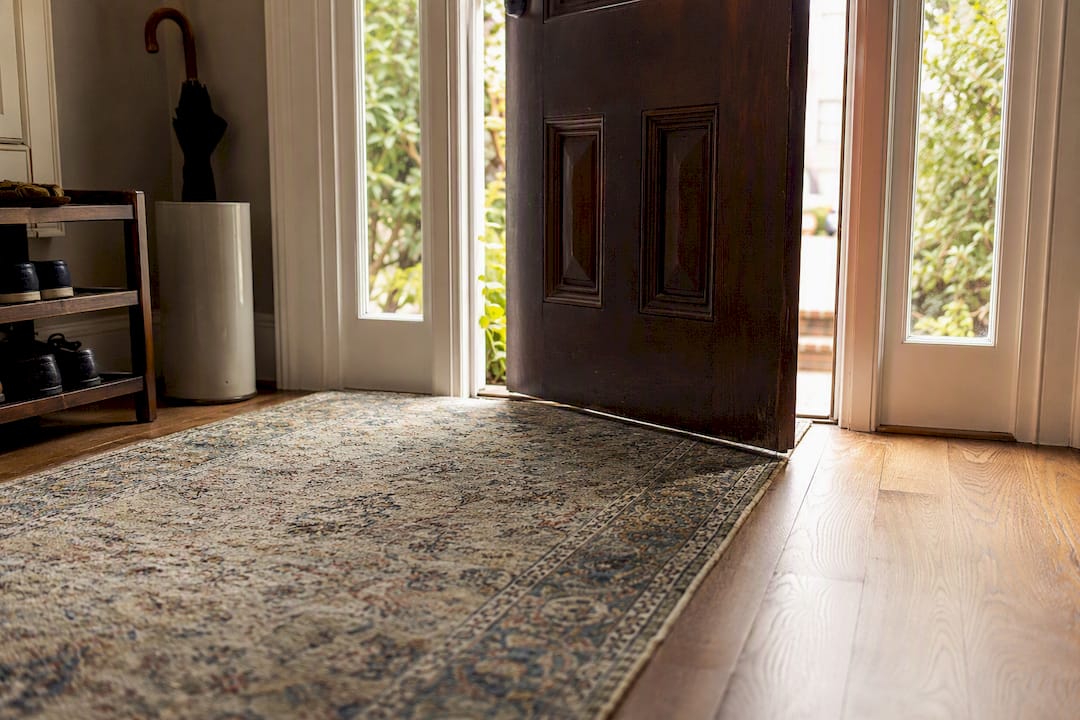
Confirm it’s really the rug
Before you buy anything new, do two quick checks so you are not chasing the wrong problem.
1) Test the door without the rug
Fold the rug back (or slide it out of the swing path) and close the door.
- If the door closes normally: your rug and pad are too tall for that doorway.
- If it still sticks or won’t latch: you likely have a different issue (hinge sag, swollen door from humidity, strike plate alignment, floor settling, or a door sweep that is hanging low). I am keeping this article rug-focused, but it is worth addressing the door itself if the rug is not the culprit.
2) Find exactly where it’s hitting
Close the door slowly and watch the bottom edge.
- Hits right at the rug edge: often a thick bound edge or rug turned slightly uphill onto the pad.
- Drags across the whole swing: your overall stack height is too high.
- Only catches in one spot: a bunched pad corner, a curled rug edge, or a high spot in the floor.
If you want to be extra precise, slide a thin piece of paper under the door without the rug. Then add the pad, then the rug. You’ll feel exactly when the clearance disappears.
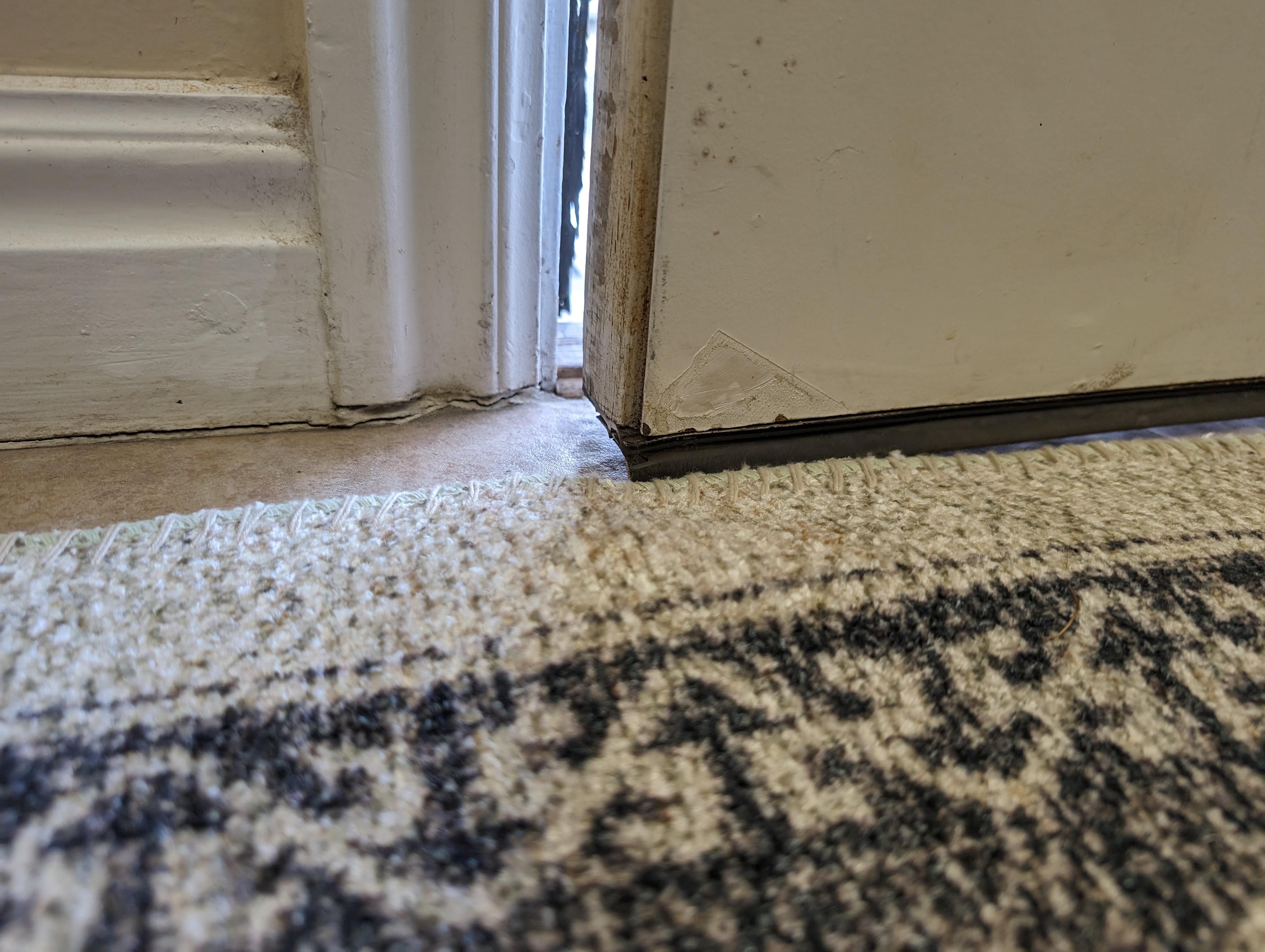
Measure the clearance (fast, not fussy)
You do not need a whole math project, but a quick measurement helps you pick the right fix.
- Check your gap: With the rug pulled back, see what fits under the door. Paper-thin clearance means even a modest pad can cause drama.
- Know your stack: Put your rug and pad together and pinch the edge. That combined thickness is what your door has to clear.
- Pad thickness reality check: Pads commonly range from about 1/8 inch (low-profile) up to 3/8 inch or more (plush). That difference is huge at a tight doorway.
The simplest fix: change the rug pad, not the rug
In styling work, this is the most common mistake I see: someone buys a plush pad because it sounds luxurious, then wonders why the door suddenly behaves like it gained an attitude.
Rug pads come in very different thicknesses and materials. Swapping the pad is usually cheaper and less heartbreaking than swapping a rug you love.
What to try instead
- Go thinner. A low-profile pad is often enough to get your clearance back while still preventing slipping.
- Choose a denser feel, not a taller one. Dense, grippy pads can keep a rug stable without adding a lot of height.
- Trim the pad back from the door zone. If the rug is fine but the pad is the issue, you can cut the pad so it stops 2 to 4 inches before the doorway. Often the rug will still lie flat, but if yours is a lighter flatweave or tends to shift, add a thin strip of rug tape or low-profile grippers under the edge to keep it from rippling at the cut line.
Clara tip: When you trim a pad, use sharp scissors and make one clean cut. For felt-style pads, a straightedge and a sharp utility knife can be cleaner. Cut on a protective surface, keep fingers clear, and take your time. Jagged edges love to roll and create new bumps.
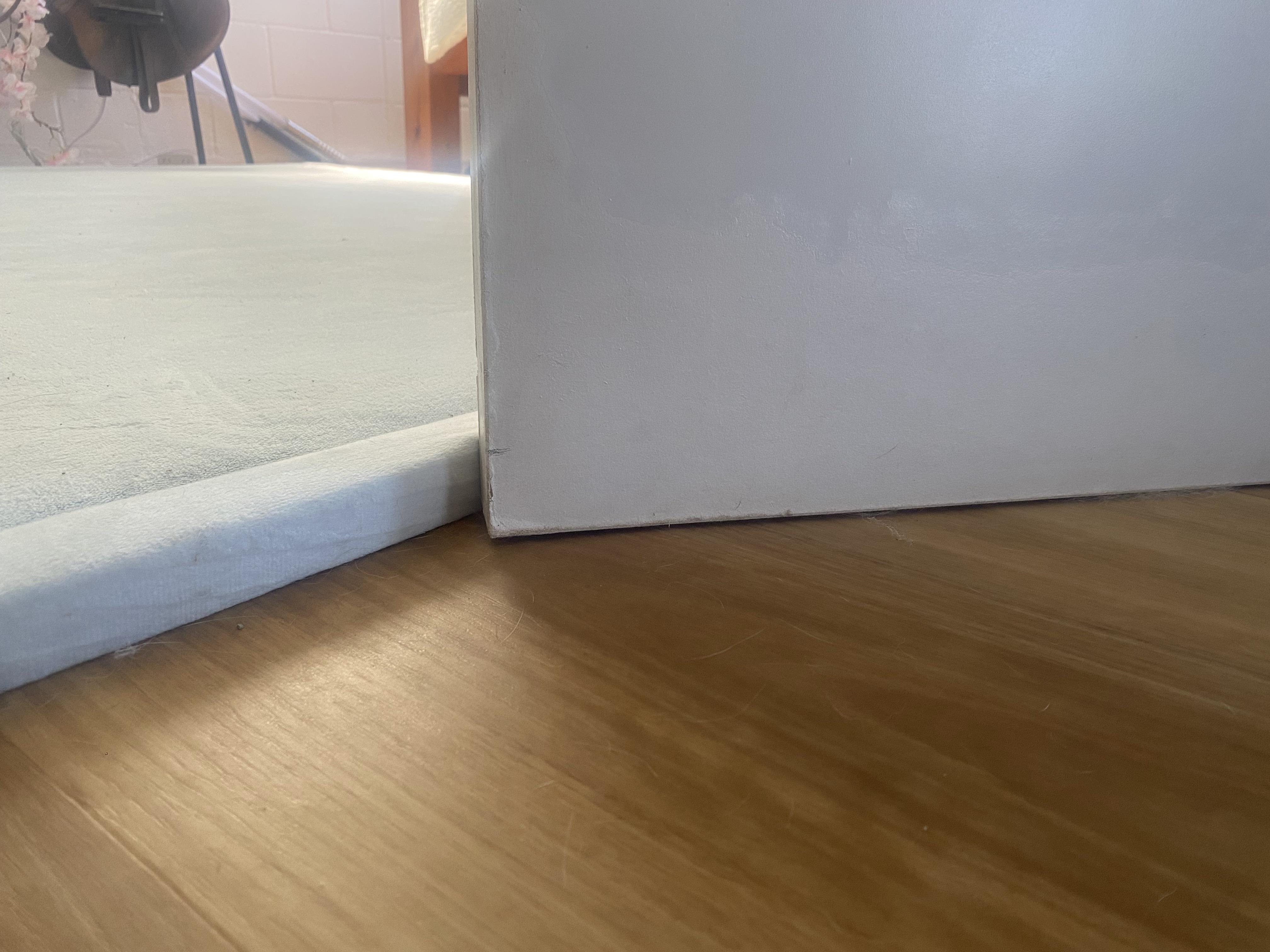
If the rug edge is the problem, tame the speed bump
Sometimes it is not the whole rug. It is that thick bound edge or the way the rug is sitting right at the threshold. You can often fix this with small adjustments that do not change your setup everywhere else.
Try these quick tweaks
- Recenter the rug. Shifting an area rug even 1 inch can move the thickest part out of the door’s tightest swing zone.
- Rotate the rug. Some rugs have a slightly thicker end depending on how they were finished or how the backing sits. Rotating can change where the high edge lands.
- Flatten the edge. If the edge is curling up, use rug tape or grippers under the edge to keep it hugged to the floor.
- Skip extra layers at the edge. If you have a pad plus an additional non-slip mat, remove one. Layering is cozy underfoot and brutal under doors.
If your rug is brand new and still has a bit of stiffness or lift from being rolled, give it a few days with regular foot traffic. Some fibers may relax noticeably.
When you need to change the rug
I love a plush, sink-in pile as much as anyone. But doorways are clearance zones, and they behave better with flatter textiles.
Rugs that work near doors
- Low-pile rugs that feel more tailored than fluffy.
- Flatweaves (think dhurries and kilim-style weaves) that sit close to the floor.
- Washable, low-profile rugs that are designed to be thin enough for everyday traffic areas.
Where thick rugs cause the most trouble
- Bathroom doors (often very little clearance)
- Bedroom doors when a rug is placed right under the swing
- Closet doors that already have tight tolerances
If you are committed to a thicker rug in a room, consider pulling it back so it starts just beyond the door swing, especially in small bedrooms where the door opens onto the rug corner.
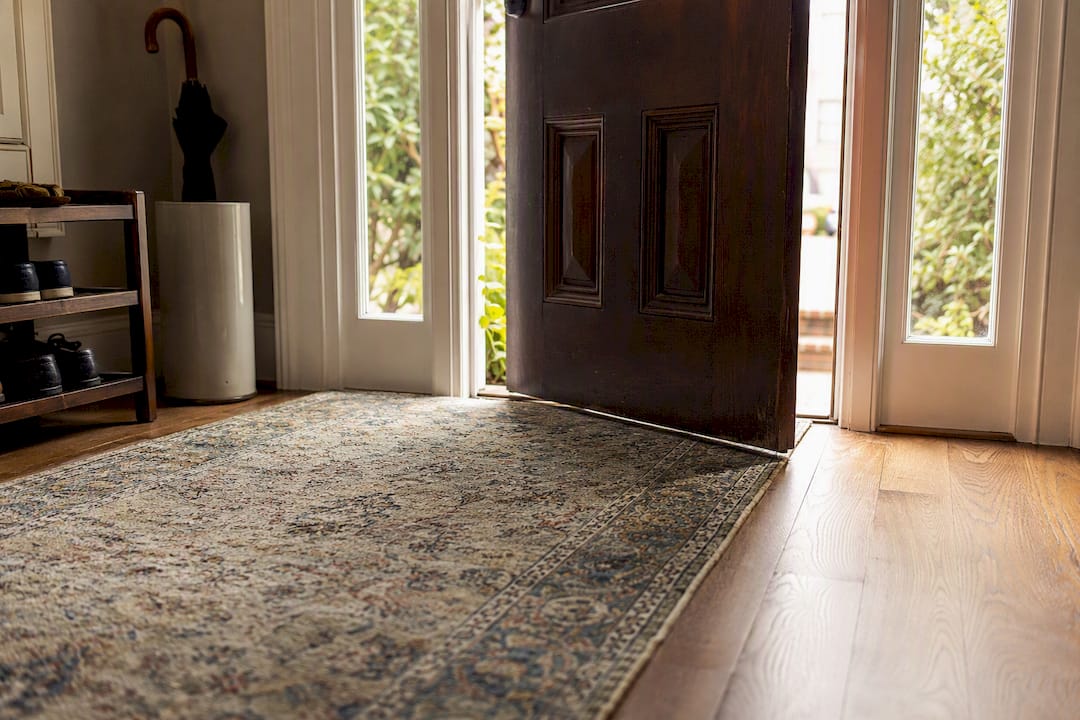
Door swing and hardware basics
One small detail can change which fix makes sense: which way the door swings.
- In-swing doors: These are the usual rug scrapers because the door moves over the floor inside the room.
- Out-swing doors: These can still catch if the rug is on the pull side, but it is less common.
Also, some doors have a sweep or draft stopper at the bottom, and some entries have thresholds. If the door clears the rug once you remove or raise the sweep, you just found your actual problem.
Rental-safe door-bottom options (when you can’t change the rug)
If you are renting, styling a temporary space, or simply do not want to alter a door, you still have a couple of non-destructive paths.
Option 1: Swap a bulky sweep for a slimmer one
Some doors have a bottom sweep or draft stopper that hangs low. On carpet or thick rugs, that extra material can catch before the door even reaches the latch.
- Look for a low-profile adhesive door sweep designed for smooth floors. Adhesives can pull paint or finish depending on the product and how well the paint cured, so test a tiny spot first.
- Remove carefully later. Gentle heat from a hair dryer can soften adhesive so it peels more cleanly. Go slow and keep the heat moving.
- If you already have a screw-on sweep and are allowed to swap hardware, choose a slimmer sweep that sits higher. Save the original to reinstall when you move out.
Important: Avoid anything that requires cutting the door or routing a channel if you are renting.
Option 2: Use a thin draft seal on the frame
If the goal is draft control, a compressible weatherstrip on the door frame can sometimes replace the need for a thick sweep that drags. This will not solve severe rubbing, but it can remove that last little bit of resistance.
Option 3: Create a no-pad zone at the doorway
This is the most renter-friendly trick when the rug is non-negotiable. Trim the pad back so the rug alone crosses the doorway area. You keep comfort in the room and gain clearance where the door needs it most.
How to choose between the three main fixes
If you want a quick decision, here’s how I’d pick.
- Choose a thinner pad if you love the rug and want the door to feel normal again with minimal fuss.
- Choose a different rug if the rug is thick enough that it will always fight the door, or if the edge binding is a constant speed bump.
- Choose a rental-safe door-bottom option if a sweep is what’s catching, or if you need draft control without altering the door itself.
What not to do (learned the hard way)
- Do not force the door repeatedly. You can fray the rug edge, tear backing, or loosen a latch over time.
- Do not stack extra grippers and pads to stabilize the rug. This usually makes the clearance problem worse.
- Do not sand or cut the bottom of the door unless you are absolutely sure the issue is permanent and not just a too-thick pad choice. Door trimming is a one-way street.
I once watched a friend “solve” this by shoving the rug down with the door until the edge looked like a chewed ribbon. It closed, technically. It also haunted the room forever.
FAQ
Can I just fold the rug edge under where the door hits?
You can, but it rarely looks good and it tends to migrate, creating a lump that catches shoes. Trimming the pad back or switching to a flatter rug is usually cleaner.
Will a thick rug eventually compress enough for the door to clear?
Sometimes, especially with softer piles, but it is not guaranteed and it can take a long time. If the door won’t latch now, I would not wait it out. Start with a thinner pad and see if that solves it immediately.
What if the door only won’t latch, but it does close most of the way?
That can still be rug height. The rug can stop the door just shy of the latch catching. Test by folding the rug back and trying again. If it latches without the rug, you know it is a clearance issue.
Is this a sign I bought the wrong rug pad?
Not wrong for comfort, just wrong for that doorway. In many homes, one room can handle a cushy pad and another cannot. Door clearances vary wildly, especially in older apartments.