Drafty Door Gap Fixes for Renters

Clara Townsend
Clara Townsend is an interior stylist, vintage furniture enthusiast, and the creative voice behind Velvet Abode. With over a decade of experience transforming both cramped city apartments and sprawling fixer-uppers, she believes that a beautiful home is built on personal stories rather than massive budgets. When she isn't hunting for the perfect brass sconce at a local flea market, she can usually be found rearranging her living room for the third time this month.
There is a very specific kind of winter misery that comes from a beautiful, cozy living room and one relentlessly icy ribbon of air sneaking in under the front door. You can light the prettiest candle. You can throw on a chunky knit blanket. And still, your ankles know the truth.
The good news is you do not have to accept a draft just because you rent. There are genuinely effective, removable fixes that do not require drilling holes or “accidentally” painting your landlord’s trim. Below, I will walk you through what works, what fails, how to size things properly, and when it is officially a building management problem, not a you problem.
Find the gap before you buy anything
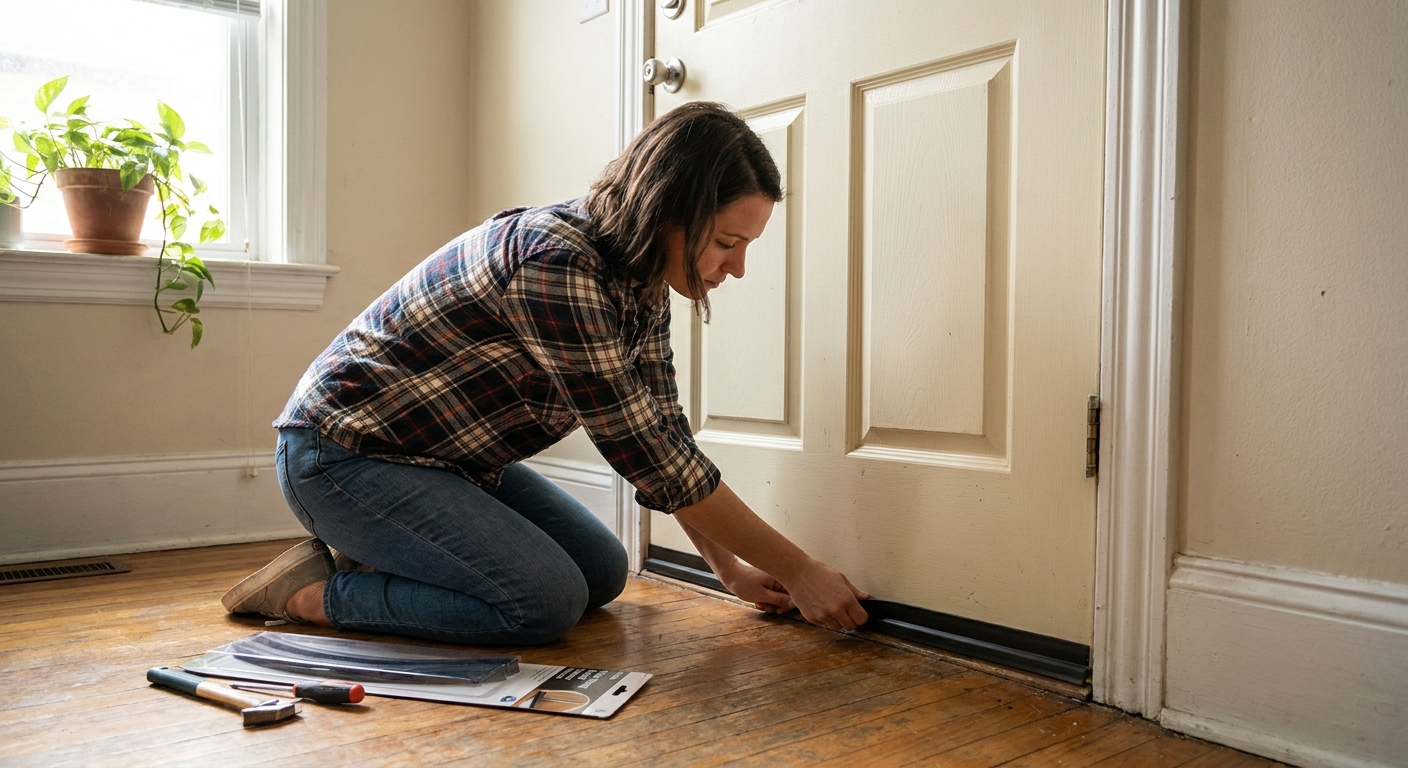
Drafts come from three common spots: the under-door gap, the sides and top of the door (the jamb and stop where weatherstripping sits), or the frame area if the existing weatherstripping is flattened, missing, or misaligned. Spend two minutes diagnosing, and you will save yourself the “why is this still cold?” frustration.
Quick draft check
- Light check: If you have a lit hallway, do this at night with your apartment lights off. If the outside is the brighter side, do the opposite: stand inside during daylight with the interior darker and look for light around the edges.
- With a tissue: Hold a tissue near the gap. If it pulls toward the door or flutters, you found airflow.
- With your hand: Feel along the bottom corners first. That is the most common leak point.
Measure like you mean it
- Under-door gap height: Measure the distance from the floor to the bottom of the closed door in a few spots, especially near each corner.
- Door width: Measure the door’s width to choose the right sweep length.
- Floor type: Carpet needs a different approach than tile or wood because anything that drags can bunch or peel off.
If your door barely closes already or rubs the floor, skip anything bulky and focus on side and top seals first. Forcing a door to close is how sweeps rip off and security deposits disappear.
Removable door sweeps: tension vs adhesive
A door sweep is what blocks the under-door gap. In rentals, the goal is: seal well, remove cleanly, and avoid damaging paint or finish.
Tension or slide-on sweeps (best for “no residue” living)
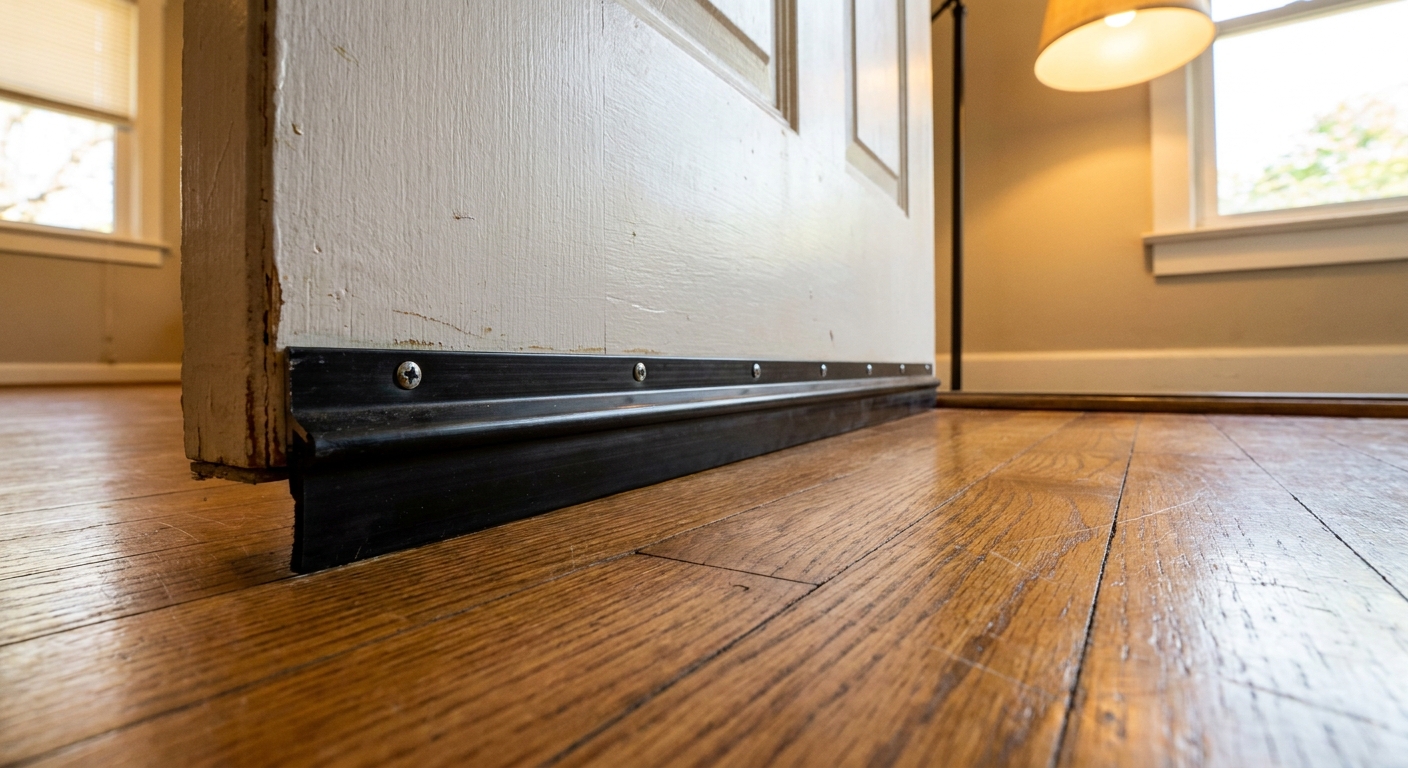
These slide onto the bottom edge of the door like a snug sleeve. No glue. No screws. They are my first choice for renters because move-out is basically just pulling it off and wiping the door.
- Pros: No adhesive, easy to remove, quick to install, great for solid floors.
- Cons: Can be too tight for very thick doors, can shift if the door slams a lot, not always great on thick carpet.
- Best for: Smooth floors (wood, vinyl, tile) and doors that close cleanly.
Sizing tip: Slide-on sweeps usually list a maximum gap height. If your gap is bigger, the sweep will not touch the floor and you will still feel the draft.
Adhesive sweeps (best when the gap is inconsistent)
Adhesive sweeps stick to the door and typically have a flexible vinyl or rubber flap that brushes the floor. They can be more adaptable to uneven floors, but adhesive is where rentals get tricky.
- Pros: Often seals better on uneven thresholds, widely available, inexpensive.
- Cons: Adhesive can pull paint or leave residue, can peel in humidity or cold, can collect grime at the flap edge.
- Best for: Slightly uneven floors or doors with a small to medium gap you need to “custom fit.”
Renter-safe adhesive rule: Choose products marketed as removable, and still do a test on a tiny hidden spot. If your door is freshly painted or the paint feels at all chalky, avoid aggressive adhesives.
Door snakes and draft stoppers: the easiest zero-commitment fix
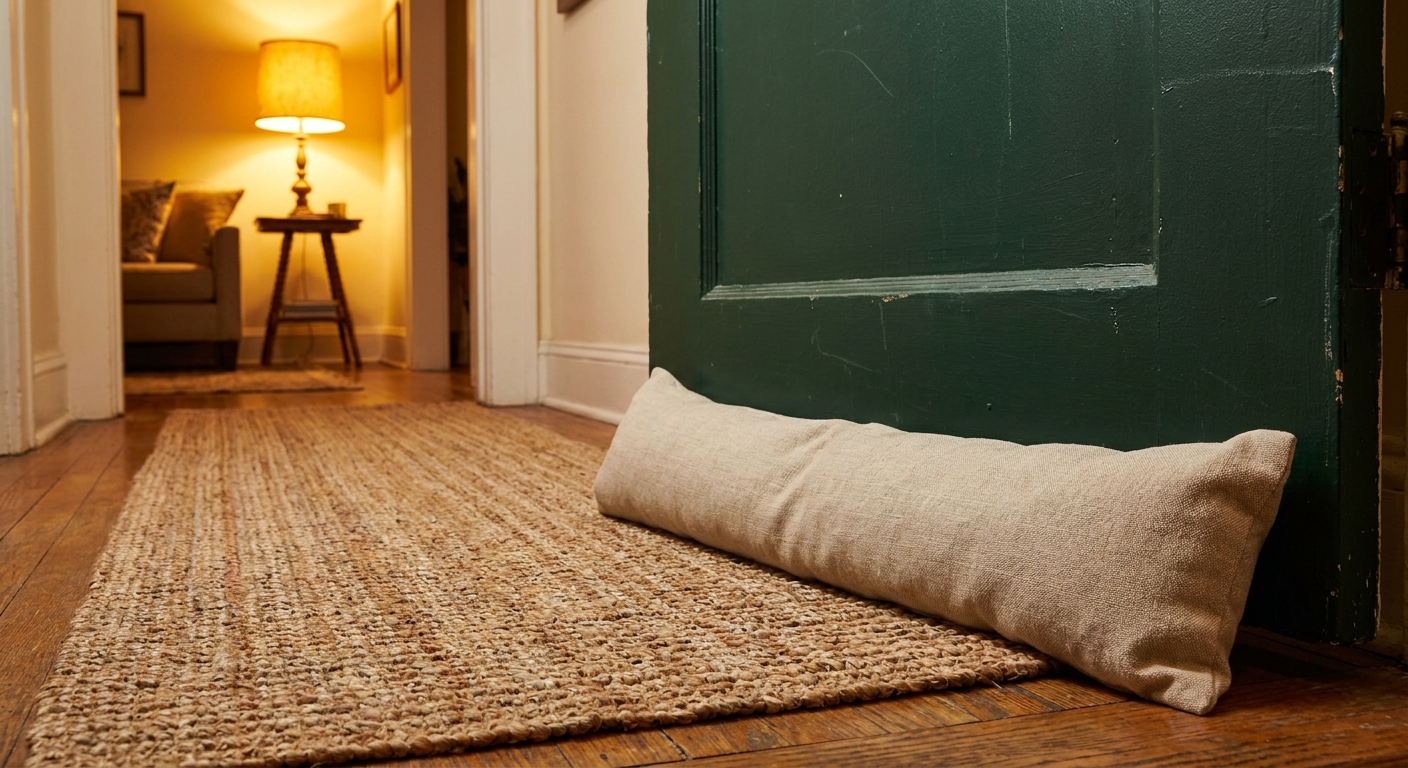
Door snakes are the soft, weighted “tube” style draft stoppers that sit against the door on the floor. They are not glamorous, but they can be deeply effective, especially if you want something you can move from room to room.
When a door snake works best
- You have a big under-door gap and you need an immediate fix without tools.
- You cannot alter the door at all (historic building, fragile paint, strict lease).
- You want seasonal flexibility and plan to stash it in spring.
Common frustrations (and how to avoid them)
- It scoots around: Choose one with a grippy fabric bottom or a little more weight.
- It looks messy: Pick a fabric that matches your palette, like oatmeal linen, washed velvet, or a boucle that reads like a cozy “intentional” texture.
- It blocks the door from opening inward: Use it on the interior side only, and keep it slightly off the swing path.
Styling note from a lifelong homebody: a door snake in a pretty textile can look like a small, quiet design choice, especially near an entry runner and a warm lamp. Practical can still be charming.
Temporary weatherstripping for the jamb
If the draft is coming from the sides or the top, a sweep will not help. You need weatherstripping, and in a rental the sweet spot is foam, rubber, or silicone that seals well but removes cleanly.
What to look for
- Peel-and-stick foam tape: Easy to install and very common. Best for small gaps and quick fixes.
- Rubber or silicone compression strips: More durable than foam and seals better when the door closes snugly.
- V-strip (tension seal): A folded strip that springs open to block gaps. Often less bulky and a good option when the door is already tight.
How to size it
Weatherstripping is only effective if it compresses when the door closes. A good rule is choosing something that squishes about 25 to 50 percent when the door is shut.
- If it is too thin: air still sneaks through.
- If it is too thick: your door will not latch, or it will feel like you are shoulder-checking it shut.
Measure the gap at the jamb (a credit card, a folded paper edge, or a thin ruler can help). Then choose a strip rated for that range. If you are between sizes, start smaller. If it does not seal, remove the thin strip and replace it with the correct thicker size rather than stacking layers. Stacking usually fails fast and looks messy.
Clean removal tips for move-out
- Warm it up: Use a hair dryer on low to soften adhesive before peeling.
- Go slow: Pull back on itself at a low angle, not straight out.
- Remove residue gently: Try warm soapy water first. If needed, use a plastic scraper and a small amount of mild adhesive remover on a cloth and test in an unseen spot. Citrus-based removers can soften or discolor some paints and finishes, so be extra cautious on latex paint if you are not sure.
Threshold fixes (still rental-friendly)
Sometimes the door bottom is fine, but the threshold is the problem. If there is a dip, a worn threshold seal, or a little channel that funnels cold air right inside, you will feel it.
- Stick-on threshold seal or bumper: A low-profile strip that adheres to the threshold to close small gaps. Choose removable adhesive and keep it thin enough that the door still clears and latches.
- Adjustable thresholds: Many exterior doors have a threshold that can be raised with screws to meet the sweep. This is usually a maintenance job, especially if it affects how the door seals or locks.
If you are dealing with an apartment corridor entry door that is fire-rated, prioritize anything that keeps the door closing and latching normally. If your “fix” makes the door stick, not latch, or not self-close, skip it and call maintenance.
Common failure scenarios
Most renter fixes fail for boring reasons: the surface was dusty, the product was the wrong size, or the door is misaligned. Here is what I see most often.
1) Adhesive sweeps peeling off
- Cause: Dust, oily residue, or installing outside the manufacturer’s recommended temperature range.
- Prevent it: Clean with rubbing alcohol and let dry completely. Install within the product’s recommended temperature range (many adhesives struggle when surfaces are cold).
- Also check: The sweep is not dragging hard on carpet or catching on an uneven threshold.
2) Door will not latch after adding weatherstripping
- Cause: Strip is too thick or placed where the door needs clearance.
- Prevent it: Choose thinner compression or V-strip, and place it on the stop molding where it seals without fighting the latch.
3) Draft is still there even after sealing the bottom
- Cause: The draft is coming from the jamb, a warped door, or an unsealed threshold.
- Prevent it: Re-check for light leaks around the sides and top. Add jamb weatherstripping and inspect the threshold area.
4) Moldy or musty smell near the door
- Cause: Moisture intrusion or condensation, sometimes from a badly sealed exterior door.
- What to do: Do not just seal it tighter and hope. Document it and contact management, especially if you see staining or feel dampness.
When building management should step in
I am all for a clever renter hack, but there is a line where the fix should come from maintenance. Exterior doors are part of the building envelope. If the door is letting in significant air or water, it can be a comfort issue, an efficiency issue, and potentially a habitability issue depending on local tenant laws and building codes. It can also be a security issue if the door is not sealing and latching correctly.
Call maintenance if you notice
- Daylight around the door even when it is fully closed and latched.
- A torn, missing, or crumbling door gasket on an exterior entry.
- Water intrusion at the threshold during rain or snow melt.
- A door that will not align with the strike plate, or needs to be forced shut.
- Cold air pouring in like a steady stream rather than a faint draft.
How to ask
Keep it simple and specific: “Hi, I am getting noticeable air coming in around the entry door, and the weatherstripping appears worn. Could maintenance replace the door seals and check alignment? There is visible light at the edge when the door is closed.”
If you can, include two photos: one of the worn seal, and one showing light leakage from inside. Clear, calm documentation tends to get faster results.
My quick recommendations
- Small gap under an interior door: A simple door snake, especially for bedrooms and offices.
- Small to medium gap under an exterior door on hardwood or tile: A slide-on tension sweep plus thin jamb weatherstripping where needed.
- Uneven floor or threshold: An adjustable adhesive sweep (renter-safe), installed on a thoroughly cleaned surface, or a stick-on threshold seal if the leak is at the threshold.
- Draft from the sides or top: Compression weatherstripping or V-strip, sized carefully so the door still latches.
- Visible daylight or water: Skip the DIY patchwork and contact building management.
Bonus: sealing drafts usually helps with hallway noise and that mysterious shared-building smell situation, too. Warmth is the headline, but quiet is a very nice side benefit.
One last cozy detail
After you seal the draft, you will feel it immediately, not just in your heating bill, but in the way the room holds warmth. It is the difference between “I guess this is fine” and that quiet exhale you do when you step inside and your home actually feels like it is on your side.
If you want to make the entry feel extra comforting, add a soft runner, a little tray for keys, and a lamp with a warm bulb. Practical fixes are wonderful, but I am always going to vote for pairing them with a bit of glow.