Flatten Ripples and Fold Marks in a New Area Rug

Clara Townsend
Clara Townsend is an interior stylist, vintage furniture enthusiast, and the creative voice behind Velvet Abode. With over a decade of experience transforming both cramped city apartments and sprawling fixer-uppers, she believes that a beautiful home is built on personal stories rather than massive budgets. When she isn't hunting for the perfect brass sconce at a local flea market, she can usually be found rearranging her living room for the third time this month.
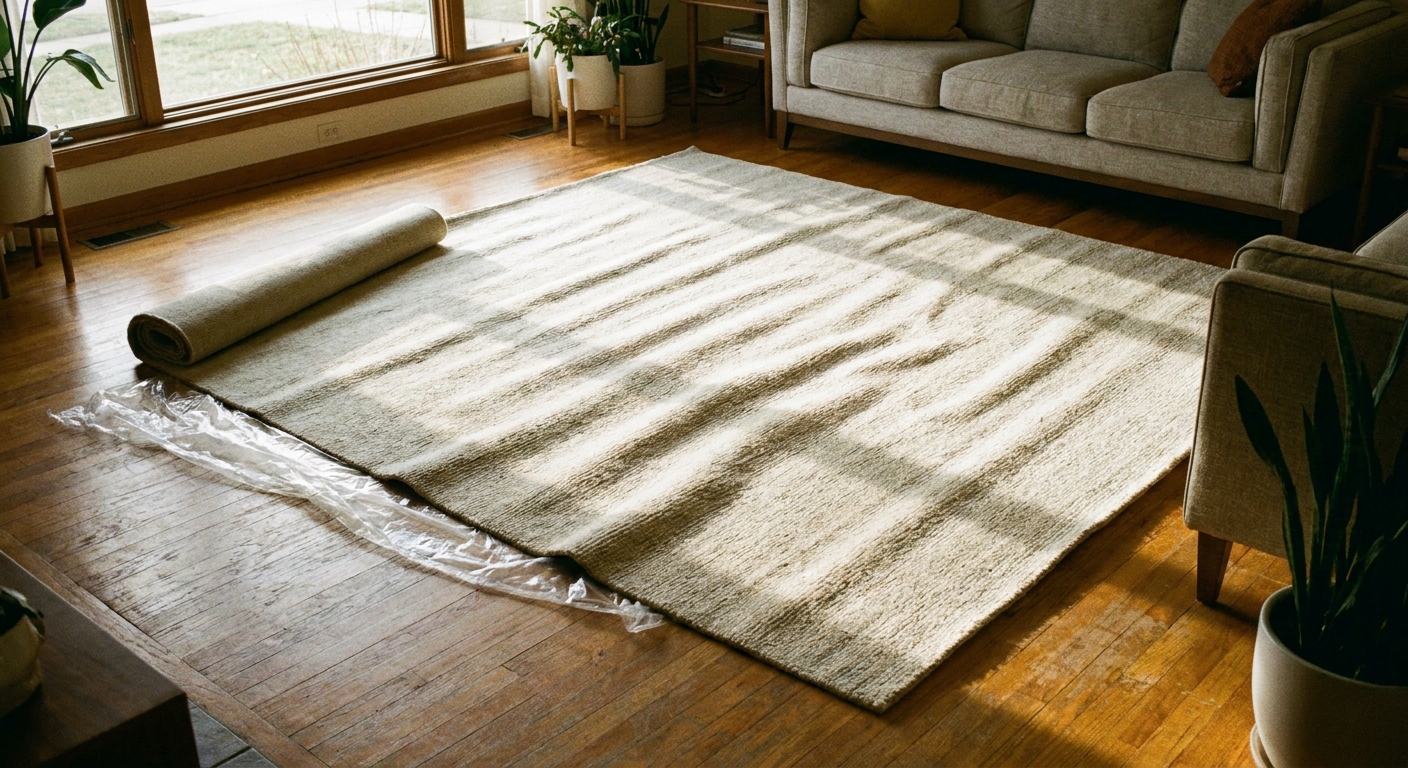
There is a particular kind of heartbreak that happens when you unroll a new rug, step back to admire it, and see… waves. Or that stubborn fold line that looks like the rug is holding a grudge from the shipping box.
The good news: most ripples and fold marks are temporary. The better news: you can speed up the flattening process without scorching, stretching, or crushing the fibers. The key is choosing the right method for your rug material and construction, and knowing when patience beats intervention.
Quick safety note: If you have a care label or manufacturer instructions, follow those first. When in doubt, skip heat and moisture and stick to time, reverse-rolling, and gentle, even weight.
Ripples vs. curling vs. slipping
These problems look similar in photos, but they behave differently in real life.
- Ripples and waves show up across the body of the rug, often from being tightly rolled for shipping or storage. You will see soft ridges that run horizontally or diagonally.
- Fold marks are sharp creases, usually from rugs shipped folded in a box. You will often feel a “hinge” when you press the crease.
- Curling corners or edges is typically an edge tension issue, sometimes made worse by humidity swings, vacuuming, a pad that is too thick, or a pad that grips too aggressively.
- Slipping is about friction under the rug, not the rug’s memory.
This article is focused on ripples and fold marks, the kind that come from packaging and roll memory. If you are dealing with edge curl, jump to the troubleshooting section for a few quick fixes.
First, identify fiber and build
Before you bring out steam or heat, do a quick material check. Look at the label if you have it, or use these clues:
- Wool: springy, warm underfoot, often with a slightly fuzzy halo. Usually very forgiving, but can be sensitive to too much heat and moisture.
- Cotton: softer and flatter, often used in dhurries and low-pile rugs. Can shrink if soaked or aggressively steamed.
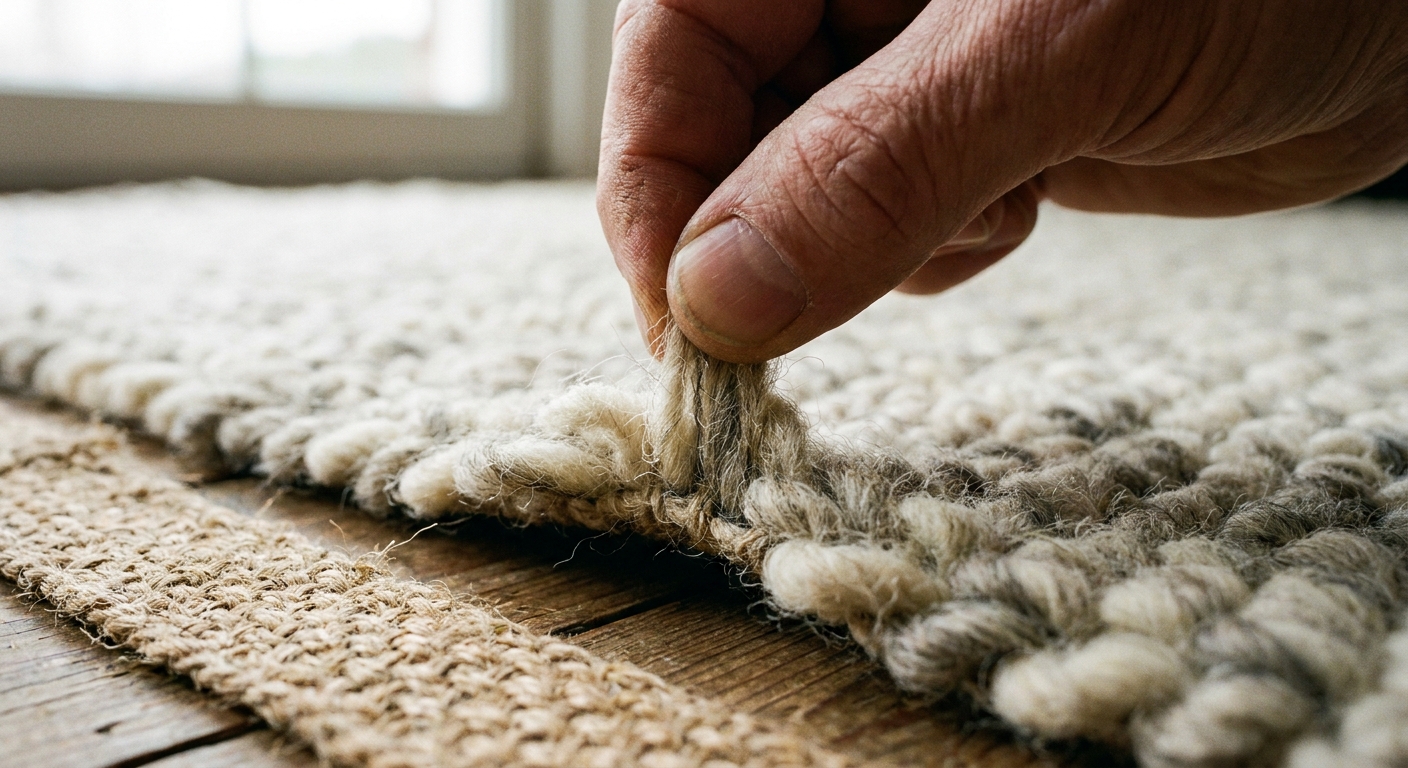
- Jute, sisal, seagrass: natural plant fibers with a dry, earthy feel. These dislike moisture and can discolor, watermark, or ripple more if they get wet.
- Synthetics (polypropylene, polyester, nylon): often very stain-resistant and consistent looking. These can flatten quickly, but heat must be gentle since synthetic fibers can warp or melt.
- Viscose, bamboo silk, art silk: silky sheen, very smooth hand. Beautiful but delicate, and moisture can leave permanent marks. Avoid aggressive steaming.
Then consider construction, because it changes how bold you can be:
- Hand-tufted and latex-backed rugs: the backing and adhesives can be stressed by tight rolling and can soften or get tacky with heat.
- Flatweaves: often respond quickly to reverse-rolling and weighting, but can shrink or skew if over-steamed.
- Hand-knotted and many woven rugs: typically tolerate gentle methods well, but expensive pieces deserve extra caution.
One more common non-problem: some rugs are intentionally carved or have mixed pile heights. That texture can catch light in a way that looks like waves from certain angles. Before you panic, view it from the other side of the room and change the lighting if you can.
When to wait
If your rug arrived rolled (not folded) and the ripples are mild, waiting is often the safest and most effective option.
Best for
- New wool rugs with light waves
- Most synthetic rugs
- Many hand-tufted rugs that just need time to relax
What to do
- Unroll it fully and position it where it will live.
- Put furniture on it as you normally would. Even a coffee table helps distribute weight.
- Keep the room steady for a few days. Avoid dramatic humidity or temperature swings if you can.
Typical timeline: a few days to a couple of weeks. Some rugs, especially thicker piles, larger sizes, or certain backings, can take longer to fully settle.
The gentle weighting schedule (my go-to)
If you want faster results without introducing heat or moisture, use a simple weighting routine. The goal is even pressure, not sharp point loads that dent pile or crease backing.
What to use as weights
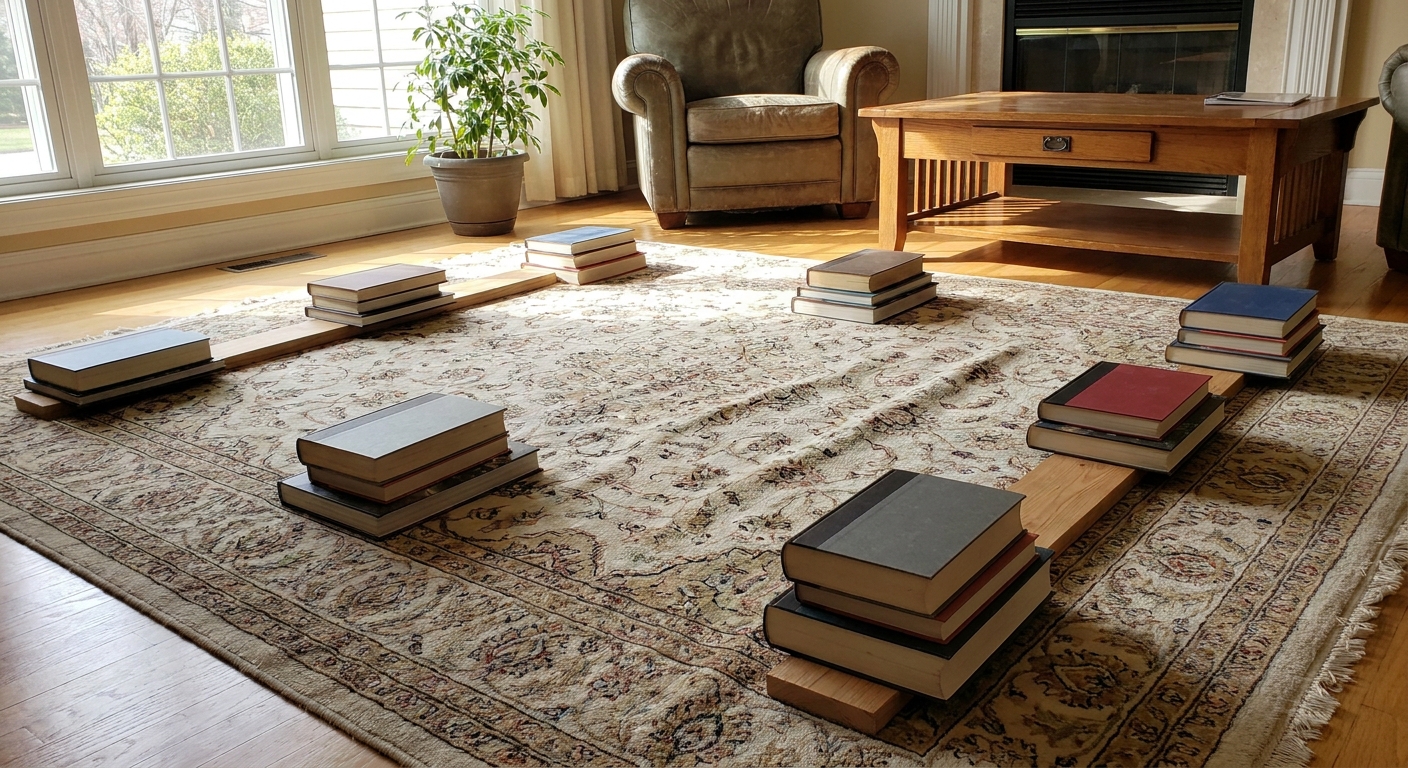
- Heavy books with smooth covers
- Baking sheets or cutting boards with books on top (spreads pressure nicely)
- Clean, flat boxes filled with magazines
Avoid: bare bricks, anything rusty, anything with a sharp edge, and anything that can transfer dye.
How to do it
- Day 1: Place weights along the highest parts of the ripple, spaced every 12 to 18 inches.
- Day 2: Move weights to the next section of ripples so the pressure is not concentrated in one spot.
- Day 3: If needed, repeat and add a little gentle, even walking across the rug in clean socks. Avoid twisting or pivoting hard on one foot, which can distort some rugs while they are still relaxing.
For a deep fold line, place weights directly on the crease and extend a few inches on either side so the whole area relaxes evenly.
Reverse-roll (fast, no heat)
Reverse-rolling is the quickest “no heat” fix for roll memory. Think of it like reminding the rug that it can bend the other way too.
Best for
- Rolled rugs with waves running across the width
- Most synthetics, wool, and cotton flatweaves
Use extra caution with
- Hand-tufted or latex-backed rugs
- Very stiff backings, bound edges, or delicate fringe
How to reverse-roll safely
- Lay the rug face down on a clean floor.
- Roll it snugly, not tightly in the opposite direction of how it arrived.
- Keep the roll even. Do not kink or fold.
- Secure with soft ties or cotton sheets. Avoid tape on fibers.
- Leave it rolled for 2 to 8 hours, then unroll and let it rest flat overnight.
If your rug is thick, very large, or has a latex backing, do a looser reverse-roll for a shorter time. Overdoing it can stress the backing and edges.
Steam vs. dry heat
Steam can be magic for stubborn ripples, but only when used gently and with the correct distance. I treat steam like I treat vintage linen: coax, do not command.
Important caveat: Heat and moisture can set dyes, relax adhesives, or cause shrinkage, especially for viscose, some cotton flatweaves, and latex-backed rugs. If you are unsure, skip to weighting and reverse-rolling, or call a pro.
Before you steam
- Spot test in a corner for colorfastness and texture change.
- Vacuum lightly so you are not steaming dirt into the fibers.
- Check the backing. Some latex backings soften with heat and can become tacky.
Gentle steam approach
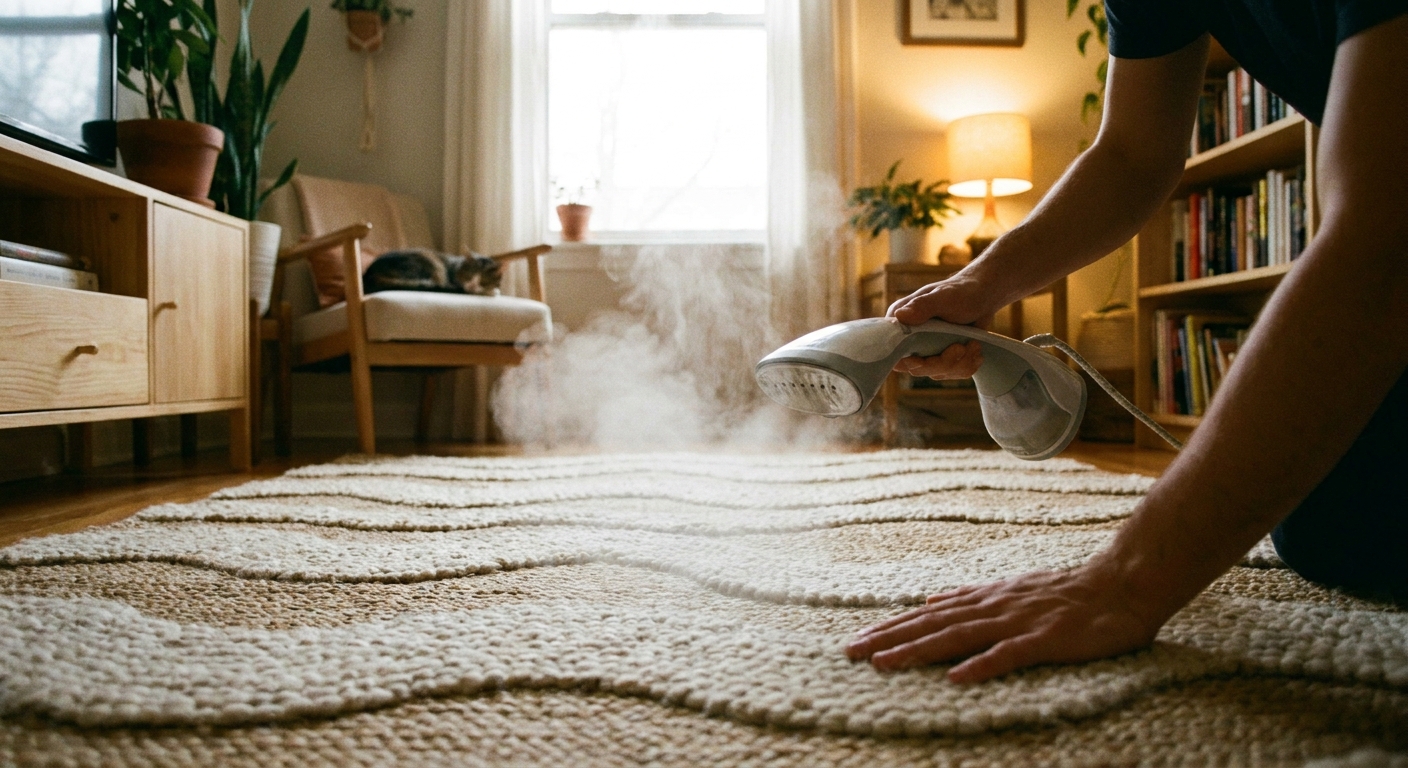
- Set a garment steamer to a moderate setting.
- Hold the steamer head 2 to 4 inches above the rug. Do not press it into the fibers.
- Steam a small section for 10 to 20 seconds.
- Immediately smooth with your hands in the direction of the pile, then place a flat board and a gentle weight over the area while it cools and dries.
Avoid saturating the rug. You want warm, humid air, not wet fibers. Plant fibers (jute, sisal, seagrass) and viscose are especially prone to water marks that do not forgive.
Can you iron a rug?
Sometimes, but treat an iron as “dry heat with consequences.” The most conservative rule is: avoid it unless you are confident in the fiber and backing.
- Use the lowest setting that produces any effect.
- Place a clean cotton towel or brown kraft paper between the iron and the rug.
- Avoid ironing synthetics directly. If you must attempt it, use a pressing cloth, keep the iron moving, and stop immediately if you smell anything or see shine or flattening.
- Never linger in one spot.
If you are unsure, skip the iron and use a steamer plus weights instead.
What to do by rug type
Wool
- Best methods: waiting, weighting schedule, reverse-roll, gentle steaming.
- Watch out for: too much moisture, which can swell fibers and slow drying.
- Extra tip: After steaming, brush lightly with a soft brush to reset pile direction.
Cotton flatweave
- Best methods: weighting, reverse-roll, minimal steam from a distance.
- Watch out for: shrinkage or skewing if you over-steam or get it too wet.
- Extra tip: Weights plus a day of normal foot traffic usually solve it.
Jute, sisal, seagrass
- Best methods: waiting, reverse-roll, weighting schedule.
- Avoid: steaming and heavy moisture. Plant fibers can stain, watermark, warp, or develop a musty smell if damp.
- Extra tip: Keep airflow moving with a fan if your room is humid.
Synthetics (polypropylene, polyester, nylon)
- Best methods: waiting, reverse-roll, weighting schedule.
- Use heat carefully: synthetic fibers can deform with high heat. If you steam, keep distance and limit time.
- Extra tip: Sun-warmth can help. A few hours in indirect sunlight near a window can relax mild waves, but avoid prolonged direct sun that can fade colors.
Viscose or “silk-like” rugs
- Best methods: waiting and gentle, even weighting.
- Avoid: steaming and ironing unless a professional approves. These fibers can water-mark and lose their sheen.
- Extra tip: If it arrived folded and the crease is severe, consider professional blocking.
Troubleshooting
The pad is fighting you
Some pads are too thick or too grippy for certain rugs, which can hold the rug in a slightly buckled position.
- Try a thinner pad or reposition the pad so it lies perfectly flat.
- Make sure the pad is slightly smaller than the rug on all sides.
- If the rug feels like it is being “stuck” in place, a less grippy pad can actually help it relax.
Uneven flooring
Old wood floors can have gentle dips that show up as rug waves.
- Rotate the rug 90 degrees and see if the ripple shifts location.
- Use furniture placement to add balanced weight where the floor dips.
Humidity swings
Natural fibers expand and contract with moisture in the air.
- Run a dehumidifier in sticky months.
- Give the rug a few days to acclimate before you do anything dramatic.
It is actually edge curl
If only the corners or perimeter are lifting, you are in edge-curl territory, not ripple territory.
- Use the weighting schedule on corners (board plus gentle weight works best).
- Consider rug tape or corner grippers made for rugs, especially in low-traffic rooms. Always test adhesive products on your floor and follow manufacturer guidance to avoid residue.
Seams or joined rugs
If your rug is made from joined sections (common in some broadloom installs or certain styles), a raised line can be a seam issue, not shipping memory.
- If a ridge follows a seam line, or you see separation, stop DIY heat and call a professional.
When to call a professional
Most new-rug ripples are normal, but a few situations deserve expert help.
- Persistent ridges after a few weeks of settling and weighting.
- Antique, heirloom, or very expensive rugs where experimentation is not worth the risk.
- Visible backing issues like cracking latex, delamination, or stiff areas that do not flex.
- Severe fold creases on viscose or delicate blends.
- Fit or pad issues where the rug consistently buckles because it is catching on a too-large pad or an uneven underlayer.
A reputable rug cleaner or rug shop can “block” a rug, which is a controlled flattening process using moisture and tension in a way that protects the structure.
Quick cheat sheet
- Try first: unroll, place furniture, wait 48 hours.
- Next: weighting schedule for 2 to 3 days.
- Fastest no-heat fix: reverse-roll snugly for 2 to 8 hours.
- Use steam only when needed: light passes, from a distance, followed by flat weight while cooling and drying.
- Avoid moisture on: jute, sisal, seagrass, viscose.
If you want a little Velvet Abode encouragement: your rug is not “ruined” because it looks wrinkly on day one. It is just decompressing after a long trip. Give it the right kind of calm pressure, a little time, and it will settle into your space like it always belonged there.