Dishwasher Leaves Grit or Sand on Glasses
Gust
A little flutter. A cozier corner.
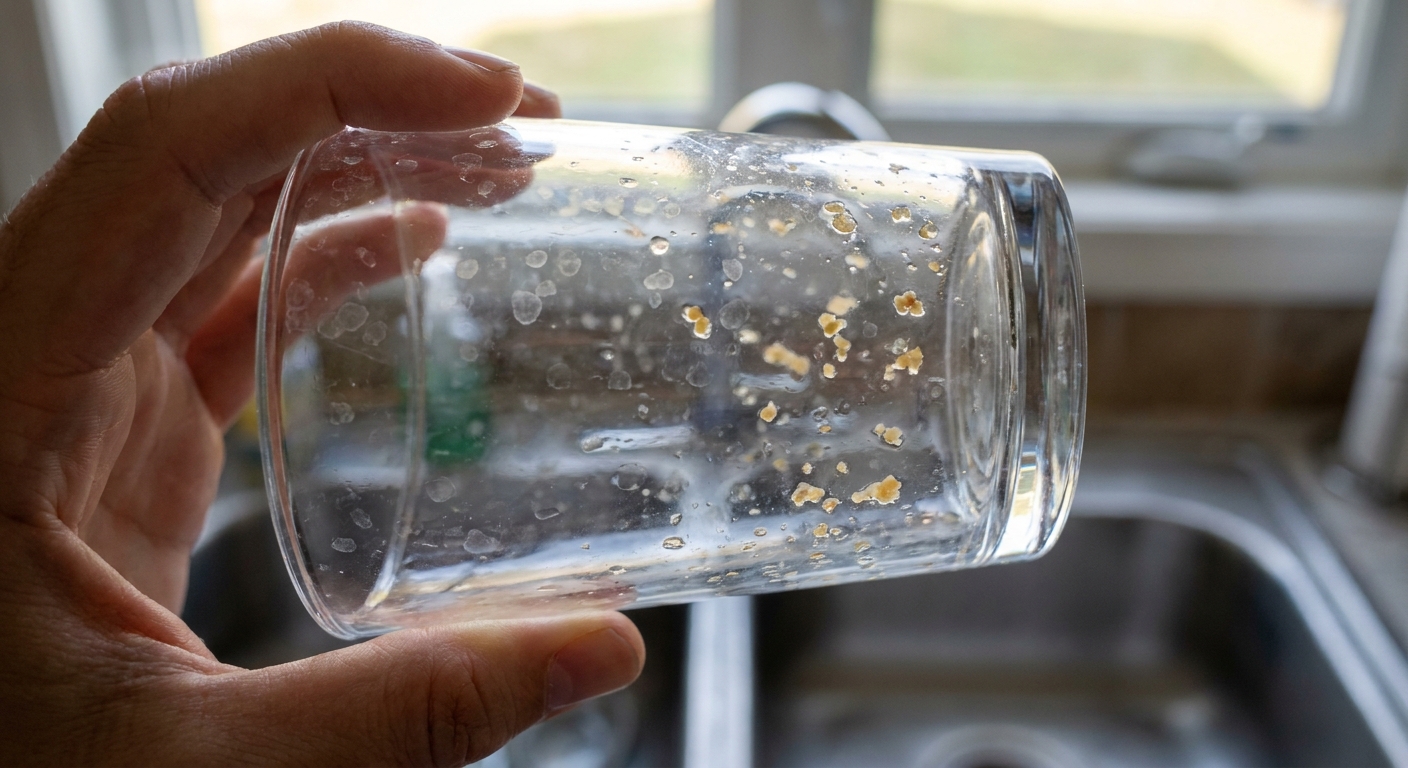
If your dishwasher cycle ends with a cheerful beep but your glasses come out feeling like they took a stroll on the beach, you are not imagining it. That grit is usually real debris that never left the machine. Instead, it got scooped up by the wash water, swirled around, and politely redeposited right where you least want it.
This page stays focused on grit, sand, and hard crumbs. If your issue is a cloudy film, permanent etching, or greasy residue, those are different problems with different fixes.
Why grit shows up
Most dishwashers drain in stages. They fill, spray, pause, and drain at set points during the cycle. During the spraying stages, the same water can recirculate through the sump area at the bottom. A filter system is supposed to keep debris from reentering the spray stream.
When something in that system is overwhelmed, blocked, or not seated correctly, hard bits can get sucked back into circulation and blasted upward through the spray arms. That is how you end up with sand-like specks on glass rims, in the bottoms of mugs, or stuck inside textured tumblers.
Most grit-on-glasses problems come down to three zones:
- The filter (needs cleaning, is damaged, or is not seated)
- The spray arms (holes blocked so debris does not get flushed away evenly)
- The sump (hard debris sitting in the bottom where water gets pulled back through)
Fast triage
Before you take anything apart, do a quick read of the situation. It helps you choose the right first step without turning your evening into an appliance saga.
- Grit is tan or dark and looks like crumbs: usually food particles from dishes, the filter, or the sump.
- Grit is white and crunchy like tiny stones: sometimes dried food, sometimes small chips from something wearing down inside the machine. True mineral scale more often shows up as film or chalky buildup, not sharp chips. If the bits are new, frequent, or sharp, treat it as a red flag and look for damage (rack coating flaking, a cracked spray arm, or a deteriorating filter mesh).
- Grit collects in cups that face upward: loading may be part of the story, or the spray is getting interrupted.
- Grit is everywhere, including upper rack glasses: think filter and sump first.
Step 1: Clean the filter
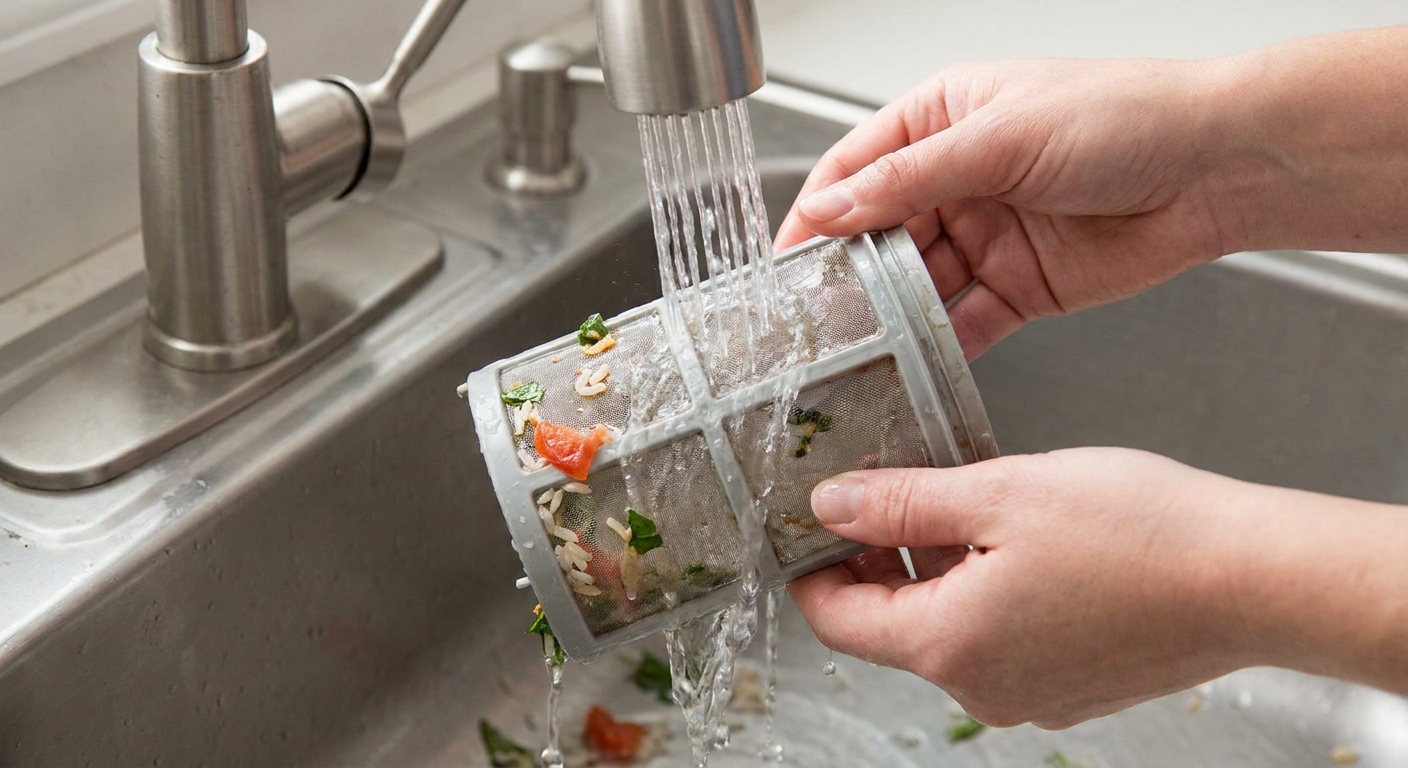
In many machines, the filter sits on the dishwasher floor, often under the lower spray arm. Its job is simple: catch the bits so they do not get pumped right back into circulation.
If it is coated in gunk, clogged with rice-sized pieces, damaged, or not locked into place, the dishwasher can start recirculating debris instead of removing it.
What to do
- Turn the machine off and pull out the bottom rack.
- Locate the filter assembly on the floor of the tub. Many twist out. Some lift out.
- Rinse under hot water and use a soft brush or old toothbrush to clear the mesh.
- Check the seat and seal. If the filter is not sitting flat, or the mesh is torn, debris can bypass it.
- Reinstall firmly. A slightly loose filter can cause a surprising amount of recirculated debris.
If you have a rental dishwasher with an unfamiliar filter style, do not force it. If it will not twist easily, stop and look for a model tag on the door frame and follow the manufacturer instructions for filter removal.
Step 2: Clear spray arms
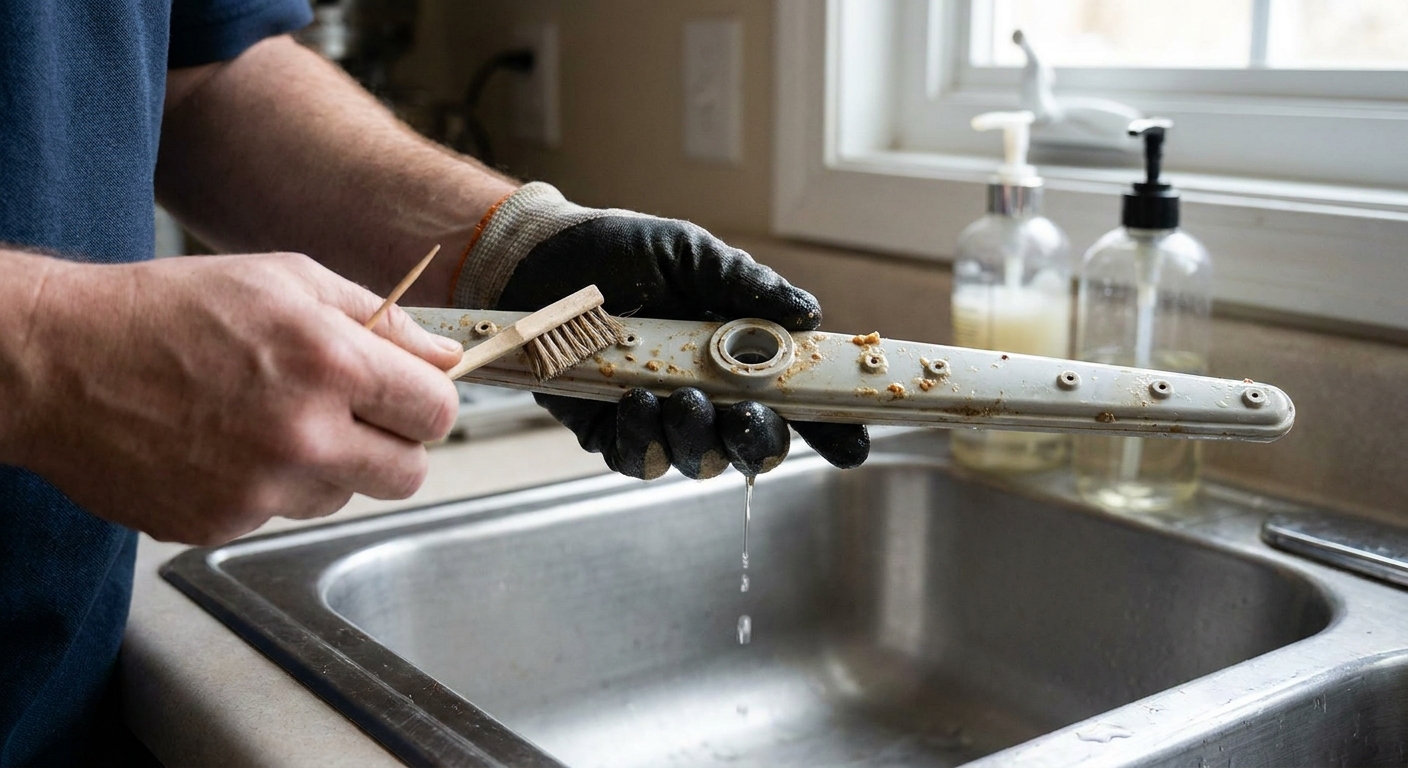
Spray arms have small jet holes that can clog with food, paper labels, seeds, or even a shard of glass. When holes are blocked, the spray pattern weakens and becomes uneven. That does two annoying things: it leaves some areas underwashed, and it fails to push debris down and away. The debris stays in circulation long enough to land on your glassware.
What to do
- Spin the spray arms by hand to be sure they move freely and are not hitting tall items.
- Inspect the holes. Look for rice, spinach bits, citrus seeds, or anything wedged in.
- Clear gently with a toothpick or soft brush. Avoid enlarging holes.
- Rinse the arm under running water if it is removable. Some arms pop off, others unscrew.
While you are there, look for a common tiny troublemaker: a broken label fragment from a jar. Those thin paper or plastic bits love to migrate into spray arm holes and settle in like they belong.
Step 3: Check the sump
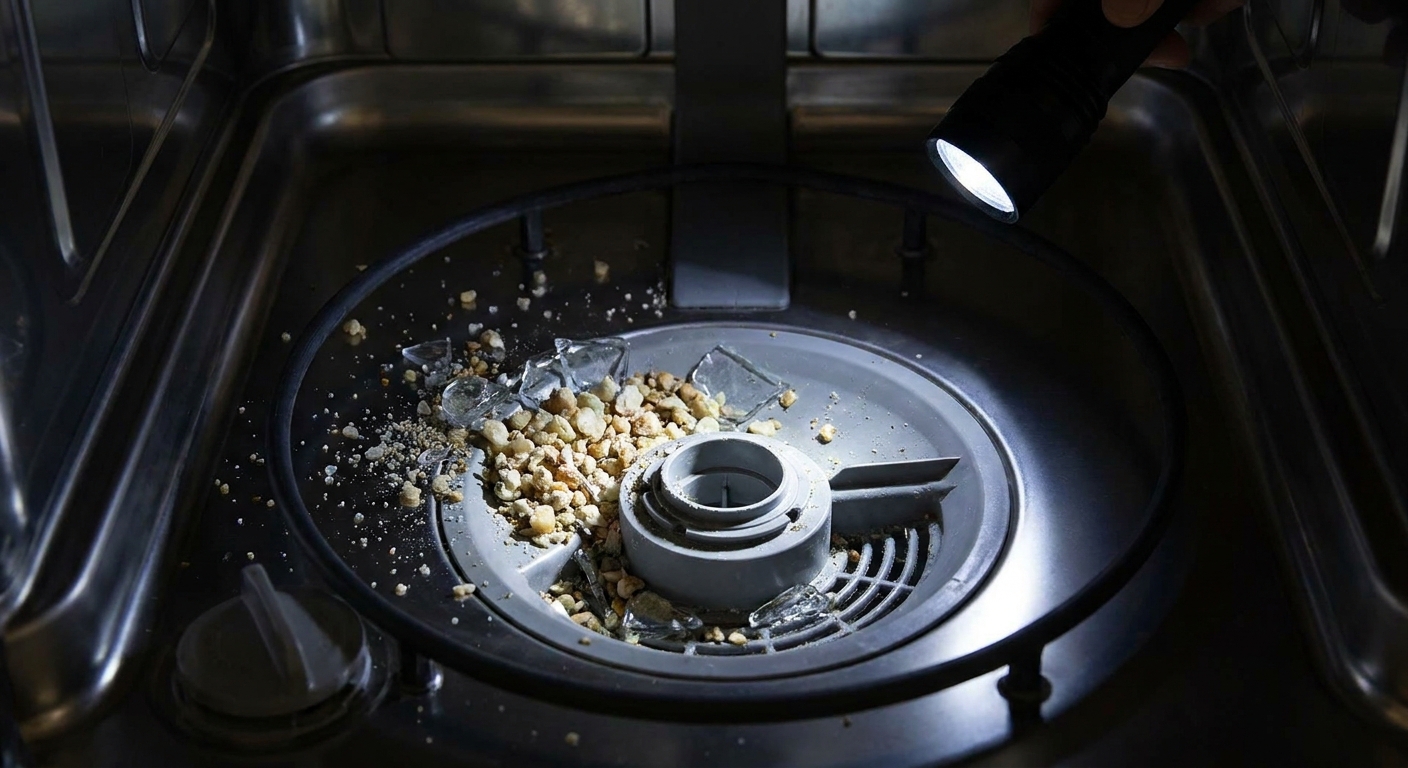
The sump is the low area at the bottom where water collects before being pumped through the system. If hard debris settles there, it can get pulled back into the wash stream again and again.
This is where you often find the gritty villains: popcorn kernels, broken glass bits, bone fragments, twist-tie wires, and those tiny stones that hitch a ride on potatoes.
What to do (carefully)
- Turn off power to the dishwasher at the switch or breaker if you will reach into the bottom.
- Remove the bottom rack and take out the filter as described above.
- Use a flashlight to look into the sump area.
- Pick out visible debris with cut-resistant gloves, tongs, or a wad of paper towels. If you suspect glass, do not use bare fingers.
- Wipe the basin around the sump opening to remove sandy sediment.
If you see standing water that never drains, or you cannot access the sump area without tools, pause and consider maintenance, especially in a rental.
Loading habits
I am only a drifting curtain wisp, but even I have watched a dishwasher get sabotaged by one tall cutting board and an overly enthusiastic mixing bowl.
- Do not block the spray. Keep large pans and boards from forming a shield in front of the lower arm.
- Angle cups and glasses so water can drain. Upward-facing cups become grit catchers.
- Keep utensils from nesting. Nested spoons can trap debris and release it later in the cycle.
- Scrape, do not rinse to perfection. Big chunks should go in the trash, not the dishwasher. You do not need to prewash everything, but you do want to remove seeds, bones, and gritty produce dirt.
One more quiet helper: make sure your hot water is actually hot. If the wash water is lukewarm, soils do not break down as well, and more solids survive long enough to recirculate.
When to call maintenance
Some grit issues are simple cleaning. Others point to a mechanical problem or a safety concern. In a rental, it is usually smarter to stop once you have done the low-risk steps and the problem persists.
Call maintenance if you notice any of these
- Grit returns immediately after you clean the filter and clear spray arms.
- Sharp particles that look or feel like glass keep appearing.
- The dishwasher will not drain, leaves standing water, or makes grinding noises.
- A broken or missing filter piece, torn filter mesh, cracked spray arm, or loose parts on the bottom of the tub.
- Rust flakes that can indicate a damaged rack tine coating, a failing rack, a heater cover issue, or another interior component wearing down.
- Your dishwasher has a grinder or chopper and you suspect something is stuck or the screen is damaged. That is not a dig-around project in a rental.
- You have to remove panels or use tools to access the clogged area. That is landlord territory.
If you want to be extra helpful, take one clear photo of the debris in the filter area or sump and send it with your maintenance request. It shortens the back-and-forth and gets your glasses out of the sandbox sooner.
Two-load reset
Once you clean the filter and check the spray arms, run two cycles with intentional loading to see if the grit was a one-off backlog or a recurring problem.
- Load 1: Run a normal cycle with the machine half full, no big pans, and cups angled down. Check glasses immediately after.
- Load 2: Run another cycle with typical dishes, but scrape well and avoid produce grit. Check the filter afterward for fresh debris buildup.
If Load 1 looks good and Load 2 brings grit back, you may be dealing with ongoing debris entering the system, a filter that is not seating well, a damaged filter mesh, or a drainage issue that leaves dirty water lingering between stages.
Quick FAQ
Is grit on glasses a sign my dishwasher is dirty?
It can be, but more specifically it means debris is being recirculated. A dishwasher can look clean on the walls and still have a clogged filter or a sump full of sandy sediment.
Why is it mostly on glasses and mugs?
Glasses show it because they are smooth and clear, and because they often sit higher where spray mist settles. Also, if they are angled slightly upward, they can collect specks as dirty water droplets land and dry.
Could it be detergent?
Grit that feels like sand or crumbs is usually not detergent. Detergent residue tends to look like powdery clumps or a haze. If you are seeing a cloudy film rather than particles, that is a different issue.
Do I need to stop using the dishwasher?
If the grit is just food-like crumbs and you can remove it by cleaning the filter and clearing spray arms, you can usually keep using it. If the particles are sharp or metallic, or the machine is making grinding noises, stop and call maintenance.