Burning Smell Coming From the Dishwasher

Clara Townsend
A dishwasher can smell a little like old food or damp rubber sometimes, and that is usually a cleaning problem. A burning smell is different. It tends to feel sharper, hotter, and more urgent, like warmed plastic, singed rubber, or that faint metallic scent you get near an overheating device.
I know it is tempting to think, “Maybe it is just something gross in the filter.” But if your nose is telling you burning, your job is not to deodorize. Your job is to make it safe, then document what you can for maintenance.
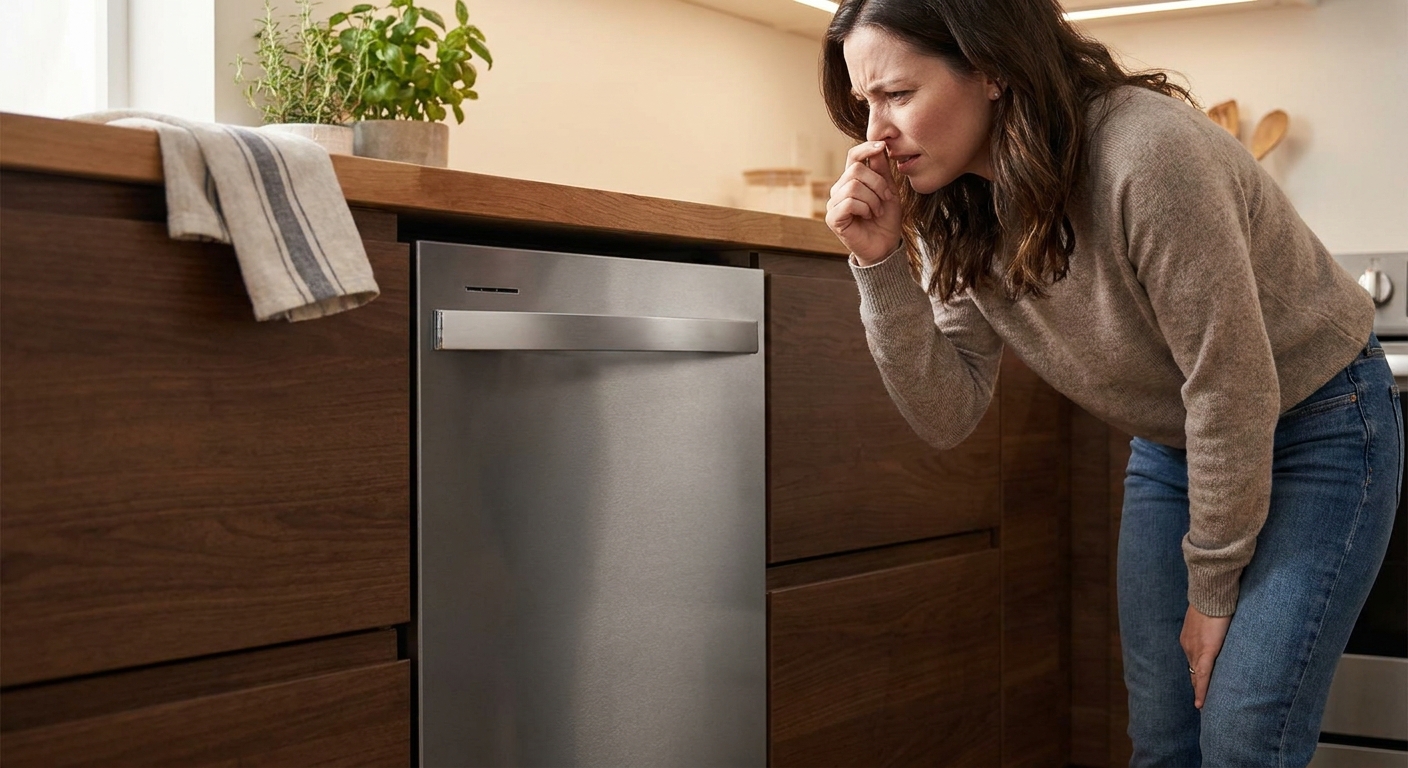
First: is this an emergency?
If any of the items below are true, treat it as urgent.
- Visible smoke, haze, or a melting plastic smell that gets stronger fast
- Sparks, popping sounds, or a burning odor near the wall outlet or under the sink
- Scorch marks on the plug, outlet, or cord
- Tripping breaker or flickering kitchen lights when the dishwasher runs
- Heat you can feel on the door, control panel, plug, or outlet
Do this right now:
- Stop the cycle and turn the unit off using the control panel, if you can do so without opening the door into steam.
- Shut off power at the circuit breaker labeled “dishwasher” or “kitchen.” If you are unsure which breaker, shut off the main only if you can do it safely and you are not cutting power to anything critical (like medical devices).
- Do not keep running it “to test.” A burning smell is a test you already passed.
- If you see smoke or flames, leave the area and call emergency services.
What burning smells can mean
Here are the common “burning” categories people describe, plus what they tend to point to. This is not a diagnosis, but it helps you communicate clearly with a landlord or repair tech.
1) Hot plastic or “new electronics” smell
Often: a plastic item fell to the bottom near the heating element, a utensil handle touched the heater, or packaging material is warming.
Clues: smell is strongest when the heated dry or final drying portion runs; you might find a warped lid, a softened spatula, or a plastic film stuck to the bottom.
2) Hot rubber smell
Often: friction or overheating at a moving part (like the circulation pump or drain pump), a strained motor, or the door gasket getting overheated because of misalignment or contact with hot surfaces.
Clues: odor lingers even after the cycle, and you may notice new noises (humming, grinding), poor draining, or a slightly distorted seal.
3) Electrical or wiring smell (sharp, fishy, or acrid)
Often: an overheating wire connection, failing control board, failing motor, or a problem where the unit is powered (plug, outlet, hardwire junction box).
Clues: strongest near the toe kick or front underside, under the sink near the outlet (if it plugs in), or at the wall outlet. May come with flickering lights or breaker trips.
If you cannot decide whether it is “hot plastic” or “electrical,” assume electrical and shut off power. You do not get a prize for being brave around appliances.
What to shut off (no tools)
Different rentals are set up differently. Use the option you actually have access to.
If your dishwasher has a plug under the sink
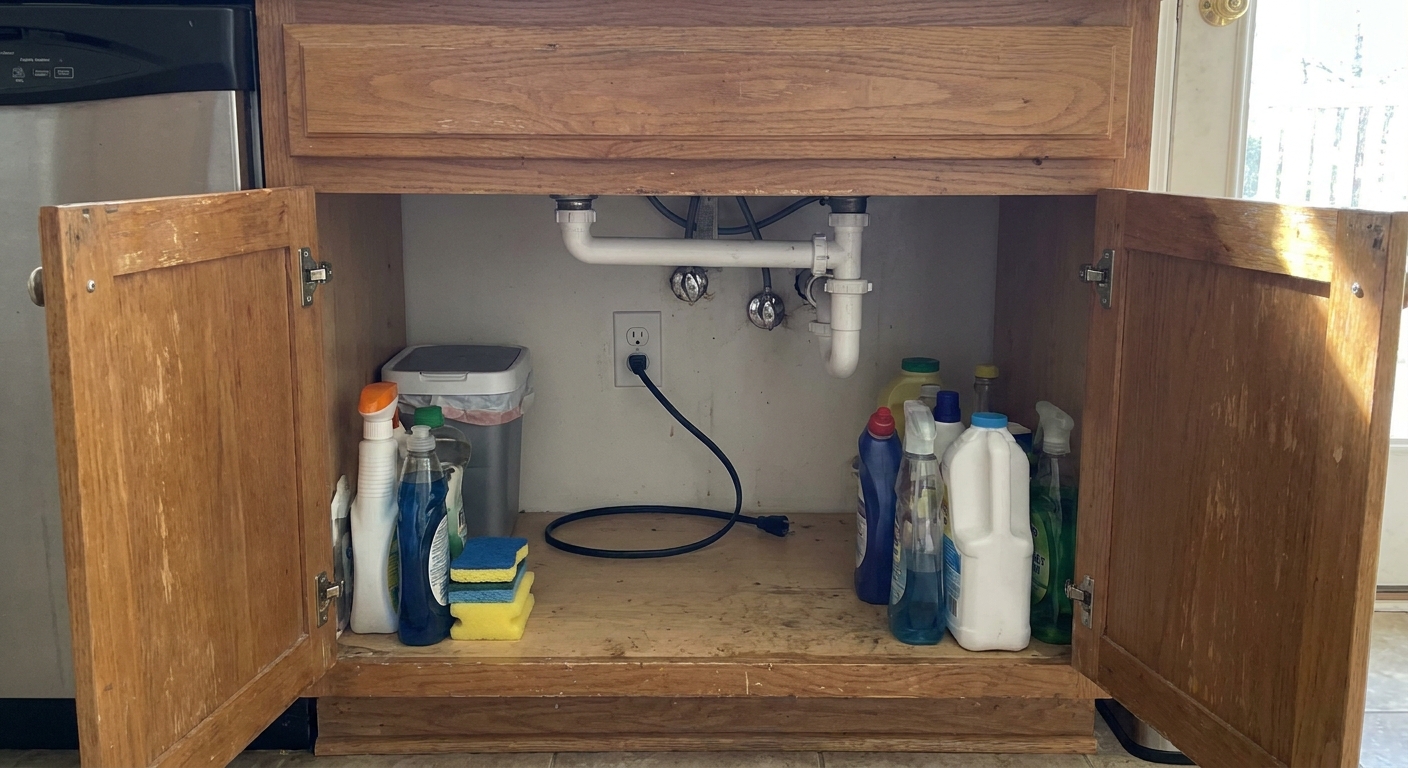
- Unplug it from the outlet under the sink.
- Look for heat damage on the plug and outlet face. Do not touch if it is hot.
- Leave it unplugged until maintenance clears it.
If it is hardwired (no plug you can reach)
- Turn off the dishwasher breaker at the electrical panel.
- If your panel is not labeled, turn off the breaker that stops the dishwasher from powering on.
- Do not remove the toe kick panel or open electrical boxes in a rental unless your lease explicitly allows it and you are qualified.
If there is leaking, shut off the water too
A burning smell plus water leaking is a nasty combination. If you see water, turn off the dishwasher water supply valve under the sink. It is usually a small valve on a line that branches off from the hot water pipe.
Quick note on GFCI outlets
Some dishwashers plug into a GFCI outlet under the sink, sometimes shared with the garbage disposal. If the GFCI trips repeatedly, do not keep resetting it and retrying the dishwasher. Leave it off and report it.
Renter-safe checks
Once the dishwasher is off and cooled, these are the checks I consider “renter-safe.” Think: eyes, nose, and gentle wiping. No screwdrivers.
1) Bottom of the tub for melted plastic
- Open the door and pull out the bottom rack.
- Look for warped lids, fallen measuring spoons, or anything plastic sitting low.
- Check the very bottom for a thin clear film that looks like shrink wrap. That can melt and stink.
If you find melted plastic, do not scrape aggressively. Photograph it and tell maintenance. Scraping can damage the tub surface or heater cover, depending on the design.
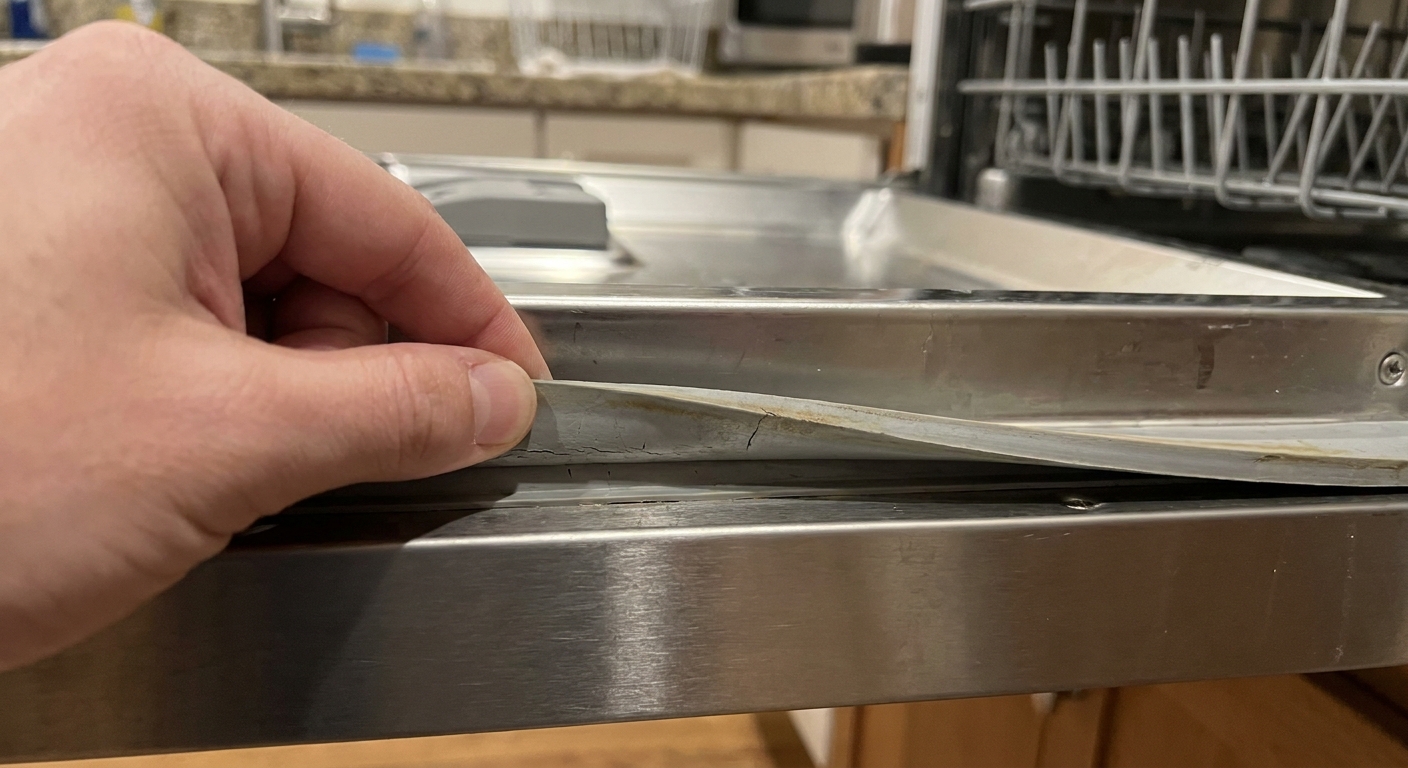
2) Door gasket for scorching
- Run your finger lightly along the gasket and look for glossy melted spots, cracking, or dark scorch marks.
- Smell near the gasket. If the smell is strongest there, mention that.
3) Under the sink
- Look for drips onto the outlet, cord, or garbage disposal wiring.
- Check for standing water in the cabinet base. Dry it up so you can tell if it returns.
- Smell near the outlet. A strong odor here is a big red flag.
4) Toe kick area (outside only)
Kneel down and smell around the bottom edge of the dishwasher door and toe kick. You are not removing panels, just noticing where the odor concentrates. That location detail helps maintenance triage the issue.
What to photograph for maintenance
When you report this, you want to make it easy for someone to say, “Yes, we need to send a tech.” Photos also protect you as a renter.
- The control panel with any error code or blinking lights
- The inside bottom of the tub, especially if anything looks warped, melted, or discolored
- Any plastic item that appears heat-damaged
- The door gasket if you see scorching, cracks, or deformation
- Under the sink showing the outlet and dishwasher plug (if present), plus any water drips
- The breaker panel if the dishwasher breaker tripped (a photo of breaker position is helpful)
- The model and serial sticker usually located on the inner door edge
If you can, also take a short video where you narrate: “Burning smell strongest near the toe kick” or “smell strongest under sink by outlet.” It sounds small, but it saves time.
Common causes (and why not to ignore them)
Melted items on or near the heater
Some dishwashers have an exposed heating element, others have a concealed heater. Either way, plastic too low in the tub can overheat. The risk is not just smell. Melted plastic can interfere with spray arms and drainage.
Overheating motor or pump
If a motor is straining, you may notice a hot, rubbery odor plus unusual sounds like humming, grinding, or a cycle that seems to stall. This is a “stop using it” situation, not a “run it again and see.”
Failing wiring connection or control board
Electrical components can overheat slowly before something fails more dramatically. A sharp, acrid smell, especially near the outlet area or toe kick, is the reason electricians and appliance techs are employed.
Wrong detergent or too many suds
This does not typically create a true burning smell, but heavy suds can cause poor circulation, messy overflows, and extra strain on the pump. If you see lots of foam inside the tub or backing up into the sink, mention it to maintenance.
What not to do
- Do not keep using it to finish a load. Hand wash for a day or two. Annoying, yes. Safer, absolutely.
- Do not remove panels in a rental to “take a peek” at wiring or the junction box.
- Do not spray cleaner into vents, around the toe kick, or into the control panel.
- Do not pour vinegar or baking soda in as a solution for burning odor. If something overheated, deodorizing is not the fix.
- Do not use extension cords or move the plug to a different outlet as a workaround.
- Do not keep resetting a tripping breaker or GFCI and trying again. Turn it off and report it.
Message your landlord
When you are dealing with maintenance, clarity beats panic. Here is wording that gets attention without sounding like you are diagnosing the appliance.
Hi, I noticed a burning smell coming from the dishwasher during a cycle today. I turned the unit off and shut off power at the breaker/unplugged it. The smell seems strongest near (under the sink / toe kick / control panel). I have photos of (any melted plastic / gasket discoloration / outlet area) and the model sticker. Please send maintenance to inspect before I use it again.
Quick FAQ
Is a burning smell ever normal?
A very mild “new appliance” odor can happen with a brand-new unit for the first few cycles. But in a rental, most dishwashers are not brand new. If it smells like burning plastic, rubber, or wiring, treat it as a warning and stop using it.
The smell only happens at the end. What does that suggest?
Often it points to the drying stage, where heat is highest. That is when plastic items can warp, or a heater related problem becomes obvious. Still: power off, then document.
Should I open it right away if I smell burning?
If the cycle is running, hit cancel or power off first. Opening a hot dishwasher can release a blast of steam. If you suspect smoke, shut off power at the breaker and keep the door closed until you are sure it is safe.
What if I already ran it and now the kitchen smells burnt?
Ventilate the room, keep the dishwasher off, and check for obvious melted plastic inside once cooled. If the odor is strongest near the outlet area or toe kick, leave it off and report it.