Dishwasher Grinding or Humming Loudly

Clara Townsend
There are a lot of household sounds I can ignore. A fridge that clicks on. A radiator that sighs. Even the odd plumbing gurgle that makes you pause mid-toothbrushing. But a dishwasher that suddenly starts grinding or humming like it is auditioning for a garage band? That one gets my full attention, because it usually means something is physically stuck, rubbing, or straining.
If you are renting, the goal is not to become an appliance tech overnight. The goal is to figure out whether it is normal wash noise or a mechanical problem that you should stop before it gets worse, then hand off to maintenance.
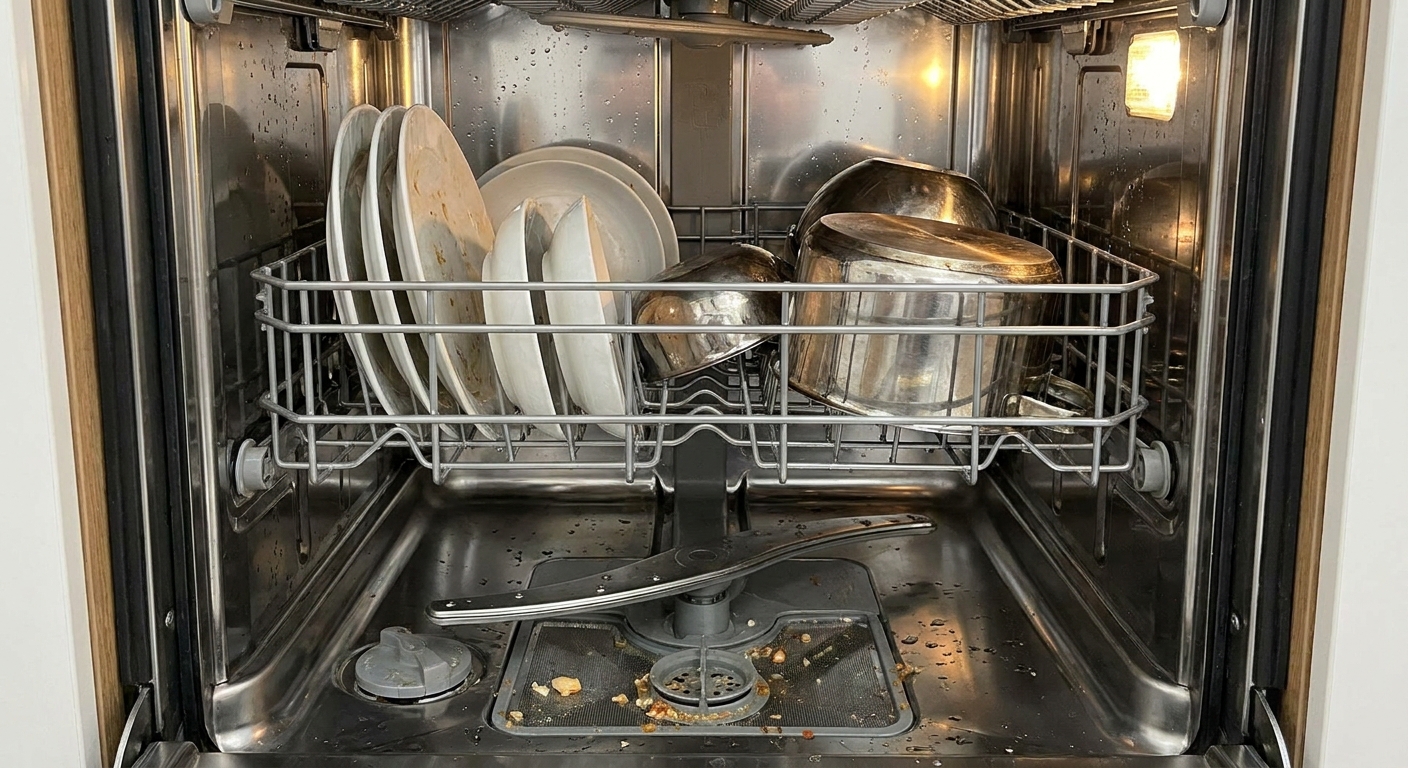
First, what counts as normal?
Most dishwashers are not silent, even the newer ones. Here is the comforting stuff that can be totally normal.
- Steady swishing or whooshing: water circulating through the spray arms.
- Gentle, rhythmic sloshing: water moving around the tub during wash and rinse.
- Clicking every so often: the detergent door opening, a diverter switching water flow, or the control relay.
- A brief drain sound: a louder rush that often lasts roughly 10 to 30 seconds when it pumps water out, though it can vary by model and load.
- Light humming that comes and goes: a motor running under normal load, especially during wash.
What is not normal is a harsh metallic grind, a loud buzzing hum that does not change, or a new noise that appears mid-cycle and keeps escalating.
When to stop the cycle
In a rental, you want to avoid turning a small issue into a ruined pump or motor. Stop the dishwasher and call maintenance if you notice any of the following:
- Grinding or crunching that lasts more than a few seconds.
- A loud hum with no obvious water movement you can hear inside, especially if it sounds strained.
- A burning smell or hot-plastic smell while it is running.
- The noise starts right after a “risky” load like broken glass, popcorn kernels, toothpicks, or bottle caps.
- It gets louder each minute rather than settling into a steady wash sound.
How to stop safely: press Cancel or Drain if your model has it. Once the unit stops (or quiets down), open the door. If you suspect a jam or the sound is intense, switch the dishwasher off at the wall switch if you have one, or flip the breaker if you can access it. It is normal to see some water left in the bottom after you cancel a cycle, especially if it did not finish draining.
Quick safety note: if you suspect glass or sharp debris, do not reach into the sump area blindly. Use a flashlight first and wear gloves.
Common causes to check
The same two noises show up again and again: grinding and humming. They tend to point to a few renter-relevant culprits.
1) Something stuck near the pump
What it sounds like: gritty grinding, crunching, or a rattly clatter that is worse during drain or right when the motor kicks on.
Why it happens: on many dishwashers the filter prevents most debris from reaching the impeller, but tiny hard bits can still get through on some designs, after a broken-glass incident, or if the filter is mis-seated. Common offenders are glass shards, bones, fruit pits, labels, twist ties, and small plastic pieces from lids.
What you can safely do as a renter:
- Turn power off at the dishwasher switch or breaker if you have access.
- Pull out the bottom rack so you have room to work.
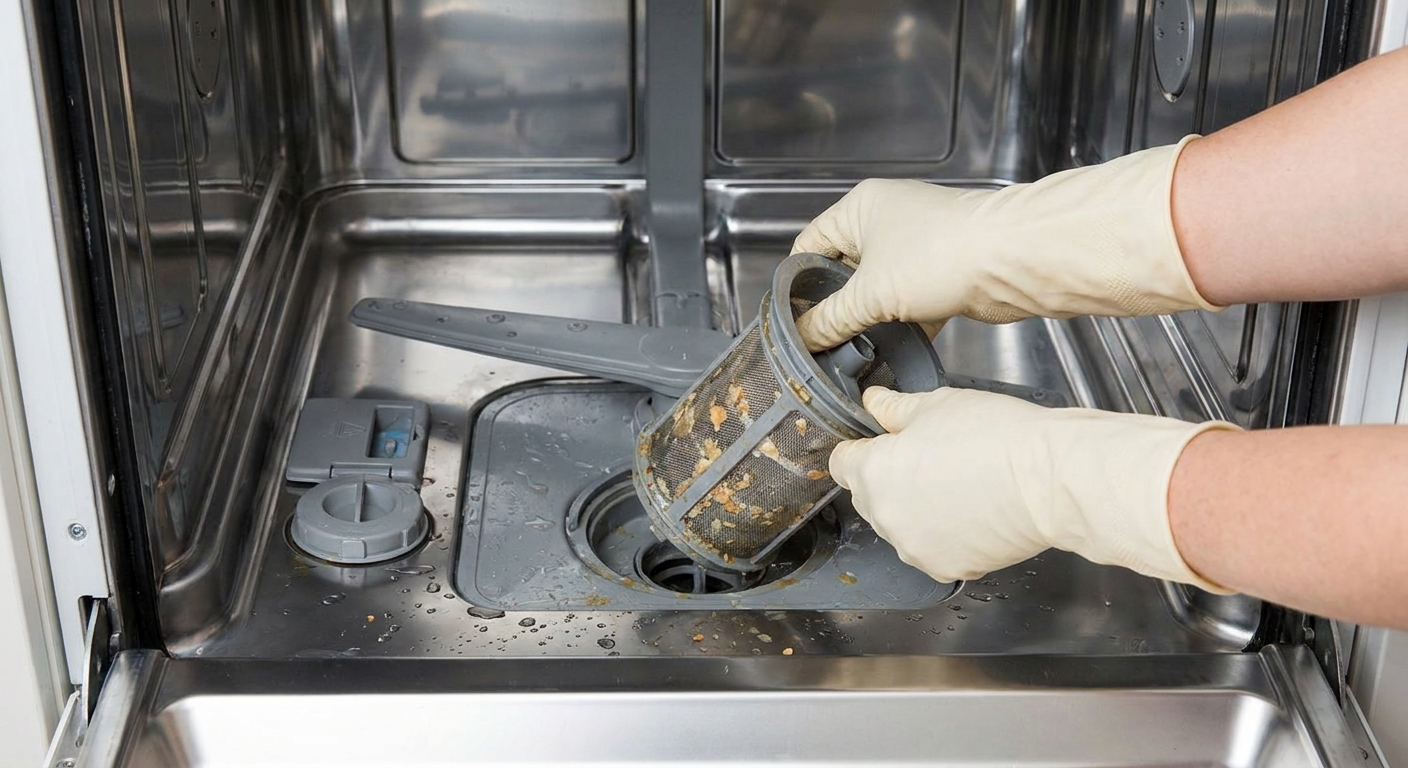
- Remove the bottom filter assembly if your model has one that twists or lifts out. Rinse it at the sink.
- Look into the sump area with a flashlight. If you see obvious debris, remove it with gloved fingers or needle-nose pliers.
- Check around the filter seat and the bottom spray arm base for loose fragments.
When to stop and call maintenance: if you cannot see what is stuck, if something feels wedged, or if you would have to remove panels, hoses, or the unit itself. That is maintenance territory.
2) The spray arm hitting a dish
What it sounds like: a repeating tick, tapping, or a hollow knocking that matches the spin of the spray arm. It often gets louder when the water pressure ramps up.
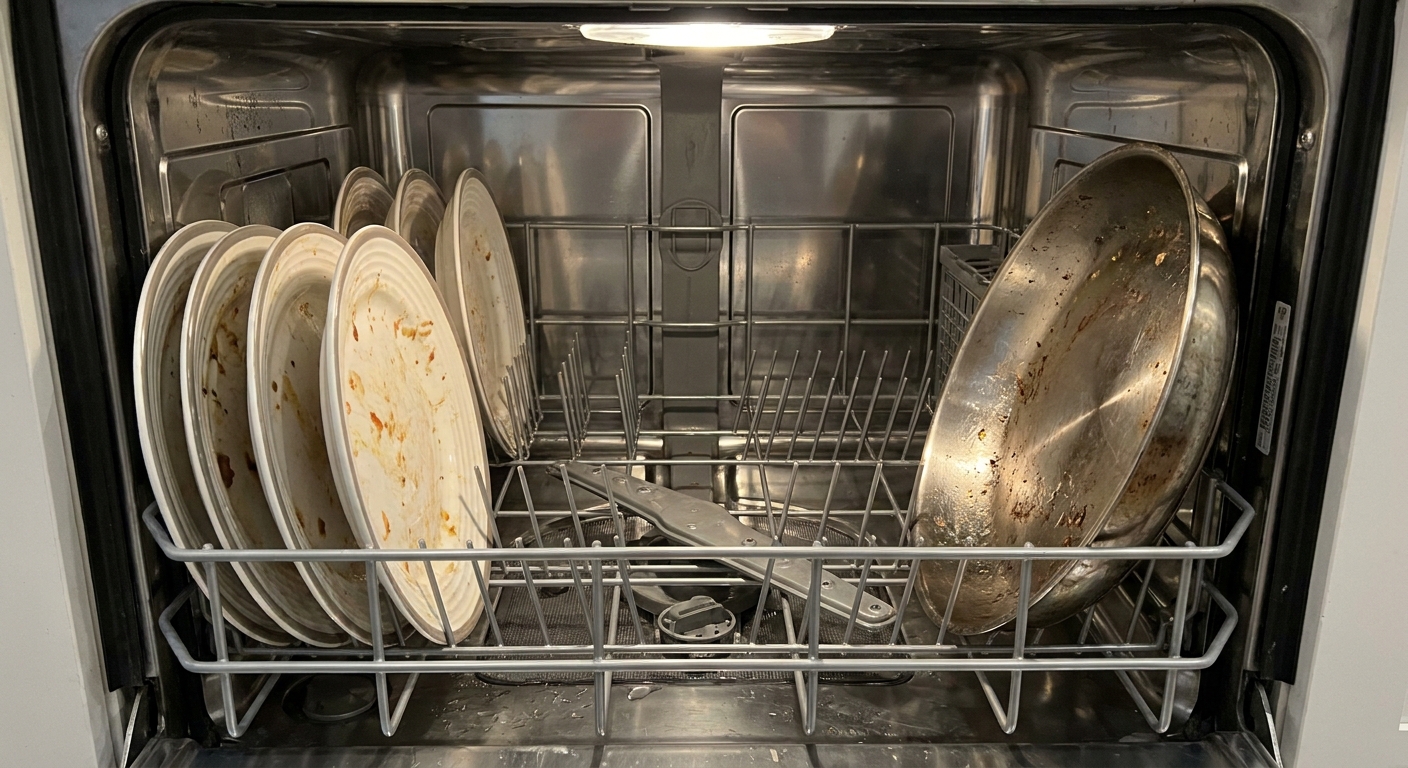
Why it happens: a pan handle or utensil is sticking out, a cutting board is too tall, or a plate is leaning in a way that blocks the spray arm path. Sometimes the bottom rack is slightly off its track so everything sits a tiny bit higher than usual.
What you can do in two minutes:
- Pause the cycle and open the door.
- Spin the lower spray arm by hand. If it hits anything, you found the problem.
- Reposition tall items so nothing hangs down into the arm’s circle. Keep sheet pans and cutting boards along the sides.
- Make sure the bottom rack is fully seated on its wheels and rails.
- Check the upper spray arm too if your model has one under the top rack. Long spatulas and ladles love to misbehave up there.
This is the best-case scenario because once the arm spins freely, the noise usually disappears immediately.
3) A struggling motor or jammed pump
What it sounds like: a deep, sustained hum or buzz that can sound like the machine is trying very hard, but not actually moving water the way it should. You may hear it struggle, pause, then try again.
Why it happens: sometimes it is wear and tear (circulation motor or drain motor). Sometimes it is a jam you cannot access, a blocked circulation path, or an electrical starting issue on certain models. Either way, it is not a renter DIY fix.
Clues that point to a bigger issue:
- The sound persists even with an empty dishwasher.
- You ruled out spray arm interference and checked the filter area for visible debris, and it still hums loudly.
- The dishwasher used to be quietly consistent, and now it is noticeably louder every cycle.
- You hear humming but very little water action inside, like the wash never really gets going.
What to do: stop the cycle and contact maintenance with a clear description of the sound and when it happens. Do not keep re-running it “to see if it works itself out.”
Other noises you might hear
A few other common culprits can sound dramatic even when the fix is simple, or at least simple for maintenance.
- Buzzing during fill: can be the inlet valve energizing while water flow is restricted. A partially closed shutoff valve under the sink can contribute, but if you are not sure, skip the under-sink gymnastics and tell maintenance.
- Loud drain or gurgling: can be a drain hose routing issue, a check valve problem, or a disposal connection backing up.
- Random rattling: lightweight items like small lids or loose cutlery can migrate and bounce against the tub or spray arm.
- Grinding on some older designs: some units have a chopper area that can get jammed. The sound is real, and the fix is usually not renter-level.
A quick sound decoder
If you are standing in your kitchen trying to decide whether to intervene, this can help:
- Repeating tick or knock: likely spray arm hitting something. Rearrange the load and test the arm spin.
- Gritty grinding, especially near drain: likely debris in the sump or pump area (or a jam you cannot reach). Stop and check the filter area if accessible.
- Loud steady hum with weak wash sounds: possible jammed pump, blocked circulation path, or motor struggle. If you have ruled out spray arm interference and obvious debris, stop and contact maintenance.
- High-pitched squeal: can be bearings, a pump seal, a worn bushing, or something rubbing. Stop and contact maintenance.
What to tell maintenance
When you report it, you will save everyone time if you include a few specifics:
- When the noise happens: right after starting, during wash, only during drain, or near the end.
- What kind of noise: grinding, ticking, buzzing hum, squealing.
- What you already checked: “spray arm spins freely,” “filter removed and rinsed,” “no visible debris.”
- Whether it started after a specific load: for example, after a broken glass incident or a very messy baking night.
If you can safely take a short video of the sound with your phone, that can be surprisingly helpful too.
Habits that prevent it
I am not here to turn your kitchen into a maintenance schedule, but a few low-effort habits can keep your dishwasher from acting up:
- Do a quick sweep for tiny hard bits before loading, especially after anything with toothpicks, skewers, or shattered glass.
- Load tall items thoughtfully: keep pan handles and long utensils from dipping into spray arm space.
- Make sure the filter is seated after anyone cleans it. A slightly misaligned filter can invite debris where it does not belong.
FAQ
Is a humming dishwasher always bad?
No. A gentle hum during washing can be normal motor sound. It becomes a red flag when it is loud, strained, or paired with poor water movement, or when it is new and persistent.
My dishwasher grinds for a few seconds at the start. Should I worry?
A brief change in sound during startup can happen as the machine shifts modes, but a true grind usually means something is rubbing or caught. If it repeats, gets louder, or happens during drain, stop and check the filter area, then contact maintenance if it continues.
Can I keep running it until maintenance comes?
If it is grinding or loudly humming, I would not. Continuing to run a struggling pump or motor can turn a fixable jam into a full replacement. Better to stop, leave it off, and report it.