Dishwasher Pod Not Dissolving

Clara Townsend
The first time I opened a dishwasher and found a perfectly intact pod sitting there like it had taken a spa day, I genuinely thought the machine was messing with me. It is a very specific kind of annoyance because the cycle finished, the door clicked open, and yet the one job the pod had was not completed.
The good news: when a pod will not dissolve, you are usually dealing with a simple trio of culprits: a dispenser door that did not open properly, water that was not hot enough (or not moving enough), or a pod that got placed where it could not get fully soaked. Let’s walk through it in a calm, practical order.
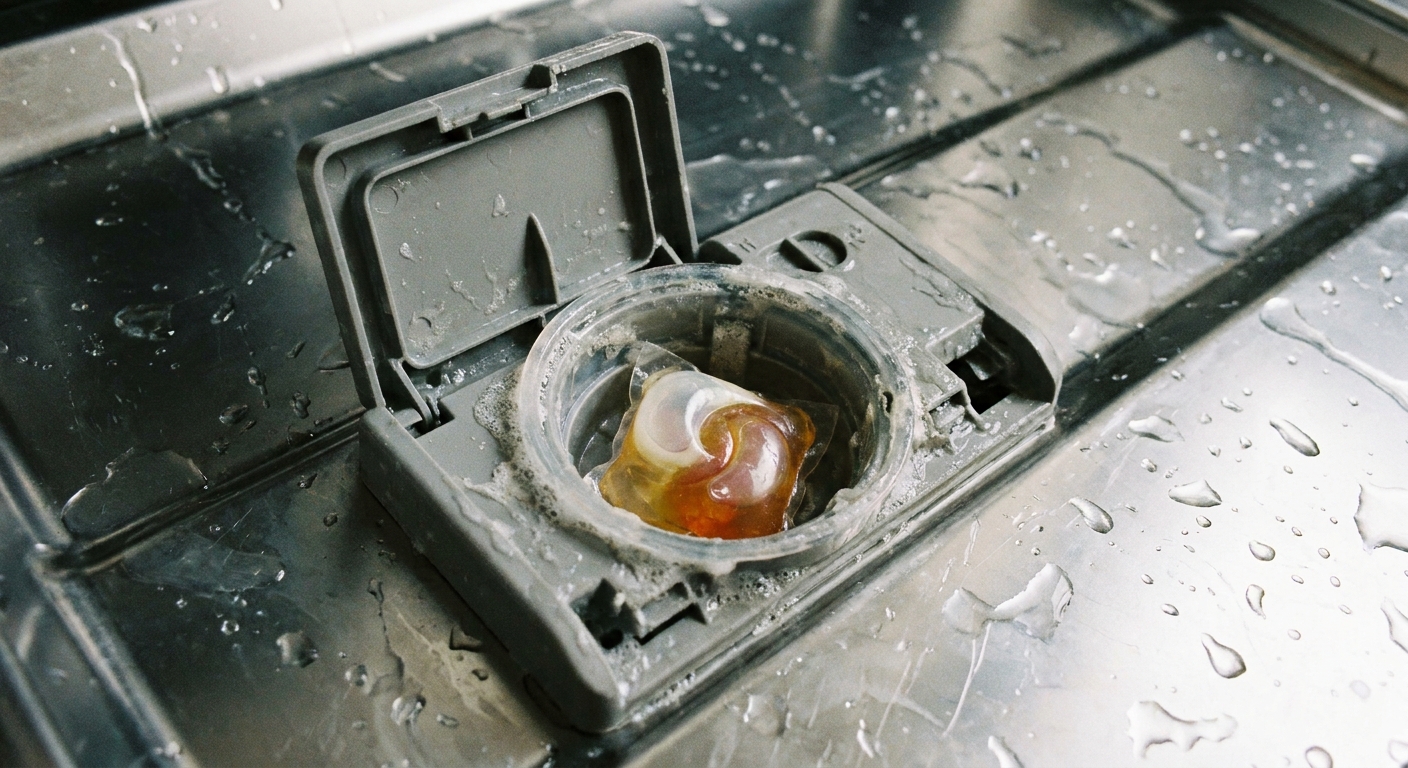
Start here: what the leftover pod tells you
A pod that is still whole in the detergent cup points to a different issue than a pod that is half-melted and stuck somewhere.
- Whole pod in the dispenser: the dispenser door likely stayed shut, got blocked, or popped open too late.
- Pod half-stuck: water hit it, but not enough warm water or spray action reached it consistently.
- Powdery clumps from a pod: can happen when a pod dissolves in fits and starts, often due to cooler water or restricted spray.
Keep that clue in mind as you troubleshoot.
1) Check the detergent dispenser for blockage
If the pod is sitting in the dispenser like a little time capsule, focus on the dispenser door first. It is supposed to pop open partway through the cycle, and if it cannot swing freely, the pod never gets a proper drenching.
Quick dispenser door checklist
- Was something in the way? A large cutting board, sheet pan, or tall plate in the front rack can stop the dispenser door from opening. Re-load with a clear landing zone in front of the dispenser.
- Is the latch gummy? Sticky residue from detergent, rinse aid, or hard water can make the latch sluggish. Wipe the dispenser cup and door edges with a damp cloth.
- Is the cup wet when you load it? Pods can cling to a damp dispenser and stick instead of dropping cleanly into the wash. A quick towel-dry before you load helps.
- Does the door open smoothly by hand? With the machine empty, open and close it a few times. It should click shut and release without resistance.
If you clean the dispenser area and re-load so nothing blocks the door, run a short cycle and see if the pod is gone.
If you also notice weak cleaning: check the filter
A dirty filter will not usually cause a dispenser door to fail on its own, but it can reduce circulation and leave grime behind, which makes everything work worse. If you are also seeing gritty dishes, cloudy glasses, or weak spray, pull the filter (if your model has an easy-to-access one), rinse it under hot water, and re-seat it firmly.
2) Make sure the water is warm enough
Pods dissolve best with warm, moving water. If the dishwasher fills with lukewarm water, a pod might soften but never fully break down, especially on short or eco cycles.
What to do (fast, no tools)
- Run the hot water at your kitchen sink for 30 to 60 seconds before starting the dishwasher. This helps avoid a cold start.
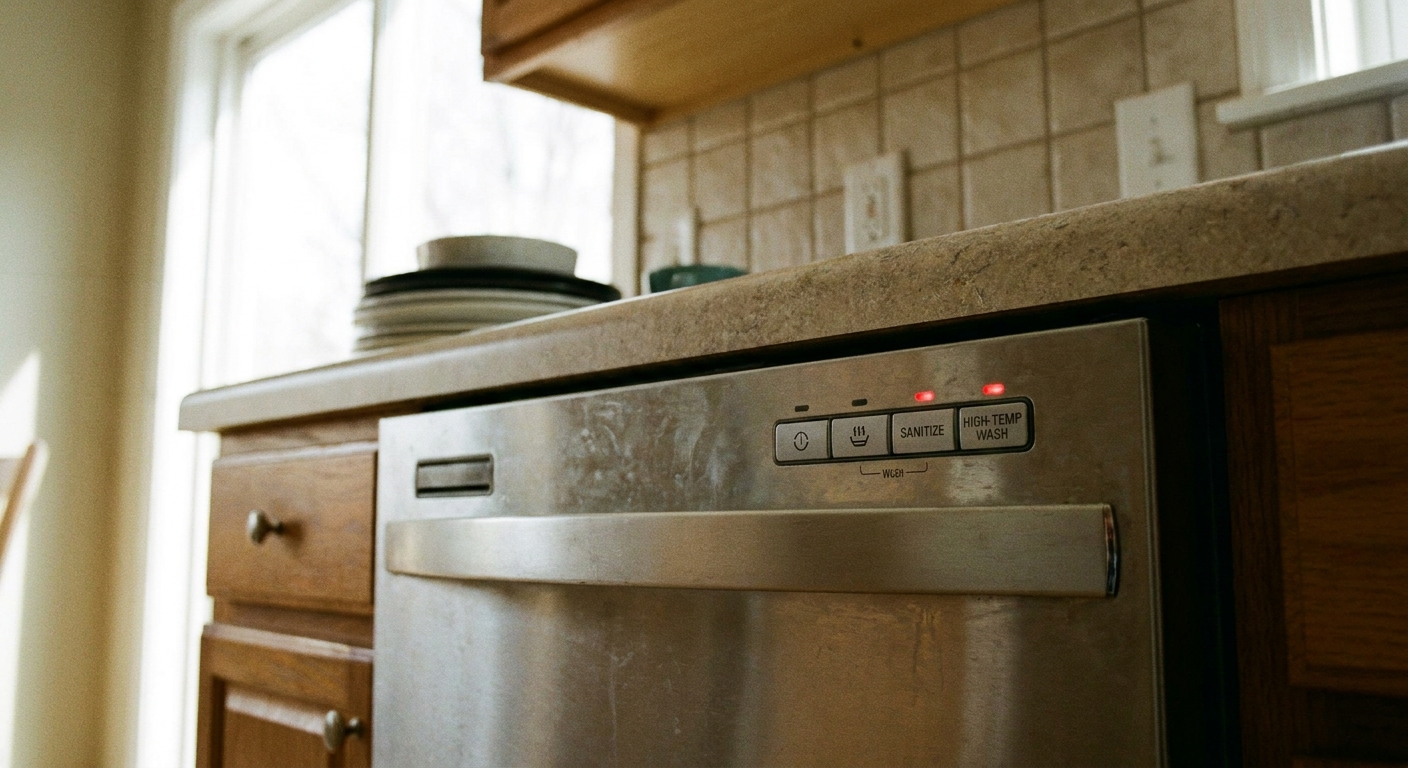
- Choose a normal cycle for testing. If your machine has High-temp wash or Sanitize, turn that on for one troubleshooting run since those options typically boost wash temperature.
- Check your hot water at the tap if you can. Many dishwasher manufacturers recommend about 120°F (49°C) at the kitchen tap for best results. If yours runs much cooler, pods may struggle.
If you are in a rental and cannot adjust the water heater, the sink pre-run trick is your best friend.
3) Pod placement matters
Most of the time, the pod belongs in the detergent dispenser. But there are a few common scenarios where placement becomes the problem.
Avoid these pod placement mistakes
- Do not toss a pod into the utensil caddy or onto the door if your machine expects it in the dispenser. It can dissolve too early, stick to plastic, or end up in a corner with poor spray.
- Do not press it into a damp dispenser. Moisture can glue it in place so it never drops cleanly when the door opens.
- Do not overpack the front of the bottom rack. Even if the door opens, a big pan right in front can trap the pod so it sits there, half-melting.
Best placement, simply
Dry the dispenser cup, place one pod inside, and close the door firmly. Then load tall items so they do not block the dispenser door’s swing path.
4) Check spray arms for obvious obstruction
You do not need to become an appliance technician for this. You are just looking for something simple that prevents strong water movement, because pods need consistent spray.
- Spin the spray arms by hand with the racks pulled out. They should rotate freely.
- Look for a trapped spoon or fallen label that could stop the arm from turning.
- Peek at the tiny holes on the spray arm. If you can see debris lodged in multiple holes, that can weaken spray enough to leave a pod behind.
If you spot gunk in the holes, gently clear it with a toothpick or rinse the arm if it is removable.
5) Quick checks people forget
Hard water and mineral buildup
If you have chalky white film on glasses or visible scale around the dishwasher, hard water can make detergent performance less predictable. Cleaning the filter and running a dishwasher cleaner cycle can help, and keeping rinse aid filled often improves results in hard-water homes.
Pods stored in humidity
If your pods live under the sink next to a leaky sponge situation, they can absorb moisture and clump. Store them sealed and dry. Also, only grab pods with dry hands so the film does not start dissolving before it even gets a chance.
6) A simple test cycle to pinpoint the cause
If you want a clear answer without guessing, try this quick experiment.
The watch-the-dispenser test
- Load the dishwasher normally, but keep the front area clear of large items.
- Start a normal cycle.
- After you can hear washing clearly underway and the machine has been running for a bit, pause the cycle and carefully open the door. On many models this is around 15 to 30 minutes, but timing varies.
- Look at the detergent dispenser: is it open? Is the pod gone or at least dissolving?
If the dispenser is still closed, you have a dispenser issue or something is blocking it. If the dispenser is open but the pod is still mostly intact, you are likely dealing with water temperature, low fill, or weak spray action.
Be careful opening mid-cycle. Hot steam and hot water are no joke. Also note that some dishwashers pause, pump out, or act a little dramatic when you open the door mid-run, so treat this as a clue, not a courtroom verdict.
When to stop troubleshooting and call for service
If you have tried: (1) clearing and drying the dispenser, (2) loading so the door is not blocked, and (3) starting with hot water at the sink, and you still find intact pods after multiple cycles, it may be a mechanical issue.
- Dispenser actuator failure: the door is not being triggered to open at the right time.
- Heating issue: the dishwasher is not heating water properly.
- Water circulation problem: the pump is not pushing water with enough force.
- Fill problem: the dishwasher is not filling with enough water to create strong spray. If you notice unusually quiet washing, poor cleaning, or error codes, mention that when you request service.
In a rental, this is usually the point where I document it with one photo of the intact pod and a note of what you tried, then submit a maintenance request. It is not you, and it is not your loading skills.
Quick FAQ
Why is my dishwasher pod still intact after the cycle?
Most often: the dispenser door did not open fully, something blocked it, or the pod stuck to a damp dispenser cup. Less commonly, the dishwasher did not get warm enough water, did not fill properly, or did not have strong enough spray action to dissolve it.
Is it okay to put the pod in the bottom of the dishwasher instead of the dispenser?
Some manufacturers allow it, many do not. If your issue is an intact pod in the dispenser, the fix is usually to address the dispenser door and loading, not to bypass the dispenser. If you do experiment, run one test cycle and check results, but default to the manufacturer’s instructions for your machine.
Do I need to change detergents?
Usually no. Before switching brands, make sure the dispenser is clean and dry, the door is unobstructed, and the dishwasher is starting with hot water. Pods are sensitive to those basics.
Should I poke a hole in the pod to help it dissolve?
I would not. Pods are designed to dissolve on their own, and puncturing them can make a mess in the dispenser and on your hands. Focus on wash temperature, spray, and dispenser function instead.