Why Your Rug Looks Stained (But Isn’t): Pile Shading and Watermarking

Clara Townsend
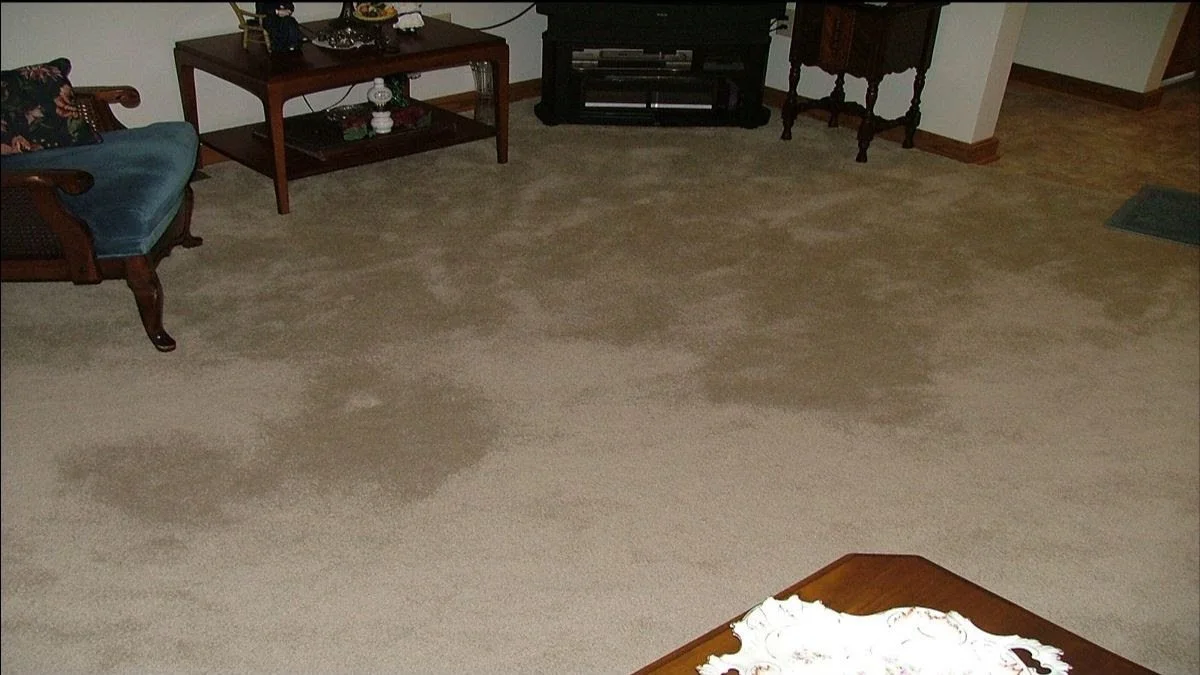
The first time I noticed it, I fully panicked. My living room rug looked like someone had dragged a damp mop across it and walked away. It was a weird, cloudy ripple that read as a stain, especially in late afternoon light. I did the whole routine: vacuum, blot, mild soap, then that slow, suspicious stare that basically accuses your rug of having secrets.
Here’s the comforting truth: if the “stain” changes when you brush the fibers with your hand, and your rug is lying perfectly flat, you’re very likely looking at cut-pile shading or watermarking. It is a real thing, it is common, and it is not a sign you did something wrong.
What cut-pile shading actually is
Cut-pile rugs have yarn tips that are cut, creating that soft, velvety surface many of us love. The trade-off is that the pile has direction, and light hits it differently depending on which way those fibers are leaning.
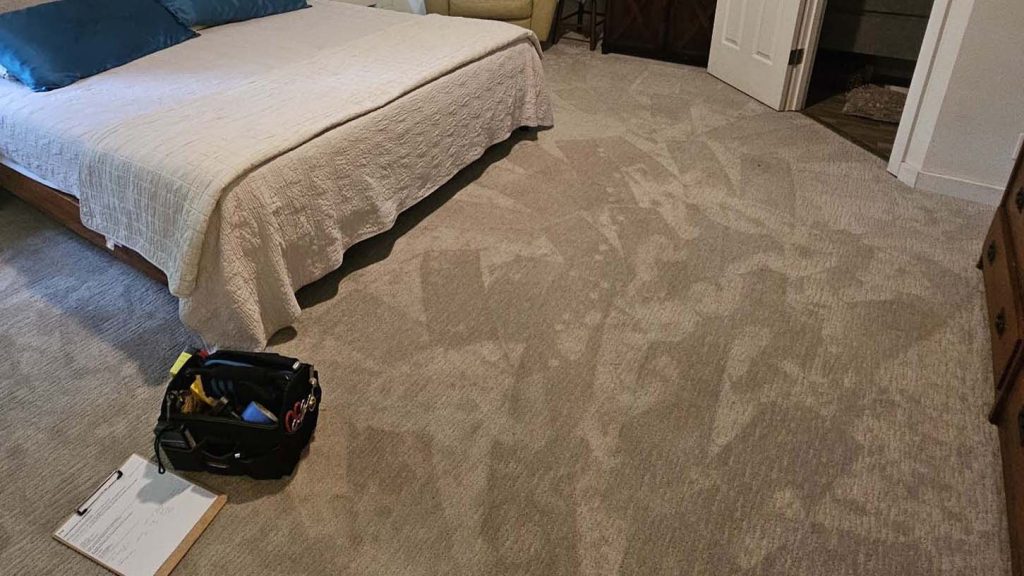
Shading happens when sections of the pile are pressed, brushed, or naturally “trained” to lean in different directions. One direction reflects more light and looks lighter. The opposite direction absorbs light and looks darker. Your eye reads those shifts as ripples, waves, or stains, even though nothing is actually on the rug.
Watermarking is the cousin of shading. It can look like soft-edged puddles or cloudy patches. It is still about pile orientation and reflection, not moisture damage. It is especially common on certain constructions and fibers, and it can appear during normal use and vacuuming.
Signs it’s shading or watermarking, not dirt
- The patch changes when you brush it. Run your hand or a clean, dry spoon over the spot. If it flips from light to dark depending on direction, that is the biggest clue.
- It shows up most in side light. Morning or late-day sunlight skimming across the rug makes shading scream. Overhead lighting often makes it quieter.
- You can’t feel anything. No crust, no stiffness, no tackiness. The fibers feel normal.
- It “moves” when furniture moves. After sliding an ottoman or chair, you suddenly see a new patch where the pile was pressed.
- The rug lies flat. The surface looks blotchy, but the backing is not bubbled and the edges are not curling.
If most of these are true, you’re not dealing with a spill. You’re dealing with physics and a bit of drama.
The easiest test: the side-light check
When a rug looks “stained,” I like to do a quick lighting investigation before I do anything wet.
Step 1: Turn off overhead lights
Overhead lighting can flatten the look of the pile and hide what is really happening.
Step 2: Use a low, side light
Use a floor lamp, a flashlight, or even your phone light held low to the rug so the light skims across the surface.
Step 3: Look from two directions
Crouch at one end of the rug, then the opposite end. If the “stain” flips from dark to light when you change your viewing angle, you are almost certainly seeing shading or watermarking.
Important: This flip is not a defect in the backing. It is the pile reflecting light differently based on direction.
Why steam, reverse-rolling, and heavy books will not fix it
I love a simple fix as much as anyone, and those tricks do help when a new rug has shipping creases or ripples in the backing. But shading is a different beast.
- Steam relaxes fibers, it does not re-engineer pile direction. You can temporarily fluff a section, but you cannot permanently force every tuft to “agree” on a single direction. The pile will respond again to foot traffic and vacuum lines.
- Reverse-rolling addresses fold memory. Shading is not a fold line in the backing. If the rug is already flat, reverse-rolling is solving the wrong problem.
- Weighting down changes height, not light reflection. In fact, heavy pressure can make shading more noticeable by compressing the pile.
If your rug is flat and the mark changes when you brush it, your time is better spent confirming it is not a stain than trying to “flatten” the look away.
What you can do (realistically) if shading bothers you
Some people genuinely do not mind shading. Others, especially in bright rooms with lots of raking light, find it distracting. Here are a few practical ways to make peace with it.
1) Choose your vacuuming direction on purpose
Vacuuming creates visible tracks on many cut-pile rugs. Pick a direction and stick to it for the last pass so the finish looks intentional. If you alternate directions every time, you can end up with a patchwork effect.
2) Brush the pile gently for visual consistency
A soft carpet brush or a clean, dry broom can nudge fibers into a more uniform lay. This is cosmetic, not permanent, but it can help before guests come over.
3) Adjust lighting
If one window creates strong side glare, try a sheer curtain, a different lamp placement, or a warmer bulb. Shading is mostly about how light hits the pile, so lighting changes can make a bigger difference than you would expect.
4) Embrace pattern and texture next time
If you are shopping for a rug and you know shading will drive you nuts, look for:
- Low, looped piles
- Berber styles
- Heavily patterned designs
- Textured weaves
- Flatweaves
They are typically more forgiving visually because there is less uniform pile to reflect light like velvet.
When it’s not shading: real creases, waves, and backing issues
Sometimes a rug really is rippling, and that is a different repair path. Here’s how to tell.
It might be a crease or buckle if:
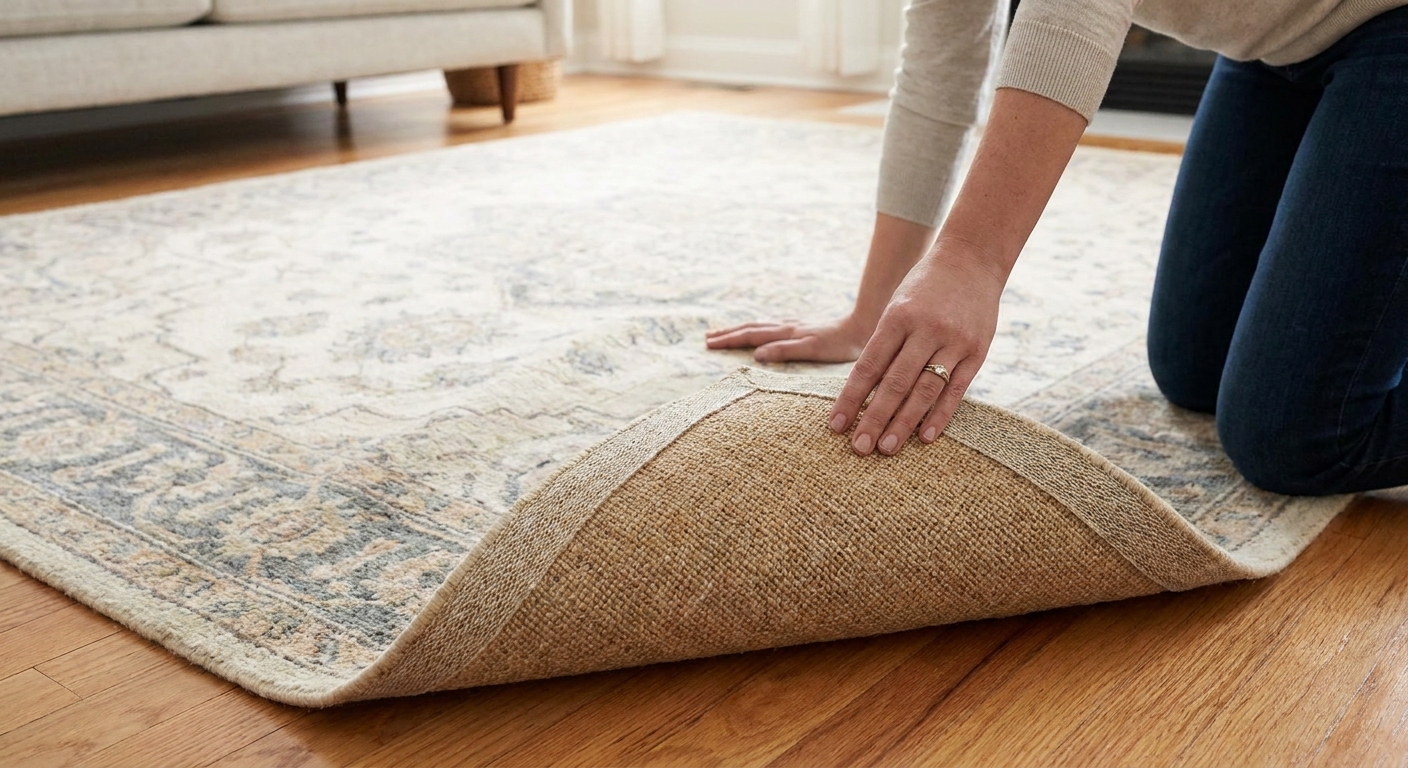
- The rug has a raised ridge you can feel with your hand or foot.
- The edge won’t lie down even after a few days on the floor.
- The surface looks wavy and the backing also looks wavy when you lift a corner.
- The ripple follows a straight line where it was folded or rolled for shipping.
Those issues are structural, not optical. That is where careful weighting, time, proper pad choice, or professional stretching can actually help.
When it’s not shading: how to spot an actual stain
Because shading can look like a spill, I always do a quick “is this real?” check before I relax.
Clues you may have a real stain
- The color does not change when you brush the pile in different directions.
- The outline has a specific shape that looks like a splash, ring, drip, or pet accident.
- The fibers feel different in that area: sticky, crunchy, matted, or stiff.
- There is odor, especially with milk, wine, pet stains, or mildew.
- It looks the same in every light, including straight overhead light.
If you suspect a stain
Blot, do not rub. Test any cleaner in an inconspicuous corner first. And if the rug is wool, viscose, or a vintage piece, I strongly recommend calling a reputable rug cleaner sooner rather than later. The wrong DIY can set the stain or distort the pile.
Quick FAQ
Is rug shading a defect?
Usually, no. Shading and watermarking are commonly considered normal characteristics of cut-pile rugs, especially plush or velvety constructions. Some manufacturers note it in their care information because it is so common.
Will professional cleaning remove watermarking?
Cleaning can remove soil that makes shading look worse, but it cannot change the inherent way a cut pile reflects light. If the issue is purely directional shading, cleaning will not permanently eliminate it.
Why does it look worse in photos?
Cameras love contrast. Side light plus a phone camera often exaggerates the dark and light shifts, making a normal shading pattern look like a dramatic stain.
Can I prevent it?
You can reduce it by using a quality rug pad, rotating the rug so traffic is even, and vacuuming consistently in one finishing direction. But you cannot fully prevent a cut pile from showing directional change over time.
The comforting takeaway
If your rug is lying flat and the “stain” flips when you brush the pile, you are probably looking at shading, not damage. It is the same optical trick that makes velvet look lighter when you smooth it one way and darker when you smooth it the other. Annoying sometimes, yes. Dirty or ruined, no.
And if you do the side-light check and the spot stays stubbornly the same in every direction, that is when you switch gears and treat it like a real stain or a real crease. Your rug is not being mysterious. It is just asking you to diagnose the right problem.