How to Vacuum an Area Rug Without Pulling Fibers

Clara Townsend
Clara Townsend is an interior stylist, vintage furniture enthusiast, and the creative voice behind Velvet Abode. With over a decade of experience transforming both cramped city apartments and sprawling fixer-uppers, she believes that a beautiful home is built on personal stories rather than massive budgets. When she isn't hunting for the perfect brass sconce at a local flea market, she can usually be found rearranging her living room for the third time this month.
Vacuuming should make your rug look quietly better, not like it just lost a fight with your vacuum. If you have ever stood over a fluffy wool rug holding a canister of fuzz, or found a pulled loop in a flatweave that wasn't there yesterday, you're not alone. Most rug damage isn't from “too much cleaning.” It's from the wrong setting, the wrong attachment, or one aggressive pass in the wrong direction.
Below is my go-to, no-drama routine for vacuuming area rugs so they stay plush, tidy, and intact. We'll cover pile height, beater bar rules, pass direction, fringe protection, and the small mistakes that cause shedding and pulled fibers on wool, shag, and flatweaves.
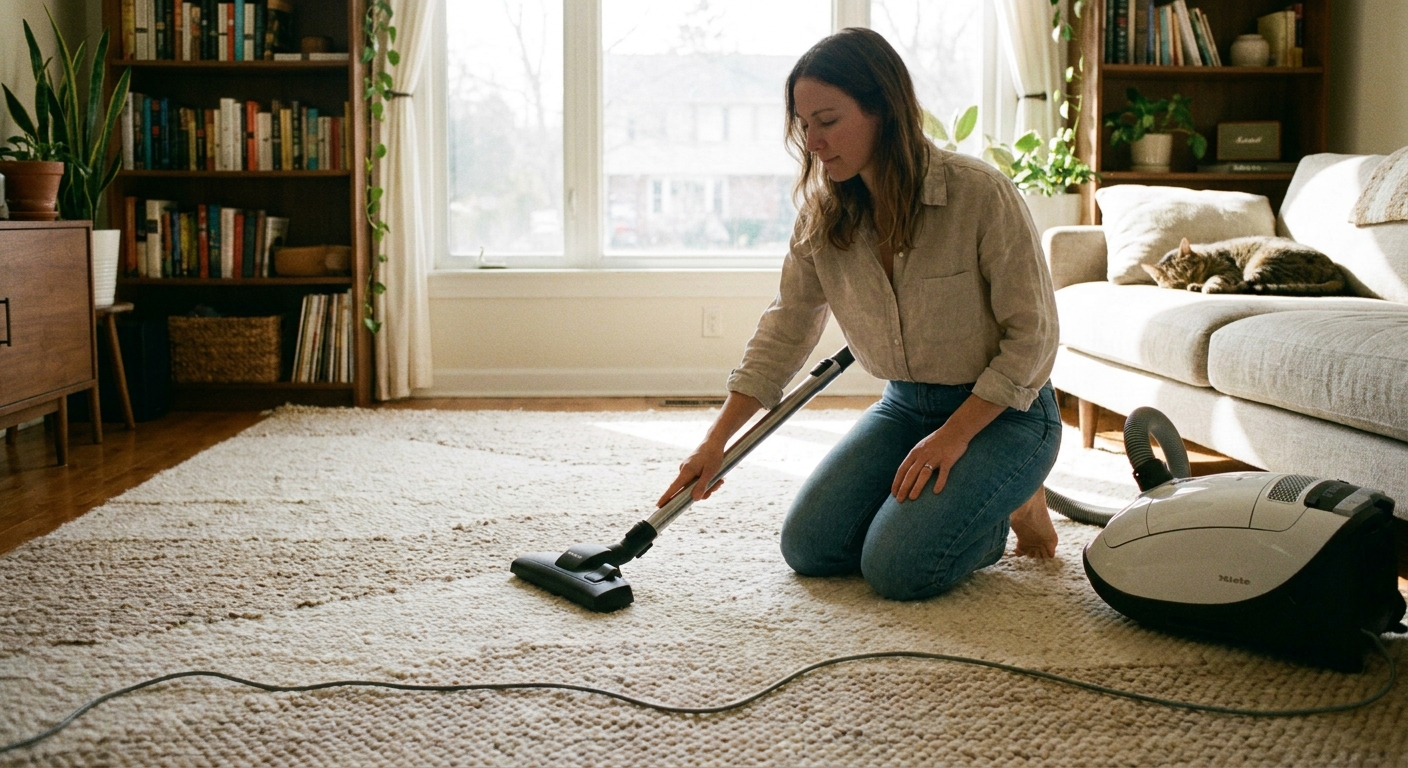
Start with a 60-second rug check
This tiny pre-check saves you from snags, fuzzing, and that awful zipper sound a vacuum makes right before it eats something it shouldn't.
- Look for loose threads and pulled loops. If you see one, don't vacuum directly over it. Trim only the loose end with sharp scissors so it sits level with the surface. Don't pull it.
- Check the corners and edges. If the rug curls, secure it first with a rug pad or rug tape so the vacuum doesn't catch the lip.
- Pick up hard debris by hand. Bits of glass, pet kibble, and gritty pebbles can act like sandpaper and increase fuzzing when dragged across fibers.
- Identify the rug type. If you're not sure, use the feel test: shag is long and plush, flatweave is thin and tight (often reversible), and tufted wool tends to feel dense with a visible backing.
Beater bar on or off by rug type
The beater bar (also called a brush roll) is the spinning brush that can be amazing for wall-to-wall carpet and absolutely brutal on the wrong rug. Here's the simple rule: if the rug has loops, fringe, or long pile, default to beater bar off.
Wool rugs (cut pile or plush)
- Best setting: Start with beater bar off or use a suction-only floor head. If your wool rug is low to medium pile and very sturdy, you can test beater bar on a low setting, but only if the vacuum has a gentle height adjustment.
- Why: New wool rugs shed naturally, and a brush roll can over-agitate the fibers, creating extra fuzz and speeding up wear.
- My tell: If the vacuum feels like it's “sticking” or the rug lifts, the brush is too aggressive. Turn it off.
Shag and high-pile rugs
- Best setting: Beater bar off, highest pile height setting (if using an upright), and lower suction if your vacuum allows it.
- Why: A brush roll can tangle in long fibers, pull strands, and create bald spots over time.
- What to use instead: A suction-only head, or a canister vacuum with a smooth floor tool. For deeper cleaning, a handheld vacuum on low suction can help in high-traffic spots.
Flatweaves (kilim, dhurrie, low-profile cotton blends)
- Best setting: Beater bar off and suction-only.
- Why: Flatweaves are tight and structured, so brush rolls can catch the weave, pull threads, and create runs.
- Bonus tip: Many flatweaves are reversible. Vacuum both sides regularly to remove embedded grit that grinds fibers down from within.
Looped rugs (berber-style, some sisal blends)
- Best setting: Beater bar off, always.
- Why: Loops can snag and unravel. One caught loop can turn into a long pulled line faster than you can say “well… that's new.”
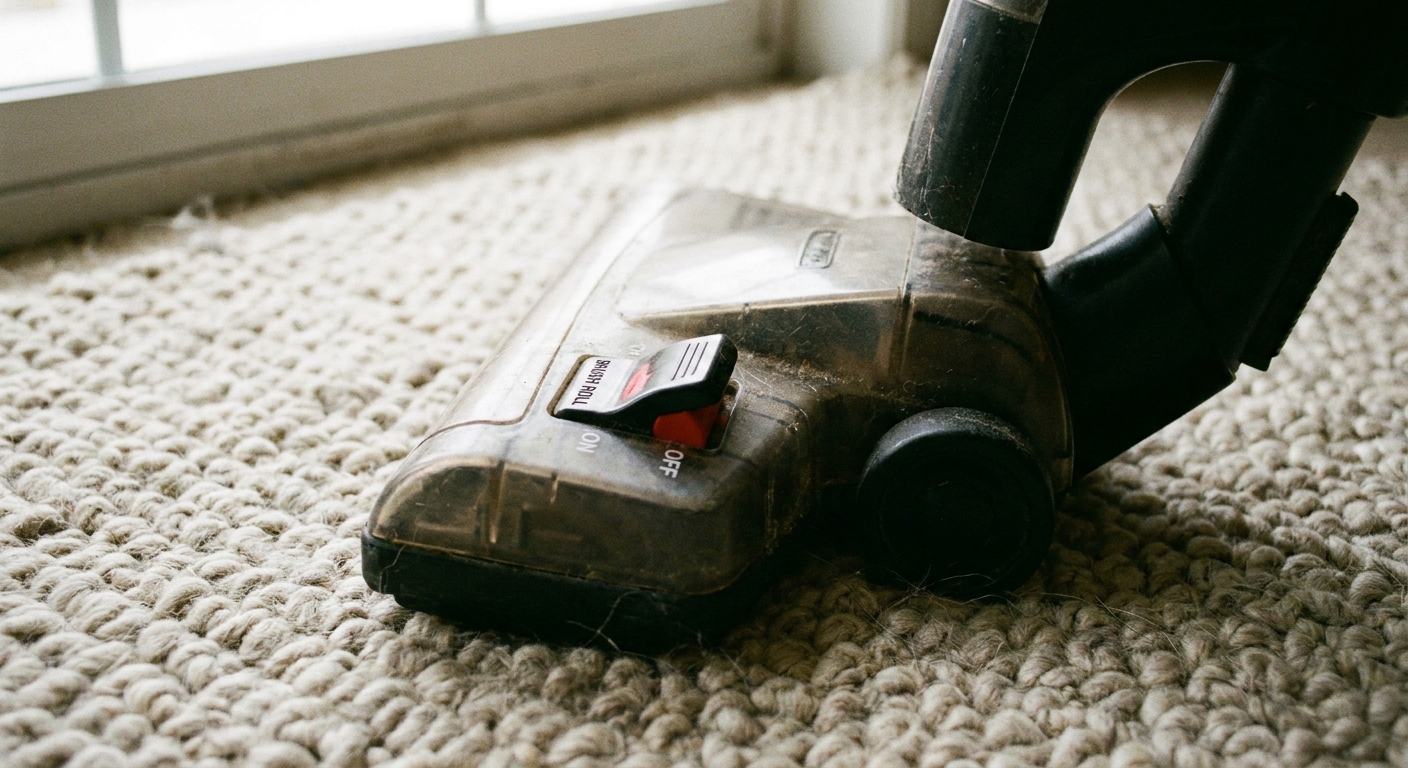
Vacuum direction
Rugs have a “nap,” meaning the fibers naturally lean in one direction. Vacuuming with the nap looks smoother and puts less stress on the yarn.
- Step 1: Run your hand across the rug. One direction will feel smoother. That's the direction to vacuum.
- Step 2: Vacuum with the nap in long, slow passes.
- Step 3: For a deeper clean, do a second set of passes perpendicular to the first, still gentle and slow.
- Caveat for delicate rugs: If your rug is especially delicate (faux silk, viscose, bamboo silk, or anything with a shiny, “liquid” look), skip crosswise passes. Stick to light suction-only passes with the nap, because cross-grain vacuuming can permanently distort the surface.
- Avoid: Rapid back-and-forth scrubbing. It's the fastest way to create fuzzing on wool and fray on delicate fibers.
If you have a patterned rug, vacuuming with the nap also helps the design look crisp, like you just fluffed pillows and lit a candle. Small visual wins matter.
Fringe: treat it like hair
Fringe is often the first casualty of enthusiastic vacuuming. The goal is to clean around it without twisting, chewing, or pulling.
The safest method
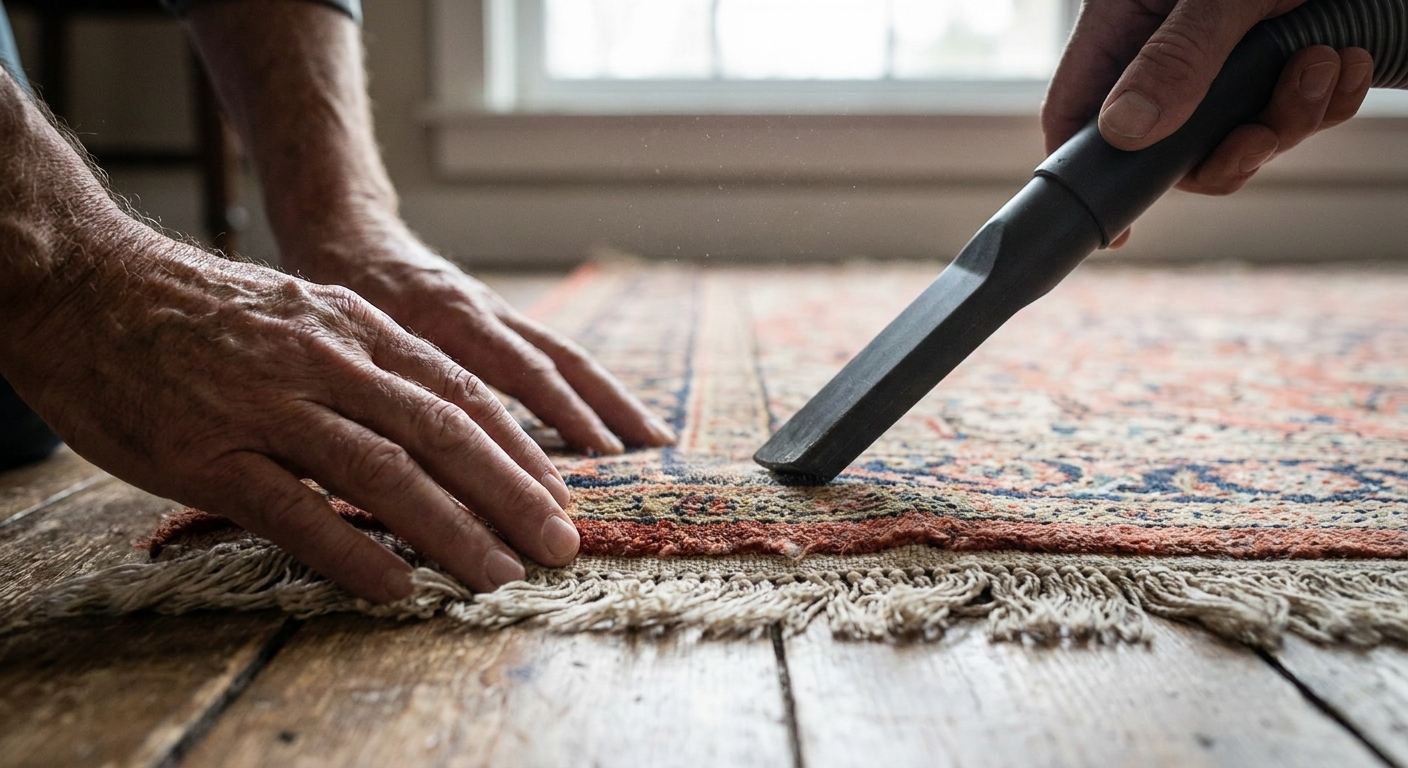
- Don't vacuum fringe with a motorized head. Turn the beater bar off, or switch to a suction-only upholstery tool.
- Hold the fringe down. Place your hand flat just above the fringe line to stabilize the rug.
- Vacuum away from the fringe. Start at the base (where fringe meets rug) and pull the tool outward in short, gentle strokes.
If fringe is already a little wild
Lightly comb it with your fingers first, then vacuum on the lowest suction you can manage. If it's badly tangled, skip the vacuum and gently detangle by hand. Tugging is how fringe starts to thin.
How often to vacuum
Frequency isn't about being perfect. It's about keeping gritty dirt from settling into the base of the rug, where it acts like tiny blades every time you walk across it.
- High traffic (entryway, kitchen runner, living room center): 2 to 4 times per week
- Medium traffic (dining room, home office): once per week
- Low traffic (guest room, formal sitting area): every 2 to 3 weeks
- Pets or allergies in the home: add one extra session per week, and focus on edges where fur gathers
For new wool rugs, expect visible shedding for the first few months. Gentle, regular vacuuming helps remove loose fibers so they don't mat down. The key word is gentle.
A quick, rug-safe routine
If you want a simple checklist you can follow half-awake on a Saturday morning, here it is.
- Set up: Beater bar off for shag, flatweave, fringe, loops, and most wool. Choose a suction-only floor head when possible.
- Edges first: Vacuum around the perimeter where dust and pet hair collect.
- Main field: Vacuum with the nap in slow, overlapping passes. No hard pressing down.
- Second pass (optional): Go perpendicular for a deeper clean, still gentle. If the rug is delicate or silky (faux silk, viscose, bamboo silk), skip this and stay with-the-nap only.
- Fringe last: Use an upholstery tool, suction-only, working outward.
- Finish: If the pile looks a bit flattened, fluff with your fingers or a soft brush, especially on shag.
Mistakes that cause fuzzing or snags
These are the big ones I see in real homes, even very tidy ones.
- Using a rotating brush on shag or fringe. It tangles fibers and physically pulls them.
- Vacuuming a flatweave like wall-to-wall carpet. Brush rolls can snag the weave and create runs.
- Cranking suction to max on delicate rugs. Too much suction can lift the rug into the head, stressing fibers and backing.
- Speed-vacuuming. Fast passes increase friction and leave grit behind, so you end up doing more damage with less cleaning.
- Vacuuming over a pulled loop. The vacuum can grab it and turn a tiny issue into a long ladder.
- Skipping the underside. Dirt settles through. On reversible rugs, vacuuming both sides extends life dramatically.
If your rug is shedding heavily beyond the normal break-in period, or you're seeing bald patches, it's worth checking whether the rug is tufted with latex backing that's starting to break down. In that case, a gentle routine helps, but the rug may need professional evaluation.
Rug-type cheat sheet
Bookmark this part in your brain for next time you pull out the vacuum.
- Wool (new): beater bar off, weekly or more, slow passes with the nap
- Wool (older, stable pile): beater bar off, or very gentle on low if it doesn't lift or grab
- Shag: beater bar off, high height setting, low suction, avoid aggressive back-and-forth
- Flatweave: beater bar off, vacuum both sides, watch for snags
- Loops (berber-style): beater bar off always, avoid catching loops at edges
- Fringe: suction-only attachment, vacuum outward, never with a motorized head
- Faux silk or viscose: suction-only, low suction, with-the-nap only, no crosswise passes
When to call a pro
You don't need professional cleaning every time your rug looks a little tired. But you do want expert help when:
- There's a lingering odor (pet accidents, smoke) that vacuuming won't touch
- The rug has valuable dyes or is antique and colorfastness is uncertain
- You see rippling, delamination, or a brittle backing
- There are moth concerns (especially with wool and vintage rugs)
For everyday maintenance, the routine above is your best friend. Done consistently, it keeps fibers looking calm and upright, like freshly steamed linen curtains catching late-afternoon sun.
Small upgrades that help
- A rug pad: reduces shifting, curling edges, and vacuum snags
- A suction-only floor tool: the gentlest way to clean most area rugs
- A handheld vacuum: great for fringe and quick spot maintenance
- Sharp scissors: for trimming fuzz or a pulled loop level, never yanking
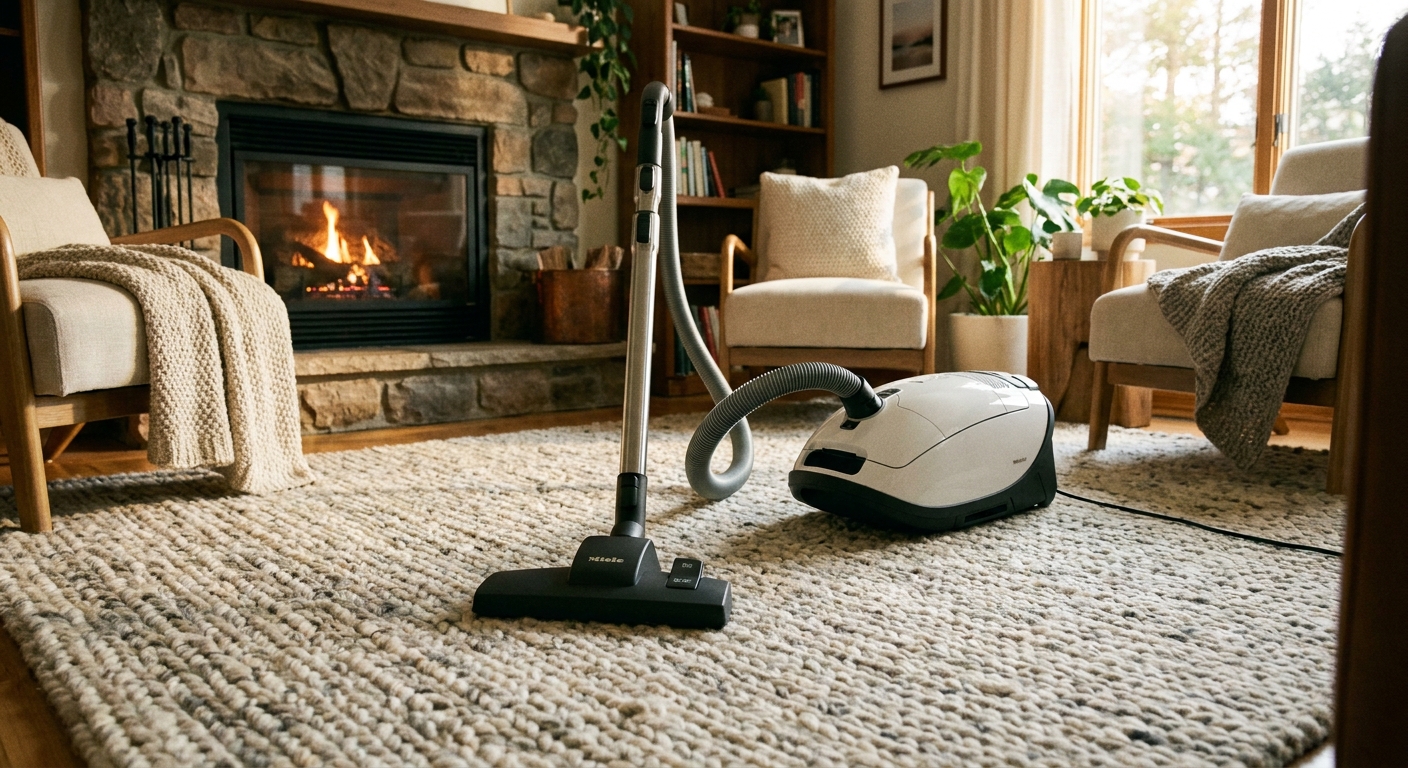
A comforting note about shedding
If your rug is wool and it's new, some shedding is normal. It's not you, and it's not automatically a quality problem. Think of it like a new sweater that leaves a little fluff on your coat the first few wears.
Your job isn't to attack the shedding out of it. Your job is to vacuum gently, regularly, and correctly so loose fibers leave the rug without the rug itself coming with them.