Why Your Rug Buckles Over a Floor Register

Clara Townsend
The first time this happened to me, I blamed the rug. I tried the usual suspects: smoothing it by hand, piling a stack of design books on the spot, even giving it time like it was a moody houseguest who would eventually settle in.
Nothing changed. The rug stayed perfectly flat everywhere except one maddening little hill that appeared the moment the heat kicked on. The giveaway was that it was centered right over a floor register.
If your rug only buckles or tents above a vent when the HVAC turns on, you may not be dealing with “rug memory” or a bad rug. You are usually dealing with airflow, pressure, and sometimes a register that is just a hair too tall.
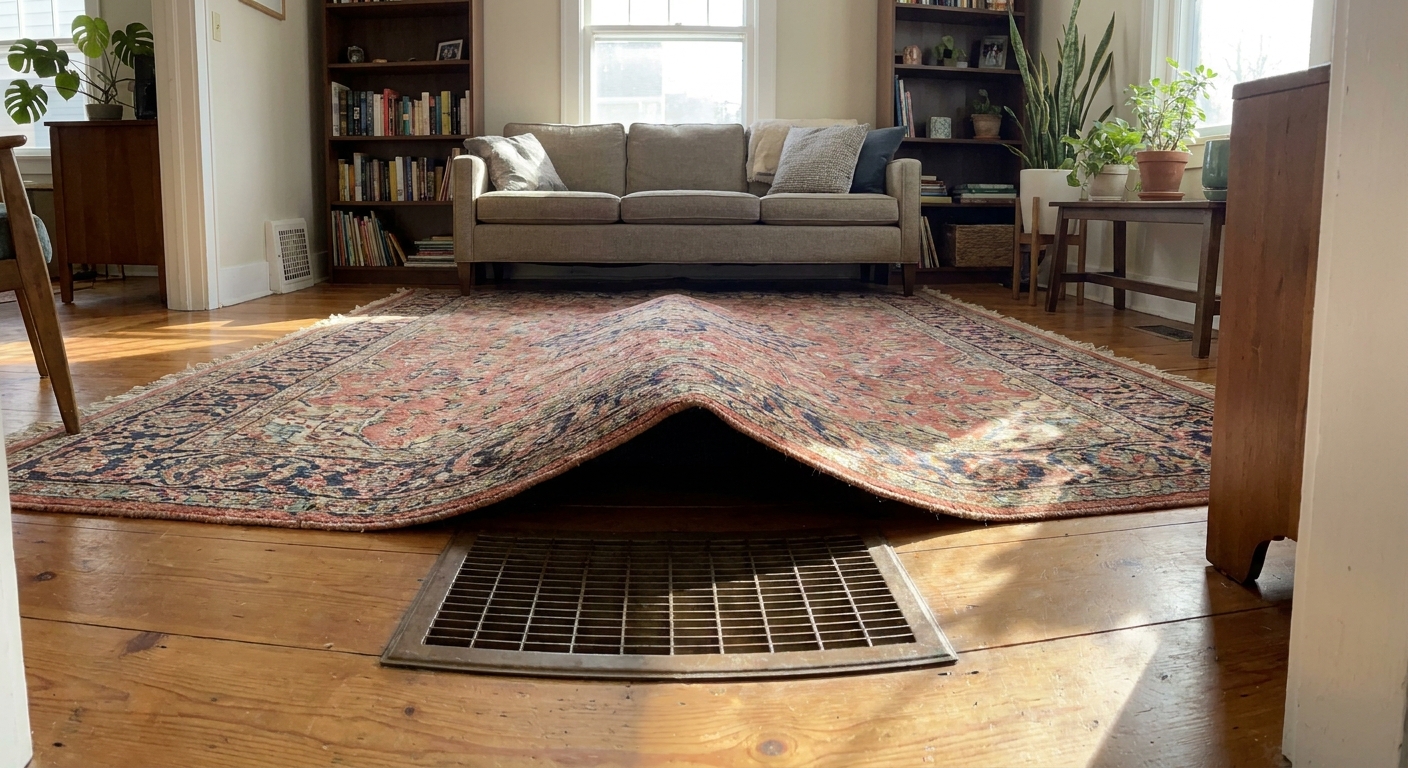
What is actually happening
When air pushes up through a floor register, it can create a little balloon effect under a rug. Even if the rug is heavy and has been lying flat for months, a strong burst of warm or cool air can:
- Lift the rug slightly right at the vent opening.
- Create a ripple that has nowhere to go because the rug is pinned by furniture or grippy backing around it.
- Catch on the lip of the register if the metal or wood grille sits proud of the floor.
This is why steaming, reverse-rolling, and weighting often will not fix it when the trigger is airflow or a raised grille. Those methods change the rug. Your problem is a moving column of air and a physical bump under the rug.
Quick diagnosis in 2 minutes
1) Confirm it is airflow
Turn the system off and smooth the rug. If it goes flat quickly, then turns into a little tent again when the heat or AC turns on, airflow is the trigger.
Quick safety note: If you are lifting a grille to test, turn the system off first and watch for sharp edges on older registers.
2) Figure out supply vs return
This matters because you do not want to restrict a return, and a supply is the one doing the “puffing.”
- Supply register: it blows air when the system runs.
- Return vent: it does not blow. It pulls air in and is often larger (or there are fewer of them).
3) Check the register height
Run your hand across the grille. If you can feel an edge or raised frame, that ridge can act like a tiny speed bump that the rug drapes over and then gets lifted by air.
4) Check whether the vent is blowing “up” or “out”
Some registers throw air more vertically, others angle it. A strong vertical throw is more likely to inflate the rug. You can test this by holding a tissue a few inches above the register with no rug on it and seeing how aggressively it lifts.
Vent direction: the overlooked fix
Many floor registers have adjustable louvers. If yours can be adjusted, aim for a softer, more outward flow rather than a straight-up blast.
- For heating: you still want good circulation, but a hard vertical stream under a rug is a buckling invitation. Angle the louvers so air is directed outward into the room.
- For AC: cooler air is denser and can hug the floor, especially with lower velocity airflow. A slightly outward angle often distributes cool air better and reduces the balloon effect.
If your register louvers are fixed, swapping to an adjustable louver register can be a surprisingly effective change, especially in rooms where the HVAC output is strong.
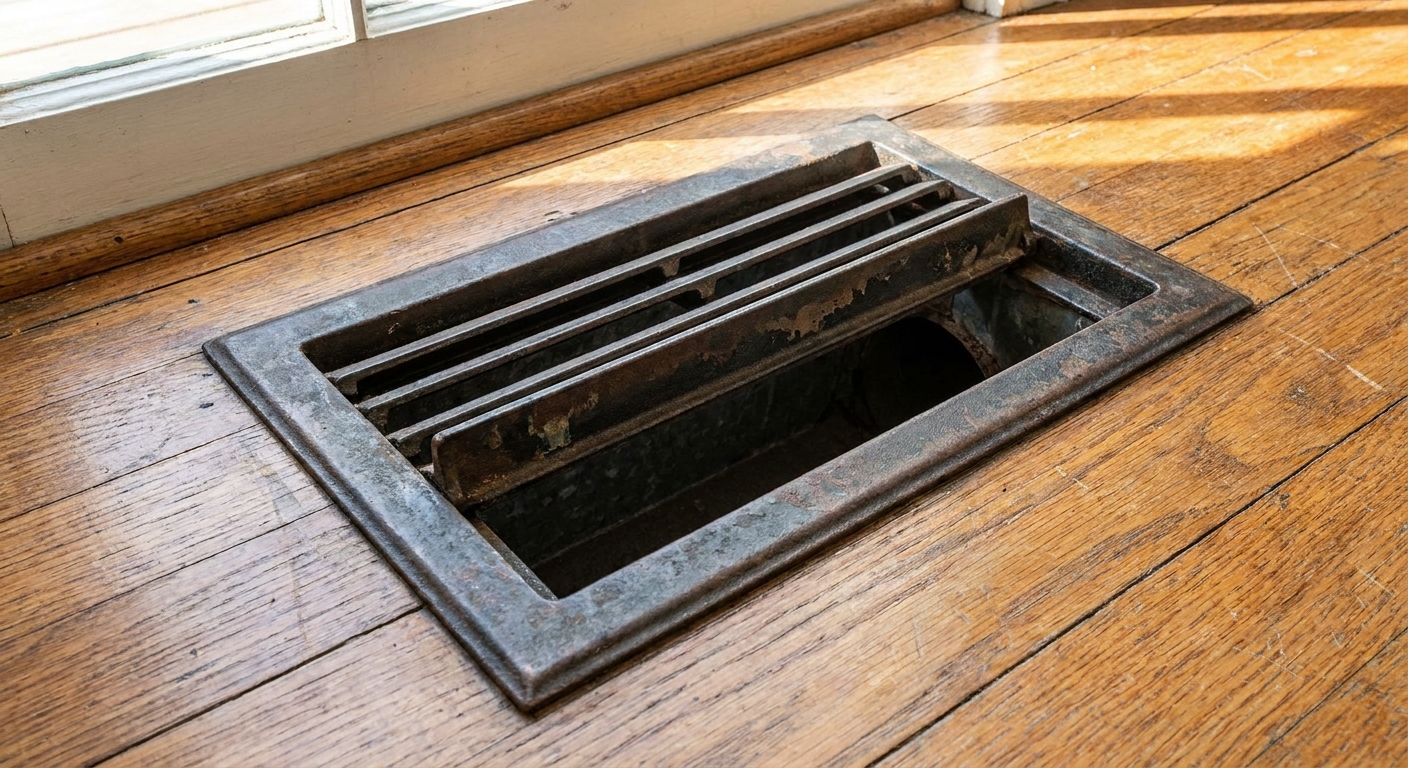
Try a low-profile register
If the register sits even a little high, the rug has to drape over it. Add airflow and the rug pops up like a tiny camping tent.
What helps:
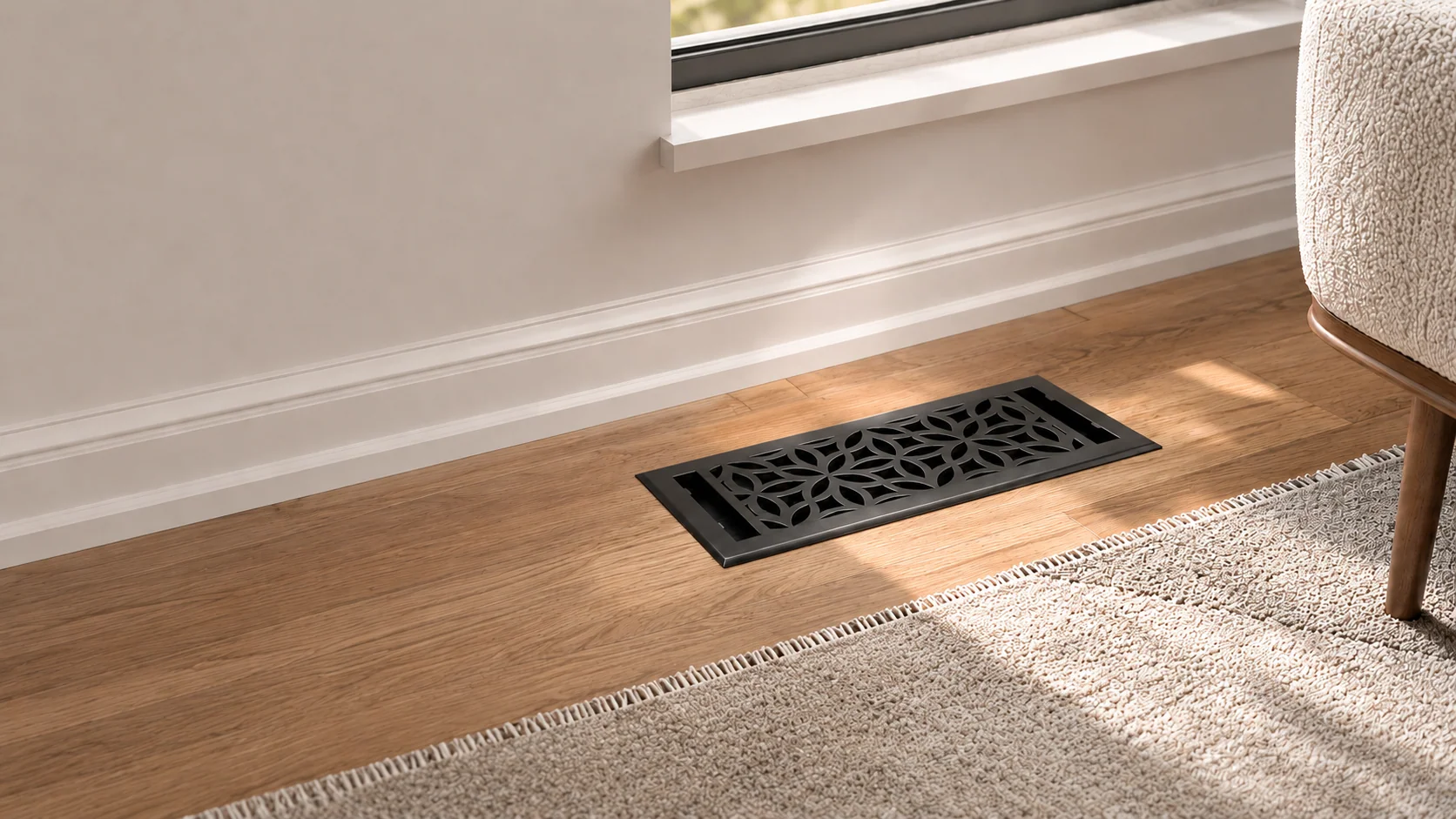
- Low-profile floor register: Look for a design with a thinner frame and a flatter face so there is less of a lip to telegraph through the rug.
- Flush-mount styles: In some homes you can install a register that sits more level with the floor. This is especially common with wood registers made to match hardwood floors.
- Correct size matters: A register that is slightly too small for the opening can shift or rattle, which can nudge the rug every time air turns on.
If you rent or cannot swap hardware, make sure the register is seated properly and screwed down if that is how your style is meant to be installed.
Check for looseness and vibration
Sometimes the “buckling” is not the rug at all. It is the hardware moving under it.
- Loose grille: If the register wiggles when you step near it, tighten screws (if your style uses them) or reseat it so it sits flat.
- Register box issues: A bent boot, a chewed-up opening, or a gap around the perimeter can create extra turbulence that lifts the rug edge.
- Rattles and whistles: If you hear noise plus tenting, you are probably dealing with pressure and vibration together.
If it feels like the ductwork itself is vibrating or the floor around the register is flexing, that is the moment to call an HVAC pro or a handy contractor. You are not being dramatic. You are being safe.
Furniture placement can make it worse
Here is the annoying little design reality: the more perfectly placed your room feels, the more likely a vent-buckle becomes.
If the rug is pinned down tightly by a sofa leg, coffee table, or console near the register, the rug cannot breathe when air pushes up. The pressure lifts the only flexible spot, which is often directly over the vent.
Small layout tweaks that help
- Move the rug 1 to 3 inches so the register is not centered under the rug’s most tensioned area.
- Shift a furniture leg off the rug if that leg is acting like a clamp near the vent zone.
- Rotate the rug so the register lands in a different part of the weave and backing. Some rugs have a stiffer direction.
Even a tiny nudge can change how the rug distributes that upward push.
Anchoring solutions that work
You are aiming for two things: keep the rug from lifting, and keep airflow from inflating a pocket underneath.
Use the right rug pad
- Thinner pad near the register: A thick, squishy pad can create a little air chamber. If possible, use a thinner, denser pad overall, or cut the pad back so it stops several inches before the register area.
- Trim the pad, not the rug: If the buckling started after adding a plush pad, trimming the pad away from the vent often helps immediately.
Rug tape (selectively)
For rugs on hard floors, you can use double-sided rug tape around the register zone to reduce lift. A few notes from the real world:
- Use tape labeled safe for your floor type.
- Do a small test first, especially on finished hardwood.
- Do not tape directly over the register or block louvers.
- Avoid aggressive adhesives that can pull finish when removed.
Register deflectors (only if they fit)
Magnetic vent deflectors are more common for wall registers, but some floor setups can use a deflector to redirect air outward instead of straight up. The key is safety and fit.
- If it can be kicked out of place, skip it.
- If it noticeably reduces the open area of the register or creates loud noise, skip it.
When to move or notch the rug
Sometimes the honest answer is that the rug and that register cannot share the same square foot of floor without constant drama.
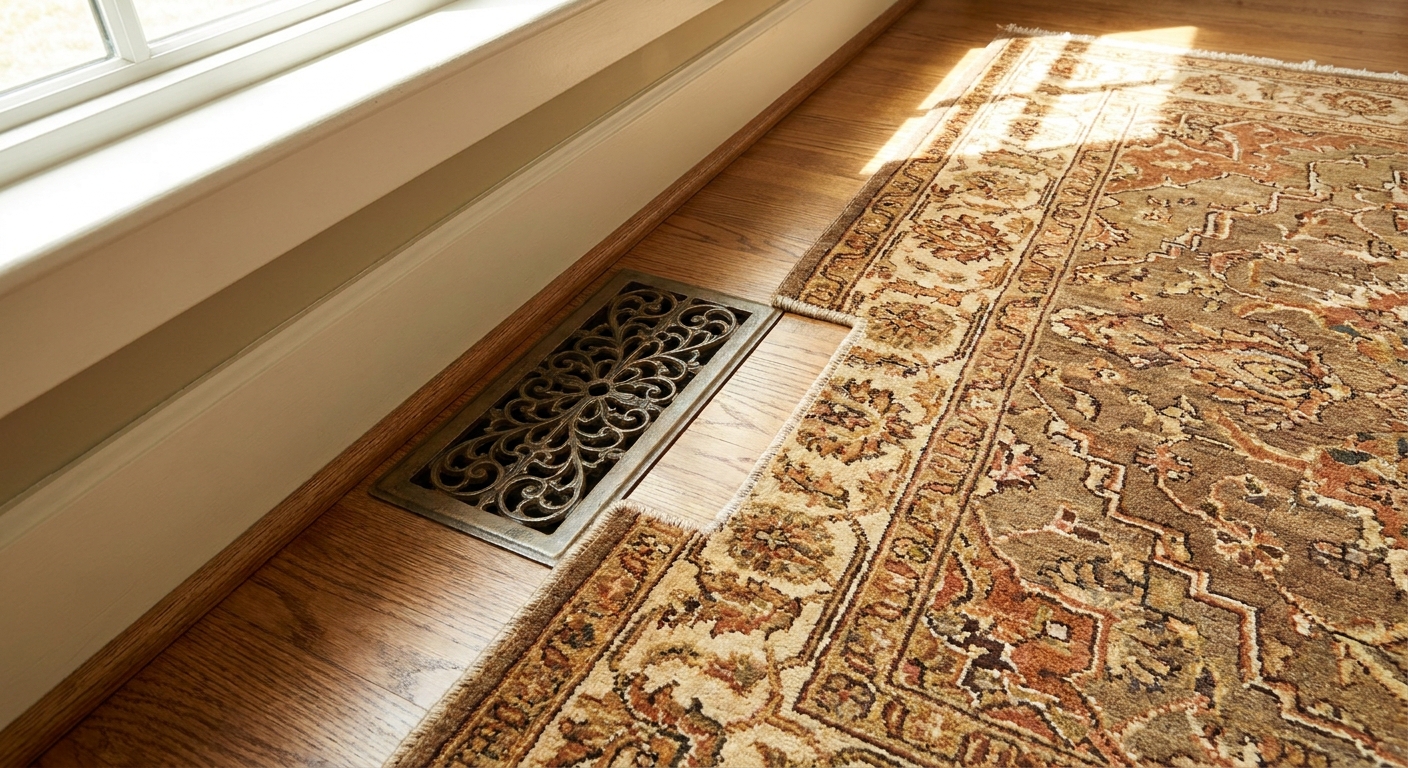
Consider moving the rug so the register is fully exposed if:
- The vent is a major source of heat or cooling for the room.
- The rug tents enough to become a tripping hazard.
- You have tried angling the louvers, changing the pad, and stabilizing the register and it still buckles.
Cutting a rug: only in specific cases
I am not anti-cutting. I am anti-regret.
Cutting back a rug can make sense if all of the following are true:
- The rug is inexpensive or easily replaceable (think basic flatweave, not heirloom vintage).
- The register is near an edge so you can create a clean notch without it being obvious.
- You can finish the cut edge so it will not fray (binding tape, professional binding, or a rug repair pro).
If your rug is tufted, thick-pile, or a nicer woven piece, cutting often leads to unraveling or an edge that never looks intentional. In those cases, moving the rug is usually the prettier solution.
A seasonal note
In some homes, this shows up more in winter because the system runs longer, the air feels more forceful, or the supply air is warmer and creates stronger upward movement under the rug. On top of that, seasonal dryness can make some natural-fiber rugs relax or shift slightly, which can turn a minor lift into a more obvious tent.
What not to do
- Do not fully cover a supply register long-term. It can reduce comfort in the room and make your system work harder.
- Do not block a return vent with a rug. Returns need airflow to pull air back into the system.
- Do not put thick foam directly over a register. It can create a bigger air pocket and make the balloon effect worse.
- Do not “solve” it with permanent adhesive. It is rarely worth the floor damage risk.
HVAC and safety notes
- If the register is extremely forceful (it feels like a hair dryer on high), it may be worth asking an HVAC pro about balancing dampers or airflow adjustments.
- Airflow restriction adds up. Covering one supply briefly is unlikely to cause a disaster, but widespread restrictions (blocked returns, dirty filters, closed vents everywhere) can contribute to low airflow problems in cooling season, including frozen coils on many systems.
Troubleshooting checklist
- Confirm the bump appears only when the system runs.
- Identify whether it is a supply or return vent.
- Adjust register louvers to reduce straight-up airflow.
- Make sure the register is seated flat and secured.
- Switch to a lower-profile register if the frame is raised.
- Trim the rug pad back from the register zone.
- Use a denser, thinner pad to reduce the air pocket effect.
- Nudge rug or furniture placement so the rug is not clamped tight over the vent.
- If it is still tenting, expose the register by moving the rug, or notch the rug only if it can be properly finished.
FAQ
Why does it only happen when the heat turns on?
In some homes, heating season airflow feels more forceful because of longer run cycles, different fan settings, or the way warm air moves upward once it gets under the rug. The key clue is that it correlates tightly with the system turning on.
Will a heavier rug fix it?
Sometimes, but not reliably. Even heavy rugs can puff up if air is being forced into a pocket underneath, especially if the rug is pinned by furniture.
Can I put a vent cover under the rug?
I would not. Anything that significantly restricts airflow can create comfort issues and, if you are restricting airflow all over the house, potentially contribute to HVAC performance problems. It is better to redirect airflow with louvers, use a flatter register, or move the rug so the vent can do its job.
Is it okay if my rug covers the register a little?
A small overlap that does not cause buckling is usually fine in real-life decorating. Fully covering a supply register long-term is not ideal, and returns should be kept clear.