Why Jute and Sisal Rugs Buckle in Humid Weather

Clara Townsend
There are few things that make a room feel instantly finished like a jute or sisal rug. That soft sandy color, the chunky weave, the way it makes even an awkward little apartment living room feel grounded.
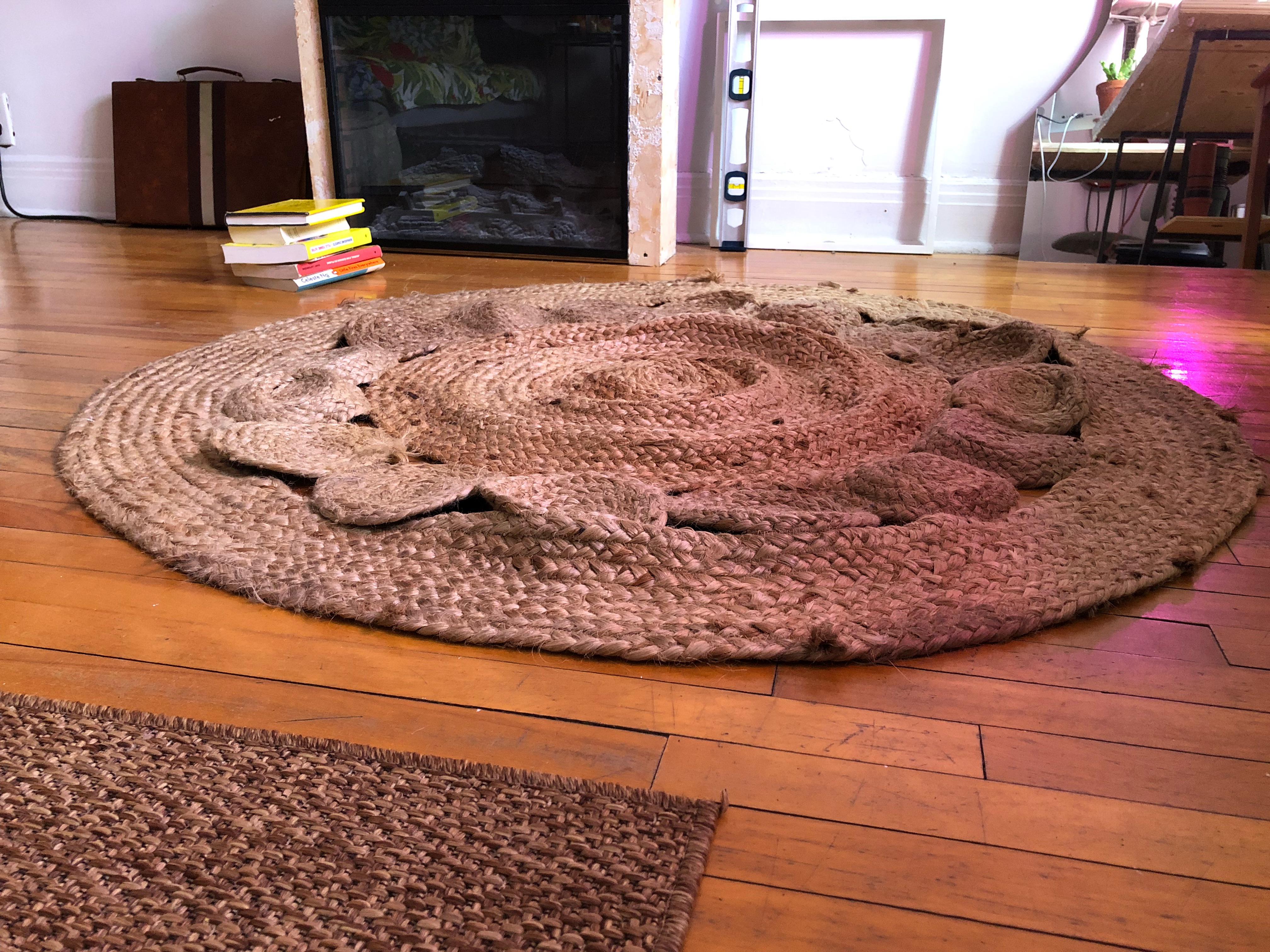
So when a rug that has been lying perfectly flat suddenly grows a ridge or a puffy bubble after a stretch of humid weather, it feels personal. I promise, it is not. It is physics, plant fibers, and moisture doing their weird seasonal dance.
Let’s walk through why this happens, what to do the moment you notice it, and the big mistakes that make buckling worse.
What buckling is
When a jute or sisal rug buckles, you are usually seeing one of two shapes:
- A long ridge that looks like the rug is trying to form a little mountain range.
- A bubble that feels airy underfoot, like there is trapped looseness in the middle.
This is different from a shipping crease or fold line, which tends to be straight, predictable, and shows up immediately when the rug is unrolled. Humidity buckling tends to appear after a sticky day, a stormy week, or the first time you switch from dry heat to summer air.
One quick safety note: a ridge or bubble is a trip hazard. Until it settles, keep kids, pets, and fast-walkers off that spot if you can.
The main cause
Jute and sisal are plant fibers. They are hygroscopic, which is a fancy way of saying they absorb and release moisture from the air. When humidity rises, those fibers take on water vapor and swell slightly.
That swelling can make the weave grow in width and length. Sometimes it is tiny. Sometimes it is enough that the rug no longer matches the exact footprint it had yesterday.
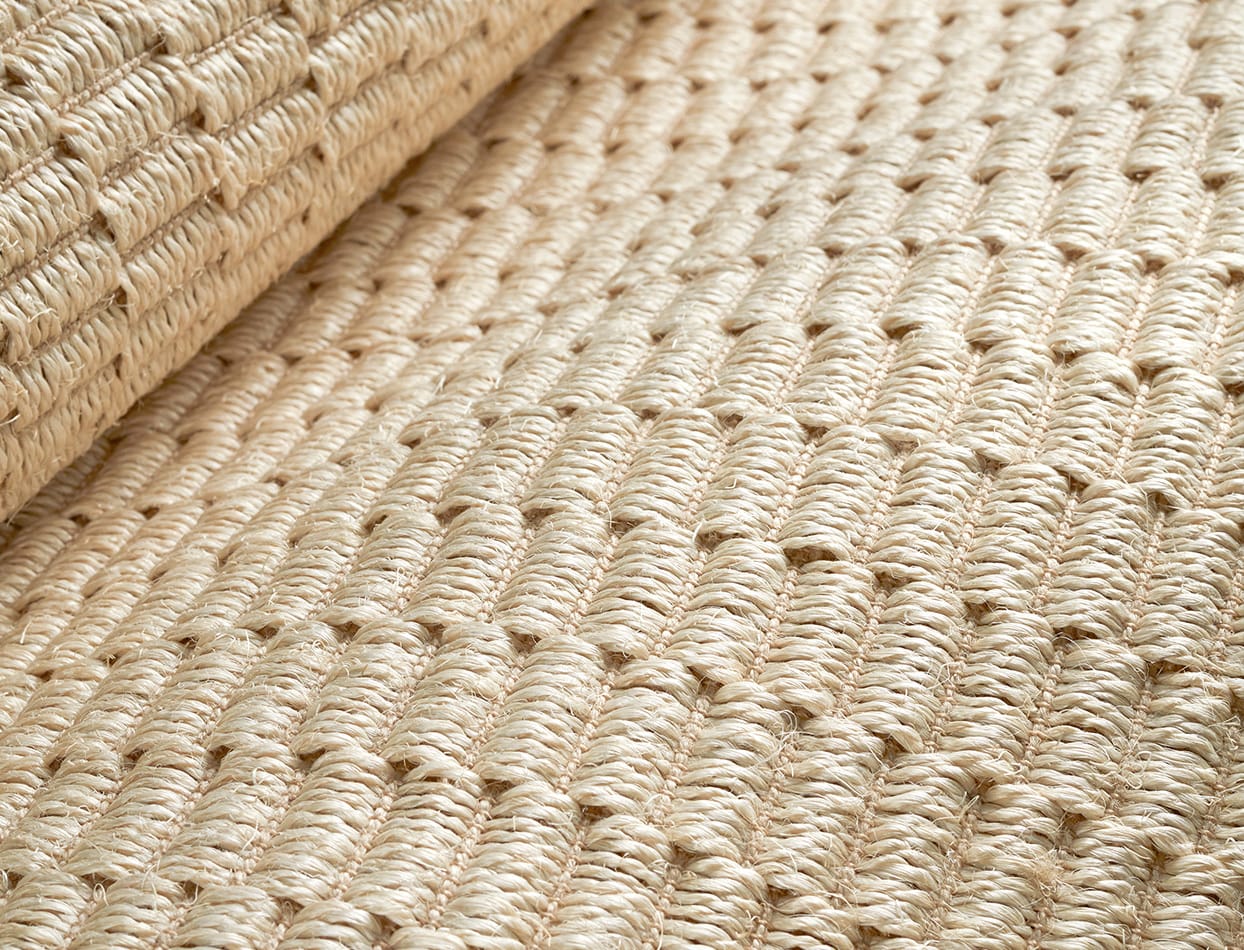
If your rug is a tighter flat weave, you may see a subtle ripple. If it is a chunkier weave or a larger rug, that extra growth can concentrate into one big ridge.
Backing can move too
Many jute and sisal rugs are finished with a backing layer or a latex-like adhesive to stabilize the weave. The important thing is that the top layer and the underside do not always change the same way at the same time.
In humid conditions, two things can happen at once:
- The natural-fiber face expands as it absorbs moisture.
- The backing system can change dimensionally depending on what it is made of. Some backings may tighten, some may relax or soften, and some may shift as they grip the floor differently.
When one layer wants to move differently than the other, the rug has to go somewhere. That somewhere is usually up, in the form of a ridge.
Floors play a big role
Even if your home does not feel damp, your floor can hold onto moisture, especially:
- Concrete slabs
- Basement-level rooms
- Older homes with seasonal humidity swings
- Rooms after mopping, steam cleaning nearby textiles, or running a humidifier
Natural fiber rugs do not love sitting on a surface that is even slightly moist. Moisture can get trapped in the thin space between rug and floor, and that uneven dampness is a recipe for rippling.
What to do right away
The goal is simple: remove the moisture source and let both the rug and the floor dry evenly. Here is the calm, effective sequence I use.
Step 1: Lift it, do not fight it
If the rug has buckled, resist the urge to press it down, spritz it, or pile heavy objects on top. First, lift the rug up off the floor so dampness is not trapped underneath.
If it is a large rug, fold it back in halves or thirds so the underside can breathe. You are not trying to crease it. You are trying to get air under it.
Step 2: Dry the floor completely
This matters even if the floor feels dry to your hand. Run air conditioning if you have it, or a dehumidifier, or a fan aimed across the floor.
How long? Often 24 to 48 hours of decent airflow does the trick, but the real target is conditions, not the clock. If you can, aim to get indoor humidity back into a comfortable range (roughly 40 to 55 percent RH) and keep it there long enough for the floor surface to fully dry out.
If you recently mopped or spot-cleaned, wait until there is no residual moisture left at the surface before putting the rug back. (It is the leftover water that matters, not whether the floor feels warm.)
Step 3: Air out the rug evenly
Ideally, lay the rug somewhere with airflow underneath, like over a railing, across sturdy chairs, or on a clean, dry surface where you can run a fan across it.
If you have to leave it folded back in the room, that is fine. Just make sure air can reach the underside and you are not sandwiching it against the floor.
Step 4: Put it back when both sides are dry
Once the room feels under control and the rug feels dry on top and underneath, lay it back down gently and let it settle.
Most humidity buckles relax as the fibers release moisture and return closer to their usual size. If yours does not, it often means the room is still too damp, or the rug is repeatedly being exposed to moisture from below.
Do not add water
I know the instinct. A ripple looks like something you could steam out or mist and smooth, like wrinkled linen.
With jute and sisal, dampness is usually the problem, not the solution.
- More water can swell the fibers further, increasing the size mismatch between the face and the backing system.
- Water can affect adhesives and backings, especially if it lingers.
- Uneven drying can lock in the ridge instead of releasing it.
If you are thinking, “But I did not spill anything,” that is exactly why humidity buckling feels so sneaky. The rug is reacting to invisible moisture in the air and floor, not a dramatic accident you can point to.
Other things not to do
Beyond adding water, these are the moves that tend to make a natural fiber rug situation worse:
- Do not iron it and do not use a heat gun or high heat. Heat can warp backings, soften adhesives, and create uneven tension.
- Do not aggressively stretch or yank the rug to “pull it flat.” You can distort the weave or stress the edges.
- Do not leave heavy weights on for days, especially if there is any lingering dampness underneath. Weight can set an uneven shape in place.
- Do not put it back over a damp pad or underlayment. If the layer under the rug is holding moisture, the problem will repeat.
Rug pads and buckling
Not all rug pads are created equal, and with natural fiber rugs, thickness is not always your friend.
Here is why a heavy pad can worsen buckling during humid spells:
- It reduces airflow under the rug, which traps humidity against the underside.
- It can hold moisture like a sponge, especially if the pad is felted or porous and your floor releases moisture.
- It adds a soft, compressible layer, which lets the rug deform upward more easily when the face expands.
If your rug buckles seasonally, think “dry and breathable” before you think “plush.” In general, an open-weave pad tends to allow more airflow than a solid sheet-style pad. And if you are on a concrete slab or below-grade space where moisture is a recurring issue, it is worth thinking about whether you need better moisture control in the room rather than trying to solve it with a thicker pad.
Is it humidity or something else?
Humidity-related buckling has a few telltale signs:
- The rug was flat for weeks or months before the ridge appeared.
- The ridge shows up after rainy days, sticky heat, or seasonal transitions.
- The ridge changes day to day, sometimes looking worse in the morning and better after AC runs.
- You do not see a crisp fold line that matches how the rug was shipped.
But a few other things can mimic humidity buckling. I run through this quick checklist:
- Furniture pressure: A table or sofa leg can create tension and a ridge line, especially after you drag it slightly.
- Uneven subfloor: A dip or hump can telegraph as a ripple that comes and goes.
- Sticky residue under the rug or pad: Old pad material or adhesive can grab the backing and cause puckering.
- Recent spot-cleaning: A small wet-cleaned area can swell unevenly and bubble.
- Heat sources: Direct sun through a window or a nearby heat vent can dry one area faster than another and create waves.
A true manufacturing issue is more likely if the rug never laid flat from day one, or if the backing is visibly distorted, cracking, or separating. When in doubt, take a few photos on the day it buckles and again after a stretch of drier weather. That comparison is incredibly clarifying.
Prevent it next time
You do not need to obsess over your hygrometer to keep a natural fiber rug happy. A few gentle habits go a long way:
- Keep indoor humidity in a comfortable range, especially in summer and in basements. If your windows fog or the room feels clammy, your rug is feeling it too.
- Avoid damp-prone spots like directly outside a showering bathroom or in a basement that smells musty after rain.
- Let floors dry fully after mopping before you lay the rug back down.
- If you know a humid stretch is coming, occasional lifting for an hour of airflow can help, especially on concrete or basement floors.
I also like to do a quick seasonal check when we switch to summer weather: lift a corner, feel the underside, and trust my senses. If it feels even slightly cool-damp, I give the room a day of dehumidifying before the rug starts complaining.
When to call for help
Most humidity buckling is temporary. That said, it is smart to get help if you notice:
- A persistent, hard ridge that does not relax after several dry days at a comfortable indoor humidity
- A sour or musty odor from the rug or floor
- Discoloration that suggests moisture staining
- Floor issues like cupping wood, peeling finish, or repeated dampness in the same area
At that point, the rug is doing you a favor by acting like an early warning system. The bigger issue may be humidity management in the room or moisture coming up through the floor.
If you suspect a defect, contact the retailer or manufacturer while you are still in their return or warranty window. Have your order info, a few clear photos of the buckling, and a note about the room conditions (for example: slab floor, basement room, recent storms, indoor humidity readings if you have them). It makes the conversation much easier.
Quick questions
Will the buckle go away on its own?
Often, yes. If humidity drops and the rug can dry evenly, the fibers usually relax back into place. The key is not trapping dampness underneath.
Should I weigh it down while it dries?
I would not start there. First focus on drying the floor and underside. Weight on a still-damp rug can encourage uneven stretching or set the distortion.
Is this more common with jute than sisal?
Both are sensitive to humidity. Jute tends to feel a bit more forgiving underfoot, but it can still swell and ripple. Sisal is often stiffer, so when it moves, it can look more dramatic.
Does this mean I cannot own a natural fiber rug in a humid climate?
You can, but it helps to treat it like a living material. Manage indoor humidity when you can, keep moisture from lingering under the rug, and expect minor seasonal shifts the same way you expect wood doors to stick a little in summer.