White Powder on the Back of an Area Rug

Clara Townsend
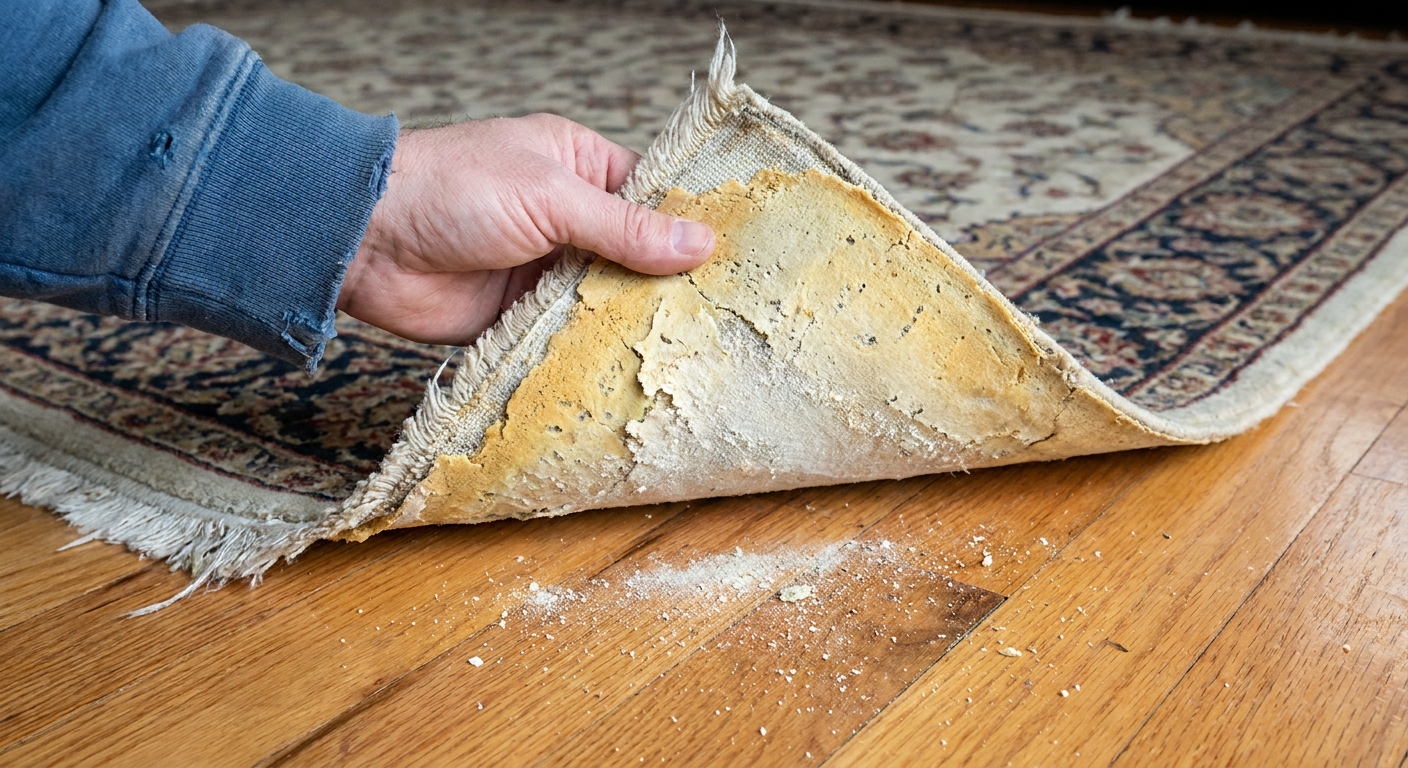
The first time I noticed it, it looked like someone had dusted flour under my rug. I pulled up the corner to peek, and there it was: a chalky white powder clinging to the back of the rug and sprinkling onto the floor like snow.
If you are seeing something similar, you are not alone and you are not imagining it. That white dust is very often the rug’s own backing breaking down. The good news is that you can diagnose it quickly and protect your floors right away. The not so cozy news is that once a backing starts crumbling, it is usually a one-way trip, at least for a DIY fix.
What the white powder usually is
On many modern area rugs, the underside is coated or bonded with a latex or rubber-like backing (sometimes paired with a fabric scrim). That backing helps the rug lay flatter, keeps tufts locked in, and adds a bit of structure.
Over time, that material can dry out, oxidize, and become brittle. Instead of staying slightly flexible, it starts to crack and crumble. The crumbly bits often look:
- White or pale gray, like chalk dust
- Powdery when you wipe it with a finger
- Flaky around fold lines, corners, or high-traffic areas
This is different from normal “new rug fuzz” on the surface. With backing breakdown, the mess is happening underneath and it keeps coming back after you clean.
What else it could be
Backing breakdown is common, but it is not the only thing that can leave a pale powder under a rug. A few look-alikes to rule out:
- Rug pad breakdown: some pads (especially older foam or rubber) can crumble or shed dust that collects under the rug.
- Drywall or plaster dust: after renovations, fine white dust can migrate and settle under rugs for weeks.
- Concrete efflorescence: if the rug sits on a slab or basement floor, moisture can bring salts to the surface that dry into a white, chalky residue.
- Cleaning product residue: powders used for deodorizing or “dry cleaning” can sift through and linger underneath.
- Pest debris: less common, but worth considering if you also see pellet-like droppings, casings, or odd debris near baseboards.
If the powder appears even when the rug is gone, or it seems to be coming from the floor itself, pause before blaming the rug.
Backing dust or fiber shedding? A quick check
Before you do anything major, figure out where the dust is coming from. Here are a few easy tells.
Signs it is the backing breaking down
- The powder is mostly under the rug, not on top.
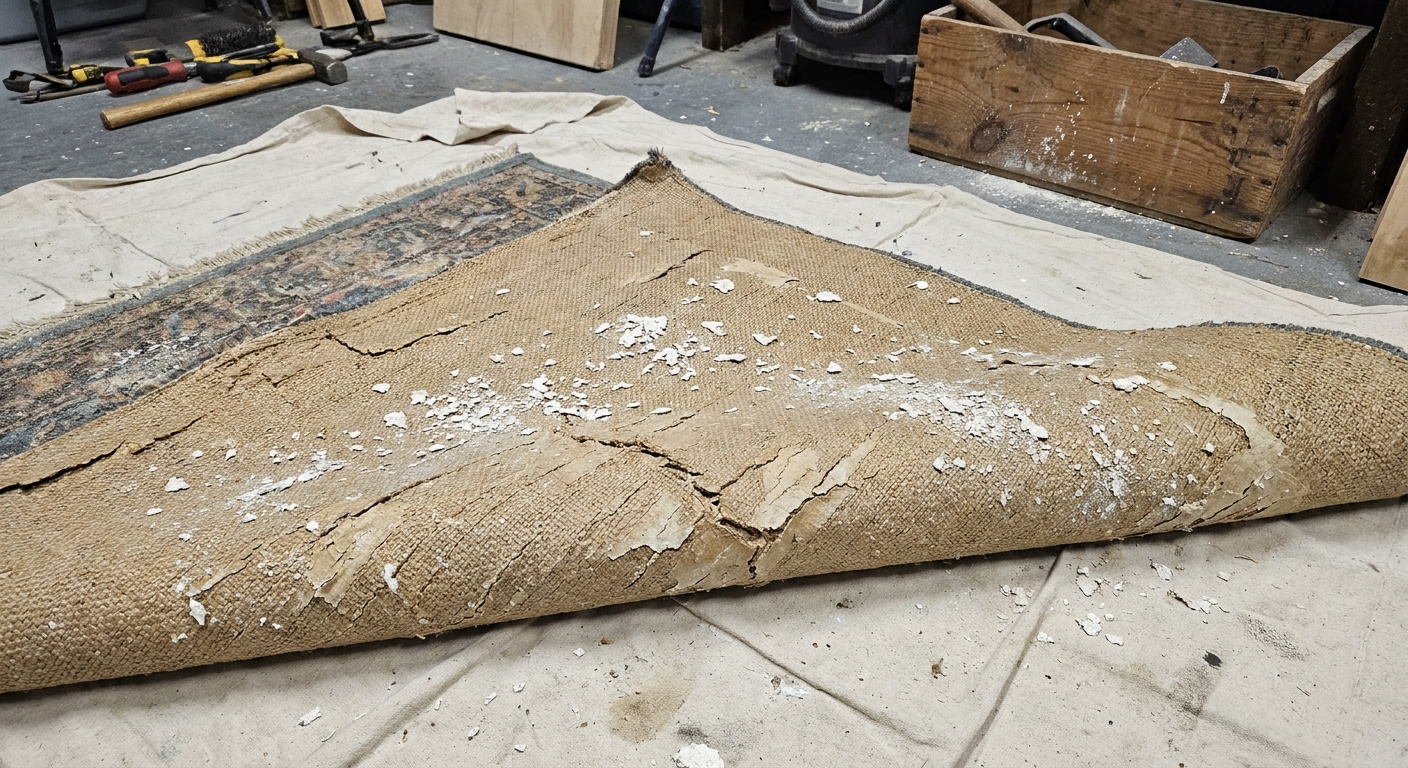
- The underside looks cracked, crazed, or patchy.
- You can rub the backing lightly and it creates more dust.
- The rug feels stiffer or oddly crunchy when you bend it.
- You see flakes stuck to the floor or coming off in sheets near the corners.
Signs it is face-fiber shedding (not the backing)
- The “stuff” is on the top of the rug and looks like lint or fuzz.
- It matches the rug’s pile color (cream fibers, gray fibers), not a chalky white powder.
- The underside looks intact and smooth, not cracking or dusty.
If you are still unsure, do a simple test: place the rug upside down on a sheet or an old bedspread for a minute and gently rub a small area of the backing with your palm. Keep it light, and test a small spot first. If you get a chalky residue fast, it is the backing.
Protect your floors first
If the backing is deteriorating, treat it like a little leak. You want to stop the transfer before it leaves marks or creates a gritty layer that gets ground into the finish.
Do this today
- Pick up the rug and take it outside if you can. If it is large, fold it carefully, backing side in, to contain the dust.
- Vacuum the floor with a hard floor setting, or use a soft brush attachment. If you have a HEPA vacuum, this is a good time to use it. Avoid dragging the vacuum head through piles of grit.
- Wipe the floor with a barely damp microfiber cloth to grab fine residue, then dry the area.
- Put down a barrier before the rug goes back: a quality rug pad or even a temporary sheet as a stopgap if you are deciding what to do next.
Floor-specific cautions
- Hardwood: backing grit can act like sand underfoot. Stick to manufacturer-approved cleaners and avoid harsh solvents that can dull finishes.
- Vinyl and LVP: rubber and latex can sometimes discolor or stain certain vinyl formulations. If you have LVP, it is worth checking the flooring maker’s guidance about rug backings and pads.
On older hardwood or softer finishes, the risk is not just staining. It is micro-scratching from foot traffic. If you have a cherished floor, do not let a crumbling backing continue to shed onto it while you “wait and see.”
Should you try to save the rug?
I am a vintage lover, so I am rarely quick to say “toss it.” But with crumbly latex or rubber backing, the honest answer is: sometimes you can stabilize it for a while, and a professional can sometimes rebuild it, but you usually cannot reverse it at home.
When it might be salvageable
You may be able to keep using the rug if:
- The backing is only lightly dusty, with minimal cracking.
- The rug is not shedding continuously once you remove the loose residue.
- The rug has sentimental or aesthetic value and you are willing to baby it.
In those cases, you can gently remove loose powder, keep a protective pad underneath, and limit aggressive bending or folding.
When it is time to retire it
If you see any of the following, I would plan on replacing the rug or having it professionally re-backed if it is truly special.
- Sheets or chunks of backing are coming off.
- The underside feels sticky in spots and brittle in others.
- The rug leaves new dust every time you lift a corner.
- The backing is staining the floor or leaving a haze.
- The rug is in a high-traffic spot and you cannot keep up with the mess.
On tufted rugs, deteriorating backing can also lose its grip on the tufts over time, which can mean more distortion, rippling, or thinning in the pile later on.
How to clean up backing dust safely
The goal is to remove what is already loose without accelerating the breakdown.
Step-by-step
- Take it outside if possible. Lay it backing side up on a clean surface like a tarp.
- Wear a mask if the dust is heavy, especially if you are sensitive to fine particles. Keep kids and pets away while you clean.
- Gently vacuum the backing using a hose and brush attachment, not a beater bar. You are lifting dust, not scrubbing.
- Do not soak the backing. Water can make some backings swell, get gummy, or release more residue as it dries.
- Vacuum the top of the rug afterward to catch any particles that migrated through.
- Empty the vacuum (or change the bag) and clean the filter if it is coated in fine powder.
If the backing is actively crumbling, avoid shaking the rug aggressively. It can turn into a dust cloud and strip more backing off than you intended.
Can you seal the backing?
This is the part where people get crafty, and I get it. If you love the rug, you want a fix that feels decisive.
In practice, most DIY sealing attempts are short-lived. A crumbling backing is failing at a material level. Coatings can crack when the rug flexes, and some products can create new issues like stiffness, uneven texture, or residue transfer.
If the rug is valuable or deeply sentimental, the most reliable “save” is to talk to a reputable rug professional about re-backing or converting it to use with an underlay system. For everyday rugs, replacement is often the cleaner, safer option for your floors.

Why it happens
Backing breakdown can be sped up by a few common conditions:
- Heat and sunlight (especially near patio doors or bright windows)
- Ozone and normal aging, which can make rubbery materials brittle over time
- Frequent folding for storage, which creates stress lines that later crack
- Low humidity can contribute to brittleness in some formulations, but heat, UV, and age are usually the bigger accelerants
- Time and chemistry, which varies by manufacturer and backing formula
If you pulled a rug out of storage and suddenly saw powder everywhere, it is often because the backing aged while it was folded, then released residue once you started handling it again.
What to do if the rug is new
If your rug is new enough that you are surprised to see backing dust, treat it like a defect until proven otherwise.
- Stop using it on your floor until you have a plan, especially on hardwood.
- Take photos of the backing, the powder, and any transfer to the floor.
- Check your return window and contact the retailer or manufacturer.
A small amount of factory residue can happen, but ongoing chalky powder from the backing is not something you should have to live with on a new purchase.
When to call a pro
If any of these are true, I would bring in help rather than experimenting:
- The rug is valuable, antique, or irreplaceable to you.
- You suspect mold or moisture under the rug (musty smell, damp pad, discoloration on the floor).
- The backing is leaving stains, stickiness, or haze on your floor finish.
- The shedding is so heavy it creates a visible dust cloud when you move the rug.
- You have asthma, allergies, or other sensitivities and symptoms are flaring. In that case, consider checking in with a clinician, too.
FAQ
Is the white powder harmful?
Often it is nuisance dust from deteriorating backing, but it is still fine particulate you do not want floating around your home. Avoid stirring it up, vacuum carefully, and consider a mask if the shedding is heavy. If anyone in the house is sensitive (or symptoms show up), it is smart to be extra cautious and get professional help with cleanup.
Will airing the rug out fix it?
Airing out helps with some issues, but it does not stop a backing that is crumbling. If the material has become brittle, fresh air will not restore flexibility.
Can I just put a thicker pad underneath and forget about it?
A pad can protect your floor for a while, but it does not stop the backing from continuing to break down. If you are seeing frequent dust, plan for replacement or professional repair so you are not constantly cleaning residue.
How do I keep this from happening to my next rug?
Use a good rug pad, keep rugs out of harsh direct sun when possible, and avoid folding for long storage. Roll rugs instead, with the pile inward, and store them in a cool, dry place.
The simple takeaway
Chalky white dust under an area rug is very often the rug’s latex or rubber backing breaking down. If the underside is cracking and rubbing it creates more powder, focus on floor protection first, then decide whether the rug is worth professional help. If it is shedding continuously or leaving residue behind, it is usually time to let it go.
If you want, tell me what kind of floor you have (hardwood, laminate, tile) and whether the rug is new or from storage. I can help you choose the least stressful next step.