Musty Smell Under an Area Rug

Clara Townsend
The first time I noticed this in a client’s apartment, it was baffling: the room smelled totally fine, then we laid the rug down for a few days and suddenly the air had that damp-basement mustiness. We rolled the rug back and there it was, the scent living underneath like it had been waiting for a curtain call.
If your rug smells musty only when it’s been down (and there’s no obvious spill stain on the top), you are most often dealing with moisture that has nowhere to go. The usual suspects are a damp felt pad, humidity trapped against hardwood or concrete, or early mildew starting in the pad or backing. Less commonly, the smell is from older contamination in the rug or pad, pet-related bacteria, or an odor that reads “musty” but is actually chemical or rubbery off-gassing.
A quick smell check can help you sort that out: musty tends to smell like a damp towel or old basement. Chemical or rubbery smells more like tires, plastic, or a “new product” odor, and it does not always require the same fix.
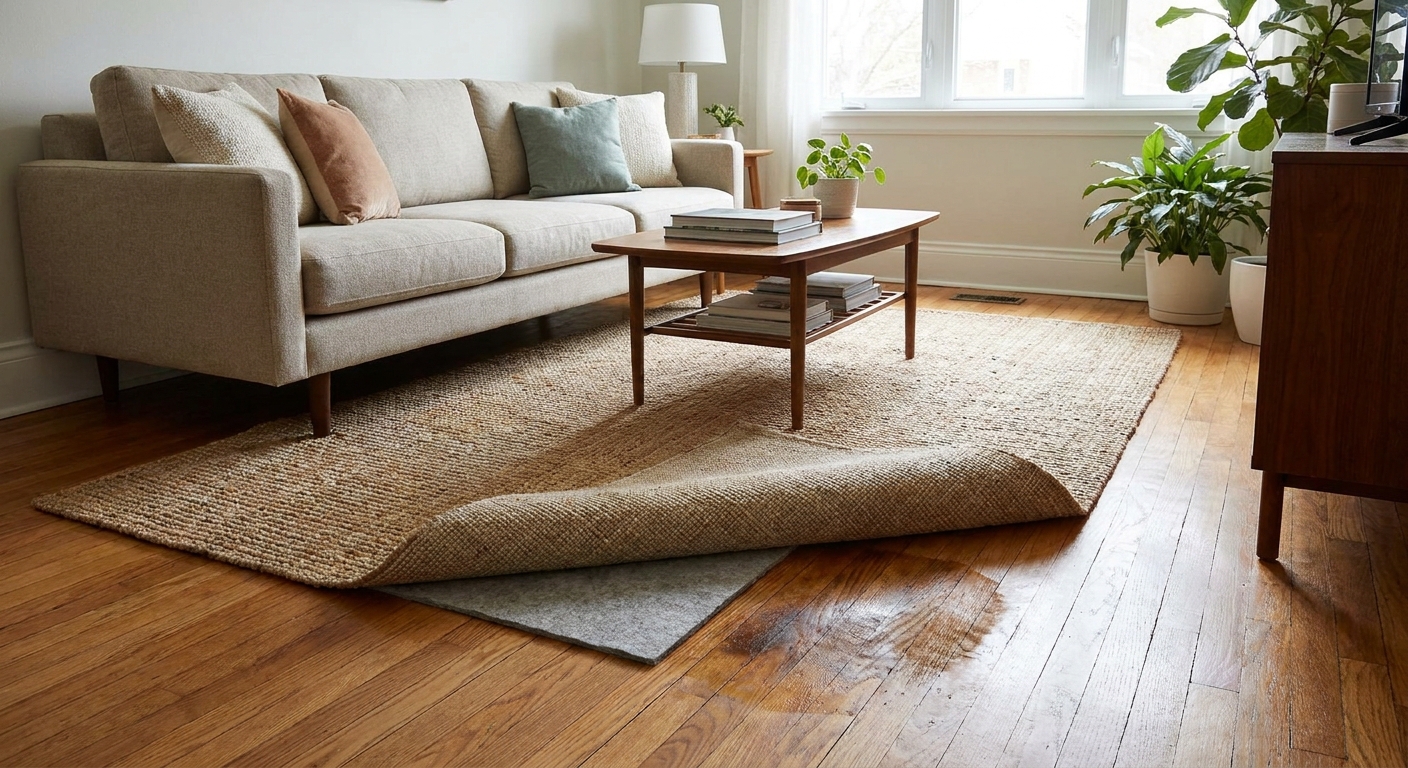
Why it happens only when the rug is down
Rugs and rug pads act like cozy blankets for your floor. Cozy is great for bare feet, but it also slows evaporation. Even normal household moisture can become a problem when it is trapped in a low-airflow sandwich:
- Humidity in the home (especially in summer, rainy seasons, or in older buildings) can lead to condensation on cooler surfaces like concrete slabs or basement-level floors when the floor surface is below the air’s dew point.
- Felt and fiber pads can absorb moisture from mopping, wet shoes, pet water drips, plant watering, or just damp air.
- Non-breathable backings (latex, rubbery coatings, or some skid-resistant grids) can hold moisture against the floor.
- Temperature swings (AC blasting over a warm slab, or warm indoor air hitting a cool floor) can create light condensation you never notice until it is trapped.
The key clue is your timeline: the room smells fine, the rug goes down, time passes, and the smell blooms when you lift it or walk on it.
Quick safety check
Most musty rug situations are fixable at home, but pause for two quick checks.
Skip DIY and call a pro if
- Fuzzy growth that is white, green, or black on the pad, rug backing, or floor
- A large area of moisture (widespread dampness, not just a small patch)
- Soft, cupped, or buckling hardwood planks
- A strong, sharp odor that hits you immediately and makes you cough or feel unwell
- History of flooding, ongoing leak, or wet basement
Also, do not try to dry heavily moldy rugs or pads indoors. That can spread spores and make the air quality worse.
What you can do right away
- Open windows if outdoor humidity is lower than indoor humidity.
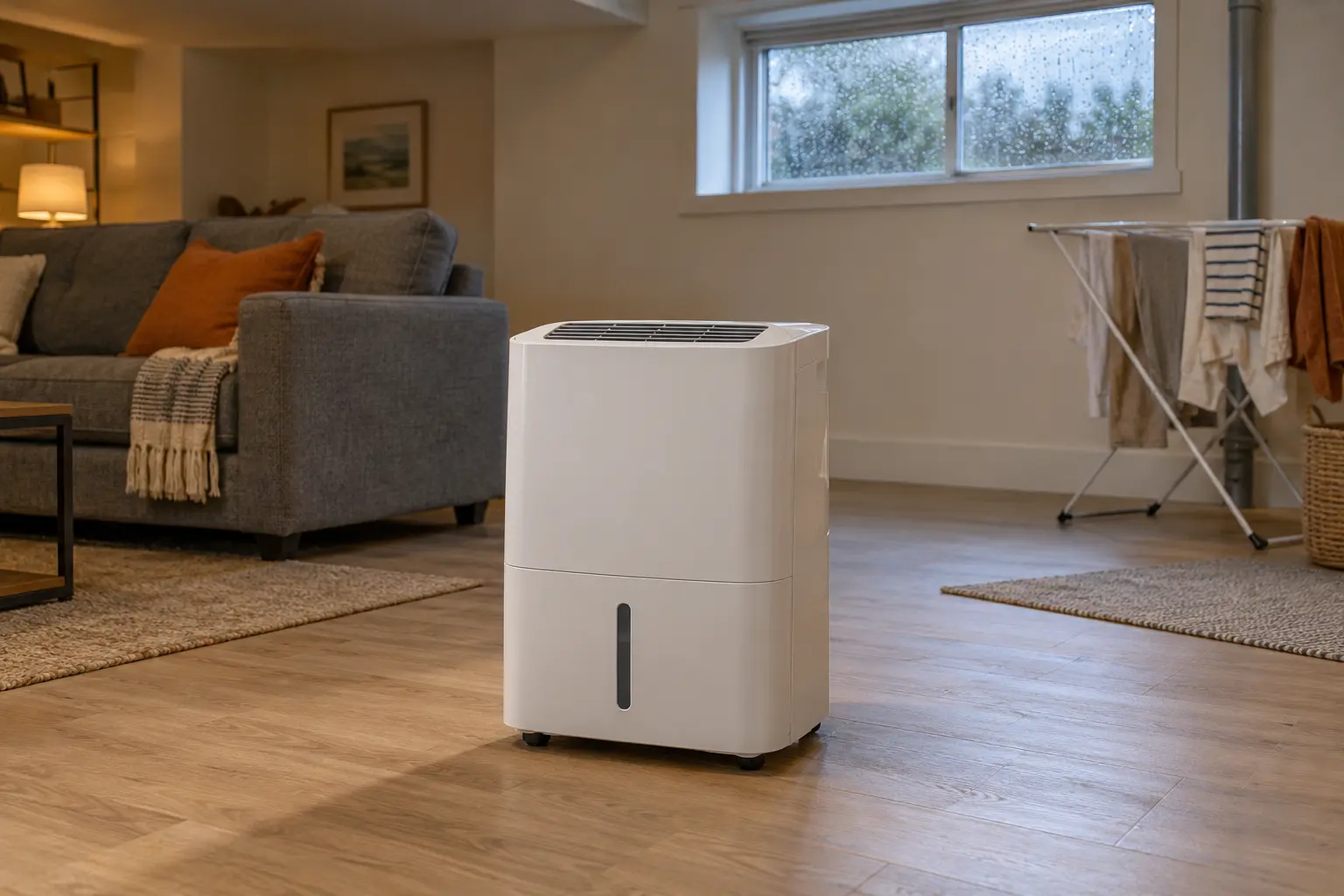
- Run AC or a dehumidifier if indoor humidity is high. Many homes do well around 30% to 50% relative humidity (and it helps to stay under 60% to discourage mold), but targets vary by climate and season.
- If you have asthma or mold sensitivity, wear an N95-style mask and gloves when handling a smelly pad.
Confirm the conditions
If you like a simple, no-drama way to confirm what is going on, two small tools help a lot:
- Hygrometer: A cheap indoor humidity meter tells you whether you are fighting a humidity problem or just a one-off spill you forgot about.
- Infrared thermometer (optional): If your floor temperature is much cooler than your room air, you are more likely to hit condensation conditions. It is a quick way to catch “cool slab, humid air” problems.
The simplest diagnosis
You are going to play detective, and your nose is the fastest tool you have.
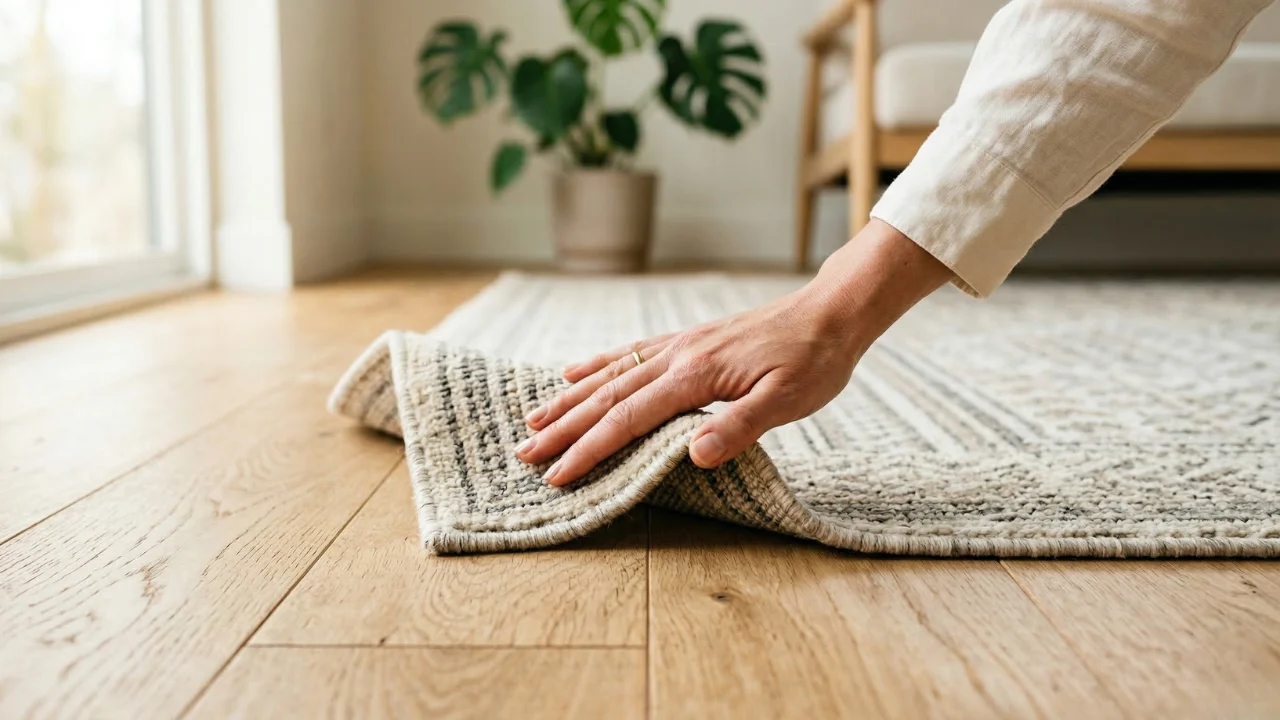
- Lift a corner of the rug and smell the underside and the air near the floor.
- Fold the rug back to expose the pad and smell the pad surface.
- Lift the pad and smell the floor itself.
Here is what the results usually mean:
- The pad smells worst: the pad is damp or harboring early mildew. This is extremely common with felt pads.
- The rug backing smells worst: moisture is lingering in the backing, or the rug is slow to dry due to dense fibers or a coated underside.
- The floor smells worst: moisture is being trapped against the floor finish, or you have a slab or basement humidity issue.
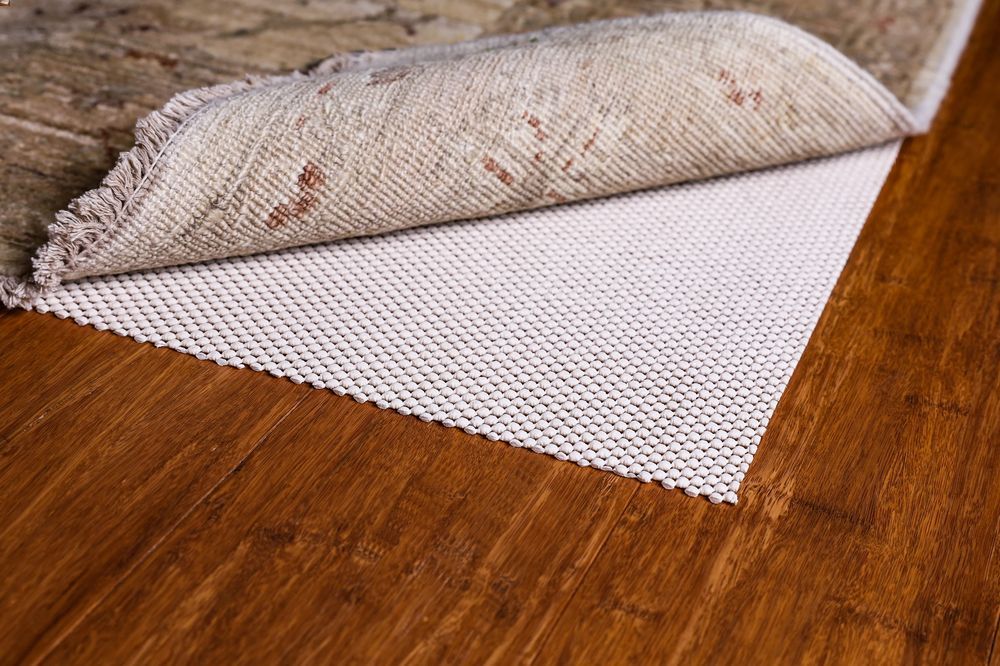
Lift and dry every layer
Even if you think you know the culprit, dry everything. Musty odor is stubborn, and half-fixes tend to come back the moment the rug goes down again.
Step 1: Remove the rug and pad
- Roll the rug, do not fold it if it is stiff or has a thick backing.
- Carry the pad separately. If it is wet, keep it off wood furniture and textiles.
- If the rug is large, fold it loosely in big sections just for transport, then unroll it as soon as you can.
Step 2: Dry the floor
- Hardwood: Wipe with a dry microfiber cloth. Then aim a fan across the area for several hours. Avoid soaking the floor with cleaners.
- Engineered wood: Treat like hardwood, but be extra cautious. Engineered floors can still swell if moisture sits at seams.
- Laminate: Keep water away from edges and joints. Dry with cloths and airflow only.
- Concrete: Dry with fans and, ideally, a dehumidifier. Concrete can look dry and still be releasing moisture vapor, especially with slabs-on-grade that lack an effective vapor barrier or when groundwater and soil moisture are high.
- Tile: Dry the grout lines well. Mustiness often hangs out in grout if damp air is a repeat issue.
If you notice a darker outline that matches your pad shape, that is a common sign of trapped moisture. It should lighten as things fully dry, but persistent discoloration on wood may indicate finish damage and is worth getting assessed.
Step 3: Dry the rug
- Take it outside if weather is dry. Hang it over a railing or sturdy clothesline so air can circulate on both sides.
- If outdoors is humid, dry it indoors with fans and a dehumidifier instead.
- Flip it halfway through drying. The underside often holds onto moisture longer.
Skip high heat. Hair dryers and space heaters can warp some backings, shrink certain fibers, and stress adhesives. The safer play is steady room-temperature airflow plus dehumidification.
Step 4: Dry or discard the pad
This is the make-or-break step. Pads are often the real smell source.
- Felt pads: If the pad smells musty, feels damp, or shows any spotting, I lean toward replacing it. Felt is absorbent and can keep odor even after drying.
- Rubber or latex-backed pads: These can trap moisture against the floor. If it smells and has any tacky breakdown or discoloration, replace it.
- Memory foam style pads: They can hold moisture internally. If the odor persists after a thorough dry, replace.
If you want to attempt saving a pad that is only lightly musty and not visibly affected, dry it flat with strong airflow on both sides. If after 24 to 48 hours it still smells even a little off, do not put it back under your rug. That odor will return as soon as humidity rises again.
Rug material notes
This is the part people skip, then they accidentally make a small smell problem into a big rug problem.
- Wool: Wool can handle gentle cleaning, but it hates being left damp. Prioritize thorough drying, and avoid over-wetting with DIY shampooing.
- Synthetics (nylon, polypropylene, polyester): Often easier to dry and more forgiving, but the backing and pad can still trap moisture and odor underneath.
- Natural plant fibers (jute, sisal, seagrass): These are the divas. They discolor, warp, and hold onto musty odor easily. Keep them dry, avoid water-based cleaning, and consider professional help if they get damp or start smelling.
Floors that need extra care
Some floors tolerate a little trapped humidity. Others really do not. Here is where to be especially careful.
Hardwood with older finishes
Older floors can be more sensitive to moisture sitting under a rug, especially if the finish is worn in traffic paths. Moisture can sneak into micro-gaps and cause cupping or staining.
- Make sure the floor is bone dry before putting anything back.
- Consider a thinner, more breathable pad.
- Avoid rubber-backed pads directly on the finish if the manufacturer warns against it.
Hardwood with water-based polyurethane
These finishes are durable, but they still dislike trapped moisture. The bigger risk is repeated cycles: dampness, dry-out, dampness again.
LVP and sheet vinyl
Vinyl itself resists water, but moisture can get trapped at edges or seams, and odor can build under non-breathable pads. Also, some rubber and latex pads can discolor vinyl over time due to chemical interaction and plasticizer migration.
- Choose a pad that is explicitly approved for vinyl.
- Prioritize airflow and humidity control.
Concrete slabs and basement floors
Concrete can wick moisture from below. Even without a leak, vapor can move upward, especially in older homes and ground-level units.
- Dehumidify the space consistently.
- Use a breathable rug setup and lift the rug periodically to let the floor breathe.
When to toss the pad
I am frugal to my core, but I am also firmly in the camp of: if a pad is contaminated, it is not worth risking your air quality or your flooring.
Replace the pad if:
- It smells musty after drying
- It feels damp in the center even when the surface seems dry
- You see any spotting, dark specks, fuzzy growth, or slimy patches
- It has started to crumble, get tacky, or shed
- Your floor showed a damp outline that returns when you reinstall the same pad
And if you replace it, this is your permission slip to choose a pad that matches your floor and your climate, not just whatever was on sale.
If the odor still comes back
If you dried everything properly and the smell returns the moment the rug has been down for a few days, do not keep repeating the same cycle. Use this quick decision tree instead.
- Smell is strongest in the rug, not the pad: consider a professional rug cleaning, especially for wool and natural fiber rugs. For synthetic rugs with an organic source (pets, food), an enzyme-based odor treatment may help, but test first and follow label directions.
- Smell is strongest at the floor: you may be dealing with subfloor moisture, slab vapor, or a hidden leak. Check humidity levels, look for plumbing or exterior wall dampness, and consider bringing in a flooring pro or moisture specialist.
- Smell is strongest near vents or only when HVAC runs: check for elevated humidity, dirty coils, or airflow issues. Sometimes the rug is the “collector,” but HVAC is the “fuel.”
- Smell reads rubbery or chemical: try removing the pad for a few days and ventilating the rug and room. If the smell fades without any drying work, you are likely dealing with material odor or a pad that is not compatible with the floor.
Keep it from coming back
Once everything is dry and neutral again, the goal is to stop recreating the damp sandwich.
Control humidity
- Run a dehumidifier in damp-prone rooms (basements, first-floor apartments, rooms over crawl spaces).
- Use bath and kitchen fans, and vent dryers properly.
- If you mop, use a barely damp method and let the floor dry completely before replacing rugs.
Let rugs breathe
- Every couple of weeks, lift and shake out corners, especially in humid seasons.
- Vacuum both the rug and the floor underneath during deep cleans.
- In tight spaces, a small fan pointed across the floor for an hour can do wonders after cleaning days.
Watch common water sources
- Houseplants that get overwatered and drip beyond the saucer
- Pet bowls placed near the rug edge
- Wet boots parked on the rug in winter
- Entry rugs layered over larger area rugs
FAQ
Can I sprinkle baking soda under the rug to fix the musty smell?
Baking soda can help absorb odor short-term, but it does not solve moisture. If you sprinkle it under a rug that is trapping humidity, the musty smell will return. Also, fine powders can work down into some fibers and be annoying to vacuum fully.
Is the rug ruined if it smells musty underneath?
Not necessarily. If you catch it early and dry it thoroughly, many rugs recover just fine. The pad is more often the thing that needs replacing. The longer it stays damp, the harder it is to fully remove odor.
Why is it worse on concrete than on hardwood?
Concrete can hold and release moisture vapor, especially on slabs or in basements. When you cover it with a rug and pad, evaporation slows down, and that damp smell builds in the trapped pocket of air.
What if there is no stain at all?
That is very common. Humidity and light condensation do not always leave a visible mark, especially on darker pads. Trust your nose and focus on drying and airflow.
How long should I wait before putting the rug back?
Wait until the floor, rug backing, and pad are completely dry and odor-free. Practically, that often means at least 24 hours of airflow, and sometimes 48 hours or more in humid homes. If you reinstall too soon, you are basically restarting the cycle.