Pet Vomit on an Area Rug

Clara Townsend
The first time my dog got sick on a rug I loved, I did what most panicked homebodies do. I grabbed a wet cloth and started rubbing like my life depended on it. All I accomplished was pushing acid, pigment, and funk deeper into the pile and closer to the backing.
So here is the approach I use now. It is gentle, it is fast, and it is all about lifting and blotting instead of soaking. Vomit is a messy combo of partially digested food (dyes and fats), stomach acid (low pH), and odor-causing proteins. If you treat it like urine only, you often miss the food color and grease that love to cling to rug fibers.
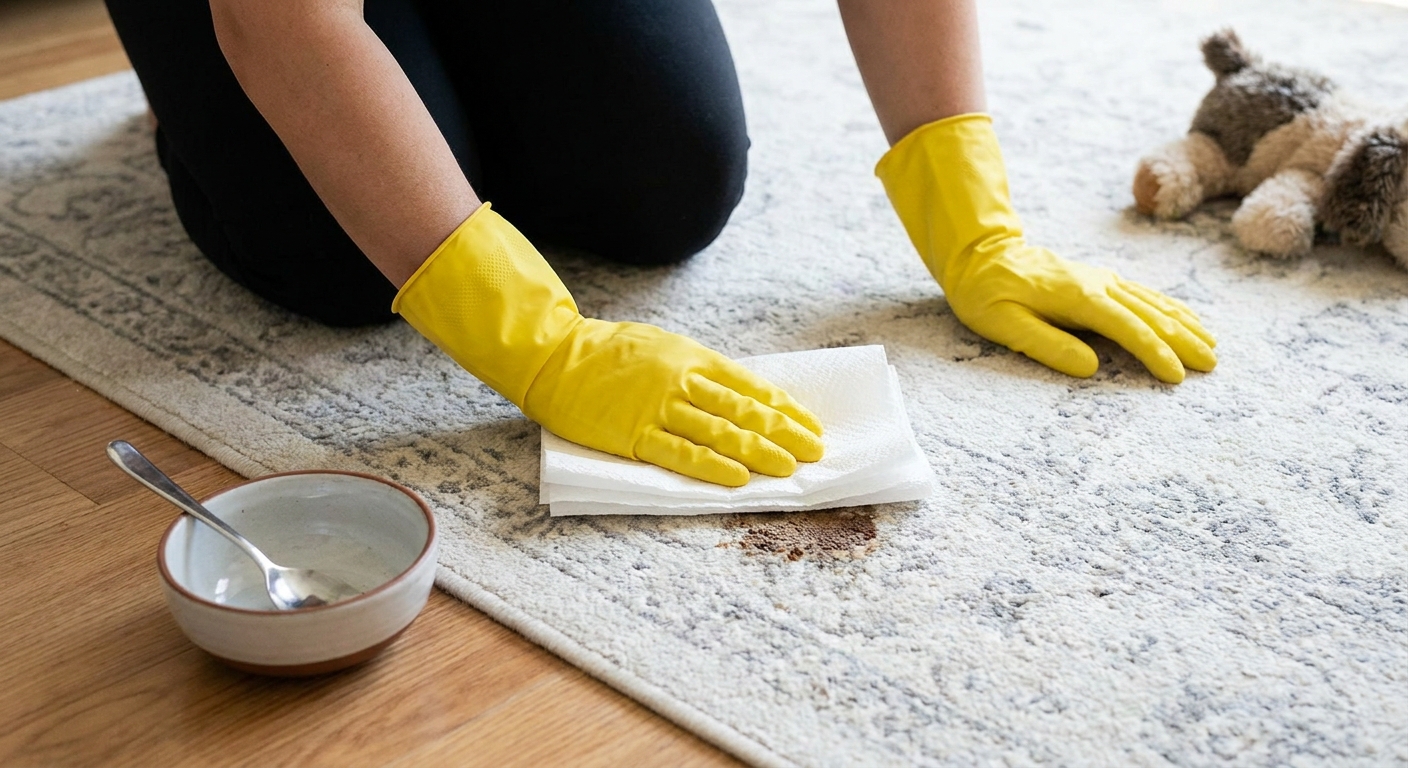
What you need
- Disposable gloves
- Spoon or dull scraper (for lifting solids)
- Paper towels or clean white cloths
- Baking soda (for deodorizing and drying)
- White vinegar
- Mild dish soap
- Cold or cool water
- Spray bottle or small bowl
- Soft brush (optional)
- Enzymatic cleaner (optional but helpful for lingering odor)
Before you start
Work from the outside in. It keeps the spot from spreading.
Avoid hot water. Heat can make protein-based messes harder to remove and can lock odor in. Cool water is the safe default for rugs.
Do not flood the rug. Your goal is to clean the fibers, not soak the backing and pad. Overwetting is how you get rewicking and that stubborn sour smell that comes back a day later.
Spot test first. Before you use vinegar or soap, test your solution on an inconspicuous corner and blot with a white cloth. If you see color transfer, stop and use less moisture or call a pro. This matters a lot on wool, silk, and older or deeply dyed rugs.
Expect to blot more than you spray. If you are making it wetter faster than you are lifting it, you are going the wrong direction.
Step by step
1) Lift the solids
Put on gloves. Use a spoon or dull edge to scoop up solids gently. If it is chunky, lift it in layers instead of smearing it around. Toss everything in a bag and tie it off.
If it is dried or caked: Lay a cool, damp cloth over it for 2 to 5 minutes to soften, then lift. Do not scrub it dry. That just grinds it into the fibers.
2) Blot, do not rub
Lay paper towels or a white cloth over the area and press firmly. Stand on it if you need to. Replace towels and repeat until you are no longer pulling up moisture.
3) Rinse and deodorize (gentle acid step)
This step is less about true chemical neutralization and more about flushing residue and cutting odor without overwetting.
Mix 1 part white vinegar with 2 parts cool water. Lightly mist or dab it onto the spot. You want it damp, not drenched.
Let it sit for 2 to 3 minutes, then blot until mostly dry.
When to stop: Do one pass, then assess. If it still smells sharp or looks dingy, repeat once. If you find yourself tempted to keep pouring liquid on it, switch to blotting and drying instead.
4) Break up grease and food dye
In a bowl, mix 1 cup cool water with 1/2 teaspoon mild dish soap. Dip a cloth into the solution, wring it out well, and dab the stain.
If you need a little more agitation, use a soft brush and make short, gentle strokes in the direction of the pile. Then blot with a dry towel.
Looped pile and Berber note: Skip the brush or be extremely gentle. Aggressive brushing can fuzz the yarn or pull loops.
Rinse lightly: Dampen a clean cloth with plain cool water and dab to remove soap. Blot dry. Leftover soap can attract dirt later.
When to stop: If you are still seeing stain, do one more light soap pass, then rinse and move on to drying. The rug should not feel wet through to the backing.
5) Deodorize and dry
Sprinkle a generous layer of baking soda over the damp area. This helps pull out moisture and odor without overwetting.
Let it sit for at least 30 minutes. Overnight is even better if the smell was strong. Vacuum thoroughly.
If the smell comes back
If you still catch a whiff after it dries, it usually means some of the mess reached deeper than the fibers.
Try an enzyme cleaner
Use an enzymatic cleaner labeled for pet vomit and follow the bottle directions exactly. Enzymes work by digesting proteins, but they need time and the right moisture level.
Three important notes:
- Test first on an inconspicuous corner for colorfastness.
- Do not mix enzymes with bleach or disinfectants. They can inactivate the enzymes and damage fibers.
- Avoid using enzymes right after vinegar without a rinse. Very acidic or very alkaline conditions can reduce enzyme effectiveness. Clean, rinse with cool water, blot well, then do an enzyme pass.
How to stop rewicking
Rewicking is when the stain looks gone, then creeps back up from the backing or pad as the rug dries.
- After cleaning, blot one last time with a stack of dry towels and firm pressure.
- Put a fresh towel over the spot, then set something heavy on top for 15 to 30 minutes.
- Speed drying with a fan. Faster drying means less time for residue to travel upward.
Fiber cautions
Wool or silk: Use minimal moisture, skip strong alkalines, and avoid aggressive scrubbing. Stick to careful blotting with a very diluted vinegar step and a very mild soap solution, only if your spot test looks good. If the rug is expensive, antique, or heavily dyed, professional cleaning is often the safest move.
Jute, sisal, seagrass: These hate water. Blot aggressively, use as little liquid as possible, and focus on quick drying. If the stain soaked in, a pro is often the safest move.
Synthetics (nylon, polyester, polypropylene): Usually the most forgiving, but you can still overwet the backing. Keep it controlled.
When to call a pro
If the vomit hit a large area, soaked through to the pad, or the rug is wool, silk, antique, or sentimental, professional cleaning can save you from permanent dye changes and lingering odor. I say that as someone who has learned the hard way that a rug is easier to protect than it is to resurrect.