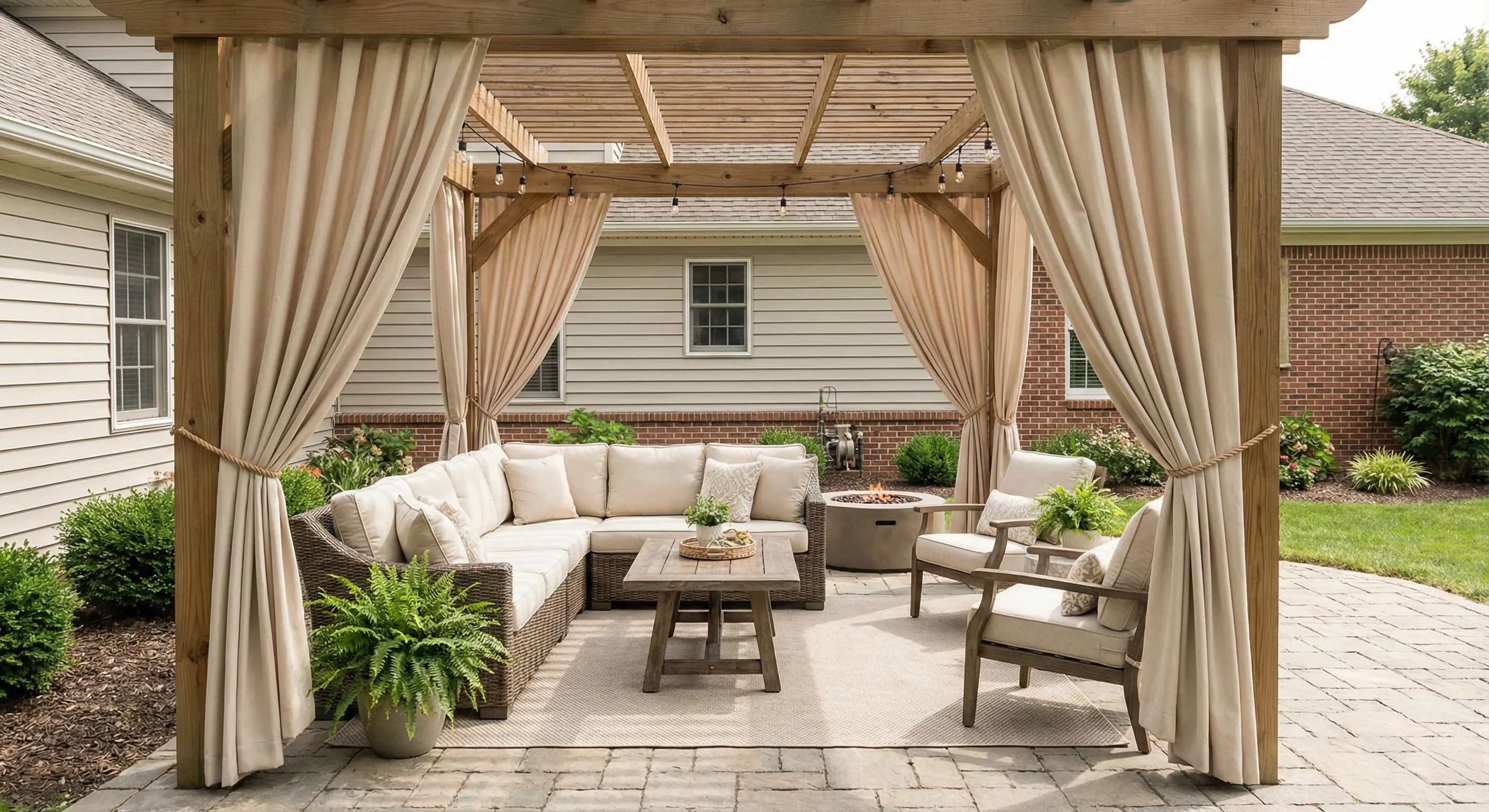
Outdoor Patio Curtains That Stay Put and Stay Fresh
Gust
The first time I hung curtains on a breezy little porch, I pictured slow linen-like sways and candlelit dinners. What I got was a curtain panel doing a full escape artist routine off the rod, followed by that unmistakable damp-towel smell two days later. Outdoor curtains are not indoor curtains with a tan, and once you accept that, everything gets easier.
Below is how I hang porch and pergola curtains so wind does not pull them down, plus the habits that keep mildew from ever getting comfortable. No indoor window-frame rules, no sliding-door tracks, just outdoor reality.

Why patio curtains fail outdoors
Two things make patio curtains misbehave: lift and staying wet for too long.
- Lift: Wind gets behind the fabric, balloons it like a sail, and the curtain rings or grommets hop right over the rod end.
- Staying wet: Rain, sprinklers, fog, and humidity soak the fibers. If the fabric stays damp and folded or bunched, mildew shows up fast.
Your goal is simple: stop the curtain from leaving the rod and get it dry quickly after weather.
Pick a rod setup that cannot be popped
If your rod has open ends, the wind will eventually find them. Start here, because the best fabric in the world cannot outsmart a rod with an exit route.
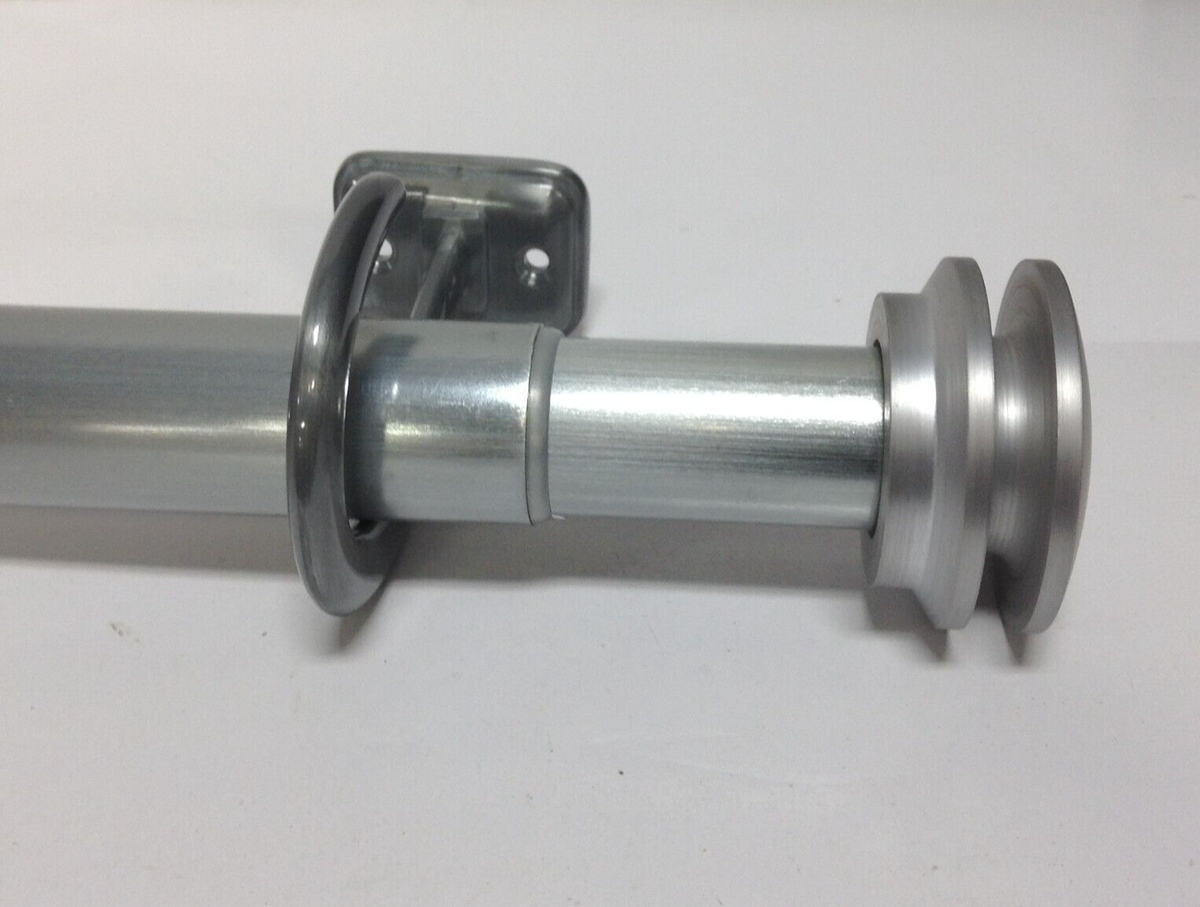
Use return ends or real end caps
Look for an outdoor rod with return ends (the rod curves back toward the wall or post) or solid end caps that physically block rings from sliding off. Decorative finials look nice, but some still leave enough gap for a ring to jump off in a gust.
Anchor the brackets like you mean it
Pergola and porch posts are often wrapped or hollow, so flimsy mounting is common. A few steadier options:
- Mount into solid wood: If you have wood posts or beams, go straight into them with exterior-rated screws.
- Use a mounting board: If your post wrap is thin, attach a pressure-treated or composite board to something structural, then mount the rod brackets to that board.
- Masonry anchors for brick or stucco: If you are mounting to masonry, use the correct anchors and sealant so water does not creep into the holes.
Outdoor hardware lives or dies by corrosion resistance. In wet or coastal areas, I stick with stainless or hot-dip galvanized fasteners and rust-resistant brackets whenever possible.
Quick safety note: before drilling into walls, check for wiring and plumbing, use the right bit for the surface, and do not do ladder acrobatics in the name of ambiance.
Go thicker on the rod
Outdoor curtains get heavier when wet. A rod that looks fine on a sunny day can bow after a rain. Choose a heavier-duty rod and add a center support for longer spans (especially wide openings). A straight rod is not only prettier, it also helps panels slide smoothly without snagging and jerking in wind.
Stop wind from pulling curtains off the rod
There are three reliable strategies. You can use one, but the magic is often a combination.
1) Lock rings in place
If you are using curtain rings or hooks, give them a stop sign.
- Rubber curtain ring stoppers: These grip the rod and keep rings from drifting toward the ends.
- Hose clamp stops (the hardware store hero): A small stainless steel hose clamp tightened discreetly near each end acts like an immovable bumper. It is not glamorous, but it is wildly effective, especially for pergolas that get regular wind.
- Zip tie stop: In a pinch, a clear zip tie tightened around the rod can function as a temporary stop.
Stops work best when your rod ends are capped or returned, so rings cannot hop off even if they reach the edge.
2) Use a wind-friendly curtain top
Some curtain tops behave better outdoors than others.
- Grommet tops: Very wind-friendly because the curtain is directly on the rod and less likely to detach. Choose rust-resistant grommets.
- Tab tops: Cute, but tabs can stretch and flap more. If you love the look, use wider, reinforced tabs and keep panels tied back when not in use.
- Rod pocket: Secure because the rod is enclosed, but it is harder to slide open and shut. Also, the panel can still act like a sail in gusts unless you add a bottom anchor. Great for “mostly closed” privacy panels.
If your current panels are ring-top and they keep escaping, switching to grommets is often the cleanest fix.
3) Add a bottom anchor so fabric cannot balloon
This is the step most people skip. It is also the step that makes curtains look intentional instead of constantly mid-tantrum.
- Weighted hems: Sew in drapery weights, add a chain weight in a hem channel, or use weighted outdoor curtain panels. Weight reduces flapping and helps panels hang straight.
- Discreet bottom tie: On pergola posts, you can add a small hook and a soft tie near the bottom third of the panel. This keeps the curtain from turning into a sail.
- Outdoor-safe bungee tiebacks: If your patio is consistently windy, flexible ties absorb gusts better than a tight knot.
If you want the option to close curtains fully, use tie-downs that release quickly. Think simple hook-and-loop straps or a loop that slips off a post hook.
Outdoor fabrics that resist mildew and survive rain
Outdoor curtains live a messy life. Your best bet is fabric that dries quickly and does not hold onto moisture.
Best fabric choices
- Solution-dyed acrylic: Often used in awnings and outdoor cushions. It resists fading, and it generally dries faster than natural fibers, depending on the weave and weight.
- Outdoor polyester: A common, budget-friendly choice. Look for fabric labeled for outdoor use and check that it is meant to resist UV and moisture.
- Olefin: Another solid outdoor performer, often quick-drying and durable.
What to avoid (or use only in covered, low-humidity spaces)
- Indoor cotton and cotton blends: They hold water, stay damp longer, and are basically a welcome mat for mildew.
- Untreated linen: Beautiful, yes. Outdoors in rain and humidity, it can get spotty and musty quickly.
- Anything described as “water-absorbent”: You want weather-resistant, not thirsty.
If your heart is set on a soft, linen-like look, search for outdoor sheers specifically labeled for patio or pergola use. They are typically synthetic but woven to mimic that airy drape.
Tiebacks that survive rain
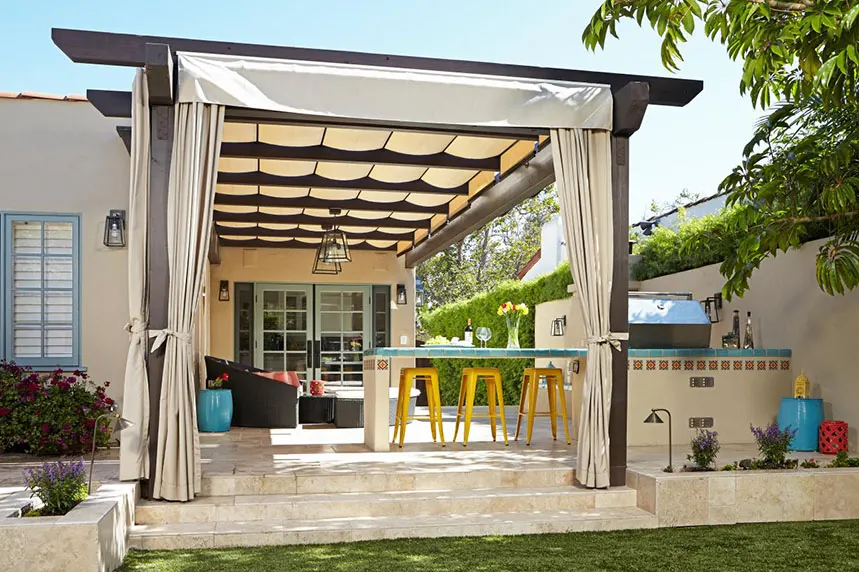
The fastest way to make outdoor curtains look pulled together is a good tieback. The fastest way to make them look sad is a tieback that stays wet and stains the fabric.
Materials that do well outdoors
- Marine-grade rope: Designed for moisture. It dries quickly and looks charming on pergolas.
- Acrylic or polypropylene cord: Practical, unfussy, and resists mildew better than natural fibers.
- Outdoor-rated straps: Think webbing, hook-and-loop, or buckled straps used for outdoor gear.
- Powder-coated or stainless hooks: Prevent rust streaks on light panels.
Materials that tend to disappoint
- Jute, sisal, cotton rope: They absorb water and can mildew, plus they can leave marks.
- Unsealed leather: Outdoors it stiffens, stains, and can mildew if repeatedly soaked.
- Cheap metal hooks: Rust drips are heartbreak in slow motion.
My favorite look is a simple rope loop over a small hook on the post. It is easy to undo, it dries quickly, and it reads relaxed rather than fussy.
Drying routine: stop mildew before it starts
Mildew prevention is mostly a timing game. If you can get curtains dry and aired out within about 24 hours when possible, you will avoid most problems. In shaded or extra-humid spots, you may need a fan or a full take-down and dry.
After rain: do this the same day if you can
- Shake the panels out: Give each panel a few brisk snaps to release pooled water and open up the folds.
- Open them wide: Spread panels fully so air can move through. Bunched fabric dries slowly and grows smells quickly.
- Tie them back loosely: If you need them out of the way, do a loose tie so air still circulates.
- Use sun and airflow: If you have a fan you can aim toward the porch for an hour or two, it makes a surprising difference.
If they are soaked: do not leave them hanging wet for days
If your curtains got truly drenched, the kind where water is dripping from the hem, I treat them like a wet bathing suit. They need real drying time.
- Take them down and drape them to dry: A clothesline, a drying rack, or even a clean railing in the sun works.
- Do not fold them damp: Folding locks moisture into creases, which is exactly where mildew blooms.
- Wash promptly if they smell musty: Once the smell sets, it is harder to remove.
For cleaning, follow the care label. A lot of outdoor fabrics do not love chlorine bleach, and oxygen bleach is often the gentler option, but the label gets the final vote.
One more tip that sounds obvious, but saves panels: aim sprinklers away from your curtain line. Repeated daily misting is a mildew factory.
Details that matter without a window frame
Outdoor curtains often hang from posts, beams, or pergola rafters. That changes a few practical choices.
Give panels a place to land
Indoors, curtains stack against a wall. Outdoors, they often have nowhere to go and end up twisted around a post.
- Add hooks on each post: One at about hand height for tiebacks, and optionally a lower one for wind control.
- Plan for furniture clearance: Make sure tied-back panels do not drag across dining chairs or grill corners.
Keep hems out of puddles and splash zones
Puddles and muddy splash are where curtains get stained and stay damp. Hem them to hover above the patio floor by an inch or two. You still get that full, elegant drop without wicking water up the fabric.
Try two narrower panels
Wide panels catch more wind. Two panels per opening are easier to control, easier to tie back, and they dry faster because each panel has less bulk.
Maintenance that keeps them fresh
A little low-effort upkeep goes a long way outdoors:
- Quick rinse: In pollen season or near salt air, a gentle rinse keeps grime from settling into the weave.
- Check hardware: Tighten loose brackets and look for rust spots before they turn into streaks on your fabric.
- Off-season storage: If you have long wet winters, take panels down, wash if needed, dry completely, and store them somewhere breathable.
Quick troubleshooting
My curtains keep blowing off the rod. What is the fastest fix?
Add end caps or return ends, then install stops near each end of the rod so rings cannot migrate. If you are using rings and still struggling, switch to grommet-top panels and add a bottom anchor.
My outdoor curtains mildewed. Do I have to throw them away?
Not always. If the fabric is truly outdoor-rated and the mildew is early, you can often wash it per the care label and dry it completely in sun and airflow. If mildew has eaten into the fibers or keeps returning immediately, it may be time to replace and switch to a quicker-drying fabric.
Why do my curtains smell even when they look dry?
They are probably still damp inside the folds or at the hem. Shake them out, spread them fully, and give them more time with airflow. Heavy hems can hold moisture longer than the rest of the panel.
Do I need outdoor liners?
Usually, no. Liners add weight and bulk, which can mean slower drying. If you want more privacy, choose a heavier outdoor fabric instead of layering.
My simple outdoor-curtain setup
If you want a low-drama recipe, here is what I reach for:
- Sturdy outdoor rod with return ends or solid end caps
- Grommet-top outdoor panels in solution-dyed acrylic or outdoor polyester
- Stops on the rod near both ends (rubber stoppers or discreet clamps)
- Rust-resistant screws and brackets matched to your surface
- Powder-coated hooks on posts for tiebacks
- Marine-grade rope tiebacks or outdoor straps
- Hems kept just off the ground to avoid puddles
The result is the good kind of relaxed. Curtains that move gently when you want ambiance, and behave themselves when the weather decides to get theatrical.