Grommet Curtains That Stick and Will Not Slide

Clara Townsend
I have a special kind of sympathy for grommet curtains that refuse to slide. They always pick the worst moment to seize up, like when you are balancing coffee, trying to let in morning light, and suddenly you are in a full-body tug of war with your window treatment.
The good news is this: most sticky grommet curtains are not “bad curtains.” They are curtains having a friction problem. Usually it comes down to one of three culprits: the rod finish, tiny burrs on the grommets, or fabric and header bulk that is asking more of the hardware than it can comfortably give.

First, figure out what kind of “stuck” you have
Different sticking patterns point to different fixes. Take 30 seconds to notice what is happening before you buy anything.
- They stick in the same spots every time: Think rod seams, rod brackets, decorative finial transitions, or nicks in the finish.
- They stick everywhere and feel scratchy: Think rough grommet interiors or a rod finish that is too grippy.
- They slide at first, then start grabbing after a few pulls: Think friction from weight and compression, usually a thick header or very full panels on a narrow rod.
- They snag hard at the center support bracket: This is classic. Center supports often interrupt the smooth path.
Rod finish matters more than people think
Grommets want a smooth, consistent surface. If your rod has texture, a soft-touch coating, or a finish that feels slightly rubbery, grommets can drag instead of glide.
Common rod finishes that cause grabbing
- Powder-coated rods: Often beautiful, sometimes slightly textured.
- Painted rods: Can develop tiny tacky spots, chips, or uneven brush texture.
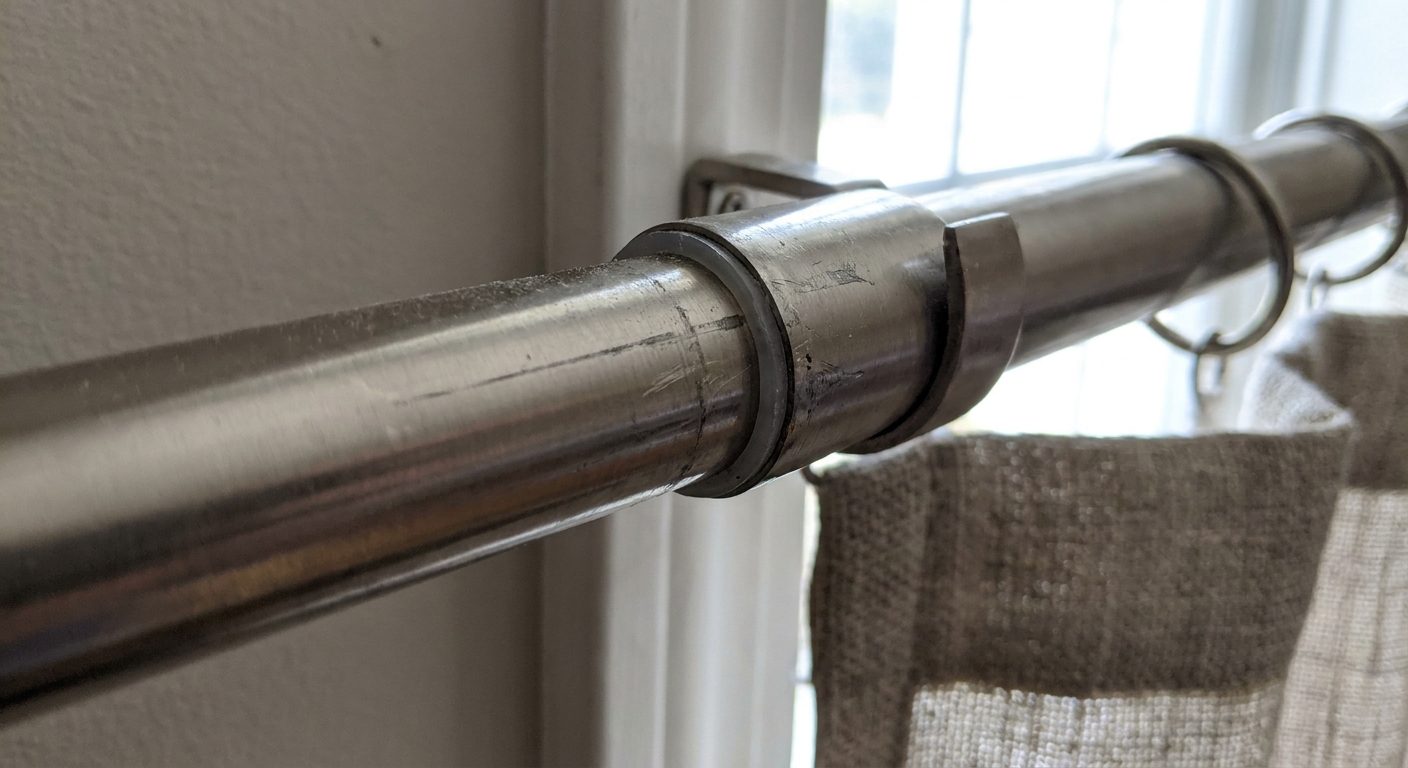
- Rods with visible seams: Adjustable rods can have a lip where the pieces overlap.
Quick rod test
Run your fingers along the top and front of the rod where the grommets travel. If you feel bumps, gritty texture, or a seam edge, the curtains feel it ten times more.
Fix 1: Clean the rod properly (this alone solves a lot)
Dust mixed with humidity and cooking residue can create a faint sticky film that makes metal grommets drag. Cleaning is the least messy fix, so I always start here.
What to do
- Take the curtains off if you can. If you cannot, slide them to one side and work in sections.
- Wipe the rod with a barely damp microfiber cloth and a drop of mild dish soap.
- Follow with a clean damp cloth to remove soap residue.
- Dry the rod fully with a dry cloth.
Skip oily cleaners in this spot. Anything that leaves a film can transfer to the curtain header over time.
Fix 2: Check the grommets for burrs and sharp edges
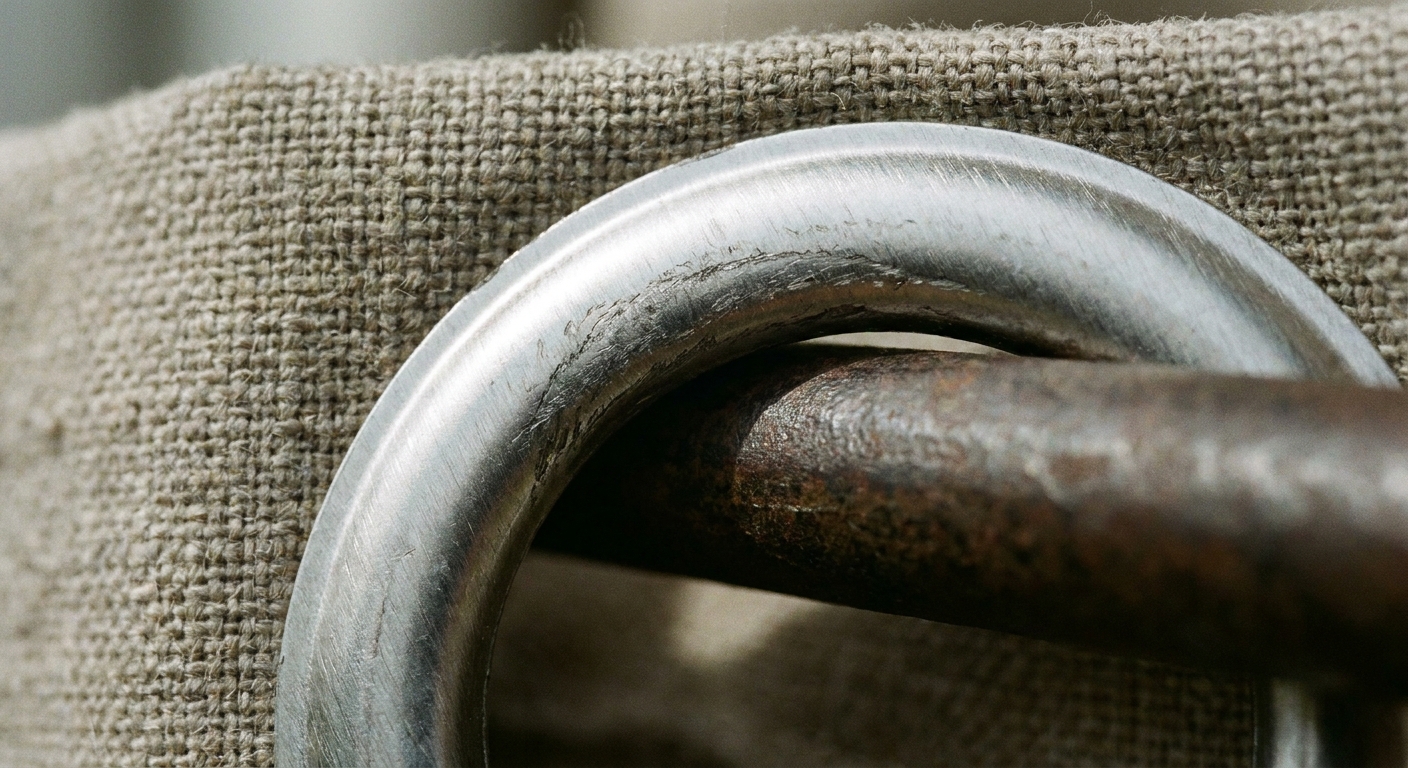
“Burr” sounds dramatic, but it can be as small as a jagged edge on the inner ring. One rough grommet can make the whole panel feel like it is fighting you.
How to check without taking everything down
- Slide the panel to where it sticks.
- Pinch the fabric near the sticky grommet and lift slightly to take weight off the rod.
- Rotate the grommet around the rod. If it catches at one point in the rotation, the inside edge is likely rough.
How to smooth a rough grommet
If you can remove the panel, do it. You will be more precise and you will not risk rubbing tools against your rod finish.
- Use fine grit sandpaper (around 220 to 400) or a fine nail buffer.
- Lightly smooth the inside edge of the grommet where it contacts the rod.
- Wipe away dust with a dry cloth.
Avoid metal files unless you are extremely careful. They can create sharper edges and can scratch the rod later.
Fix 3: Use a dry lubricant that will not stain
If your grommets and rod are basically fine but still drag, you want a lubricant that feels invisible once applied. This is where people reach for household oils, and then wonder why their header has dark smudges later.
What to use
- Dry silicone spray (applied to a cloth first, not sprayed directly near fabric)
- Paraffin wax (a clear candle or plain canning wax rubbed lightly on the rod)
- Graphite lubricant (works well but can be messy, so it is my last choice around light fabrics)
My no-stain method (curtains already hung)
- Lay a towel over the top edge of the curtain header under the rod area you are working on.
- Put a small amount of dry silicone onto a clean cloth until it feels barely damp, not wet.
- Wipe the rod in the travel path, especially where it crosses brackets and seams.
- Wait a minute, then slide the curtain back and forth several times to distribute.
- Wipe the rod once more with a clean dry cloth to remove any excess.
Important: the goal is a whisper-thin layer. If you can see shine or feel residue, you used too much.
Fix 4: Deal with the center support bracket snag
If your rod spans a wider window, you probably have a center bracket. Many grommet panels will catch on that bracket every single time, no matter how much you clean or lubricate.
Options that actually work
- Swap to a bypass center bracket so the rings can pass in front of the support.
- Use curtain rings with clips (or sew-on rings) instead of sliding the grommets directly on the rod.
- Split the panels so you do not need to cross the center as often, if your styling allows it.
If you are currently yanking the curtain past the center support, you are not alone. But the repeated snagging can chew up both the grommet and the rod finish over time.
Fix 5: Make sure your rod is the right size for the grommets
This is the quietly common one: the grommet inner diameter and the rod diameter are too close. When there is not enough clearance, the curtains will bind, especially with heavier fabric.
What “good clearance” feels like
You want the grommets to have a little wiggle room around the rod, not a tight hug. If your grommets barely fit over the rod, sliding will always feel stubborn.
Also check for these friction boosters
- Overstuffed header: A thick buckram-style header can compress and grip the rod.
- Very full panels: Gorgeous, yes. But more fabric means more weight and more pressure on the rod.
- Rod bowed slightly: Even a small sag creates pinch points where grommets want to stall.
When grommet panels need rings instead
I love a grommet look when it works, but sometimes the smartest styling move is to stop forcing it.
Consider switching to rings if:
- Your rod has a center support you cannot change, and you need the panels to open and close daily.
- Your panels are heavy (blackout, velvet, lined linen) and the grommets drag even after cleaning and dry lubricant.
- The grommets are flimsy or slightly misshapen and keep catching.
- You are seeing wear marks on the rod finish or metal dust around the grommets.
The simplest workaround: clip rings. You can clip just below the grommet header so the grommets become decorative while the rings do the sliding. If you prefer a cleaner look, sew-on rings on the back can create a tailored ripple fold without the grommets touching the rod at all.
Cheat sheet: best fixes by symptom
- Sticks at the same spot every time: Clean rod, inspect seam, check bracket, consider bypass bracket.
- Scratchy drag everywhere: Inspect for grommet burrs, lightly smooth inner edges, add a dry lubricant.
- Leaves dark marks on the header: Remove any oily product, clean rod, switch to a dry silicone or paraffin wax applied sparingly.
- Snags at center support: Bypass bracket or switch to rings.
- Feels tight on the rod: Rod diameter is too large for the grommets, or the grommets are undersized. Rings are often the cleanest fix.
What not to do (learn from my past mistakes)
I have tried the “quick fixes” so you do not have to.
- Do not use cooking spray or olive oil. It will collect dust and can stain fabric.
- Do not rub bar soap on the rod. It can leave residue and may transfer to light headers.
- Do not force the grommets over a rough bracket. That is how you end up with chipped paint and torn header fabric.
- Do not spray lubricant directly toward hanging curtains. Always apply to a cloth first.
FAQ
Why do my grommet curtains suddenly stop sliding?
Most often, the rod has picked up a film (dust, humidity, kitchen residue), or the finish has worn slightly sticky in high-contact areas. A quick clean and a very light dry lubricant usually bring them back to life.
Will WD-40 help grommet curtains slide?
It will make them slide, but it is oily and can migrate into fabric over time. If your curtains are already hung, I would avoid it. A dry silicone product applied to a cloth is a safer direction for most homes.
What is the best dry lubricant for curtains?
For most standard rods and metal grommets, dry silicone works well when applied sparingly. Paraffin wax is also a great low-mess option, especially if you are sensitive to sprays.
My curtains catch at the bracket. Can I fix that without rehanging everything?
You can improve it by cleaning and lubricating the rod and by ensuring the bracket hardware is not protruding into the path. But if the bracket interrupts the rod (especially a center support), the true fix is usually a bypass bracket or switching to rings.