New Blackout Curtains Smell Like Chemicals

Clara Townsend
The first time I hung blackout curtains in a tiny city bedroom, I felt like I’d unlocked a new level of adulthood. The room went deliciously cave-dark. The only problem was the smell. Not a gentle “new fabric” scent, but a plasticky, factory-sharp chemical whiff that made the whole space feel less like a sanctuary and more like a shipping container.
If your new blackout panels smell like chemicals, you are not alone and you are not being dramatic. Many blackout curtains use a coating, lining, or bonding layer that can off-gas when it is fresh out of the package. The good news is that, for a lot of people, it fades with the right approach. The important part is doing it in a way that does not crack or peel the blackout backing.
Quick start: Unfold them fully, give them strong airflow (fan plus ventilation if you can), avoid heat, and only wash if the care label says it is allowed.
Why they smell so strong
Regular curtains are usually just woven fabric. Blackout curtains vary by brand, but they often combine fabric plus a light-blocking layer. That extra layer is where odor tends to linger.
The usual culprits
- Acrylic foam coating: Common in many “100% blackout” styles. It can smell like fresh paint or plastic when new.
- Polyurethane (PU) or other resin coatings: Used for blackout and sometimes water resistance. Can have a sharp, sweet, or solvent-like odor at first.
- Bonding adhesives: Some curtains are “bonded” or “laminated” with a lining. Adhesives can off-gas after being sealed in packaging.
- Packaging and transit: Curtains spend time compressed in plastic, in warehouses and trucks. Heat during shipping or storage can intensify that trapped smell.
What you are smelling is often low-level off-gassing, which can include volatile organic compounds (VOCs) from coatings, adhesives, dyes, or packaging. A chemical smell does not automatically mean something is dangerous, but some VOCs can absolutely irritate sensitive people. Treat new curtains like any newly manufactured item: give them time and air before you sleep next to them, and take symptoms seriously.
Before anything: check the label
Blackout curtains are not one-size-fits-all when it comes to cleaning. The fastest way to damage them is to wash them like cotton sheets.
Look for these words
- “Coated”, “foam coated”, “acrylic backing”, “PU coating”, “laminated”, “bonded”
- “Do not machine wash”, “Do not tumble dry”, “Spot clean only”
Do a quick touch test
If the back side feels slightly rubbery, smooth, or plasticky, treat it as a coated backing. If it feels like a separate cloth layer stitched in, you may have a sewn-in lining that is often more forgiving (but still follow the care tag).
If the care label says spot clean only, believe it. The goal is to remove odor without stressing the blackout layer.
Gentlest fix: air them out
If you want maximum odor reduction with minimum risk, start here. Airing out solves most fresh-from-the-box smells, and it does not gamble with the coating.
How to air out panels safely
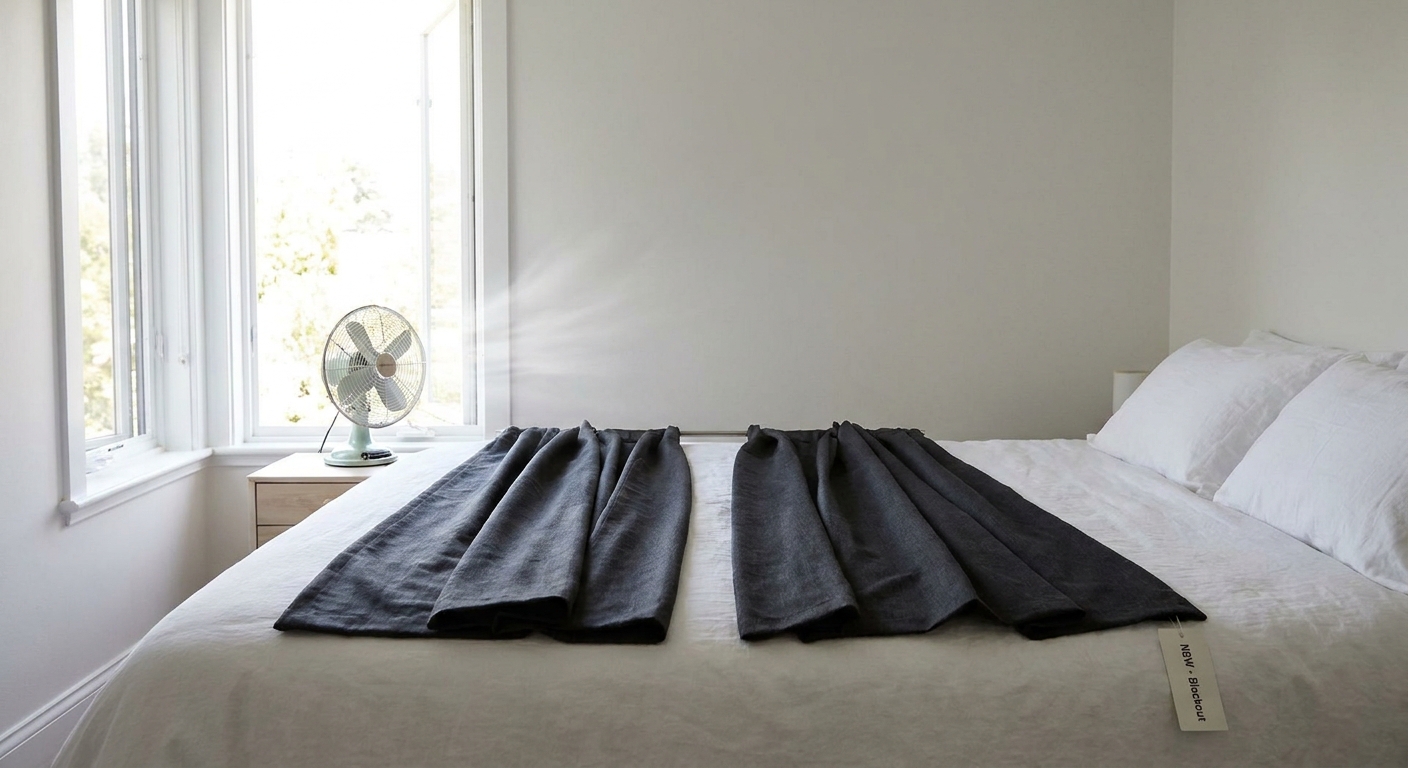
- Unfold completely. Creases trap odor. Drape the panels over a shower rod, railing, or a couple of chairs.
- Prioritize airflow, not heat. Open windows if you can and run a fan. High heat can soften coatings and make them tacky.
- Avoid hot direct sun. Bright indirect light is fine, but long stretches of hot sun can age some coatings and contribute to stiffness or warping.
- Give them space. Do not stack them in a pile while “airing.” Think: lots of surface area, lots of air movement.
My favorite setup is simple: curtains draped open, a fan aimed across the fabric (not blasting it from two inches away), and a cracked window. It is not glamorous, but it works.
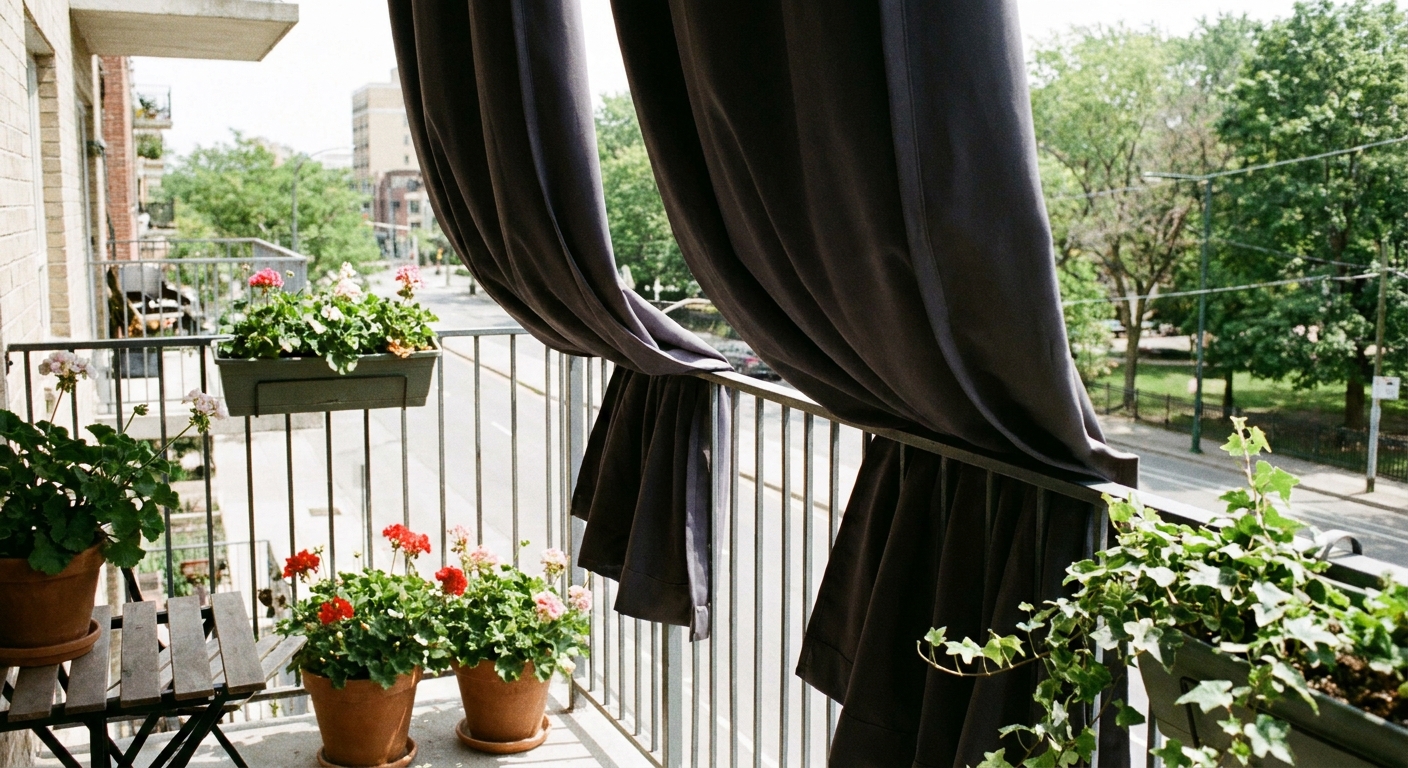
If you cannot open windows, you still have options: run a bathroom exhaust fan nearby, set your HVAC fan to circulate, use a purifier with activated carbon if you have one, or air them in a garage or covered outdoor area where they will stay clean and dry.
Can you wash them safely?
Sometimes, yes. Sometimes, absolutely not. The risk is that the blackout layer can micro-crack, flake, or separate from the fabric if it is agitated, wrung, exposed to hot water, or dried with heat.
If the label allows washing
If your care tag permits machine washing or hand washing, a gentle clean can speed up odor removal.
- Use cold water. Warm or hot water is more likely to soften adhesives and stress coatings.
- Use a mild liquid detergent. Avoid bleach, whitening agents, and heavy fragrances.
- Use the gentlest cycle (delicate or hand wash). Low spin if you can select it.
- Wash one or two panels at a time. Overcrowding increases friction and creasing.
- Skip fabric softener. It can leave residue and sometimes makes the odor situation worse by adding perfume on top.
Drying is where damage happens
- Do not tumble dry unless the label explicitly allows it, and even then choose no heat or low heat.
- Air dry by hanging the curtains lengthwise so the backing is not folded onto itself.
- Avoid hot direct sun while drying.
If you are nervous, start with a rinse rather than a full wash: cold water only, very gentle, minimal agitation. For some curtains, that alone takes the edge off the smell.
Spot-clean and deodorize
If your curtains are spot clean only, you can still make progress on odor without soaking them.
Try a light wipe (test first)
In a hidden corner, test a soft cloth lightly dampened with plain water. If the backing gets tacky, smears, or leaves residue on the cloth, stop.
- Wipe lightly with a barely damp cloth and then dry immediately with a towel.
- Do not scrub. Scrubbing is what turns “fine” into “peeling.”
Baking soda, but keep it dry
If the smell is coming from the folds, lay the curtains flat and place an open bowl of baking soda nearby (or sprinkle baking soda on a sheet under them). Avoid making a wet baking soda paste on the coating, and do not leave loose powder where kids or pets can get into it.
Activated charcoal for stubborn odor
If you have activated charcoal odor absorbers (often sold for closets or shoes), put the curtains in a large clean room or closed office with the charcoal nearby for 24 to 48 hours. It is a slow, low-risk approach, but keep charcoal out of reach of children and pets.
What not to do
- Do not steam the blackout backing unless the manufacturer recommends it. Steam plus coating can cause rippling, softening, or separation.
- Do not use vinegar sprays on the backing without testing. Acids can affect some coatings and adhesives.
- Do not use high heat from a dryer, radiator, or hair dryer. Heat is the enemy of many blackout layers.
- Do not iron the coated side. If ironing is allowed at all, it is usually on the fabric side with a pressing cloth and low heat.
When it is a return
I am all for letting things breathe. But there is a line where your home comfort and health matter more than forcing a product to work.
Consider returning them if:
- The odor is still strong after 72 hours of active airing (fan plus real air exchange), not just sitting folded on a chair.
- The smell causes headaches, nausea, throat irritation, or asthma symptoms for anyone in the home.
- The coating feels sticky, oily, or leaves residue on your hands after airing out.
- You see defects like bubbling, flaking, cracking, or a powdery film shedding from the backing.
- The smell is intensely solvent-like and does not noticeably improve day by day.
For bedrooms, nurseries, and small spaces with limited ventilation, I am especially picky. Sleep is already delicate. Your window treatments should not make the room feel harsh or unbreathable.
How long it usually lasts
In my experience, most new blackout curtain odor drops dramatically within 24 to 72 hours when the panels are fully unfolded and given consistent airflow. Heavier coated styles can take up to a week to become truly neutral. Construction, room size, ventilation, temperature, and humidity all change the timeline.
If you hung them immediately and the room still smells, take them down for a day, drape them open elsewhere, and run a fan. Hanging them in tight pleats can trap the odor right where you are trying to rest.
Sleeping through off-gassing
If you need darkness right now but do not want to sleep in the smell, you can split the difference.
- Air them out during the day in a living room or near ventilation, then hang at night only if the smell is mild.
- Ventilate the bedroom for at least 30 minutes before sleep, even if that just means a fan exhausting air to another room.
- Use an air purifier if you have one, especially a model with substantial activated carbon for odors.
- Keep the panels slightly spread rather than tightly stacked, so air can move around them.
And if your body is telling you “no,” listen. Design should feel like comfort, not endurance.
FAQ
Is the chemical smell toxic?
“Chemical smell” often points to off-gassing from coatings, dyes, adhesives, or packaging. That is common with new manufactured goods, and it often fades with ventilation. But sensitivity varies, and some people get headaches or irritation. If anyone has symptoms, prioritize fresh air and consider returning the curtains.
Will washing ruin the blackout effect?
It can. Some blackout curtains are washable, others are not. If the blackout layer is a coating, harsh washing or heat drying can cause cracking or separation, which can reduce light blocking. Follow the care label and avoid hot water and high heat.
Why does it smell worse at night?
At night, windows are often closed and air exchange drops. If the curtains are pleated tightly on the rod, the smell can also concentrate in the folds.
Can I put them in the dryer on low?
Only if the care tag explicitly allows it. Even low heat can be too much for certain coated backings. Air drying is the safest default.
What should I look for next time if I am sensitive?
If you know you react to odors, look for brands that claim low-VOC materials or third-party textile certifications such as OEKO-TEX. It is not a guarantee of zero smell, but it can be a helpful filter when you are shopping.