Musty Closet Smell in a Small Apartment

Clara Townsend
Clara Townsend is an interior stylist, vintage furniture enthusiast, and the creative voice behind Velvet Abode. With over a decade of experience transforming both cramped city apartments and sprawling fixer-uppers, she believes that a beautiful home is built on personal stories rather than massive budgets. When she isn't hunting for the perfect brass sconce at a local flea market, she can usually be found rearranging her living room for the third time this month.
Closets in small apartments are basically tiny caves filled with fabric. Dark, packed, and rarely disturbed, they trap moisture and whatever yesterday’s “just wear it one more time” energy was. The result is that unmistakable musty smell that clings to clothes and linens, even when everything looks clean.
Musty cushions and stored furniture have their own issues , but closet mustiness is its own beast. Upholstery funk often lives deep in foam and padding. Closet funk is usually a ventilation and humidity problem, plus a little bit of “not enough space for everything to breathe.” The good news: you can make real progress in a single afternoon.
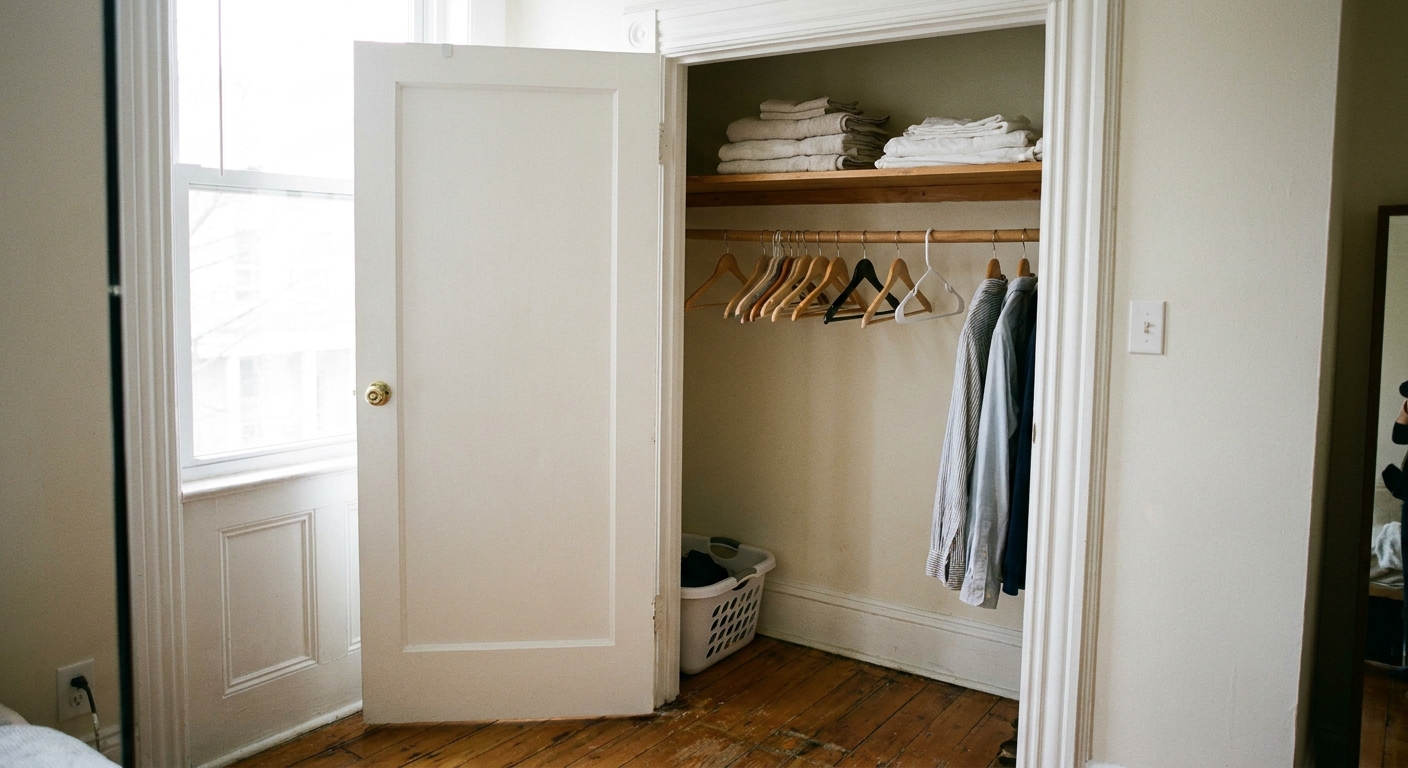
Why closets get musty so fast
Musty odor is usually a mix of damp air, low airflow, and microscopic growth (mildew is the usual suspect). Closets are perfect for it because:
- Air is still. Even clean fabric starts to smell stale when it sits in trapped air.
- Humidity gets locked in. Steam from showers, cooking, and even air drying laundry spreads through an apartment, then lingers in closed storage.
- Closets are sometimes on exterior walls. Those walls can run cooler, which can lead to condensation when humid air hits a cold surface.
- Overstuffing blocks airflow. A tightly packed rod is basically a fabric sponge wall.
- “Clean enough” items go back inside. A lightly worn sweater or towel holds skin oils and moisture that feed odor.
Fast reset: a 60 minute closet triage
If you want the quickest win, focus on two things: removing the source and moving air.
Step 1: Pull everything out in zones
Do not try to “freshen around” your stuff. Take items out and group them:
- Definitely needs washing: gym wear, towels, sheets, anything worn against skin, anything with visible spots or body odor.
- Can be aired: coats, denim, structured pieces, dry-clean-only items that smell stale but are not dirty.
- Investigate: shoes, bags, vintage pieces, and anything that smells strongly musty even after a brief air-out.
Step 2: Wipe the closet like it matters (because it does)
Musty smell clings to dust and old residue on shelves and baseboards. Use:
- Warm water + a drop of dish soap for general wipe-down.
- White vinegar diluted 1:1 with water for extra deodorizing power on painted surfaces. Spot test first, especially on older paint, and avoid using vinegar on unfinished wood or natural stone.
- Skip heavy fragrance sprays inside the closet. They often mix with must and create a new problem.
Step 3: Blast airflow for one full hour
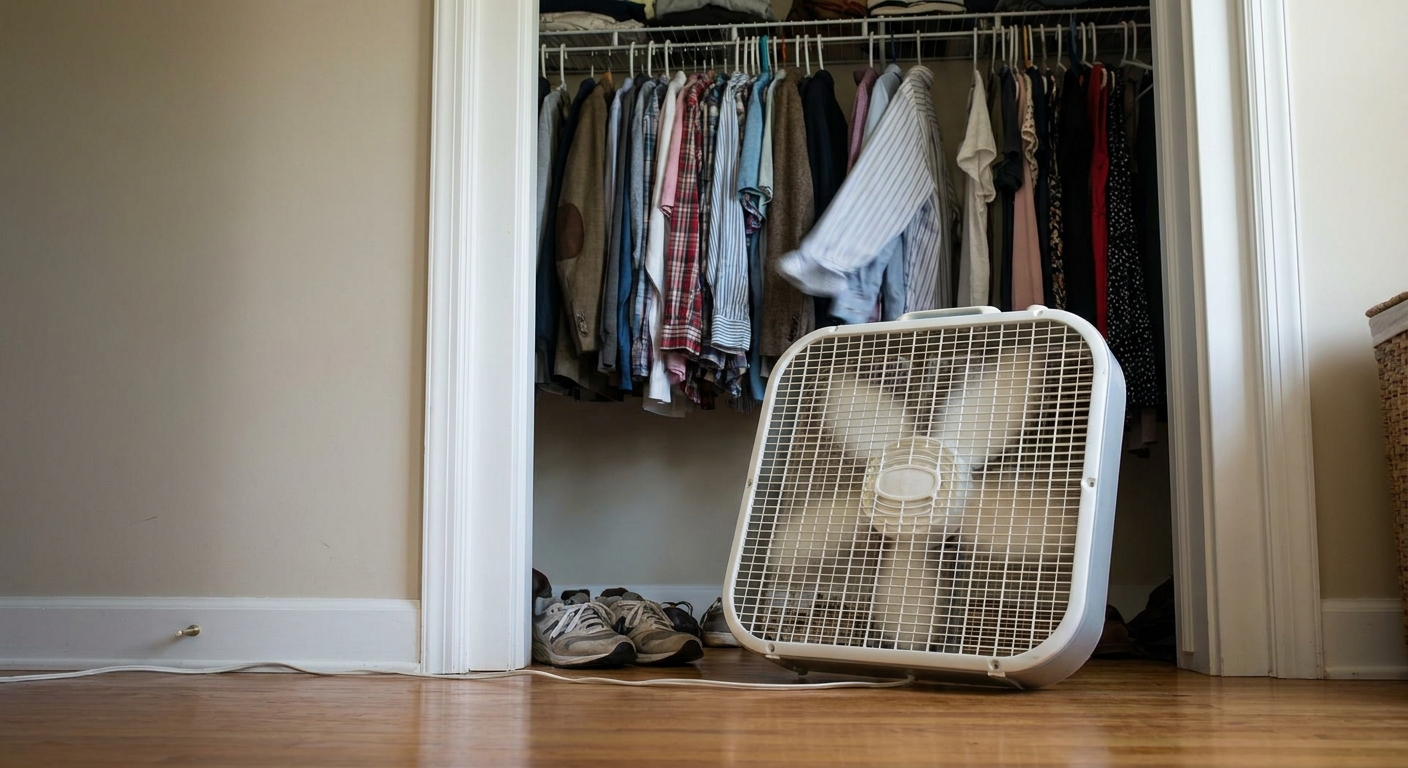
Open the closet door. Open a nearby window if you have one. Aim a fan so it pushes air into the closet for 20 minutes, then angle it to pull air out for 20 minutes, then repeat. You are trying to exchange air, not just stir it.
Charcoal vs. silica gel: what actually works?
Once you have done the reset, these are the tools that keep the “closet air” problem from creeping back.
This is where people often get stuck buying the wrong thing for the wrong job. Both help, but they do different work.
Activated charcoal: best for odor in a closet that is mostly dry
Activated charcoal adsorbs odors (VOCs) really well and can take up a small amount of moisture. Think of it as odor control first, with only modest help for humidity.
- Use it when: the closet smells musty, but you do not see condensation or feel dampness.
- Where to place: one bag on the floor, one on the top shelf, and one near shoes.
- Maintenance: many bags can be “recharged” in sunlight. Check the product instructions.
Silica gel: best for real moisture control in tight spaces
Silica gel is a stronger moisture catcher for small enclosed spaces. If your closet is actually humid, silica is your friend.
- Use it when: your closet feels damp, you notice condensation on walls, or you live in a humid climate.
- Where to place: corners, near the baseboard, and near any exterior wall.
- How much matters: a couple of tiny packets will not dehumidify a whole closet. Use a closet-sized canister or multiple larger packs.
- Maintenance: it saturates and needs regeneration or replacement, depending on type. Indicator beads are helpful.
What about DampRid or calcium chloride tubs?
These can pull a surprising amount of water from the air, but in a small apartment closet they can also be messy if tipped. If you use them, put the tub in a stable tray, far from linens and shoes.
My rule of thumb: If your closet smells musty but your apartment is not humid, start with charcoal. If you suspect humidity, start with silica gel and add charcoal for odor backup.
Washing vs. airing: the fabric-safe way
Musty odor loves to hide in fibers, but over-washing and over-heating can damage clothes fast. Here is what I recommend, fabric by fabric.
Cotton sheets, towels, and most everyday clothes
- Wash in the warmest water safe for the fabric.
- Add a booster if needed: oxygen bleach for whites and color-safe loads.
- Dry thoroughly. Even slightly damp folding is a mustiness boomerang.
Wool sweaters and wool coats (and why “just wash it” is not always the answer)
Wool is naturally odor-resistant, but it holds onto moisture if it is stored too tightly or put away even slightly damp. Washing wool too aggressively can felt it, shrink it, or change the drape.
- Air first: hang wool in indirect sunlight or a bright room near an open window for a few hours. Space it away from other garments.
- Steam lightly: a garment steamer can relax fibers and help release odor. Keep the steamer moving and do not soak the fabric.
- Spot clean: for collars and cuffs, use a wool-safe cleanser.
- Wash only when needed: if it smells musty after airing, hand wash with wool wash or use a true wool cycle in a mesh bag. Dry flat.
Delicates and dry-clean-only pieces
- Air out on a padded hanger near ventilation.
- Use gentle fabric refresher sparingly, and never as a substitute for airflow.
- Dry clean if odor persists, especially for lined jackets and structured vintage pieces where smells get trapped between layers.
Shoes and bags (often the hidden source)
If the closet stinks, check footwear. Leather, rubber soles, and fabric linings can hold onto moisture and funk.
- Pull shoes out and let them sit in open air overnight.
- Add cedar or charcoal shoe inserts.
- Clean the closet floor where shoes sit. That area collects dust, moisture, and grime.
Also, keep wet cleaning tools out of there. A damp mop head, a used sponge, or a “drying” cleaning cloth in the same closet can undo your work fast.

Make your closet breathe without a renovation
In a small apartment, the goal is “constant gentle airflow,” not a dramatic once-a-month purge.
Give hangers breathing room
Aim for at least a finger’s width between hangers. If that is impossible, rotate seasonally and store off-season items elsewhere.
Swap solid bins for breathable storage
- Use cotton garment bags instead of plastic. Plastic traps moisture and can lock in odor.
- Choose woven baskets for linens, or fabric bins with grommets.
- Avoid vacuum bags for anything you might put away slightly damp, including “air-dried but not fully dried” sweaters.
Crack the door more often than you think
If your closet has no vent, your simplest habit is leaving the door open for 30 minutes a day, especially after showers or cooking.
Add a light source
Closets that stay dark stay musty longer. A battery motion-sensor light is perfect for visibility, and it makes it easier to spot damp corners, water staining, or early mold before they become a bigger problem. If you actually want added warmth, you would need a safely installed, plugged-in bulb and clearance from clothing.
When humidity or HVAC is the real culprit
If you keep deodorizing the closet and the smell comes back within days, zoom out. Closet odors often reflect what is happening in the whole apartment.
Signs you have a humidity issue
- Musty smell in multiple closets or drawers
- Clothes feel slightly cool or clammy
- Condensation on windows
- Bathroom mirror stays foggy for a long time after showers
Quick check: a small hygrometer is inexpensive and genuinely helpful. Many apartments feel best around 30 to 50 percent relative humidity, and it is smart to try to keep it under 60 percent to discourage mildew and mold. If you are consistently above that, consider a dehumidifier, or at least run the bathroom fan longer and crack a window when weather allows.
Signs it might be HVAC or building-related
- Musty smell strongest near air vents or returns
- Odor spikes when AC turns on
- You notice visible dust buildup around vents
- Water stains near ceilings, baseboards, or inside the closet
If you suspect building moisture, leaks, or mold, document it and contact your landlord or property manager. No amount of charcoal bags will fix an active leak behind a wall.
A quick mold safety note
If you find visible mold that covers more than a small spot, keeps coming back after cleaning, or anyone in your home has asthma or serious allergies, it is worth pushing for a professional assessment. Your nose is useful, but your lungs are more important.
A simple “fresh closet” routine
Once the closet is reset, keeping it fresh is mostly about tiny habits, not big weekend projects.
- Once a week: leave the closet door open for an hour while you are home.
- Once a month: wipe the closet shelf where you store linens and the area where shoes live.
- Seasonally: pull everything out, vacuum the floor, and rotate what you are not wearing.
- Anytime you put something away: make sure it is truly dry. “Almost dry” is how musty closets are born.
A closet should smell like nothing, in the best way. Like clean cotton, quiet air, and the comforting idea that your favorite sweater will be exactly how you left it.