New Area Rug Dye Rubs Off When Damp

Clara Townsend
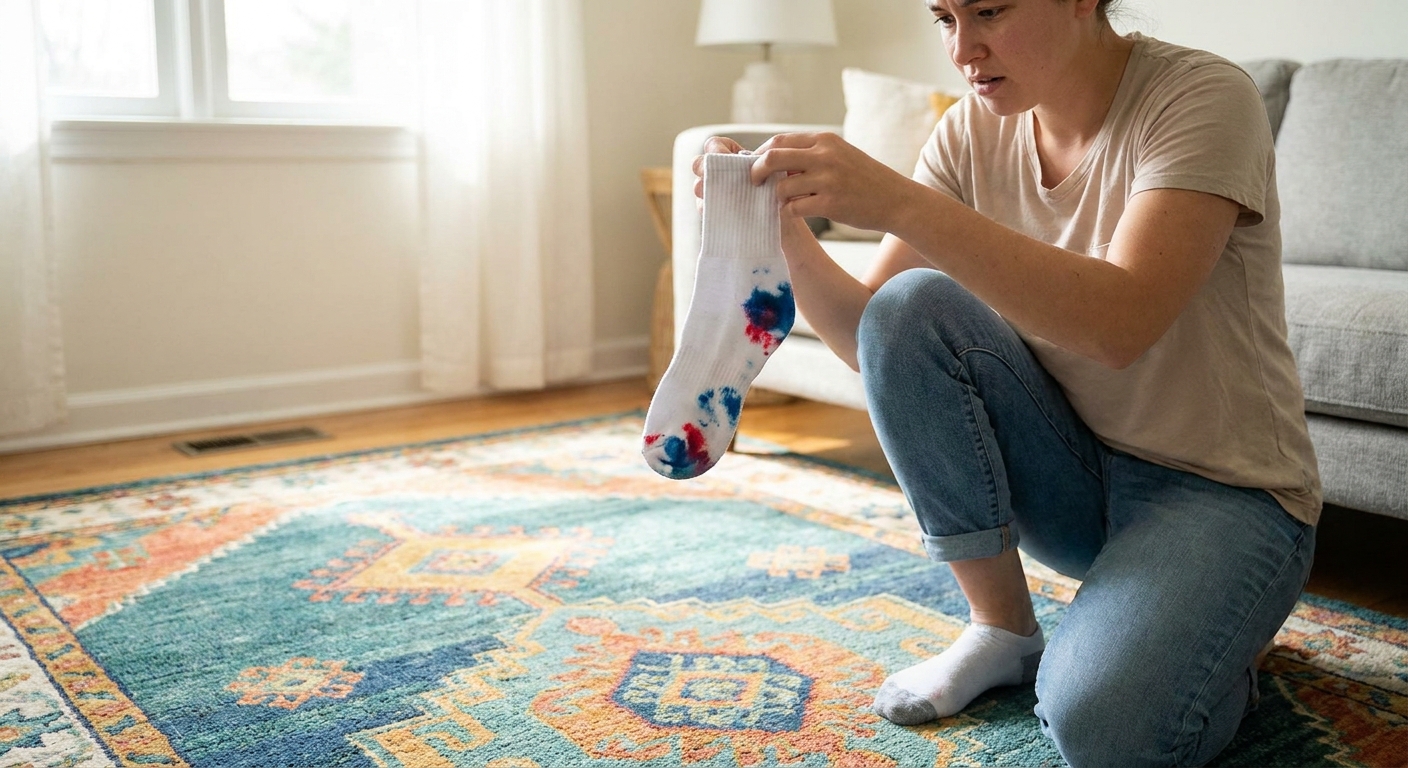
The first time this happened to me, I blamed my coffee. I’d unrolled a new rug, misted it lightly to relax the shipping creases (a classic stylist move), and a few minutes later my white socks had a faint inky blush. Then I noticed the same tint kissing the bottom edge of my linen ottoman. Not ideal.
If your new area rug is rubbing color off when it’s damp or freshly unrolled, you’re most likely dealing with color crocking (in plain English: dye transfer from rubbing). It simply means the dye is not staying put under friction, especially when moisture is involved. The good news is you can test it quickly, minimize damage, and make a smart call about whether the rug is a keeper or a return.
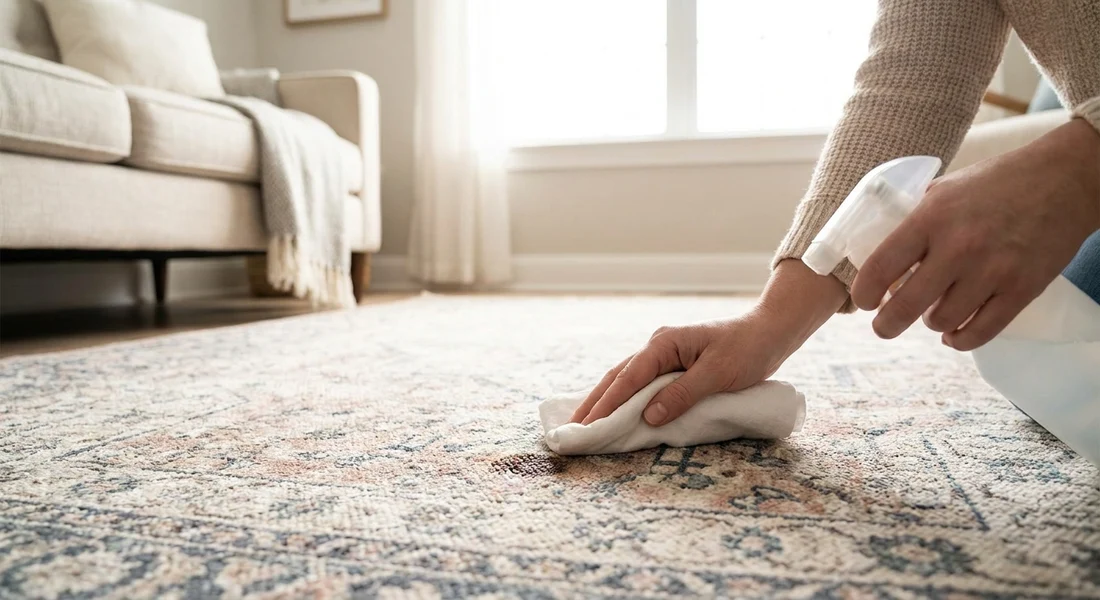
What’s happening: color crocking
Crocking is dye transfer caused by rubbing. Add moisture and the dye can become more mobile, so it can migrate onto:
- Socks and bare feet (especially light colors)
- Hardwood, vinyl, laminate, and the finish on those floors
- Carpet underneath, if the rug is layered
- Nearby upholstery if the damp pile brushes a sofa skirt, bedspread, or slipcover
A little surface dye dust on a dry, brand new rug can happen. But visible color transfer when the pile is damp is often a bigger red flag, especially if it’s strong, repeated, or happens after gentle blotting. Some rugs improve after they fully dry and you vacuum away residue, but it is not guaranteed, and you should protect your floors as you test.
Fiber and dye clues
Not all rugs behave the same. Here are quick clues that point toward higher crocking risk.
Higher risk setups
- Deep, saturated colors like indigo, navy, black, burgundy, emerald, and true red
- High contrast patterns where dark and light sit right next to each other
- Viscose or bamboo silk blends, which are beautiful but can be fussy with moisture
- Some wool rugs with less colorfast dyes or heavy surface dye residue
- Hand-tufted rugs and some printed rugs, depending on dye method and finishing
- Rugs that arrived slightly damp from shipping humidity or storage, or were rolled in plastic for a long time
Lower risk setups (not zero risk)
- Undyed natural fibers like jute, sisal, seagrass
- Solution-dyed synthetics (common in outdoor rugs and many polypropylene rugs) where pigment is added during fiber production
- Heathers and flecks that visually disguise minor transfer
Translation in plain English: if your rug is rich and moody, treat the first week like a trial period. Gorgeous rugs can still be colorfast. But they need to prove it.
Do this first: protect the floor
If you’ve already seen dye on socks or a cloth, assume the underside and pile can stain until proven otherwise.
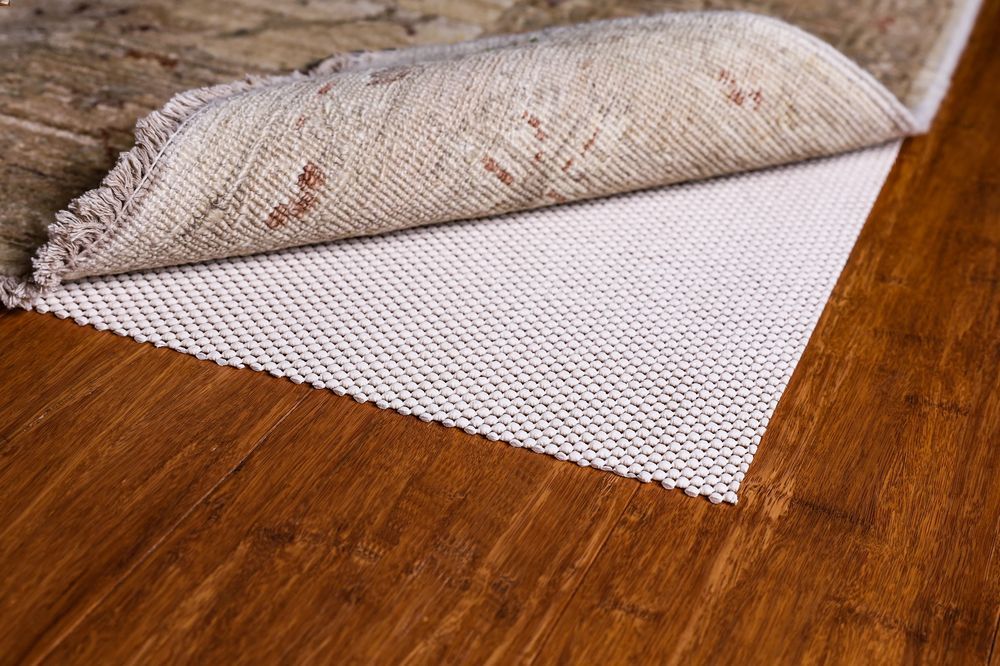
- Slide the rug onto a safe sacrificial layer: a rug pad, an old cotton sheet, a clean drop cloth, or flattened cardboard.
- Keep it off hardwood for now. Dye transfer can sometimes tint certain finishes depending on the dye, the floor coating, moisture, and how long it sits there.
- Don’t let it touch upholstery. Pull nearby furniture back a few inches until you know what you’re dealing with.
The quick corner test
You do not need special lab supplies. You need a white cloth, water, and a gentle hand.
What you need
- White cotton cloths or plain white paper towels (no prints)
- Room temperature water
- A small bowl
Step-by-step
- Pick a hidden spot: a back corner that tucks under a sofa or bed.
- Dampen, don’t soak: dip your cloth in water and wring it out hard. It should be barely damp.
- Press and hold on the pile for 10 to 15 seconds.
- Lift straight up and check for color on the cloth.
- Repeat once with a fresh spot on the cloth and a gentle rub (two light passes) in the direction of the pile, because crocking is about friction.
How to read the results
- No color transfer: good sign. Let the rug dry fully and continue normal use, but stay cautious with spills for the first week.
- A faint tint once: could be surface dye residue. You can try safe blotting steps below and retest after the rug is fully dry.
- Obvious color on the cloth or transfer every time: treat it as not colorfast. It is more likely to stain floors and fabrics.
If you see strong dye transfer, stop testing on your actual floor. You already have your answer.
What you can blot safely
I know the impulse is to scrub, shampoo, or “set the dye” with whatever is under your sink. Please do not. New rugs can be surprisingly easy to damage with enthusiastic cleaning, and you can also accidentally void a return.
Safe, low-risk steps
- Blot with dry white cloths to pick up any surface moisture and loose dye.
- Air-dry thoroughly: lay the rug flat with airflow. Use a fan, open windows, and keep pets off it until completely dry.
- Vacuum gently once dry (no beater bar if the rug is delicate, viscose, or has a loose weave). This can remove surface dye dust.
Avoid these common mistakes
- No steam cleaning during the return window. Heat plus moisture can push dye deeper and make future bleeding worse.
- No vinegar experiments unless the manufacturer explicitly recommends it. Acid can shift certain dyes and can also affect some backings or adhesives (including latex).
- No bleach or peroxide. You can strip color, create lighter patches, or damage fibers.
- No heavy wetting. Over-saturating can wick dye into lighter areas and create permanent halos.
If you spilled something and the rug is damp in a larger area, focus on blotting and drying, not “washing” the rug in place.
If the rug touched the floor
If you’re reading this with a sinking feeling because the rug has been sitting on hardwood or a pale carpet, do this:
- Remove the rug immediately.
- Photograph any transfer on socks, towels, or the floor. This helps with returns and warranty claims.
- Check the floor under bright light. If you see tinting, do not start scrubbing with harsh cleaners.
- Dry the area completely with a fan.
For hardwood or finished floors, if you see staining, it’s often safest to call the flooring manufacturer or a flooring pro for product-specific advice. Some finishes react badly to aggressive solvents.
When it should go back
Here is my very practical rule: if a rug cannot survive a slightly damp moment without shedding dye, it’s not a rug I want living with me long term. Real homes have spills, mopping, rainy shoes, and the occasional dropped water glass.
Consider returning or exchanging the rug if:
- Your damp cloth test shows obvious color transfer more than once.
- Dye transfers to socks or feet after normal walking.
- Color rubs off onto upholstery from simple contact.
- The rug is intended for high-traffic or dining areas where dampness and friction are guaranteed.
- The retailer or care tag promised colorfastness and you’re seeing the opposite.
Also, keep the packaging until you’re confident. I know it’s annoying to store a giant roll and plastic wrap, but it makes returns dramatically easier.
Call the retailer first
Before you try any at-home treatment beyond blotting and drying, check your return rules and contact the seller or manufacturer. I would ask, directly:
- Is this rug rated for colorfastness or tested for crocking?
- Do you have care instructions for dye transfer or initial shedding?
- Will cleaning or rinsing it void the return?
If they can’t give you a clear answer and your cloth test is coming up tinted, that is useful information too.
If you decide to keep it
If your testing shows only mild residue and it improves after drying and a gentle vacuum, you may be able to keep the rug with a few guardrails.
Use a barrier layer
- Choose a quality rug pad that is safe for your flooring type. For example, some PVC or rubber pads can discolor certain floor finishes, so look for pads specifically labeled non-staining and compatible with hardwood, vinyl, or laminate.
- For extra caution on light floors, you can place a thin cotton sheet between rug and pad temporarily during the first week of testing, as long as it does not create slipping.
Keep moisture off the pile
- Skip misting to relax creases. Use time, gravity, and gentle rolling the opposite way instead.
- Clean spills by blotting from the outside in, then dry with airflow.
- Keep the rug out of bathrooms, mudrooms, and entryways if it’s acting sensitive.
Consider professional help (with one big caveat)
If this is a high-value rug and you are outside the return window, a professional rug cleaner can sometimes do a controlled rinse to remove excess surface dye. It will not magically fix poor dyeing, and it is not something I would do before confirming it will not void a return.
Rotate and monitor
Rotate the rug every few months and keep an eye on corners where friction is highest. If dye transfer reappears, that is your sign to reconsider.
FAQ
Is dye transfer from a new rug normal?
A tiny bit of dry surface residue can happen, especially with very saturated colors. But noticeable transfer when damp is not something I would call normal or acceptable for a rug meant for everyday life.
Can I “set” the dye at home?
In a perfect world, dye is set during manufacturing. At home, attempts to set dye often backfire because you can shift color, weaken fibers, or damage backing. If a rug is actively bleeding with light moisture and friction, returning it is usually the safest option.
Will Scotchgard or a fabric protector stop crocking?
Protectors can help with stains, but they are not designed to improve dye fixation, and they do not reliably stop dye that is already unstable. In some cases, adding a spray introduces moisture or solvent and can trigger more transfer.
What if the rug is wool?
Wool is naturally absorbent, and wool rugs can be beautifully durable. But colorfastness depends on dye method and finishing. Do the damp cloth test, and if you get strong transfer, treat it like any other bleeding rug.
What if the rug is viscose or bamboo silk?
Be extra cautious. These fibers can be sensitive to water and can show marking easily. If you are seeing dye transfer, I would lean toward an exchange or return unless the seller has a clear solution.
A calm next step
If you’re in the middle of this right now, here’s the simplest plan: get it off the floor, do the corner test, and trust what the cloth tells you. A rug is supposed to make your home feel grounded and cozy, not like you have to tiptoe around it with a fan and a prayer.
And if you do return it, consider it a win: you caught the problem early, before your floors or upholstery became the collateral damage.