Musty Smell After Unrolling a Stored Area Rug

Clara Townsend
The first time I unroll a rug that has been living in a closet or storage unit for a season, I always do the same thing: I pause before it touches anything I care about. Not because I am dramatic, but because that stale, musty smell is often trapped moisture that has been sitting quietly in the fibers or the backing. It can be totally fixable, and it can also be a warning sign that the rug is not ready to go back into everyday life yet.
If your rug smells musty after storage, with no sharp new-rug chemical odor and no visible mold, start here. Think of this as a gentle reset: air, light, dryness, and a careful check of the parts that actually sat against the floor. (And yes, sometimes the smell is not “moisture” at all. It can also be absorbed storage odors, smoke, pet smells, cardboard, or a rubber or latex backing breaking down.)

Before you start: a quick safety check
Musty does not always mean mold, but it often means the conditions mold likes. Do this quick inspection before you bring the rug deeper into your home.
- Smell test up close: Put your nose near the backing and the tightest part of the roll. If the odor is strongest there, it is usually trapped humidity in the foundation of the rug.
- Look for faint spotting: Tilt the rug toward a window and look for cloudy patches, dark pin dots, or irregular rings. Check both the face and the back.
- Feel for dampness: Run your hand over the backing and fringe. It should feel room-dry, not cool and clammy.
- Check for pests: Look for pepper-like specks, shed fibers, or little casings along the edges and fringe, especially if it was stored in a basement or unit.
Rodent warning: If you see droppings, urine staining, or nesting material, skip vacuuming and DIY deodorizing. Vacuuming can kick contaminants into the air. Close it back up, ventilate the area, and call a professional rug cleaner who handles contaminated textiles.
If you see active mold growth, widespread staining, or the rug feels damp, skip the DIY deodorizing and go straight to a professional rug cleaner. Musty odor plus moisture is a combination you want handled properly.
Identify the rug type first
I know, it is tempting to jump straight to baking soda. But rug material and construction changes what is safe.
- Wool, hand-knotted, vintage: Keep it dry. Avoid heavy misting and any soak-at-home approach. If the odor feels deep after drying, a pro is usually the safest route.
- Tufted with latex or rubber backing: Mustiness may actually be backing degradation, not mildew. If the backing is tacky, crumbly, or smells like an old balloon, cleaning may not solve it.
- Jute, sisal, seagrass: Use dry methods only. These hate moisture and can stain, shrink, or warp.
- Viscose, rayon, “art silk”: Avoid misting. These can watermark and discolor easily.
The fastest win: air it out
Most stored-rug smells are a mix of trapped humidity, dust, and whatever the rug was stored next to. Airing works, but only if you give the rug airflow on both sides.
Step-by-step airing routine
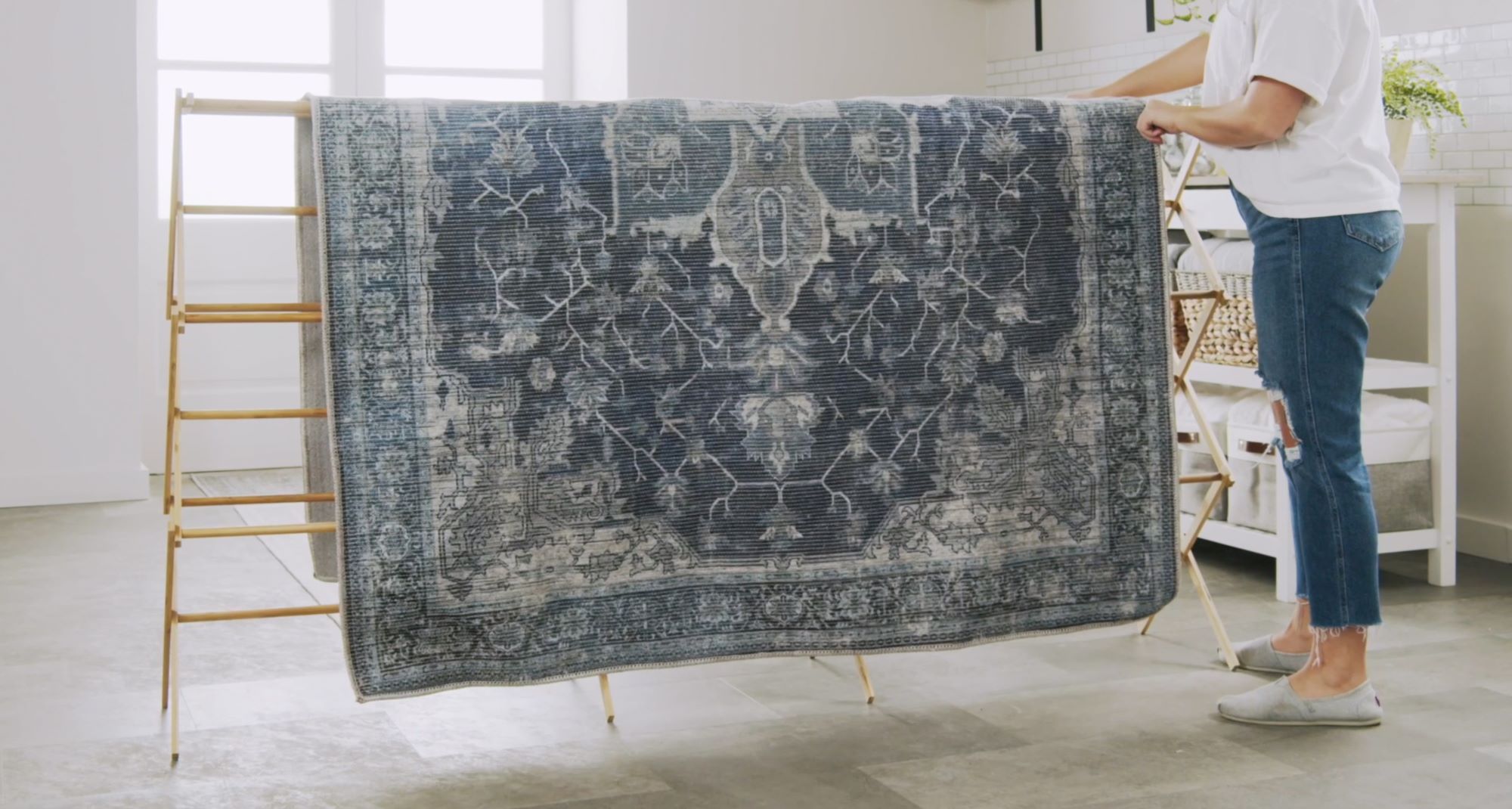
- Take it outside if you can. A covered porch, patio, or garage with the door open is ideal.
- Keep it out of harsh direct sun. Bright shade or a couple hours of gentle morning sun is fine for many rugs, but prolonged hot sun can fade dyes and dry out some backings.
- Elevate it. Drape it over a sturdy railing or two chairs so air can reach the front and the back. If you must lay it flat, flip it every few hours.
- Add moving air. A box fan aimed across the surface makes a huge difference. You want air movement, not heat.
- Avoid heaters. Do not aim a space heater at the rug. Heat can set odors, stress backings, and create uneven drying.
- Give it time. Light mustiness can lift in a few hours. A deeper storage smell may take 1 to 3 days of on-and-off airing and flipping.
If the smell improves by day two, you are on the right track. If it barely changes, the odor is likely coming from the backing, the pad, or low-level mildew in the foundation.
Do not forget the rug pad
If there is a rug pad involved, smell it. Seriously. Pads love to hold onto humidity and odor, and they can trap moisture under a rug even after the rug seems fine.
- If the pad smells musty: Air it out separately outdoors and consider replacing it if the odor lingers.
- If the pad feels at all damp or rubbery-sticky: Do not put it back under the rug yet.
- Before reinstalling: Only pair the rug with a pad when both smell neutral and feel fully dry.
When it is low-level mildew odor
That classic basement-musty scent often comes from microbial byproducts, basically the compounds left behind when mildew has had a chance to live quietly in a humid, dark roll. Mildew can be present at low levels without fuzzy visible growth, especially if the rug was stored tightly rolled and the humidity was high. The goal is to dry the rug thoroughly, then neutralize the odor gently without over-wetting it.
Dry it fully first
Odor treatments work better when the rug is completely dry. If you have any doubt, do another day of airflow and flipping, especially focusing on the underside.
Try a dry deodorizing pass
- Vacuum both sides slowly, with overlapping passes. Use a suction-only setting if your vacuum allows it, especially on delicate piles.
- Sprinkle baking soda lightly on the face of the rug. Think of a whisper of powder, not a snowstorm.
- Let it sit 4 to 12 hours in a dry space.
- Vacuum again thoroughly. Go slowly so you actually pick the powder up from the base of the fibers.
Baking soda is not magic, but it is useful for absorbing and softening stale odors without adding moisture.
If you need a slightly stronger nudge
You can try a very light mist of white vinegar diluted with water, then fan-dry immediately and flip so the backing dries too. Always spot test first in an inconspicuous area.
A few cautions from hard experience: skip vinegar misting on viscose or rayon rugs, and be extra cautious on wool, silk, and richly dyed vintage rugs. Vinegar is not a mold remediation product, and the goal here is gentle deodorizing, not “killing mold.” If you suspect an actual mold problem, a pro is the right call.
Avoid soaking the rug, shampooing it heavily at home, or using a steam cleaner unless the manufacturer specifically allows water cleaning or hot-water extraction. Over-wetting is how a minor musty smell turns into a true mildew problem.
Check backing, binding, and fringe
If the rug looks perfect from above but smells like an old storage unit, the culprit is often the foundation and edges.
Backing checks
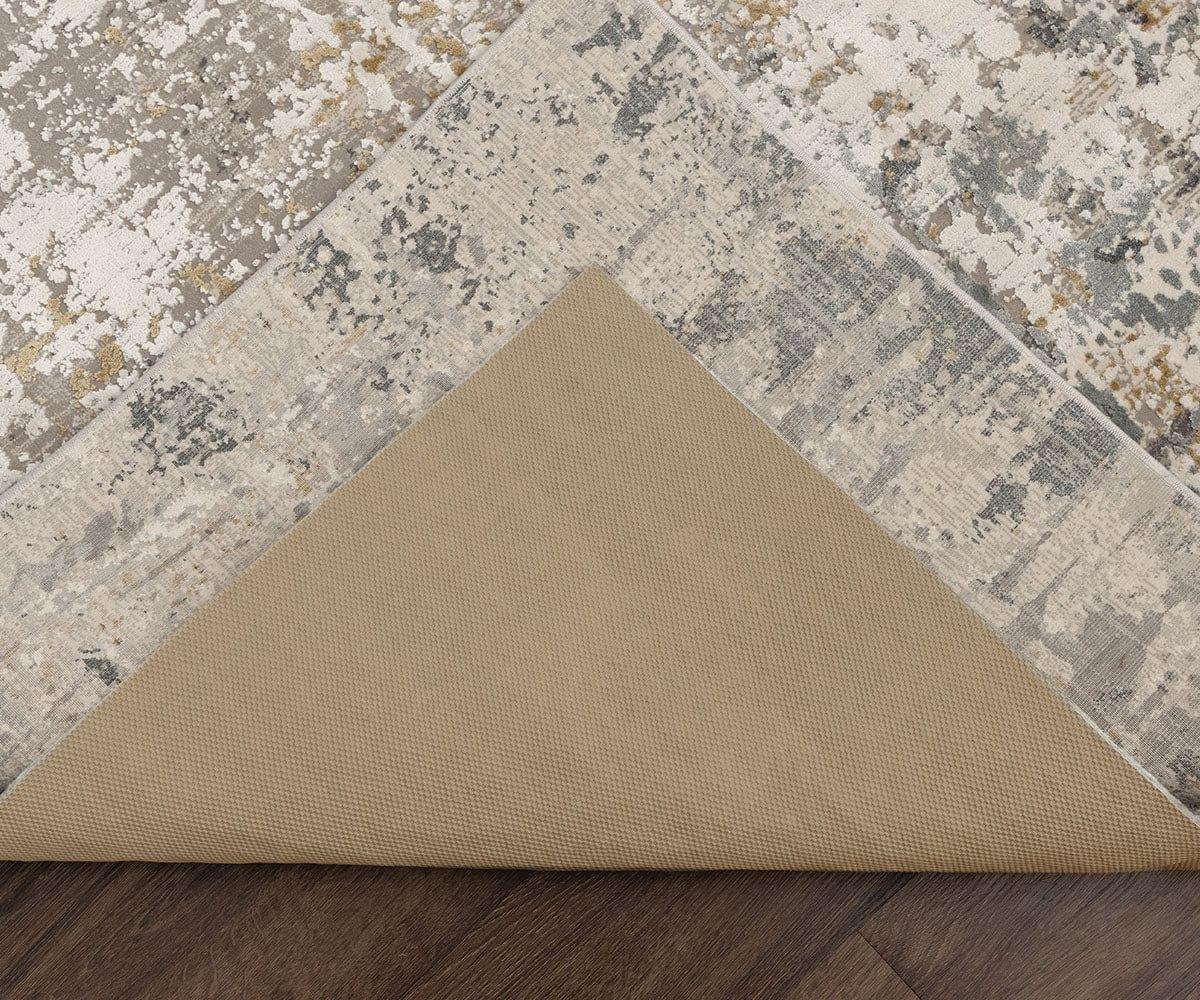
- Latex or rubber backing: Press with your thumb. If it feels tacky, crumbly, or leaves residue, do not lay it down yet. Deteriorating backing can hold odor and can transfer to floors.
- Woven foundation (no rubber): Look for stiffness, discoloration, or a slightly wavy texture that can signal past dampness.
- Glues and tape residue: Old carpet tape or adhesive patches can trap odors and also react badly with wood finishes.
Fringe and edges
Fringe is like a little wick. It absorbs humidity fast and releases it slowly. If the fringe smells stronger than the rest, wash just the fringe by hand with a small amount of gentle detergent and water, then towel-blot and fan-dry. Keep the rest of the rug as dry as possible.
Wait before placing on wood or vinyl
This is the part I wish someone had told me years ago, before I learned the hard way on a honey-oak floor in a rental. A musty rug can be harmless to you and still risky to floors.
Hold off on placing the rug directly on hardwood or engineered wood if:
- The backing feels cool or even slightly damp.
- The odor is strongest on the underside.
- You suspect it was stored in a basement or a humid unit.
- The backing is rubber or latex and feels tacky or leaves residue.
- You plan to use a rug pad that could trap moisture underneath.
Wood floors and trapped moisture are not friends. Even a little dampness can lead to discoloration, finish clouding, or a smell that transfers and lingers.
For luxury vinyl plank or tile: vinyl tolerates moisture better than wood, but trapped humidity and certain backings or pads can still cause odor, discoloration, or a stubborn film. If anything smells off on the underside, keep airing before you commit.
If you need to bring the rug inside while it airs out, lay it over a clean tarp or an old cotton sheet in a low-traffic area, and keep a fan running.
If it still smells: next steps
If you have given it real airflow time and the smell is still hanging on, work through this ladder, from gentle to more involved.
1) Vacuum, flip, vacuum again
Dust holds odor. A slow vacuum on both sides can make a surprising difference, especially if the rug was stored near cardboard boxes or old fabric.
2) Mild sun, carefully
A short session of mild sun can help, especially for natural fiber rugs. Keep it to 1 to 2 hours, then move it back into shade. Rotate to prevent uneven fading.
3) Treat the room too
If you unrolled the rug indoors, the smell can linger in the space and make you think the rug is still the issue. Open windows, run a fan, and consider a dehumidifier for a day.
4) Replace the pad if needed
If the rug is improving but the musty note comes right back when you put the pad under it, the pad is the problem. Replace it.
5) Professional cleaning when it feels embedded
If the mustiness reads as deep and earthy no matter what you do, a professional rug cleaner can flush out what DIY methods cannot, especially for thicker piles, older foundations, and valuable rugs.
When to stop DIY
- If anyone in the home has asthma, severe allergies, or is immunocompromised and the odor is strong or persistent, I would not keep experimenting indoors. Get it assessed and cleaned professionally.
- If the rug was stored in a flood-prone area or you suspect it got wet in storage, treat it as a higher-risk situation even if it looks fine.
- If there is no meaningful improvement after 3 days of proper airflow and drying, the odor is likely in the foundation, the backing, or the pad and may need pro equipment or a different plan.
What not to do
- Do not saturate the rug with water and leave it to dry slowly indoors. Slow drying is mildew’s favorite situation.
- Do not use bleach on wool, silk, or most dyed fibers. It can permanently strip color and damage the structure.
- Do not use heavy fragrance sprays as a fix. They can mingle with mustiness and create a worse, sticky perfume smell that is harder to remove later.
- Do not lay it over a damp rug pad or on a freshly mopped floor. It sounds obvious, but it happens.
FAQ
How long should a stored rug smell musty after unrolling?
If it is just stale storage air, you will usually notice improvement within a day of airflow and flipping. If it is low-level mildew odor in the backing or foundation, it can take several days or it may need professional cleaning.
Can I use baking soda on any rug?
It is generally safe for many rugs when used lightly and vacuumed thoroughly, but be cautious with very delicate antique rugs, loosely woven piles, or rugs that shed heavily. If the rug is valuable or fragile, spot test and consider going straight to a pro.
Is a musty rug automatically moldy?
Not automatically. Musty often means it was stored in humid conditions, and that can create mildew odors without visible mold. Your best clue is whether the smell improves with drying and airflow.
Can the smell transfer to my floors?
Yes. Trapped moisture, pad material, and deteriorating backing can all transfer odor or residue. That is why I keep a musty rug off wood floors until it is fully dry and neutral-smelling on the underside.
My rule before it goes back
I only place a stored rug back in its spot when it passes two tests: it smells neutral on the backing, and it feels truly dry everywhere, including the center of where it was tightly rolled. Once it hits that point, you can add a rug pad, style your coffee table, and go back to the fun part.
If you tell me what the rug is made of (wool, synthetic, jute, tufted with rubber backing, vintage hand-knotted, etc.) and where it was stored, I can help you pick the safest next step.