Mothball Smell in a Wool Area Rug

Clara Townsend
I love a storied wool rug. I love the soft spring underfoot, the way the pattern hides yesterday’s crumbs, the quiet confidence that only real fibers seem to have.
What I do not love is unrolling a vintage find and getting hit with that sharp, chemical mothball smell that clings to your hair and makes the whole room feel like an attic.
If your wool area rug smells like mothballs, it is usually residue from old storage products made with naphthalene or paradichlorobenzene. The good news is that odor can often be reduced dramatically. The tricky part is doing it without stripping dyes, felting the wool, or locking in the smell with the wrong cleaner.
One safety note up front: mothballs are pesticides and the fumes are toxic. Keep the rug away from kids and pets while it off-gasses, wash your hands after handling, and do not bring mothballs into living spaces as a “preventive” measure.
First: What that smell is
Classic mothballs are not just a fragrance. They are pesticides that slowly turn from solid to vapor. That vapor is what you are smelling, and it can linger in porous fibers like wool for a long time.
- Naphthalene is a traditionally common, older formulation and has a strong, tar-like, chemical scent.
- Paradichlorobenzene is common in moth crystals and some deodorizer blocks, and it has that unmistakable mothball punch.
This matters because the fix is not mask it with something pretty. The fix is time, airflow, and gentle deodorizing that does not harm wool.
Before you start
Ventilation and gloves are not overkill
If the odor is intense, open windows, run fans, and consider wearing gloves while you handle the rug. If anyone in the home has asthma, migraines, or chemical sensitivity, keep the rug isolated in a well-ventilated area while you work.
If you are airing the rug indoors, keep it away from HVAC returns and supply vents so you are not pulling that smell through the system. Close doors, and treat it like a little containment project.
Vacuum slowly, top and bottom
Start with a thorough vacuum to remove dust that can hold odor. If your vacuum has a beater bar, turn it off or use a suction-only floor head to avoid fuzzing or pulling loops.
- Vacuum the front.
- Flip it and vacuum the back.
- Vacuum the floor underneath too, because odor can cling to dust on the floor or pad.
Do not forget the rug pad
If there is a rug pad, treat it as guilty until proven innocent. Pads love to hold onto odors. Air it out separately, vacuum it, and if it still smells after a few days, replacement is often the fastest fix.
Air it out safely
Airing out is the backbone of mothball odor removal. You are trying to let trapped vapors dissipate.
Shade beats sunshine
Direct sun can fade dyes, especially in older or richly saturated rugs. For wool, I aim for bright shade or early morning light rather than midday sun.
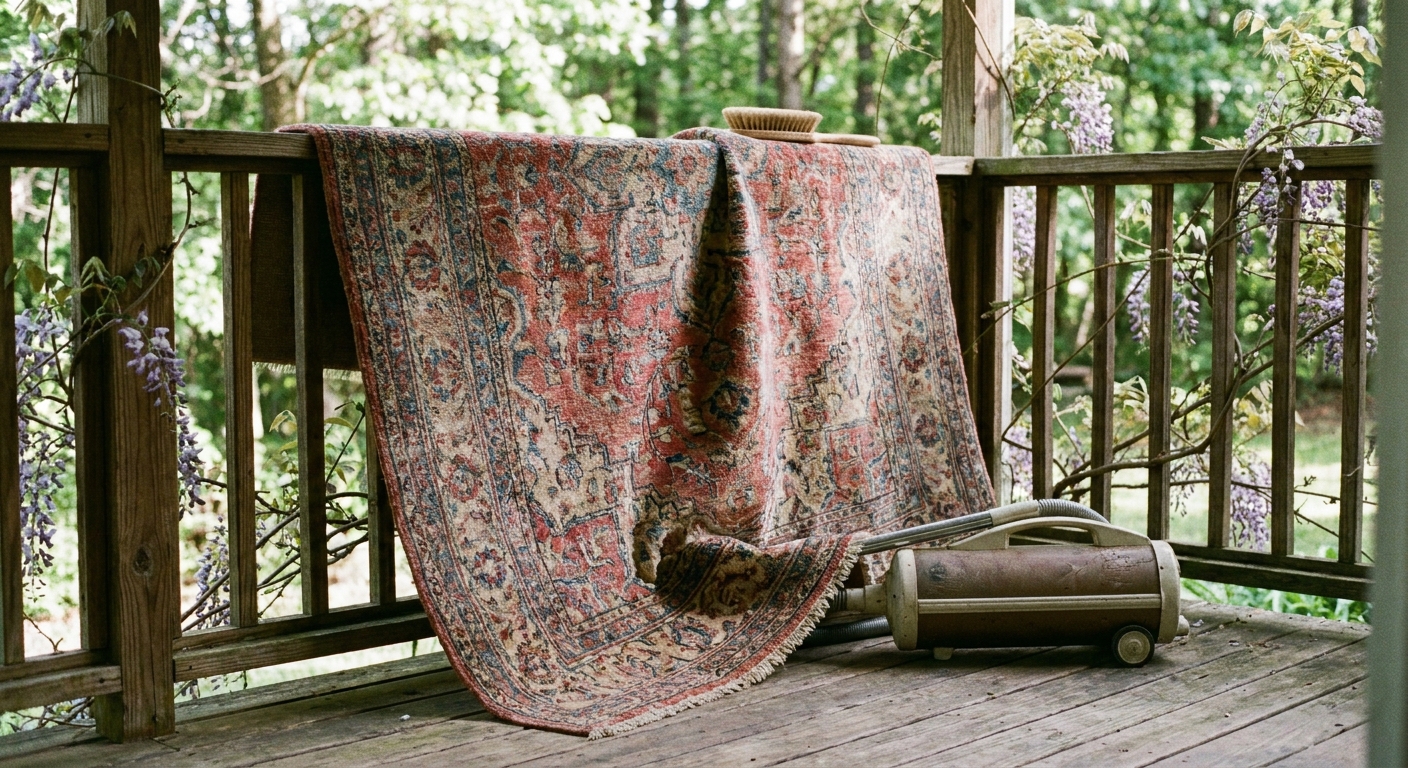
- Best setup: hang the rug over a clean railing or clothesline so air hits both sides.
- If you cannot hang it: lay it flat outside on a clean sheet and flip it every few hours.
- Timing: think in days, not hours. Two to five days of intermittent airing often makes a real dent. Very saturated odor can take longer.
Avoid humidity and overnight dew
Wool does not do well left out in high humidity or overnight dew. Dampness invites that musty smell you were not asking for. Bring the rug in before evening, and never leave it out in fog or drizzle.
Check for moth activity
You said you are dealing with odor, not hunting for holes, but this step protects your home while you work. If a rug was stored with mothballs, it was stored that way for a reason.
Inspect before it lives inside
Check before you park it in your living room and lean your face into it.
- Look along edges and underside: larvae often hang out where it is darker and less disturbed.
- Watch for pepper-like debris: tiny dark specks can be insect frass or general storage grime.
- Notice any silky webbing: moth larvae can leave fine web-like material.
- Check nearby stored wool items: sweaters, felt hats, blankets.
If you see active insects, larvae casings, or widespread damage, deodorizing is no longer the main project. At that point, isolate the rug and consider professional help.
Wool-safe odor removal
Think of deodorizing in layers. You are combining airflow with absorption, and you repeat as needed.
Spot test first
Especially with vintage rugs, do a quick spot test in an inconspicuous corner before you commit to anything, even a powder. Vacuum first, then apply a tiny amount of your chosen method to a small area and wait a few hours to make sure colors stay put.
1) Baking soda, used carefully
Baking soda is a gentle odor absorber, and it is usually safe on wool when used correctly. The key is keeping it dry and removing it completely.
- Sprinkle a light, even layer over the rug.
- Let it sit 8 to 24 hours in a dry, ventilated room.
- Vacuum slowly and thoroughly. Go in multiple directions.
My caution: on rugs with a very deep pile or delicate fringe, baking soda can hide down in the fibers and become a gritty nuisance. Use a lighter hand, and avoid dumping it into fringe.
2) Activated charcoal nearby
Activated charcoal can help with chemical odors, but results depend on airflow, amount of charcoal, and how saturated the rug is. For rugs, I prefer using it around the rug rather than on the fibers.
- Lay the rug flat in a small room you can close off.
- Place bowls or trays of activated charcoal around the perimeter.
- Run a fan to keep air moving and swap the charcoal every few days.
This is slow, but it is low-risk for wool and dyes.
3) The sealed-room air exchange trick
If outdoor airing is limited by weather or you live in an apartment, create a controlled setup indoors.
- Choose a room with a window.
- Keep the rug out of your main living space while it off-gasses.
- Open the window a bit and aim a fan outward to exhaust air.
- Flip the rug daily for a week.
This is not glamorous, but it is effective, and it keeps sunlight and moisture out of the equation.
What not to use
This is where well-meaning advice can accidentally turn a smelly rug into a ruined rug. Also, in general, do not mix cleaning chemicals. Bad combinations can create dangerous fumes.
- Do not soak it in vinegar. Vinegar is popular online, but large amounts of moisture and acidity can shift dyes and leave a sour note that mixes terribly with mothball odor.
- Do not use bleach or DIY whitening powders. These can damage wool protein fibers and discolor patterns.
- Do not use DIY oxygen bleach products. Wool is sensitive to many oxidizers, and at-home use is a common route to light spots and weakened fibers.
- Do not use ammonia. It is harsh, the fumes are unpleasant, and it can make the odor situation worse.
- Do not use steam cleaners or hot water extraction machines. Heat plus moisture plus agitation can felt wool, and it can cause dyes to bleed or migrate. Too much water trapped in a thick rug can also create mildew.
- Do not spray heavy perfume odor eliminators. Masking on top of pesticide odor is how you end up with a headache and a rug that still smells, just louder.
- Do not sprinkle essential oils directly on the rug. Oils can stain and attract soil. Also, some oils are unsafe around pets.
When it might not be mothballs
Mothballs are sharp and chemical. If your rug smells more like a basement, wet cardboard, or old towels, you may be dealing with moisture and mildew. If it smells like pet urine, that is a different project entirely and often calls for a rug specialist, because urine salts can bind deep in the foundation.
When to go pro
There is a point where airing and gentle absorption tap out. If the rug still reeks after a couple of weeks of consistent effort, it is time to consider a professional rug wash, not a quick in-home carpet cleaning.
Find a rug specialist
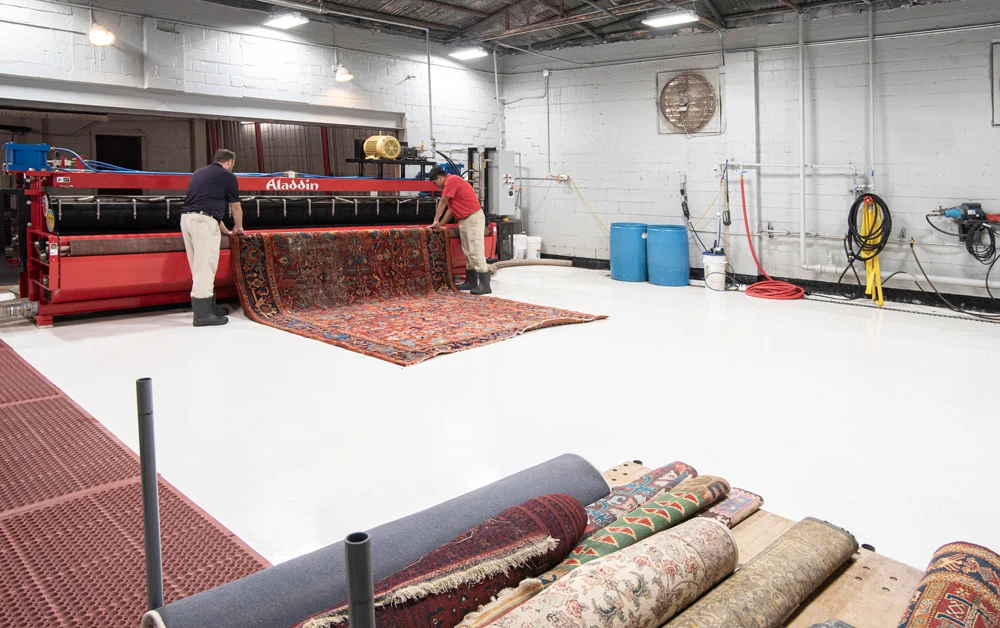
You want a shop that regularly handles wool, dyes, and fringe, and that offers full immersion washing with proper drying. Mothball residue can cling to the foundation of the rug, not just the surface.
When you call, ask plainly:
- Do you wash wool rugs in-plant and dry them in a controlled way?
- Have you dealt with mothball or pesticide odor before?
- Will you test dyes for bleeding?
When to let it go
I am all for saving old textiles, but I am also for living in a home that does not smell like chemical storage.
Consider letting the rug go if any of the following are true:
- The odor is eye-watering and returns immediately after airing.
- People in your household react with headaches, breathing issues, or nausea.
- You find signs of an active infestation and the rug has extensive damage.
- The rug is shedding powdery residue that could be old mothball material embedded in the pile.
- Professional cleaning costs more than replacement, and the rug is not sentimental or collectible.
If you dispose of it, seal it in plastic while transporting it out of the home to reduce odor spread and to avoid potentially bringing pests along for the ride.
My step-by-step order
- Vacuum both sides with suction only.
- Inspect edges, underside, and nearby wool items.
- Check the pad and air it separately, replacing it if it holds odor.
- Air out in bright shade for a few days, flipping and keeping it dry.
- Spot test, then do a baking soda treatment (light layer, dry, vacuum thoroughly).
- Charcoal bowls around the rug in a closed-off, ventilated room for several days.
- Reassess at two weeks. If the smell still dominates the room, call a rug washing specialist.
FAQ
How long does it take for mothball smell to leave a wool rug?
Light odor can improve in a few days of steady airing. Strong, long-term storage odor often takes one to three weeks of repeated airing and absorption, and some rugs need professional washing to fully reset.
Will sunshine remove mothball smell faster?
Sun can help, but it can also fade wool dyes. I treat direct sun like hot sauce: a tiny bit can be great, a lot can ruin dinner. Stick to open shade or mild morning sun, and never leave the rug out all day.
Can I use a fabric refresher spray?
I would not. Many sprays add fragrance and moisture, and that combination can cling to wool and create a new, harder-to-remove smell layer. If you want a clean reset, focus on airflow and absorption.
Does freezing remove mothball odor?
Freezing can be useful for pest control in some situations, but it does not reliably remove chemical odor embedded in fibers. For mothball smell, airflow plus absorption or professional washing are the more effective routes.