Mildew on Curtains From Window Condensation
Gust
The first time I noticed it, I blamed the light. Winter light can make everything look a little sad, right? But the grayish shadow on the bottom edge of my bedroom curtain kept getting darker, and there was a faint, not-quite-laundry smell that told the truth. It was mildew, and it was coming from a window that kept sweating every cold night.
If your curtains are hanging in front of a chilly pane and you see new speckles, shadowy bands, or a musty scent that returns fast after cleaning, you are not dealing with “dinginess.” You are dealing with fabric that has stayed damp long enough for mildew to move in. The good news: most washable curtains can be rescued if you act early and dry them completely before they go back up.
Condensation mildew vs ordinary dinginess
Regular “curtain grime” usually shows up as an overall dullness, dusty odor, or a beige cast from cooking, candles, pets, and city air. Condensation mildew behaves differently because it is tied to moisture and location.
Signs it is mildew from a sweating window
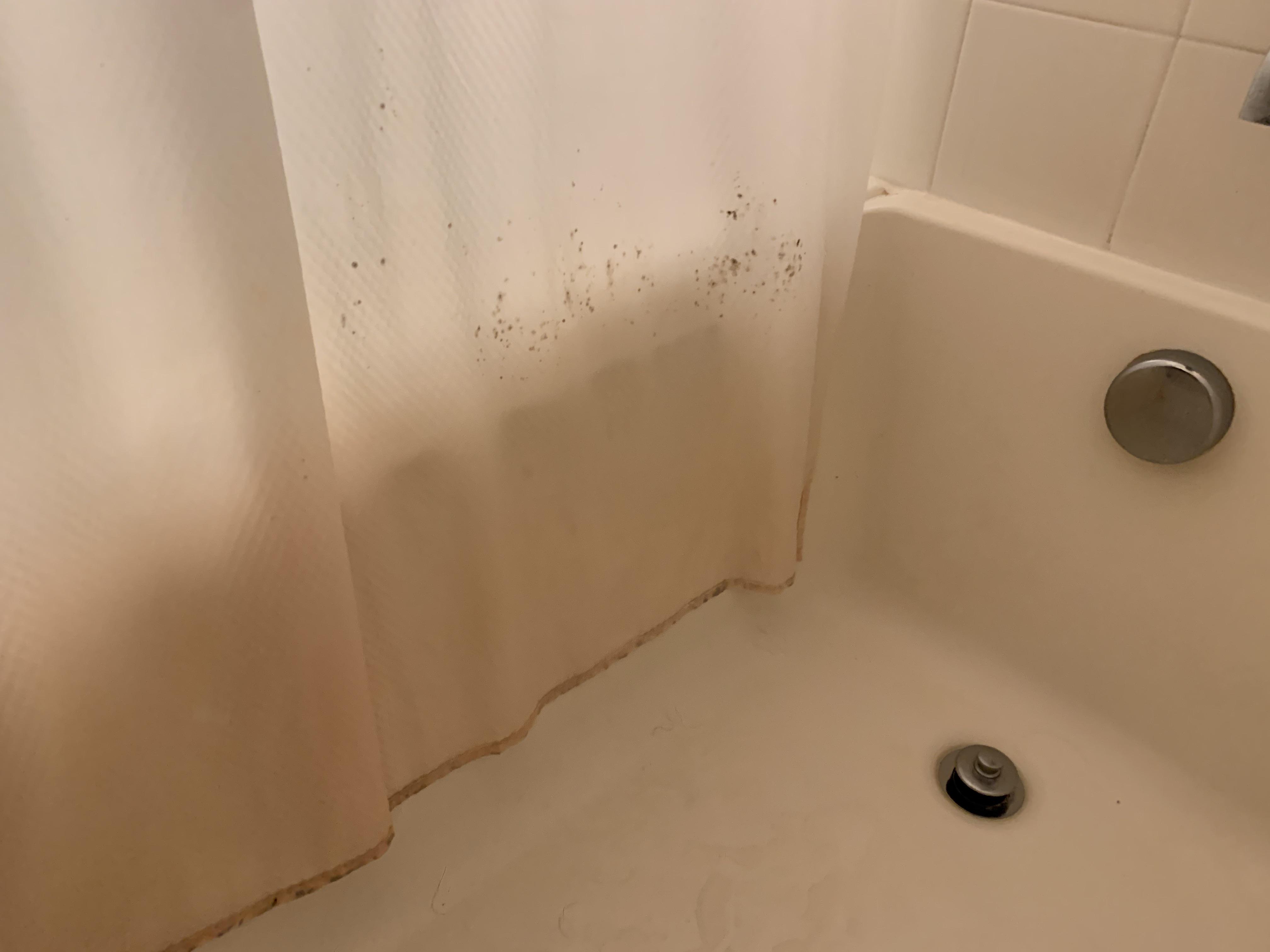
- Placement is suspiciously specific. Spots cluster at the bottom hem, the side edges closest to the glass, or wherever the fabric touches the window sill or frame.
- Speckles and blooms. You will see pepper-like dots (gray, brown, black, sometimes faint green) or cloudy patches that look like watercolor blooms.
- A musty smell that returns. Even after vacuuming or spraying “fabric refresher,” the odor comes back quickly, especially after a cold night.
- The fabric feels different. The affected area can feel slightly stiff, gritty, or just “off,” especially on textured weaves.
- It worsens in winter. You notice it during cold snaps, rainy weeks, or whenever the window is visibly damp in the morning.
Signs it is probably ordinary dinginess
- Even discoloration. The whole panel looks muted rather than concentrated near the window side or hem.
- Dust lines at the top. A gray band along the header where fabric folds sit for months is usually dust.
- No musty odor. It smells like house, not like a forgotten towel.
If you are unsure, do a quick check: dampen a white cloth with warm water and a tiny drop of dish soap, then gently rub a hidden spot near the stain. If it is dust, you will often lift gray residue. If it is mildew, it may not budge much without a targeted treatment.
Before you clean: what you can safely wash
Cleaning goes smoothly when you match the method to the curtain’s construction, not just the fiber on the tag.
Usually washable (with the right settings)
- Cotton curtains: Often machine washable, but they can shrink. Cold or warm water is safer than hot.
- Polyester curtains: Typically the easiest. They tolerate gentle machine washing well and dry faster.
- Cotton-poly blends: Usually fine in a gentle cycle.
Be careful with these
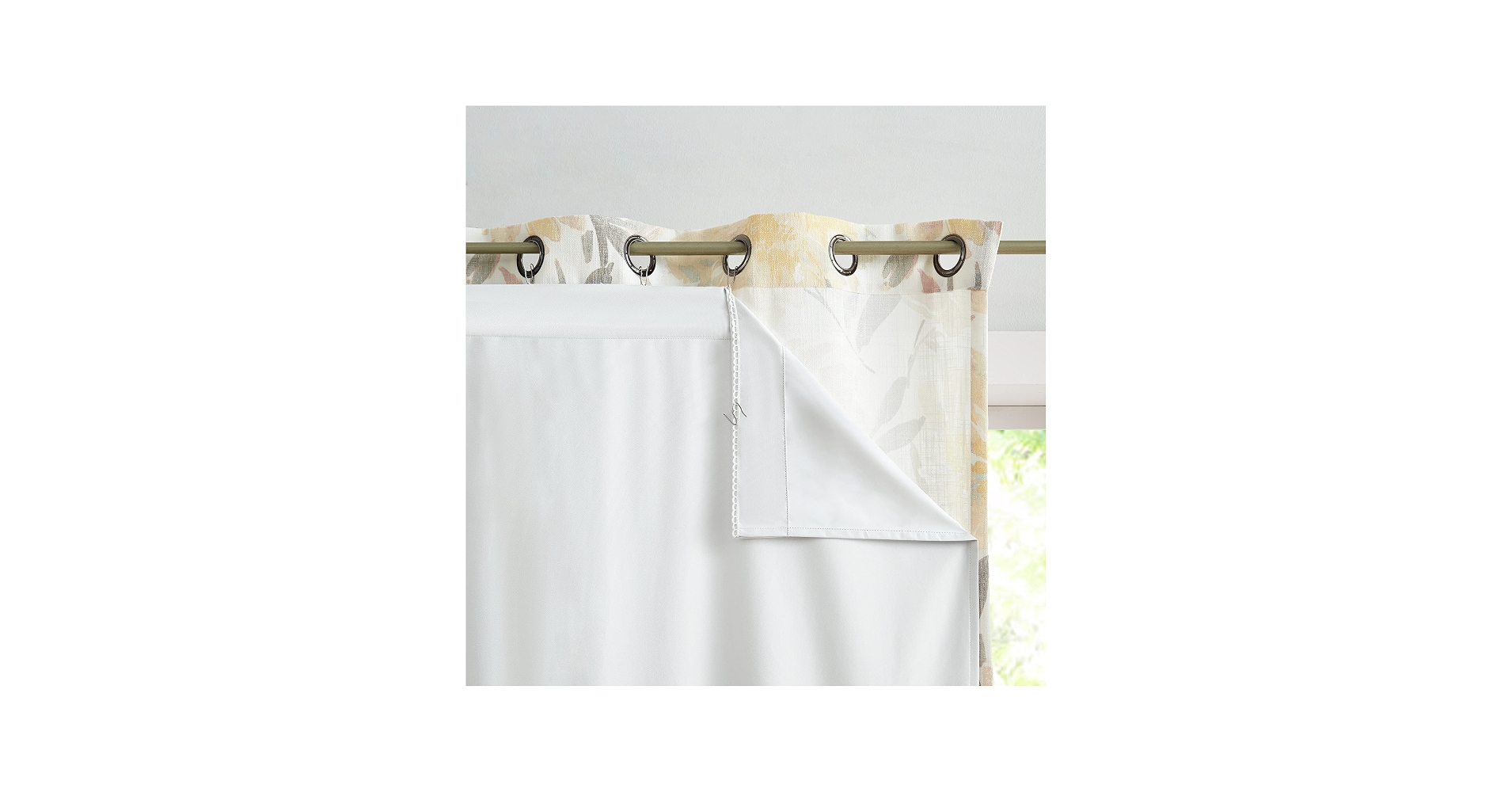
- Lined panels: Especially blackout lining or foam-backed lining. These can wrinkle permanently, delaminate, or develop bubbles if soaked for long periods.
- Interlined drapes: Thicker, padded drapes can trap moisture inside layers. They need thorough drying and often do better with targeted spot cleaning.
- Velvet, wool, silk, or “dry clean only” curtains: Treat mildew as a fabric emergency and consider professional cleaning. Water can leave marks or change the pile.
- Older vintage panels: Sunlight and age can weaken fibers. Aggressive scrubbing can create thin spots or tears.
My rule: If the curtain has a separate lining layer, blackout backing, or a structured header that feels stiff, assume it should not be soaked for hours. You can still clean it, but you want shorter contact time with moisture and excellent airflow during drying.
Safety first
Mildew is a common name people use for certain types of mold or fungal growth. Small areas on fabric are common and usually manageable, but you still want to treat it with respect.
- Work with ventilation. Open a window in another room, run a fan, or turn on an exhaust fan.
- Wear gloves. If you are sensitive, add a mask.
- Do not dry-brush aggressively indoors. That can send spores into the air. If you want to brush, do it outside and gently.
- Never mix cleaning chemicals. In particular, do not combine chlorine bleach with vinegar or ammonia.
- If there is heavy growth: If you see widespread fuzzy patches across large areas, or anyone in the home has asthma or immune concerns, consider professional help and replace the curtains if needed.
Clean the window area first
This is the step I skipped once, and I regretted it. If the sill, frame, or wall edge has mildew, clean that too or your freshly washed curtains can pick up the same musty odor again.
- Wipe down the window frame and sill with warm, soapy water and dry thoroughly.
- Check the bottom corners of the window, the trim, and the wall right behind the curtain for spotting.
- Make sure the area is fully dry before you rehang anything.
Washable curtains: the basic method
Most washable cotton and polyester curtains respond to the same core routine: pre-treat, wash gently, then dry completely. The fiber-specific notes below are where you adjust for shrink risk, heat, and finishes.
Remove mildew from cotton curtains
Cotton can usually handle a proper wash, but mildew likes to cling to natural fibers. The trick is to pre-treat, wash gently, and then dry completely.
Step 1: Take them down and keep them contained
Fold the panels inward so the mildewed areas are tucked inside, then carry them straight to the laundry area. This keeps spores from shaking through the room.
Step 2: Pre-treat the spots
Choose one pre-treatment method and test in an inconspicuous area first.
- Oxygen bleach soak (color-safe): Mix oxygen bleach powder with cool or warm water per the product label. Soak the affected area or the whole panel for 1 to 6 hours depending on severity. This is my go-to for cotton because it is effective and gentler on color than chlorine bleach.
- White vinegar pre-spray: Lightly mist the spots with distilled white vinegar, let sit 10 to 15 minutes, then wash. Vinegar can help with odor and very light mildew, but results vary by fabric and the type of growth. Drying fully is what keeps it from coming back.
Avoid chlorine bleach on colored cotton unless the care label allows it and you truly have no choice. It can strip color and weaken fibers over time.
Step 3: Wash on a gentle cycle
- Use cold to warm water and a gentle cycle.
- Use your regular detergent.
- Add oxygen bleach if you did not soak first, if the label allows it.
- Skip fabric softener. It can leave a coating that traps odor and moisture.
Step 4: Inspect before drying
Do not tumble dry until you check the stains. Heat can make remaining discoloration harder to remove. If spots remain, repeat oxygen bleach treatment.
Clean mildew from polyester curtains
Polyester is more mildew-resistant than cotton, but condensation can still leave those telltale dots along the hem.
What usually works best
- Machine wash gentle: Cold or warm water, mild detergent.
- Oxygen bleach: Safe for most polyester and very effective on organic staining.
- Short vinegar pre-treatment: Helpful for odor, especially if the mildew is new. Like anything else, it works best when you follow it with a full wash and complete drying.
Skip high heat on polyester sheers and panels with delicate finishes. Too much dryer heat can melt synthetic fibers, create a glazed look, or lock in stubborn heat-set wrinkles.
Lined curtains: what not to soak
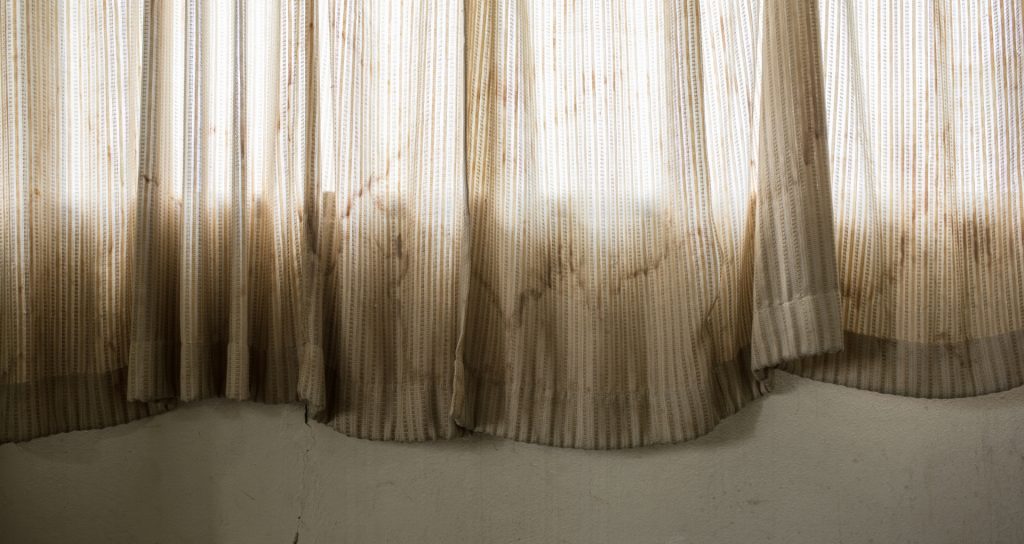
Lined panels are where people accidentally create bigger problems. Blackout or thermal linings can trap water between layers and take forever to dry, which is basically an invitation for mildew to return.
Do not do this
- Do not leave lined curtains soaking in a tub overnight.
- Do not wad them up wet in a hamper.
- Do not put foam-backed blackout panels in a hot dryer.
Safer options for lined panels
- Spot-treat only: Lay the panel flat on towels. Dab the mildewed area with a solution of oxygen bleach in water, or a small amount of mild detergent in water. Blot, do not scrub hard.
- Brief, supervised hand wash: If the care label allows hand washing, keep it short. Swish gently, drain promptly, and move immediately to drying.
- Professional cleaning: If the lining is peeling, bubbled, or older, it is often safer and cheaper in the long run to let a cleaner handle it or replace the panels.
Important: Even if the face fabric looks fine, mildew can hide at the seam where lining meets hem. Turn the curtain inside out and check the lining edge carefully.
Dry completely before rehanging
If you do one thing perfectly, make it drying. Curtains that go back up even slightly damp will often develop that same musty smell within days, especially over a cold window.
The drying routine I trust
- Spin out excess water. In a washer, use an extra spin cycle. For hand-washed panels, press water out with towels. Do not wring, especially on lined or pleated headers.
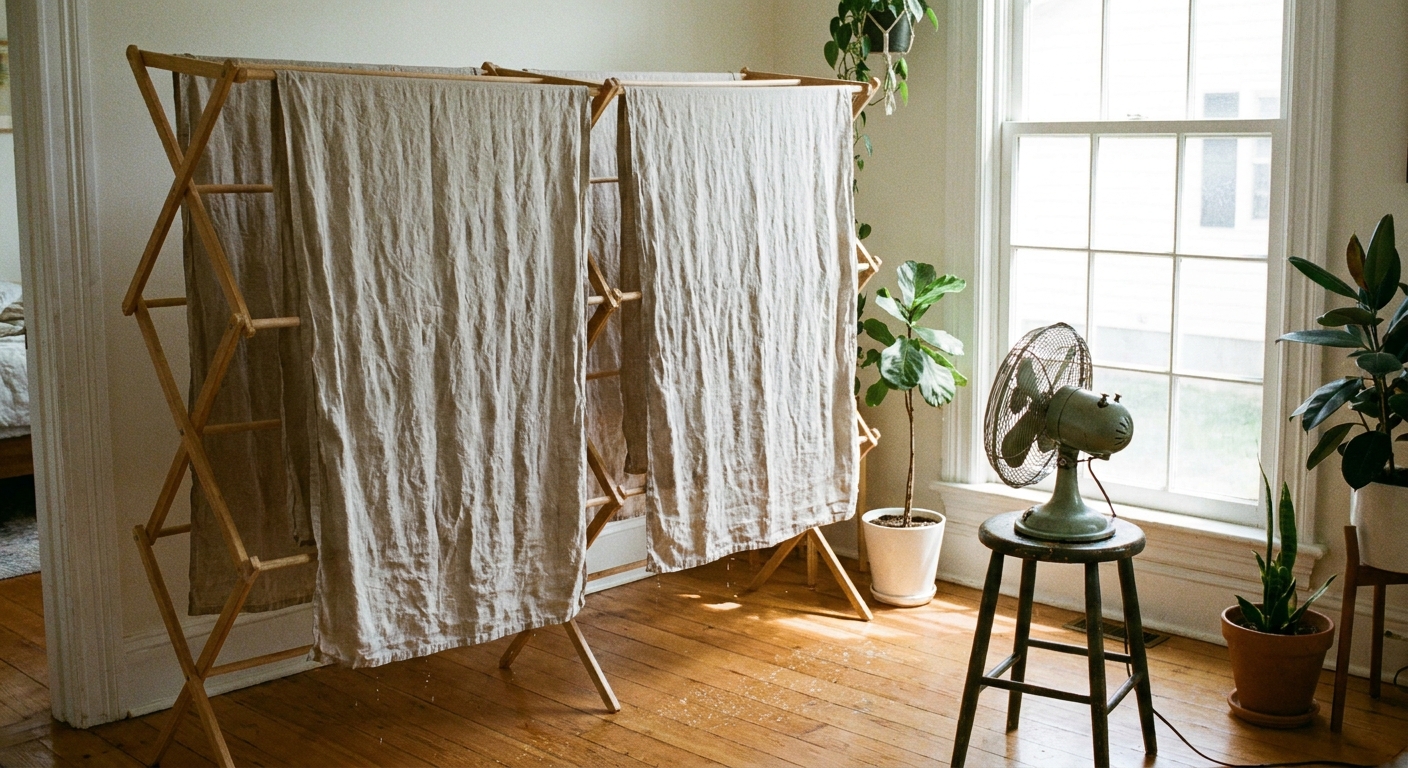
- Airflow first, heat second. Hang panels over a shower rod, drying rack, or a sturdy hanger in a room with good airflow. Run a fan toward them. This is the part that prevents mildew from coming back.
- Keep fabric away from cold glass while drying. Dry them away from the window that caused the problem, even if it is tempting to rehang to “drip dry.” Cold surfaces slow drying and encourage condensation.
- Tumble dry only if the label allows it. Use low heat for polyester, low to medium for cotton, and remove while slightly damp to reduce wrinkles. Then finish air drying.
- Confirm they are dry at the thickest points. Touch the hem, side seams, and any header tape. Those areas stay damp the longest.
Stop the window from sweating
My curtains did not really stay clean until I dealt with the window that kept creating the moisture in the first place. If you are waking up to wet glass, the mildew is a symptom, not the whole story.
Practical fixes that help fast
- Lower indoor humidity. If you have a hygrometer, aim for a comfortable range (many homes do well around 30 to 50 percent in winter, depending on climate and comfort).
- Run exhaust fans. Use the bathroom fan during showers and the kitchen fan while cooking, then keep them running a bit longer to clear the moisture.
- Keep air moving at the window. Make sure a vent is not blocked by furniture or heavy drapes. Even a small gap for airflow can reduce condensation.
- Warm the glass. Insulating window film, tighter weatherstripping, or storm windows can raise the interior surface temperature so moisture is less likely to condense.
- Check for window issues. If you have double-pane windows that look foggy between panes, the seal may have failed. That is a different problem than everyday condensation and often needs repair.
Prevent mildew from coming right back
Once the curtains are clean, a few styling tweaks can keep them that way, especially in bedrooms where we breathe moisture into the air all night.
Small changes that make a big difference
- Give the curtain breathing room. If your panels rest against the glass, adjust the rod brackets so the curtain hangs a bit farther out, or train the fabric to sit to the sides during the night.
- Hem height matters. If the bottom puddles on a cold sill or radiator cover, you are basically creating a damp zone. Raise the hem so it hovers just above the sill or floor.
- Open the curtains daily. Even 20 minutes of daylight and airflow helps evaporate lingering moisture along the window side.
- Wash seasonally. If you get winter condensation, plan a mid-season refresh so mildew never gets comfortable.
- Choose fabrics that forgive you. In condensation-prone rooms, polyester or cotton-poly blends are easier to maintain than heavy natural fibers.
Dry clean only curtains
If the label says dry clean only, treat mildew like a time-sensitive problem. The goal is to limit spread, reduce odor, and get professional advice before you throw too much water at a fabric that cannot handle it.
- Isolate and air out. Take the curtains down, fold the affected area inward, and move them outside or to a well-ventilated area.
- Vacuum gently. If you have a vacuum with a HEPA filter, use the upholstery attachment lightly. Avoid aggressive brushing that kicks material into the air.
- Talk to a cleaner. Call ahead and say you are dealing with mildew so they can tell you what they can safely do for that fiber and construction.
- Consider replacement for heavy growth. If the odor is deep and the growth is widespread, replacement can be the safer and more practical option.
When to replace instead of rescue
I love a “save it” moment as much as anyone, but there are times when replacement is the healthier call.
- The mildew returns quickly even after proper cleaning and thorough drying.
- Stains are widespread across large areas, not just a hemline band.
- The fabric is weakened. If it tears easily, feels thin, or shows sun rot near the window.
- The lining is failing. Peeling or cracking blackout backing is difficult to restore and can shed bits over time.
If you do replace, keep the old panels out of donation bins if they are musty or visibly mildewed. Bag them and dispose of them so you are not passing the problem along.
FAQ
Will mildew wash out of curtains completely?
Often, yes, especially if you catch it early. The odor usually comes out faster than the staining. Oxygen bleach is one of the more reliable options for reducing both odor and discoloration on cotton and polyester, as long as the care label allows it.
Can I use vinegar on mildew on curtains?
Vinegar can help with odor and very light mildew, and it is a useful pre-treatment. It is not a guarantee on every fabric or every type of growth, so do not treat it like a magic step. The most important factor for preventing a repeat is getting the curtains fully dry and addressing the condensation source.
Should I soak lined blackout curtains?
Generally, no. Long soaks can damage the lining and make drying so slow that mildew returns. Spot-treat, keep moisture contact time short, and prioritize airflow during drying.
Why does mildew show up on the bottom hem first?
That area is where moisture lingers. Condensation can drip or dampen the hem, and thicker seams dry more slowly than the flat fabric above.
Can I rehang curtains while they are slightly damp to “let them dry in place”?
I would not, especially over the same cold window. Damp fabric plus a cold surface is the exact recipe that started the mildew. Dry them fully in a warmer spot with moving air, then rehang.