Bathroom Exhaust Fan Weak, Loud, or Not Clearing Steam

Clara Townsend
Clara Townsend is an interior stylist, vintage furniture enthusiast, and the creative voice behind Velvet Abode. With over a decade of experience transforming both cramped city apartments and sprawling fixer-uppers, she believes that a beautiful home is built on personal stories rather than massive budgets. When she isn't hunting for the perfect brass sconce at a local flea market, she can usually be found rearranging her living room for the third time this month.
There are a few home sounds I find oddly comforting, like the soft click of an old radiator or the swish of linen curtains. A bathroom exhaust fan that rattles, whines, or does absolutely nothing is not one of them.
If your mirror stays fogged forever, your towels never fully dry, or the fan is so loud it feels like it is taking off, you are not being picky. You are noticing moisture that can quietly turn into peeling paint, musty smells, and mold.
The good news is that many of the most common causes are simple, renter-safe fixes or clear “time to call maintenance” signs.
What a fan should do
A standard bath fan is meant to pull humid air out fast enough that the room starts feeling drier soon after a shower. How fast depends on fan size (CFM), bathroom size, duct length, and how steamy your shower gets.
- Good sign: You hear steady airflow, steam starts thinning within about 10 to 20 minutes, and the mirror begins clearing.
- Not a good sign: The fan is loud but steam hangs around, the grille drips, or there is a persistent damp smell.
Two quick reality checks before you troubleshoot:
- Door gap matters. Fans need makeup air. If your bathroom door is sealed tight against thick rugs or a draft stopper, the fan can struggle. Try cracking the door 1 to 2 inches during and after showers.
- Shower heat matters. Ultra-hot, long showers can overwhelm a small fan. That is not a moral failing. It just means your habits and runtime matter more.
Renter-safe checks
1) Clean the grille and the easy dust
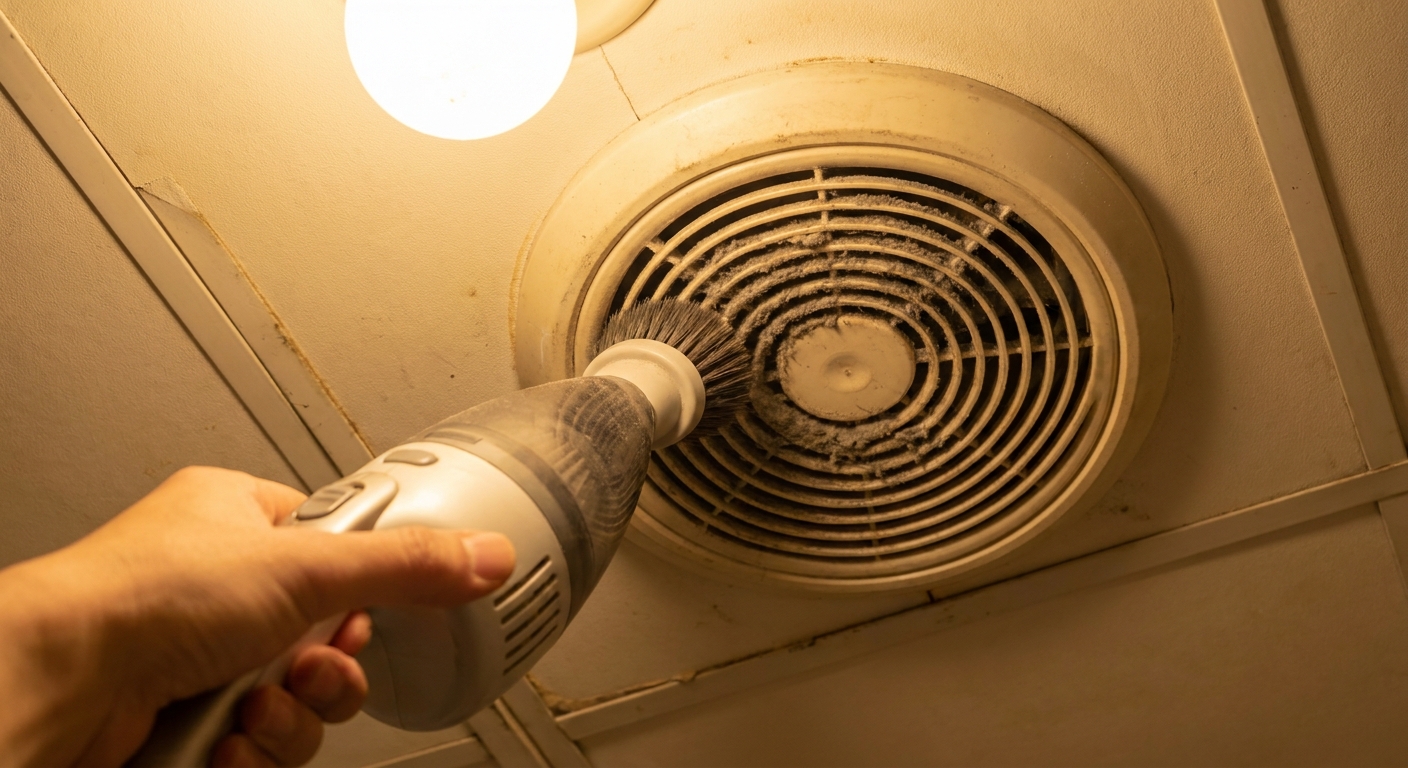
Dust is one of the most common airflow thieves. It mats onto the grille like a felt sweater and turns your fan into a tired little whisper.
- Turn the fan switch off.
- Gently pull down the grille. Most are held by spring clips that pinch inward.
- Wash the grille in warm soapy water, then dry it fully.
- Vacuum the visible dust from the fan housing opening with a brush attachment, without reaching into wiring or disassembling parts.
Safety note: Keep water on the removable grille only. Avoid spraying cleaner up into the housing.
Renter note: If you cannot reach safely or the grille is painted shut, do not pry aggressively. That is a good moment to put in a maintenance request.
2) Check airflow and the damper
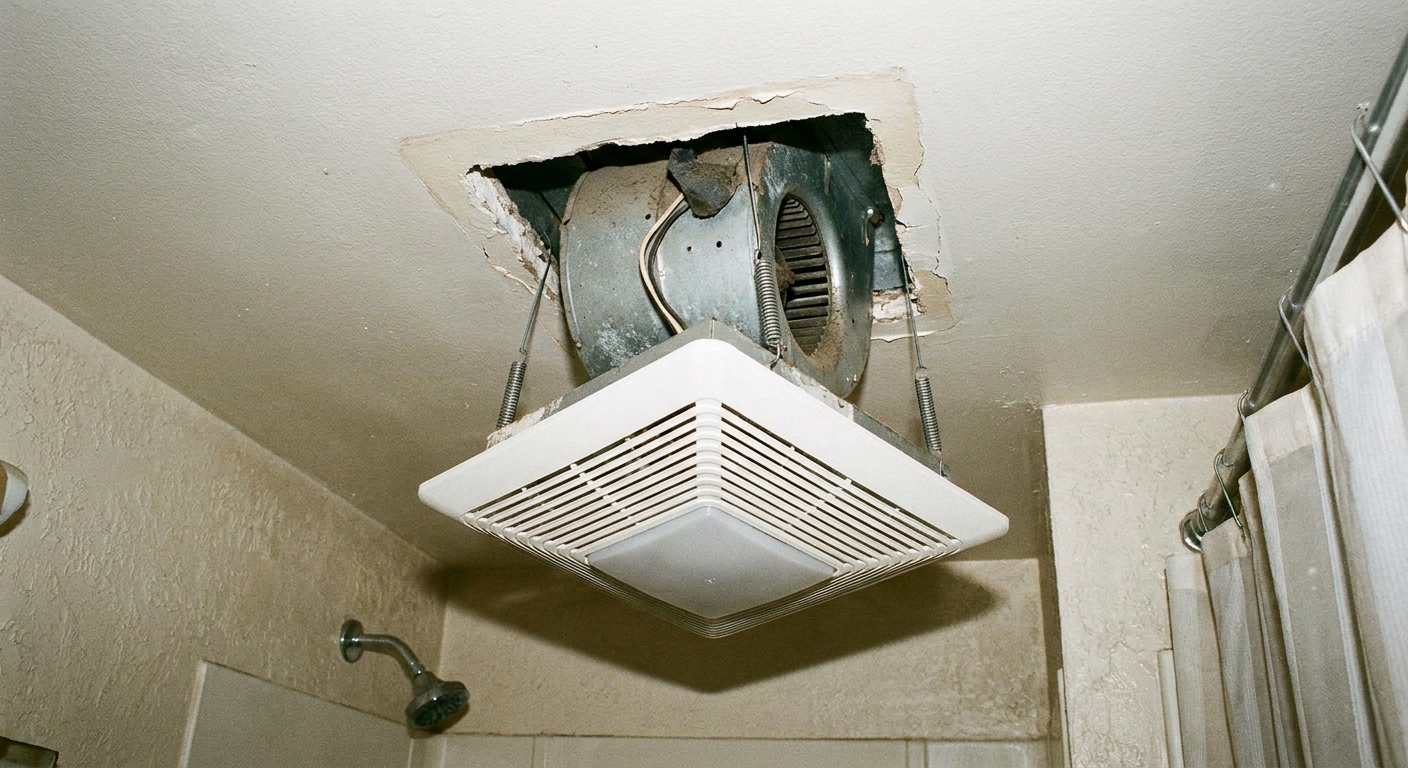
Inside the duct connection is a small flap called a damper. It should open when the fan runs and close when it is off. When it misbehaves, you get classic complaints.
- Damper stuck shut: Fan sounds like it is running, but airflow is weak and steam lingers.
- Damper stuck open: You may feel a cold draft in winter, notice dust collecting quickly, smell outside air, or hear occasional flap noise on windy days.
A safe, simple check (rough, but helpful):
- With the fan off, hold a single square of toilet paper up to the grille. It should not strongly stick. If it does, you might be getting natural airflow from pressure differences (stack effect) or a draft coming back through the duct.
- Turn the fan on and try again, ideally with the door cracked for makeup air. The paper should be pulled toward the grille if airflow is decent.
Optional quick check: Hold your hand near the grille and feel for steady pull, or listen for a subtle change in tone right when the fan starts (some dampers make a soft click as they open).
If suction is weak even after cleaning, the damper could be stuck or the duct could be restricted. Both are typically maintenance territory in rentals because access can involve the duct run.
3) Read the sound
Bathroom fan noises are surprisingly informative.
- Rattling or tapping: Often a loose grille, a tired spring clip, or dust buildup throwing the fan wheel off balance. Cleaning and reseating the grille fixes this more often than you would think.
- Deep hum but little airflow: The motor may be running but the blower wheel is clogged, slipping, or failing. If cleaning the visible area does not improve suction, it is time to ask for a replacement.
- High-pitched squeal: Worn motor bearings. This usually gets worse, not better, and is a good “replace the unit” clue.
- Loud roar with minimal clearing: Sometimes the fan is working but the duct is disconnected, crushed, or blocked, meaning it is moving air into the wrong place. That is a landlord or pro fix.
4) Check the power path
If the fan won’t turn on at all, check the easy electrical stuff you are allowed to touch.
- Wall switch: Some bathrooms have a timer switch or humidity-sensing switch. Make sure it is actually set to run long enough.
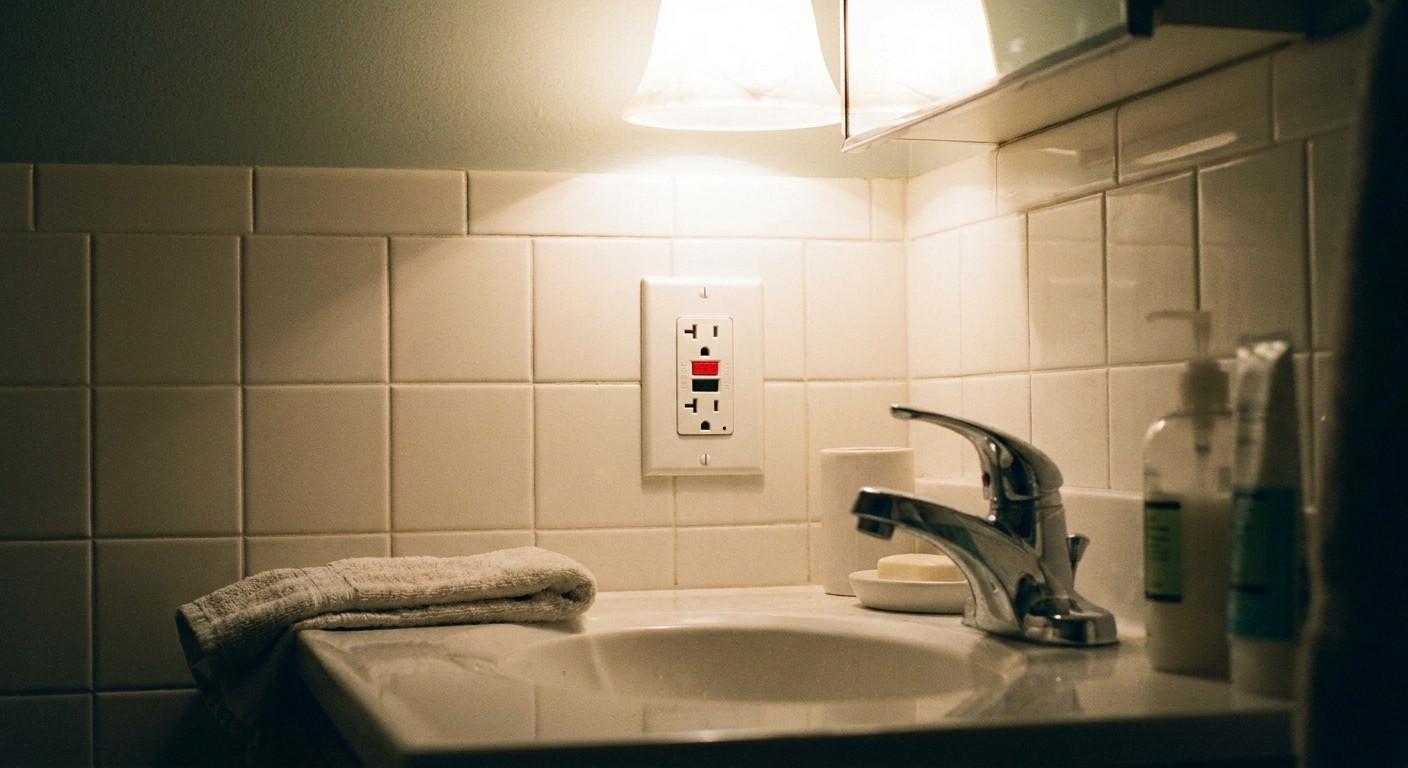
- GFCI outlet: Sometimes a bathroom fan shares a circuit with outlets or lighting. If your outlet is dead, press RESET on the GFCI, and see if anything comes back. If only the fan is dead, it might be on a different circuit.
- Breaker: If multiple things in the bathroom are off, a tripped breaker is possible. If you are not comfortable, ask maintenance. If it trips repeatedly, stop using the fan and report it.
Safety note: If you smell burning, see flickering, or hear sizzling, turn the switch off and contact maintenance immediately.
5) Make sure it actually vents outdoors
This one is not a renter DIY project, but it is worth knowing: a bath fan should vent to the outdoors, not into an attic, wall cavity, or ceiling void. A fan can sound powerful and still leave the bathroom damp if the duct is disconnected or dumping moisture into the building.
If your bathroom stays wet despite decent suction at the grille, ask maintenance to confirm the duct is connected, intact, and terminating outside with a proper hood and damper.
6) When the fan is simply too small
Many bathroom fans are in the roughly 50 to 110 CFM range. If your bathroom is larger, has a long duct run, or has a shower that produces a lot of steam, an undersized fan can struggle even when everything is clean and working.
If you are consistently doing everything right and the room still stays humid, it is reasonable to request an upgrade.
Humidity habits that help
Even a good fan needs the right routine. Think of it like preheating an oven. Starting early helps.
- Run it before: Turn the fan on 2 to 3 minutes before you start the shower.
- Run it during: Keep it on the entire shower.
- Run it after: Keep it running 20 to 30 minutes after, especially in winter or in windowless bathrooms.
- Crack the door: Leave the door slightly ajar after showering so humid air can reach the fan.
- Squeegee wins: A 30-second squeegee of tile and glass reduces how much water needs to evaporate into the room.
- Hang towels with space: Crowded towel hooks keep humidity trapped in fabric. Give towels air around them.
When it becomes a mold-risk issue
I am not here to scare you, just to give you a clear line in the sand.
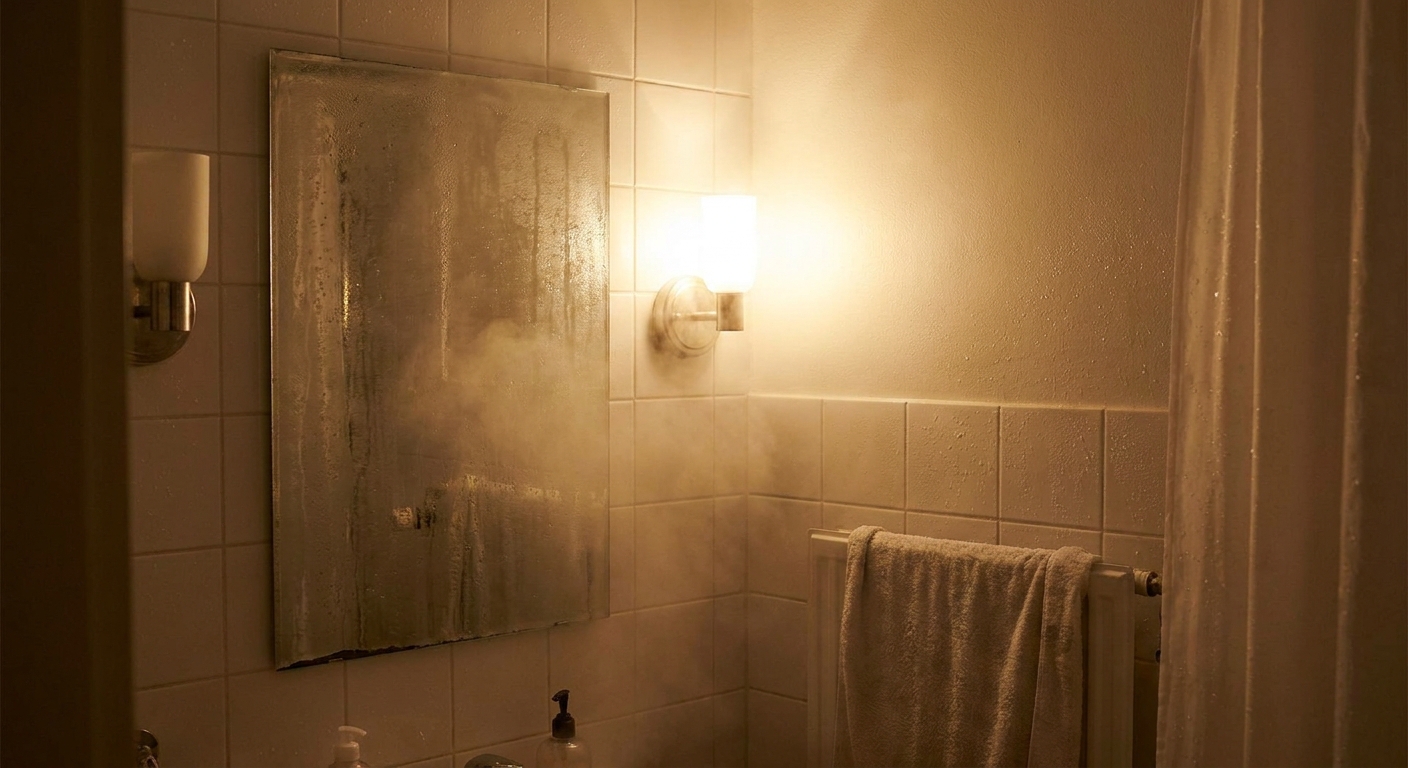
- Mirror stays foggy for 30+ minutes after a typical shower, even with the fan running and the door cracked.
- Condensation beads on walls or ceiling regularly.
- Paint bubbles or peels near the shower or around the fan grille.
- Musty odor that returns quickly after cleaning.
- Visible spotting on caulk, ceiling corners, or around the fan housing.
As a practical rule of thumb, mold is more likely when surfaces stay damp and indoor humidity stays elevated for long stretches. If you have a small hygrometer (they are inexpensive), many people aim for an overall indoor range around 30 to 50% most of the time. Brief spikes after showers are normal.
If your bathroom humidity lingers above about 60% for long periods, or it is still over about 70% well after shower time, that is a strong sign your ventilation is not keeping up and it is worth escalating.
Maintenance requests that work
If you have done the grille clean and a basic suction check and it still feels weak, the most effective next step is usually a maintenance request. The trick is describing it in a way that gets attention.
Use language like:
- “Fan runs but does not clear steam. Toilet paper suction test is weak (with door cracked).”
- “Fan is making a grinding or squealing noise.”
- “Condensation is collecting on ceiling and paint is peeling. Concerned about moisture and mold.”
- “Please confirm the fan duct is connected and vents outdoors.”
What to avoid DIY-ing in a rental: opening electrical junction boxes, accessing attic ductwork, or removing the fan housing from the ceiling. Those are reasonable pro tasks, but not renter tasks.
Quick checklist
- Clean the grille and vacuum visible dust (no disassembly).
- Do a rough suction check (toilet paper or hand), with the door cracked.
- Listen to the sound type: rattle, hum, squeal, roar.
- Check switch settings and reset the bathroom GFCI if relevant.
- Run the fan 20 to 30 minutes after showers and crack the door.
- If steam lingers 30+ minutes or you see peeling or spotting, request maintenance.
A bathroom that dries out quickly feels like a small luxury, the kind you notice every day. And you deserve that, even as a renter.