White Curtains Look Dingy? Brighten Them Without Ruining the Fiber

Clara Townsend
Clara Townsend is an interior stylist, vintage furniture enthusiast, and the creative voice behind Velvet Abode. With over a decade of experience transforming both cramped city apartments and sprawling fixer-uppers, she believes that a beautiful home is built on personal stories rather than massive budgets. When she isn't hunting for the perfect brass sconce at a local flea market, she can usually be found rearranging her living room for the third time this month.
White curtains are a little like white sneakers. They look dreamy until life happens. Cooking steam, city dust, incense smoke, hard water, and even the slow drift of sunlight can turn “crisp” into “cream that never asked to be.” The good news: you can brighten them without shredding delicate fibers or baking in stains.
This is a laundry and upkeep guide, not a window-sizing lesson. We are going to talk fiber types, water temperature, bleach choices, and drying methods that keep your curtains strong and soft.
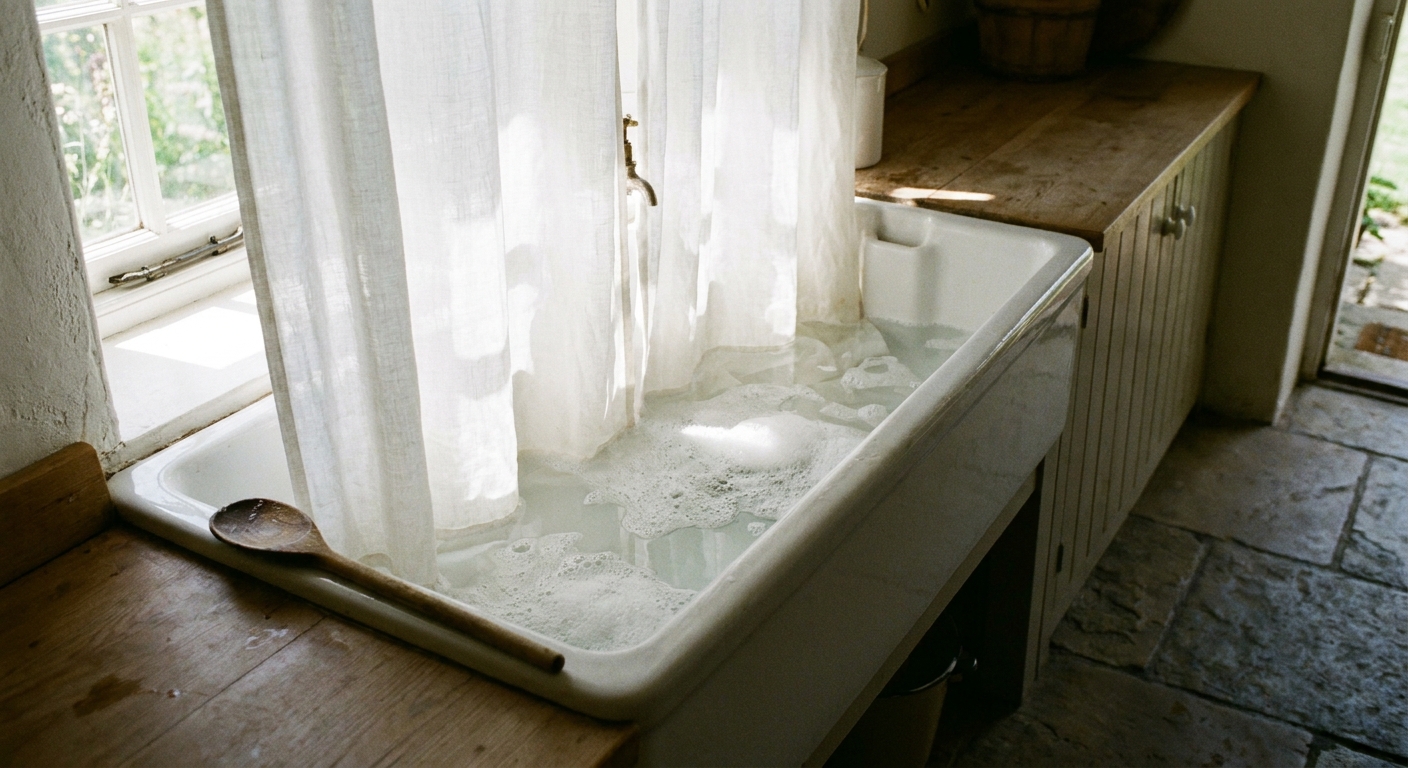
Before you wash
“White” is not one fabric. And the fastest way to ruin curtains is to treat every white panel like sturdy bath towels.
Quick prep (two minutes, big payoff)
- Remove hardware: take off hooks, rings, pins, and clip-on headers. Set anything rusty aside so it does not re-stain the fabric.
- Check construction: interlining, blackout backing, thermal layers, glued trims, or heavily pleated designer panels often do best with professional cleaning. When in doubt, follow the label.
- Spot-test: if you are using any brightener or rust remover for the first time, test a hidden hem corner.
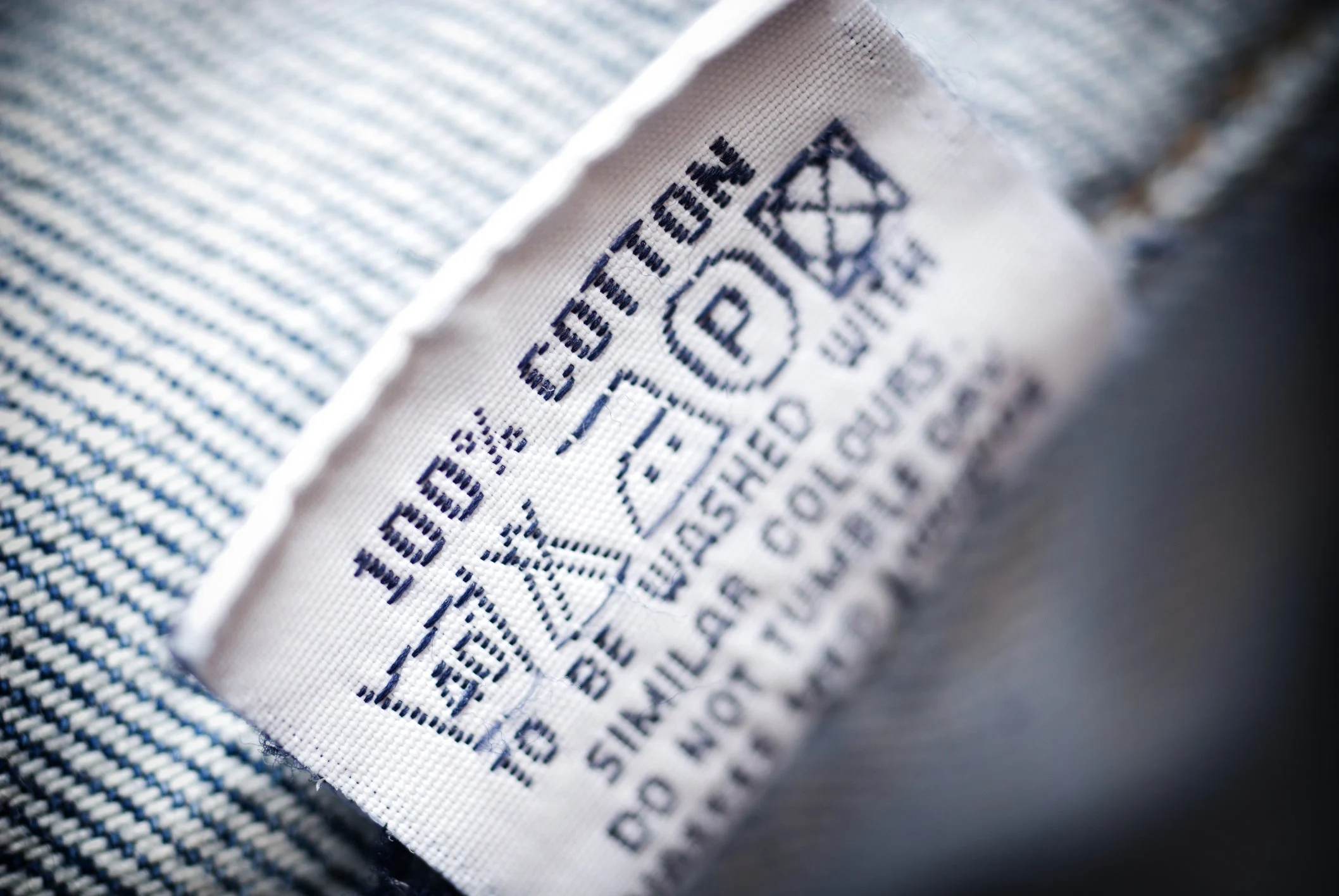
Step 1: Check the label and header tape
- Cotton: usually tolerant of warmer water, handles oxygen bleach well. May shrink if washed or dried too hot.
- Linen: strong when wet, but can crease and can yellow if overheated or dried too aggressively. Likes gentle chemistry.
- Polyester or poly blends: often “grays” from trapped soil and residue more than true discoloration. Heat can set oily stains.
- Silk or rayon/viscose: easily weakened by alkalinity and heat. Many “white silk” curtains are really off-white by design. When in doubt, professional dry cleaning is safest.
- Sheers (voile, organza): can snag and distort. Use a mesh bag if machine washing.
Step 2: Diagnose the dingy tone
- Gray cast: airborne dust plus detergent residue, fabric softener buildup, and sometimes optical brightener buildup that starts to look dull over time.
- Yellowing: sunlight exposure, aging fibers, smoke, or “invisible” body oils and cooking grease that oxidize over time.
- Spots or stripes: splash marks, mildew specks, or rust from curtain rings and hooks.
Take five minutes to do a quick check in daylight. If you see obvious grease near the kitchen or handprints at the edges, treat those first. Whitening products cannot lift oil unless you remove the oil with a surfactant (think dish soap or a targeted stain pre-treater).
Safest brightening plan
If your curtains are washable and not silk or rayon, this is my go-to order of operations. Think of it as “lift residue, lift soil, then brighten.”
1) Shake, vacuum, or lint-roll first
Dry soil turns into muddy water the second it hits a wash basin. I like to vacuum panels while they are still hanging using an upholstery attachment, top to bottom, then shake them outside if you can.
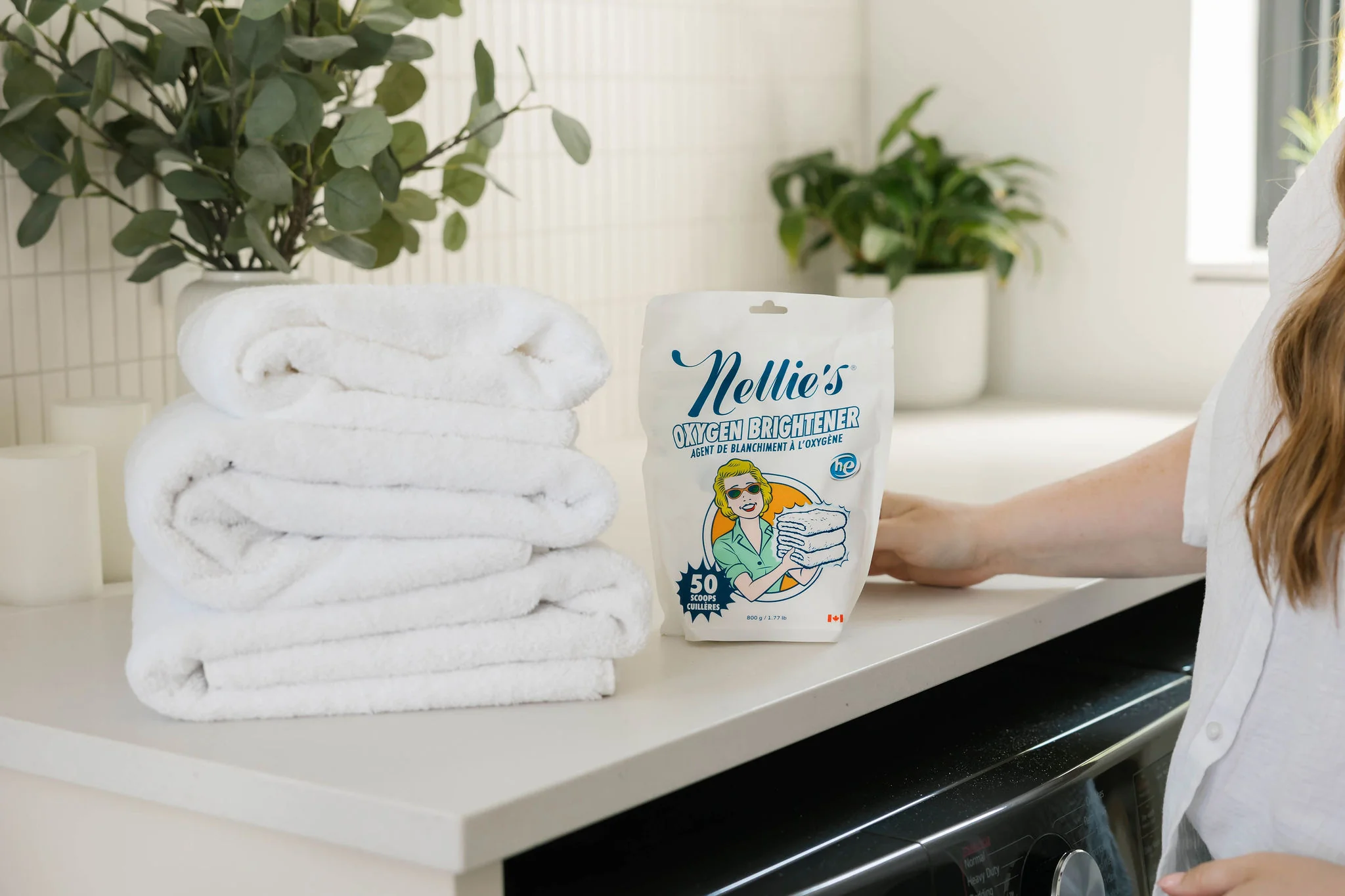
2) Pre-soak with oxygen bleach
Oxygen bleach (usually sodium percarbonate) is the gentler brightener for most cotton, linen, and many synthetics. In water, it breaks down into hydrogen peroxide-like whitening agents that help loosen yellowing and dullness without the harsh fiber attack chlorine can cause.
- Use lukewarm to warm water unless your fiber demands cool.
- Dissolve oxygen bleach fully before adding fabric, especially for sheers.
- Soak 30 minutes to a few hours depending on how dingy they are. Start with one hour and assess.
- Follow the product label for dosing and maximum soak time. More time is not always better, especially on delicate finishes.
Skip chlorine bleach unless you know the fabric can handle it and you are treating true white, sturdy cotton. Chlorine can weaken fibers, cause yellowing on some synthetics, and react dangerously with other cleaners (and it should never be mixed with ammonia or acids).
3) Wash with a low-residue detergent
Choose a detergent that rinses clean. “More soap” does not mean “more clean.” It often means more gray film.
- Start modest: for lightly to moderately dirty curtains, start with about 1/2 to 2/3 of the recommended amount, then adjust for hard water or heavier soil. If you use an HE machine, follow HE dosing guidance.
- Add an extra rinse if your machine has the option.
- Avoid fabric softener. It coats fibers and attracts dirt over time.
4) Rinse boost (optional)
If dinginess is more residue than stain, a small amount of white vinegar in the rinse can help reduce detergent residue and alkaline film. It is not a true descaler or water softener, though, so if hard-water minerals are the main issue, a dedicated water softening additive used as directed works more reliably. Use vinegar in the rinse cycle only, and never combined with bleach products.
Best wash temperatures
Heat can help cleaning, but it can also set stains, shrink fibers, and speed yellowing. Use temperature like seasoning, not like a fire hose.
Cotton
- Best range: warm (around 30 to 40°C, 86 to 104°F) for most cotton curtain panels.
- When to go cooler: if you suspect oily kitchen residue or makeup smudges, start cool to avoid setting.
- When to go warmer: sturdy cotton with general gray dullness can benefit from warm water plus oxygen bleach.
Linen
- Best range: cool to warm (around 20 to 30°C, 68 to 86°F).
- Avoid: hot water and hot drying. Linen can handle a lot, but repeated high heat can encourage that tired, yellowed look over time.
Polyester and blends
- Best range: cool to warm (around 20 to 30°C, 68 to 86°F).
- Key detail: polyester holds onto oily soils. Pretreat greasy zones with a small amount of dish soap or a stain remover designed for oil before washing.
Sheers
- Best range: cool (around 20°C, 68°F).
- Best method: gentle cycle, inside a mesh laundry bag, with low spin to prevent creasing and snags.
Silk and rayon/viscose
- Recommendation: follow the label strictly. If it says dry clean only, believe it.
- If washable: cool water, silk-safe detergent, minimal agitation, and no oxygen bleach unless the product specifically says it is safe for silk (many are not).
If you are unsure, test any brightening soak on a small hem corner first. Curtains live in the sun, and sun exposure can make fibers more reactive to chemicals than you expect.
Oxygen vs chlorine bleach
Let’s make this crystal clear, because this is where most “why do my curtains look worse?” stories begin.
Oxygen bleach (recommended for most washable curtains)
- Best for: overall dinginess, mild yellowing, odor, and general brightening on cotton, linen, and many synthetics.
- Why it is gentler: it is less likely to weaken fibers than chlorine when used correctly.
- Common mistake: using water that is too cold. Many oxygen bleaches activate better in lukewarm water. Always read the product directions.
Chlorine bleach (use sparingly)
- Best for: sturdy, true-white cotton that is heavily stained or mildewed and labeled bleach-safe.
- Risks: fiber weakening, yellowing over time, damage to seams, and possible discoloration on synthetic blends.
- Never mix with: vinegar, ammonia, or any acid-based cleaners.
Blueing agents and whitening additives
Laundry blueing can visually counteract yellow tones by adding a whisper of blue, but it requires careful dilution and even application. If you tend to get distracted mid-laundry, skip it. Uneven blueing on curtains is heartbreak.
Sun fade reality
I love the romance of sunlit sheers as much as anyone, but sunlight is honest. UV exposure slowly breaks down fibers and can shift whites toward cream or yellow, especially in natural fabrics. Once the fiber itself has changed, no amount of soaking will turn it back into brand-new bolt cloth.
Here is the practical takeaway:
- You can remove dirt and residue that makes fabric look gray or dull.
- You can lift some oxidation-based yellowing with oxygen bleach and proper washing.
- You cannot reverse deep sun damage without risking fiber strength. At that point, you are better off embracing a softer “antique white” mood or replacing the panels.
If your curtains live in a bright south-facing window, consider rotating panels seasonally or adding a simple UV-filtering window film. Less romantic, yes. Also less “why do my curtains look tired after one summer?”

Drying: line vs dryer
This is where you protect the fiber and the drape.
Line-drying (my favorite)
- Best for: linen, sheers, and any curtain you want to keep crisp and strong.
- Tip: shake panels out, smooth seams with your hands, then hang to dry. If you can, hang them back on the rod while slightly damp to let gravity do the ironing.
- Watch for: outdoor drying in direct sun can contribute to fading and weaken fibers. Bright shade with good airflow is ideal.
Dryer (use carefully)
- Best for: sturdy cotton or poly curtains that tolerate tumble drying.
- Settings: low heat or air-fluff. High heat can set stains, shrink hems, and cook in yellowing.
- Golden rule: remove while slightly damp to minimize wrinkles and prevent over-drying.
If your curtain header has plastic hooks, rubbery grommets, fused backing, or blackout lining, heat is especially risky. When in doubt, air-dry.
Common stains
Kitchen haze and greasy edges
That slightly sticky, dull film is usually oil. Oxygen bleach alone will not fully solve it.
- Pretreat the greasy zone with a few drops of clear dish soap, gently work it in, let sit 10 to 15 minutes, then wash.
- Avoid hot water at first. Heat can set oil stains.
Mildew specks
Mildew needs a two-part approach: remove the stain and address moisture.
- For washable cotton: oxygen bleach soak, then wash.
- For stubborn mildew on bleach-safe cotton: chlorine bleach may be appropriate, but follow the label and ventilate well.
- Dry completely before rehanging.
Rust marks from rings or pins
Do not attack rust with chlorine bleach. It can make it harder to remove. Use a rust remover designed for laundry fabrics, and spot-test first. Replace the hardware so it does not return.
Water spots and hard-water yellowing
If you have mineral-heavy water, residue can build up fast.
- Use less detergent and add an extra rinse.
- Consider a water softening additive as directed, especially on cotton and linen.
Simple routine
You do not have to wait until your curtains look tragic in direct sunlight.
- Monthly: vacuum curtains while hanging, especially near kitchens and windows that face busy streets.
- Seasonally: wash or refresh with an oxygen bleach soak if needed (and within the product’s recommended soak time).
- As needed: spot-treat greasy edges and hand marks early. Fresh stains are polite. Old stains are not.
Rule of thumb: if your curtain whites look gray at noon, they will look even grayer under warm lamplight at night. A quick rinse and a good dry can change the whole mood of a room.
Quick cautions
- Do not combine bleach products with vinegar, ammonia, or acids.
- Do not use hot water on unknown stains, especially oil.
- Do not overload the washer. Curtains need room to move and rinse.
- Do not use fabric softener if dinginess is the issue.
- Do not dry on high heat unless the label explicitly allows it.
If you want, send me the fiber content and what kind of dingy you are seeing (gray, yellow, or spotted), and I can help you pick the gentlest exact plan for your panels.