Curtains Shrank in the Wash and Now Float Above the Floor

Clara Townsend
The first time I shrank linen curtains, I stood in my living room holding the hem like it had personally betrayed me. They were supposed to kiss the floor. Instead, they hovered a good inch and a half above it, like they were suddenly afraid of commitment.
If your cotton or linen panels came out of the dryer too short for the rod height you already chose, take a breath. You have a few real options that can recover anything from a whisper of length to a more meaningful save. And then, there are fibers that are simply not coming back no matter how much you beg them.

First: Figure out what kind of shrink you have
Not all too-short curtains need the same fix. Before you start unpicking hems, do a quick reality check.
1) Did they really shrink, or just lose their drape?
When cotton and linen come out of a hot wash or dryer cycle, the fibers tighten and the fabric can feel stiff and board-like. The panel can look shorter because it is less fluid. In that case, you may be dealing with tightened fibers more than true, permanent shrinkage.
2) Measure before you do anything else
- Measure length in three spots: left edge, center, right edge. Some panels shrink unevenly.
- Measure from the same reference point: the top of the curtain (top edge of the header, top of the grommet, or the point where your rings or clips hold the fabric) down to the hem.
- Note how many inches you lost: this tells you whether reblocking is worth trying, or whether a construction fix is the smarter path.
If you lost less than an inch, you are in the easy-fix category. If you lost 2 to 4 inches, plan on construction changes (hem and/or the top finish) rather than expecting steam alone to bring it all back.
Quick example: if you hang from clip rings, measure from the top of the ring to the hem. If you hang from a rod pocket, measure from the pocket seam (where the rod actually sits) to the hem. Same curtain, different hang point.
Quick wins that can bring back some length
Steam reblock (best first move for linen and cotton)
This is the closest thing to undoing shrink-like tightening for natural fibers when the fabric has tightened rather than permanently heat-set shorter. It can often recover a little length, sometimes just fractions of an inch, occasionally closer to an inch depending on weave, finish, and how much heat it saw.
- Hang the curtains back up while they are slightly damp, or mist them evenly with a spray bottle.
- Use a garment steamer (or steam setting on an iron) and work from top to bottom, gently smoothing as you go.
- While the fabric is warm and damp, give a light downward tug along the length. Think coaxing, not yanking.
- Let them hang until fully dry.
Stylist tip: I start at the top finish (the header, meaning the way the curtain is finished at the top: pocket, tabs, grommets, pleats) and work down in long passes so the fabric relaxes evenly. If you only tug at the hem, you can distort the weave and end up with a wavy bottom edge.
Soak and stretch flat (for stubborn tightening)
If steaming helps but not enough, try a controlled soak. This is also where you want to be careful with color and coatings.
- Fill a tub with cool to lukewarm water and a small amount of gentle detergent.
- Color check: test a hidden area with a damp white cloth first. If dye transfers, skip soaking and stick to steaming.
- Soak 15 to 30 minutes.
- Press out water gently. Do not wring.
- Lay flat on towels and smooth to shape. If you need extra length, pin the edges to towels or a blocking mat, easing the fabric longer.
- Hang to finish drying.
This works best for simple, uncoated linen or cotton weaves. Be cautious with blackout, thermal, foam-backed, or bonded curtains. Over-wetting can cause bubbling, delamination, or a lining that never lies flat again.
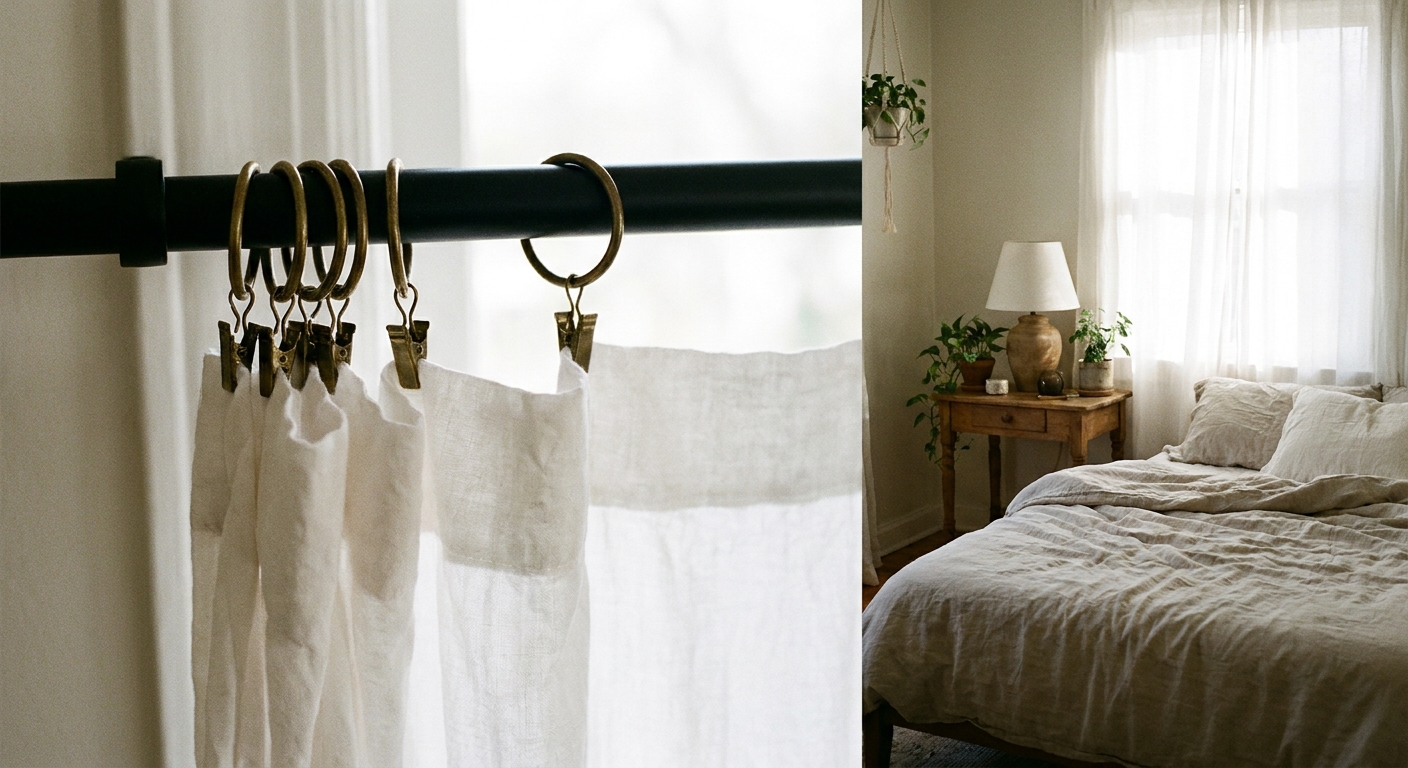
Clip rings to cheat a little length
If your curtains have a rod pocket or tabs and are suddenly too short, switching to clip rings can buy you a bit of length because you can change the hang point and avoid fabric folding over the rod.
- Test one panel first: clip it, hang it, and measure the new drop before you commit.
- Clip the rings close to the top edge for maximum length (without stressing the fabric).
- Space clips evenly, usually every 4 to 6 inches.
- If the fabric is lightweight, use more clips to prevent sagging between them.
You will not reliably regain multiple inches with clips alone, but for small losses it can be a clean fix and it often makes panels look more tailored.
Hem fixes that recover length
If you have any hem allowance at all, this is where you can get real inches back.
Let down the hem
Most ready-made curtains have a generous double-fold hem. If you can reduce that fold, you can recover length fast.
- Turn the panel inside out.
- Open the hem stitching carefully with a seam ripper.
- Press the hem flat to see how much fabric you have to work with.
- Re-hem with a smaller double fold, or even a narrow hem if you need every fraction of an inch.
Heads up: you may see the original crease line from the old hem, especially on linen. Steam and time usually soften it. In bright light, a hem shadow can linger, so test on one panel before you commit to all of them.
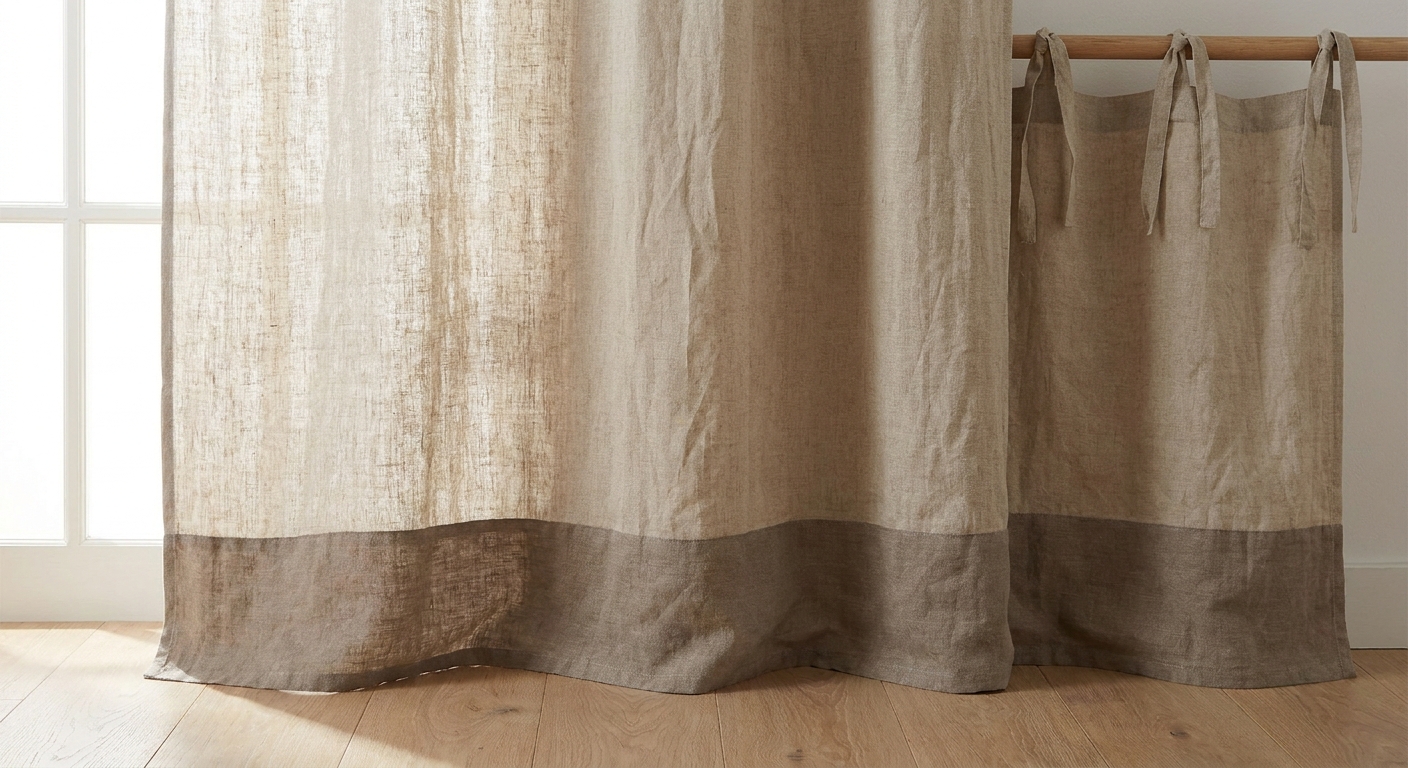
Add a hem band (my favorite it-looks-intentional fix)
If you need 2 to 6 inches and letting down the hem is not enough, add a band to the bottom. It reads like a custom designer detail, not a mistake you had to solve on a Sunday night.
- Choose a fabric with similar weight and drape. Cotton duck, linen canvas, or a wide cotton tape can work well.
- Match color for an invisible repair, or go contrasting for a tailored border.
- Sew the band to the bottom edge, then press and hem.
In a pinch, a wide iron-on hem tape can work for a band, but I prefer stitching for anything that will be washed again.
Top fixes that can recover inches
When a panel shrinks, the bottom is not your only lever. The top finish (how it is built and how it hangs on the rod) matters just as much, especially if your rod is set high and you want that long, elegant line.
Switch from grommets to rings (or tabs to rings)
Grommets and thick tabs can steal length because the fabric has to fold over the rod. Rings let the curtain hang from a higher point.
- If you have grommet curtains, you can sometimes clip rings just under the grommets to change the hang point.
- If you have tab-top panels, clipping just under the top edge often gives you a cleaner fall and a little extra length.
Expectation check: top changes are usually where you can gain the most without altering the face fabric. Still, measure after you test one panel so you know exactly what you are getting.
Convert a rod pocket to back tabs
If your curtains are rod-pocket style and now too short, converting the top can be your best real fix. A simple back-tab header can let the panel hang closer to the rod height with less fabric fold.
- Remove the rod pocket seam.
- Create a new top hem with enough stability for clips or rings.
- Add back tabs (fabric loops on the back side) so the rod sits behind the face of the curtain.
This is the kind of change that looks custom when done neatly, and it can be worth it if you love the fabric.
When stretching will not work
This is the honest part. Some materials do not bounce back in a meaningful way once heat has done its thing.
Polyester and many poly blends
Polyester does not typically shrink the way cotton and linen do. If a poly curtain got noticeably shorter, it is more often from heat damage, warping, or a lining that behaved differently. You can relax wrinkles with steam, but you generally will not regain true length reliably.
Viscose, rayon, and bamboo viscose
These can shrink and distort dramatically, especially when wet. Sometimes they can be coaxed back into shape while damp, but they can also stretch unevenly and end up longer in some areas and shorter in others. Proceed gently, and only with a controlled soak and careful reshaping.
Wool blends and felted shrinkage
If anything has a wool component and it went through heat and agitation, shrinkage can be closer to felting. That is typically permanent.
Lined, blackout, thermal, and bonded curtains
Even if the face fabric is linen or cotton, the lining can shrink differently. That mismatch can cause puckering and shorten the overall drop. Reblocking might help a little, but often you will need tailoring or a different solution.
How to tell if it is bonded or coated: if the back feels foam-like, rubbery, papery, or like two layers are fused into one, treat it as delicate. Soaking can make bonded layers bubble or separate, and aggressive steaming can soften adhesives.
If they are still too short: make it intentional
Sometimes you do everything right and the panels still hover. If replacing is not in the cards right now, styling can keep it from looking like an accident.
- Go cafe-style on purpose: if the curtains now hit above a radiator or baseboard heater, treat them as an intentional shorter length by adding a second layer like a shade or sheer behind them.
- Add a cozy layer under: a taller plant, a floor lamp, or a low bench under the window can visually anchor the area so the missing inch feels less dramatic.
- Use tiebacks strategically: a gentle tieback creates vertical lines and makes the gap less noticeable than a straight panel ending mid-air.
How to avoid the same surprise next time
Not a lecture, just what I wish someone had taped to my laundry room wall years ago.
- Skip the dryer for linen and cotton curtains whenever possible. Air dry or line dry, then steam.
- Wash cool or lukewarm, gentle cycle, mild detergent.
- Do not overcrowd the machine. Curtains need room to move or they crease hard and dry unevenly.
- If you must use the dryer, use low heat and pull them out while slightly damp, then hang immediately.
- Know what you have: blackout, thermal, and bonded linings are the ones most likely to react badly to heat and soaking. When in doubt, spot clean and steam.
If your panels have already shrunk once, they are more likely to do it again if they see high heat. Treat future washes like a spa day, not boot camp.
FAQ
Can I unshrink linen curtains after drying?
Sometimes. Linen often responds well to steaming while damp and gentle reblocking, especially if the issue is stiffness and tightening. If the shrink is severe, the fabric is pre-shrunk, or the curtains are lined or bonded, results are more limited and a hem or top adjustment is usually the better fix.
Will ironing stretch curtains back to length?
Ironing alone usually will not add meaningful length, but steam plus gentle tension can help relax tightened fibers. Avoid pulling so hard that the hem ripples.
My curtains shrank unevenly. What now?
Uneven shrinkage is common when panels twist in the wash or dry in a heap. Try re-wetting and reblocking first. If one side remains shorter, a hem adjustment is usually the cleanest way to re-square the bottom edge.
Is it worth taking curtains to a tailor?
If you love the fabric, the pattern, or the lining quality, yes. A tailor can add a coordinating band, rebuild the top finish, or adjust the lining so the face fabric hangs correctly. It is often cheaper than replacing high-quality panels.
The simplest fix I recommend first
If you want my order of operations, it is this: steam reblock first, then let down the hem, then consider clip rings or a top change. Those steps solve most my-curtains-suddenly-float situations without turning your week into a full sewing project.
And if you want permission to call it quits and pivot to a pretty hem band detail, you have it. Some of the best-looking homes I style are just a series of well-disguised little saves.