Dried Paint Splatter on an Area Rug
Gust
A little flutter. A cozier corner.
Paint splatter on a rug always looks worse the morning after, when the dots are crisp and stubborn and somehow brighter than they were yesterday. The trick is to work from the top of the pile down, keep everything controlled, and avoid the one move that makes it permanent: flooding the spot so paint and solvent wick into the backing and pad.
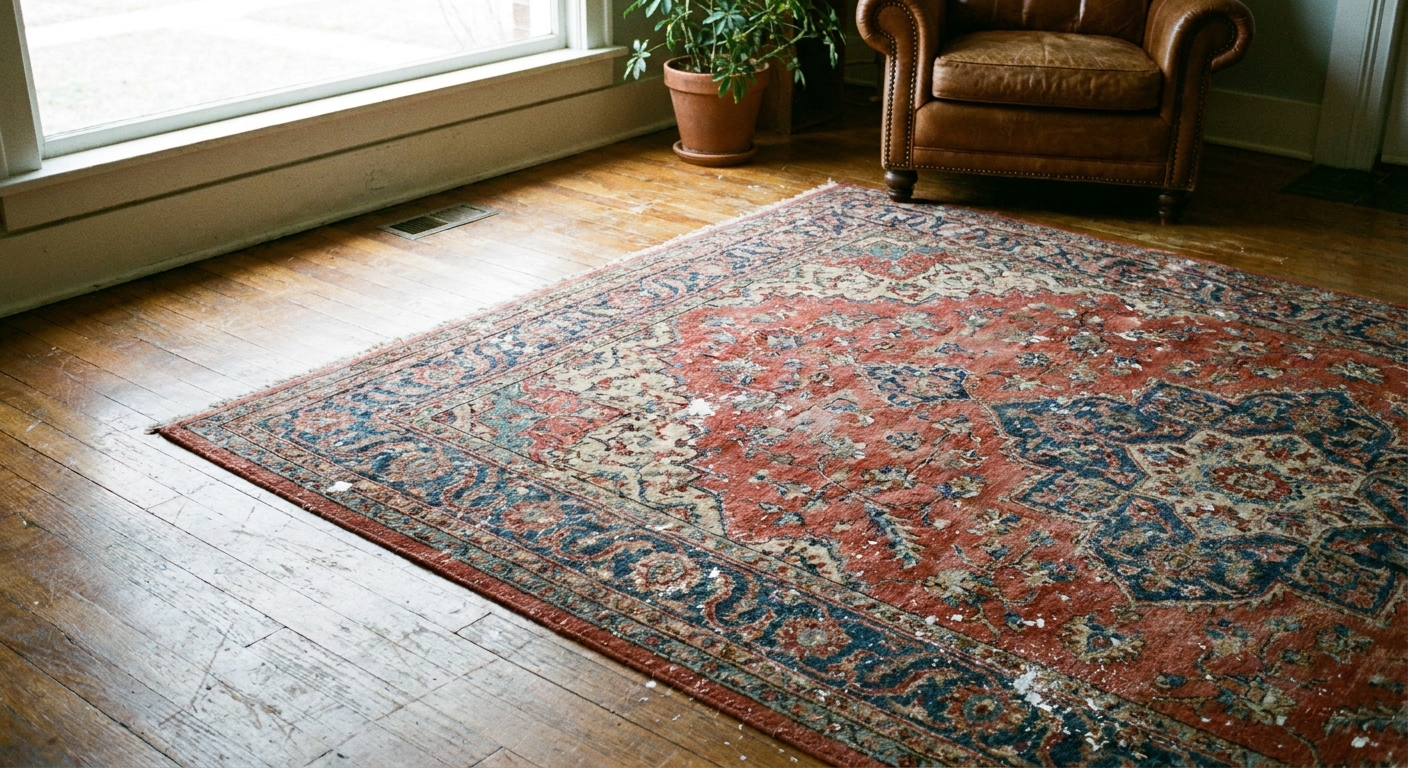
First: figure out what kind of paint it is
You do not need a lab coat. You just need one small test on an inconspicuous edge of the spot.
- Latex or acrylic (water-based): Often feels a bit rubbery. A cotton swab dampened with warm water and a drop of dish soap may soften the surface slightly.
- Oil-based or enamel: Usually harder and slicker. Water does basically nothing once dry for most traditional oils and enamels.
If you still have the paint can, check the label. If not, start with the least aggressive method first (often the water-based approach), then escalate only if you need to. “Gentle” depends on the rug, too. Some fibers and dyes dislike water as much as they dislike solvent.
Two situations, two strategies
Dried splatter usually falls into one of these categories:
- A hard dot sitting on top of the pile that can be cracked and lifted away. You can feel a little bump if you pinch the fibers around it.
- Paint that has wicked down the yarn, clinging along the sides of fibers and into the base of the pile. It looks more like discoloration hugging the strands than a raised crust.
Start by assuming you have both. Many spots do.
Supplies that keep you from making it worse
- Vacuum with hose attachment
- White cotton cloths or paper towels
- Cotton swabs
- Soft brush (an old toothbrush works)
- Old credit card or plastic spoon
- Plastic scraper (dull edge)
- Metal only if you are steady: a butter knife can work, but plastic is safer for not nicking yarns
- Isopropyl alcohol (70% or 91%) for latex paint (a reasonable first try, not a guarantee)
- Odorless mineral spirits for oil-based paint
- Mild dish soap
- A bowl of clean water
- Absorbent layer: folded towel or thick paper towels to place under the rug if possible
Ventilation note: If you are using mineral spirits, open windows and keep away from flame or heat sources.
Rag safety note: Solvent damp rags can be a fire hazard. Lay them flat to dry outdoors (away from anything flammable) and follow local disposal guidance.
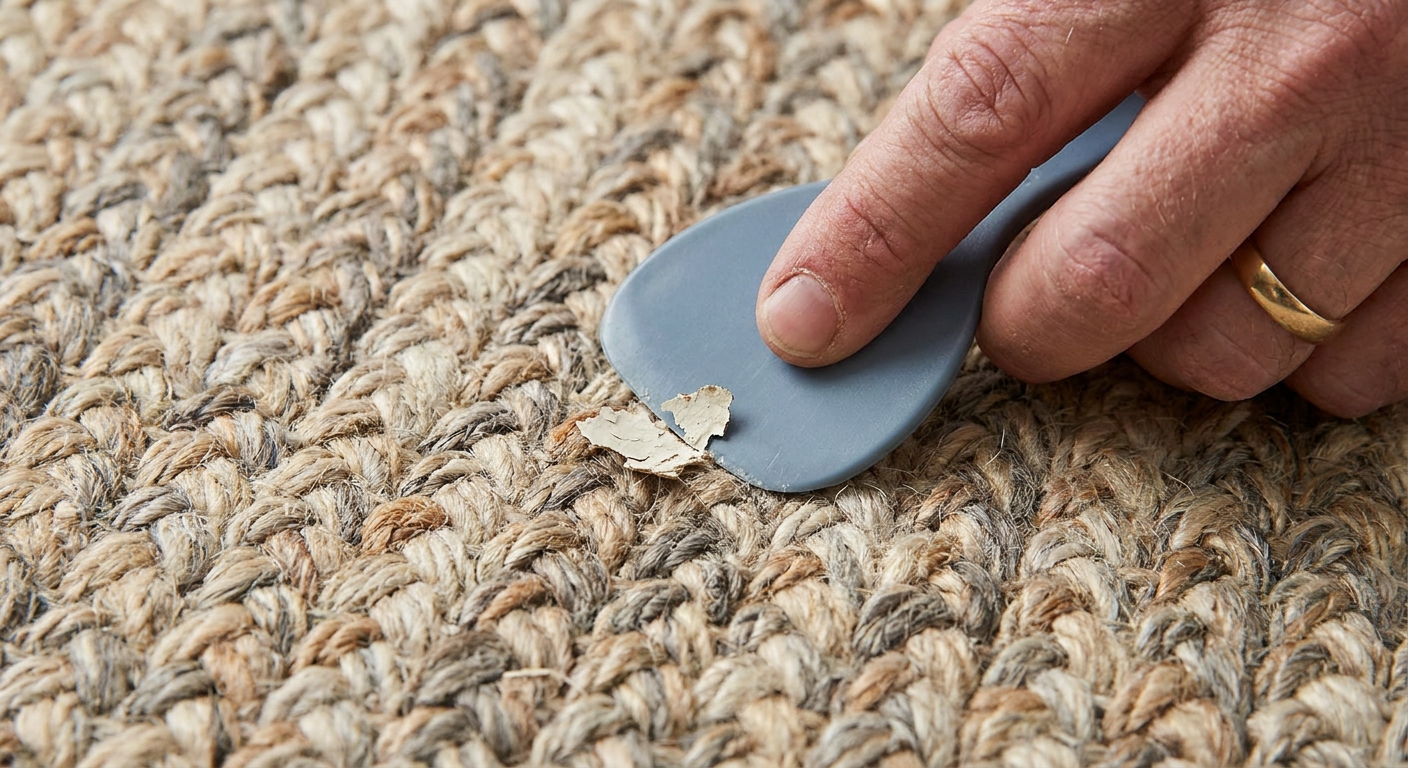
Step 1: lift the top crust
For a hard dot you can crack off
This is the satisfying one. Do it slowly.
- Vacuum first around the splatter to remove loose grit that can act like sandpaper.
- Hold the pile steady with your fingers, then use a dull plastic edge to chip at the dot from the side. Think: tiny nudges, not scraping strokes.
- As flakes break free, pick them out or vacuum with the hose held just above the area.
Do not: scrub with a brush yet. Scrubbing turns chips into dust, and dust loves to settle deeper.
If the dot is brittle but stuck
You can use a little controlled softening on the very top only.
- Dampen a cotton swab with warm water (latex) or a tiny amount of mineral spirits (oil).
- Touch the swab to the dot for 10 to 20 seconds.
- Chip again with the plastic edge.
The goal is to loosen the bond at the surface, not to soak the base.
Step 2: treat what has wicked into the yarn
Once the raised paint is gone, you may still see a faint color hugging the fibers. Now you switch to blotting and lifting, always from the outside edge inward.
Time expectation: Plan on several short passes. If you use any moisture or solvent, let the area dry fully before you judge your progress or do another round.
Latex or acrylic: alcohol, used lightly
Isopropyl alcohol can help release some dried latex or acrylic residue from fibers, but results vary by paint formulation and rug finish. Use it as a careful test, not a promise.
- Patch test first in a hidden spot of the rug for color transfer or texture change.
- Dampen a white cloth with alcohol. It should be damp, not dripping.
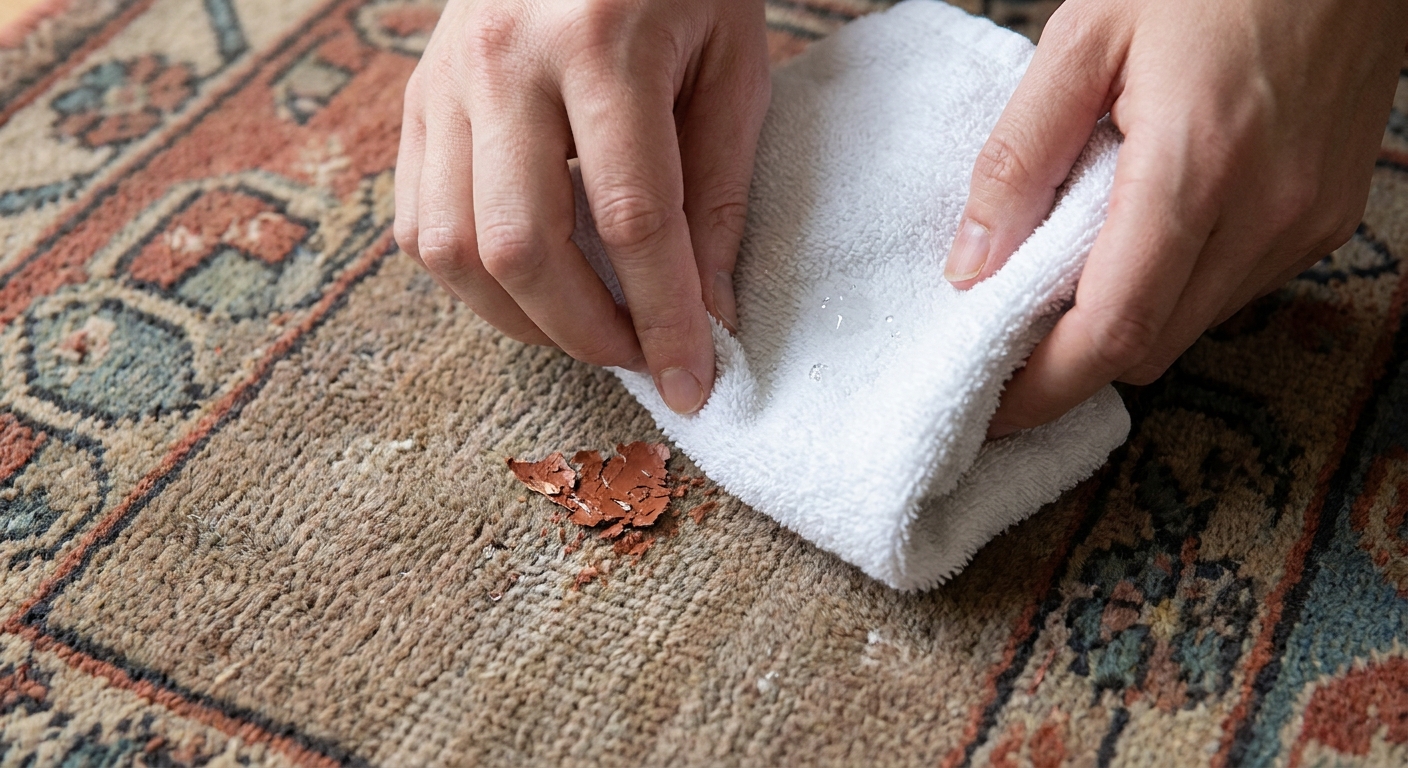
- Blot the paint from the surface of the pile. Do not rub.
- Use cotton swabs to target individual fibers, especially if the spot is small.
- When paint starts transferring, switch to a clean area of the cloth.
- Follow with a cloth dampened with plain water to remove residue, then blot dry.
Optional note: Commercial latex paint removers exist. If alcohol is not touching the residue and your rug is delicate or expensive, that is a good moment to stop and ask a pro what they use on your fiber.
Pile-direction tip: Blot along the direction the fibers naturally lie. If the rug looks shaded when you brush it one way and lighter the other, that is your pile direction.
Oil-based paint: mineral spirits, minimal moisture
For oil paint, water will not do the heavy lifting. Mineral spirits can, but it is easy to overdo it.
- Patch test in an inconspicuous corner. Some rug dyes and finishes do not love solvents.
- Put an absorbent towel under the rug if you can access the underside. This helps catch migration before it reaches padding.
- Dampen a cloth with a small amount of mineral spirits.
- Blot gently, lifting paint into the cloth.
- Switch to clean cloth sections often.
- Finish with a tiny amount of mild dish soap diluted in water on a cloth to pick up solvent residue, then blot with plain water and dry towels.
Important: You are cleaning a rug, not marinating it. Solvent that sinks below the rug can dissolve and carry paint deeper.
Backing and foundation risks
Sometimes the rug fiber is not the fragile part. Sometimes it is what is underneath.
- Tufted rugs with latex backing: Too much water or solvent can soften adhesives or leave a lingering odor trapped in the backing.
- Jute or cotton foundation (common in many rugs): Over-wetting can lead to browning or wicking that resurfaces later as a ring.
- Rugs on a pad: If paint, water, or solvent reaches the pad, it can re-wick back up after you think you are done.
This is why the boring rule wins: small amounts, blotting, and long pauses to dry.
Fiber cautions
Wool rugs
- Avoid high alkalinity cleaners and heavy soaking. Wool can felt or distort when overworked wet.
- Keep water and solvent use low and controlled, and dry thoroughly.
- If you see dye transfer onto your cloth during testing, stop and consider a pro cleaner. Continuing can spread color.
Viscose (often sold as bamboo silk or art silk)
- Viscose can develop water marks, texture change, or sheen loss from moisture and friction.
- Do not scrub. Do not over-wet. Keep blotting feather-light.
- If the rug has a silky shine and the pile looks easily brushed into different directions, assume it is delicate and treat it like viscose until proven otherwise.
If your rug is viscose and the paint is significant or has soaked in, the safest choice is often professional spot treatment. This is one of those fibers that punishes enthusiasm.
Multiple dots and big splatters
If you have a whole constellation of specks, resist the urge to batch-soak.
- Work one dot at a time, or a small cluster, so you stay precise.
- Do the chipping step for all dots first, vacuum, then move to blotting. This keeps loosened flakes from turning into paste.
- If colors are mixed, use separate cloth areas so you do not smear pigment from one spot into another.
Stop point: do not soak through
Here is the moment to be impressively boring. If you notice any of the following, pause:
- The spot feels damp beyond the splatter area.
- You can smell solvent strongly in the room even though you used a small amount.
- The underside of the rug feels cool or damp.
- You see a ring forming as moisture spreads outward.
Once the pad is wet, it can re-wick whatever you loosened right back into the fibers later, like a delayed surprise you did not request.
At this stop point, blot with dry towels, place a fan nearby, and let the rug dry completely before doing any more treatment.
What not to do
- Do not use a lot of water to rinse it out. That drives paint into the base and padding.
- Do not scrub in circles. You will rough up the pile and spread softened paint.
- Do not use a heat gun or very hot iron on unknown fibers. Heat can set residue or damage synthetics and finishes.
- Do not use acetone unless you are absolutely sure the fiber and dyes can handle it. It can melt some synthetics and strip color.
- Do not reach for chlorine bleach. It can remove dye, weaken fibers, and create a new problem that looks cleaner but is not.
If a shadow remains
Sometimes what you are seeing is not paint anymore. It is a slightly flattened pile, a bit of residue, or a small color loss where pigment grabbed. Try this after the rug is fully dry:
- Gently lift the pile with a spoon edge or your fingers, brushing in the natural direction.
- Vacuum lightly to reset the fibers.
- If residue feels tacky, do one more mild pass: a cloth barely dampened with diluted dish soap, then a cloth barely dampened with water, then dry towels.
If the spot is now clean but lighter than the surrounding area, that may be dye loss or a sheen change. At-home methods cannot always reverse that.
Quick FAQ
Can I peel dried paint off a rug?
If it is sitting on top as a raised dot, yes, often. Chip and lift gently, then treat remaining residue with controlled blotting. Peeling a flexible skin of paint can tug fibers, so go slow.
What if the rug is looped?
Avoid scraping that can catch and pull loops. Use careful chipping with a plastic edge and lots of blotting rather than digging.
How long should I wait between attempts?
Let the area dry fully if you have used any moisture or solvent. This helps you see what is truly left and reduces wicking.
When is it time to call a professional?
When the rug is viscose, when dye transfers during a patch test, when paint soaked through, when the rug is tufted with a touchy backing, or when the affected area is large enough that controlled spot work is turning into full-rug wet cleaning.
A calm ending
Rug pile is a little forest. The paint is a tiny intruder clinging to the treetops and sometimes sliding down the trunks. Your job is not to flood the forest. Your job is to lift, blot, and stop before the roots get wet.
If you want, tell me what kind of rug you have (wool, synthetic, bamboo silk, unknown) and whether the paint is latex or oil. I will help you choose the gentlest next move.