Do Quartz Countertops Need Sealing?
Gust
A little flutter. A cozier corner.
If you are standing over a shiny quartz counter with a bottle of sealer in your hand and a question in your head, let me waft in with the simple truth.
So, do quartz countertops need sealing?
No, engineered quartz countertops typically do not need sealing. Quartz slabs are made from ground quartz (a very hard mineral) bound together with resins and pigments. That resin binder creates a surface that is highly non-porous (very low-porosity) compared with most natural stone, which is why quartz is marketed as low maintenance.
In everyday kitchen life, that low-porosity structure helps quartz resist absorption from common culprits like coffee, wine, oil, and juice, as long as you wipe spills promptly.
Why quartz is different
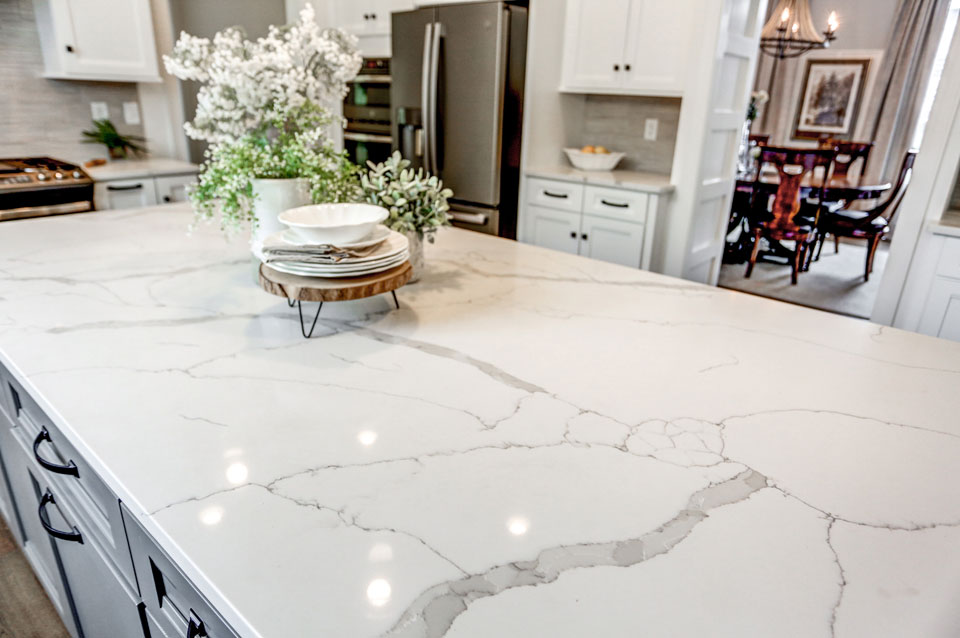
Natural stones form in the earth. They often contain tiny fissures and pores that can soak up liquids and discolor over time. Quartz countertops, on the other hand, are manufactured. The resin binder fills gaps between particles, so there is far less open space for liquids to migrate into.
That is the whole point of quartz for many homes: it aims to give you a stone-like look without the recurring sealing schedule.
What “non-porous” means
- Less absorption: Most spills stay on the surface rather than soaking in.
- Easier cleaning: A gentle cleaner and soft cloth are usually enough.
- Not invincible: Quartz can still stain from residue left too long, get dulled by harsh chemicals, or be damaged by heat.
What happens if you seal quartz?
Sealers are designed to soak into porous material and cure below the surface. On engineered quartz, there is generally very little for a penetrating sealer to meaningfully soak into. In practice, that means you usually do not get extra protection, and you may end up with leftover product sitting on top.
Potential downsides
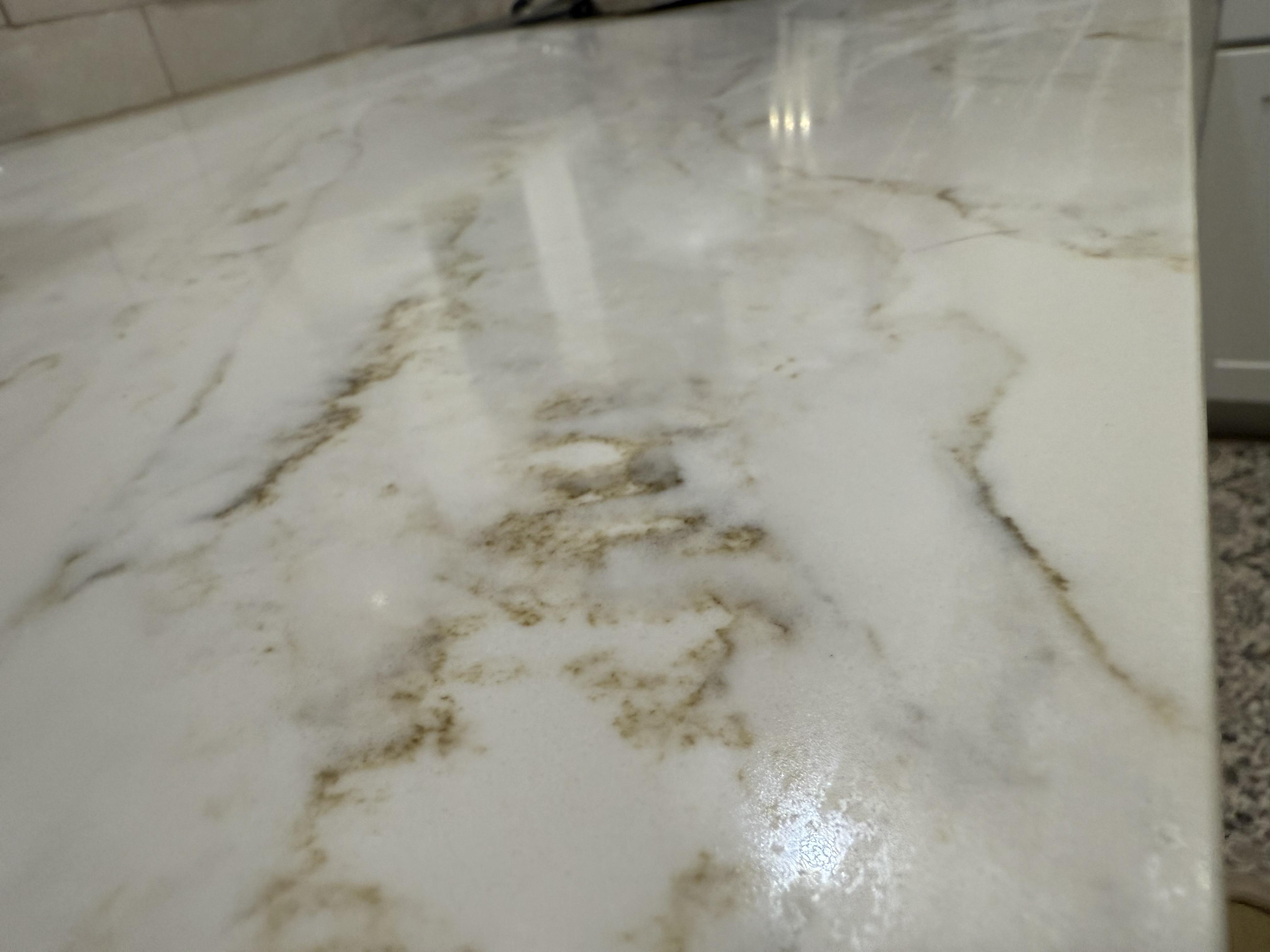
- Hazy film or streaks: Sealer can dry on the surface and leave a cloudy look that is difficult to buff out.
- Uneven sheen: You may see patchiness, shiny spots, or dull areas, particularly under certain lighting.
- Attracting grime: Some residues can make the surface feel tacky and catch fingerprints and dust.
- Warranty issues: Using unapproved products can, in some cases, complicate warranty claims if a manufacturer determines the finish was altered.
If your quartz already has a stubborn haze after a “helpful” sealing, stop adding more products. The fix is usually about removing residue safely rather than layering on another coating.
Gentle first steps for haze
- Start with warm water and a few drops of dish soap, then rinse and dry with a clean microfiber cloth.
- If you suspect greasy buildup, check your quartz brand’s care guide for what they allow for degreasing. Some approve small amounts of isopropyl alcohol, others prefer a specific quartz cleaner.
- Avoid abrasive pads, scouring powders, and aggressive “polishing” compounds unless your manufacturer explicitly recommends them.
Sealing vs natural stone
This is where the confusion usually starts. Many installers work with multiple countertop materials, and sealing is routine for a lot of natural stone. Quartz often gets swept into the same mental bucket, even though it behaves differently.
Granite
Often needs sealing, depending on the slab. Some granites are relatively dense, others are more absorbent. A sealer helps reduce staining by slowing absorption into pores.
Marble
Typically benefits from sealing, but sealing is not a force field. Marble is prone to etching (a chemical reaction that dulls the surface) from acidic foods like lemon juice and vinegar. Sealer can help with stains, but it does not prevent etching.
Travertine
Usually needs sealing. Travertine is a form of limestone with naturally occurring holes and voids. It is far more porous and often requires sealing, sometimes even filling, depending on finish and use.
Quartz sits apart from these stones because it is engineered to be very low-porosity from the start.
If someone says to seal anyway
Sometimes you will hear, “We seal everything,” or “It helps protect it.” Before you say yes, it is worth pausing. With quartz, the most important thing is to follow the specific brand’s care and warranty guidance for your exact product line.
How to handle it
- Ask what product they plan to use. Get the exact sealer name and whether it is penetrating or topical.
- Check your quartz brand care guide. Many brands explicitly say sealing is not required and may discourage waxes, coatings, or sealers.
- Ask for the reason in writing. Is there a special circumstance, like a honed finish, a unique fabrication step, or a particular installation environment?
- Confirm warranty impact. Ask: “Does applying this product affect the manufacturer warranty?” If they cannot answer clearly, hold off.
- Request a test spot. If you decide to proceed, insist on a small, hidden test area first (like an overhang underside) to check for streaking or haze.
If the advice is vague, the product is unspecified, or you are being rushed, the safest move for most engineered quartz is politely declining sealing and sticking to manufacturer-approved cleaning and care.
Make sure it is quartz
One quiet twist in this whole conversation is mislabeling. People say “quartz” when they mean quartzite, and showrooms sometimes shorthand materials in a way that sticks in your brain but not on your invoice.
If you are not 100 percent sure what you have, check your paperwork. Look for the brand name (Caesarstone, Silestone, Cambria, MSI, and so on), a color name, and the words “engineered quartz.” If it says quartzite, granite, marble, or limestone, you are in sealing territory far more often than not.
When it looks like it needs sealing
Quartz sometimes develops issues that resemble what people associate with unsealed stone. The fix is usually not sealer. It is better cleaning habits, gentler products, or removing residue.
Common mix-ups
- Water marks and streaks: Often just mineral residue from hard water or cleaner buildup.
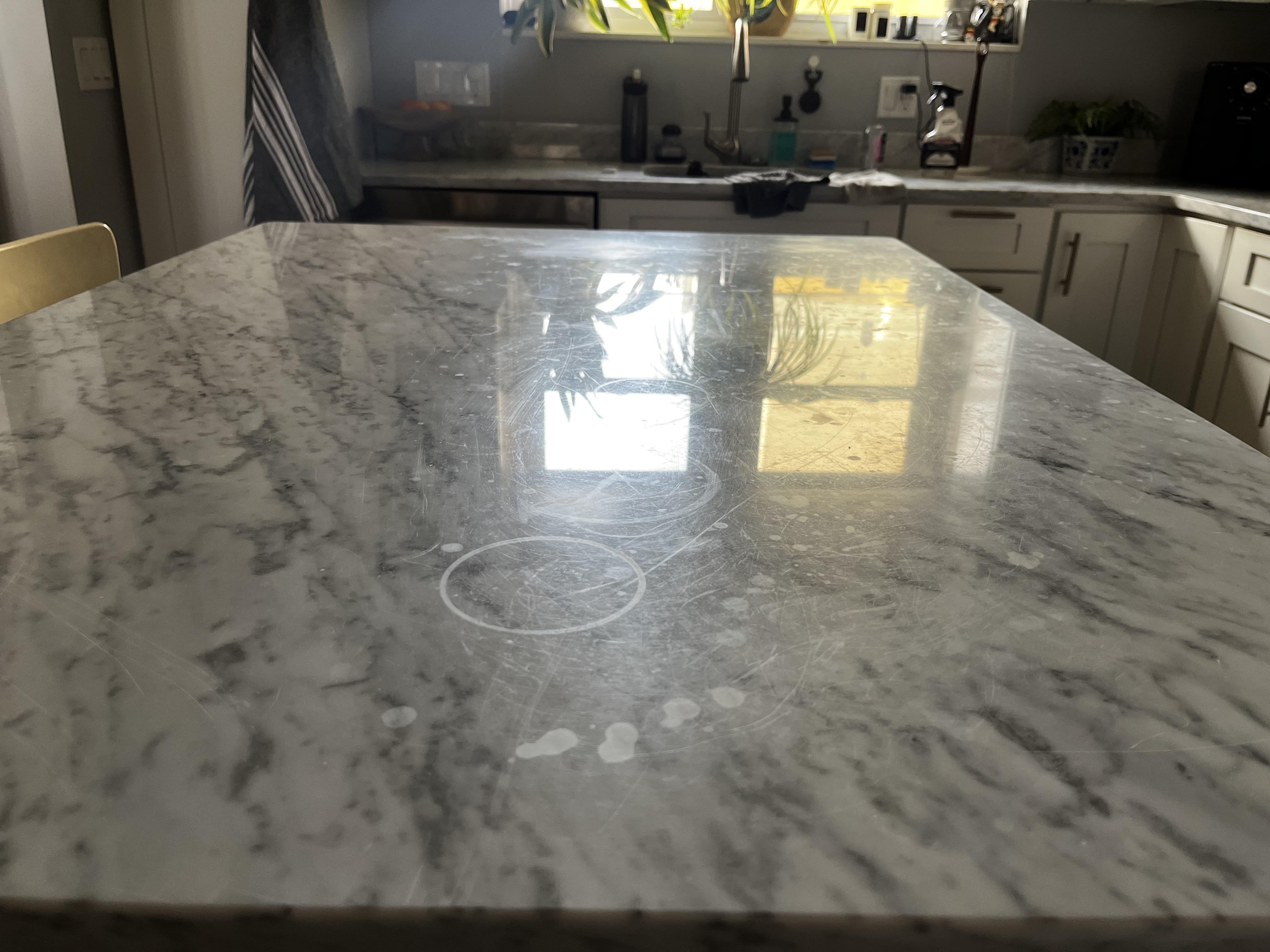
- Dull patches: Commonly caused by abrasive cleaners, scouring pads, or harsh degreasers that leave a film or micro-scratches.
- Staining from heavy dyes: Not because the counter is “unsealed,” but because pigment or oil residue was left sitting, especially near seams, edges, or textured finishes.
- Honed or matte finishes: These can show fingerprints and smudges more easily, which makes people feel like protection is missing.
What to do instead
If you want the practical routine that actually helps, keep it simple and gentle.
- Clean daily with mild soap and water or a quartz-safe cleaner.
- Wipe spills sooner rather than later, especially oil, wine, coffee, turmeric, and makeup.
- Avoid harsh chemicals like paint remover, oven cleaner, strong alkaline degreasers, and high-concentration bleach.
- Skip abrasives: no scouring powder, rough scrub pads, or aggressive polishing compounds unless the manufacturer explicitly approves them.
- Use trivets and cutting boards: quartz is durable, but the resin can suffer thermal damage or discoloration from hot pans, and the surface can scratch.
And just to set expectations: sealing does not prevent chips, scratches, or cracks. That is a different category of problem with a different category of solution.
Quick FAQ
Can you waterproof quartz with sealer?
Quartz is already highly resistant to water absorption due to its engineered, very low-porosity structure. Adding sealer typically does not improve performance and can leave residue or change the sheen.
Do quartz countertops ever come pre-sealed?
Quartz does not rely on a sacrificial sealer layer the way many natural stones do. You may hear “sealed” used casually, but most quartz care guidance focuses on approved cleaning, not re-sealing schedules.
What if I accidentally sealed my quartz?
If it looks fine, do not reapply. If it looks hazy or streaky, stop using additional coatings and consider contacting the quartz manufacturer or your installer for approved residue removal steps. Avoid scraping or abrasive pads that can dull the finish.
Does quartzite need sealing?
Quartzite is a natural stone, despite the similar name. Many quartzite slabs are porous enough to benefit from sealing. Quartzite care is often closer to granite than to engineered quartz, but it is still slab-dependent.
The breezy bottom line
Engineered quartz does not usually need sealing, and sealing it can create more problems than protection. If someone insists on sealing anyway, slow the conversation down, get the product details, and match everything to your specific brand’s care instructions and warranty terms.
Your quartz wants a soft cloth, a gentle cleaner, and a little common-sense spill timing. Not a mystery coating.