Granite Countertops: Sealing, Stains, and Daily Cleaning

Clara Townsend
Clara Townsend is an interior stylist, vintage furniture enthusiast, and the creative voice behind Velvet Abode. With over a decade of experience transforming both cramped city apartments and sprawling fixer-uppers, she believes that a beautiful home is built on personal stories rather than massive budgets. When she isn't hunting for the perfect brass sconce at a local flea market, she can usually be found rearranging her living room for the third time this month.
Granite is one of those “quietly tough” surfaces. It can take the heat of a busy kitchen, it hides crumbs like a champ, and it looks gorgeous under warm evening light. But granite is not bulletproof. It is a natural stone with pores, and a few wrong habits can leave you chasing mysterious dark spots or a dull patch that will not buff out.
This is your grounded, real-life guide to granite: what sealing actually does, why some spills need a blot-not-wipe response, how to tell a stain from damage, and the daily-clean routine that keeps your counters looking like the day you fell in love with the slab.
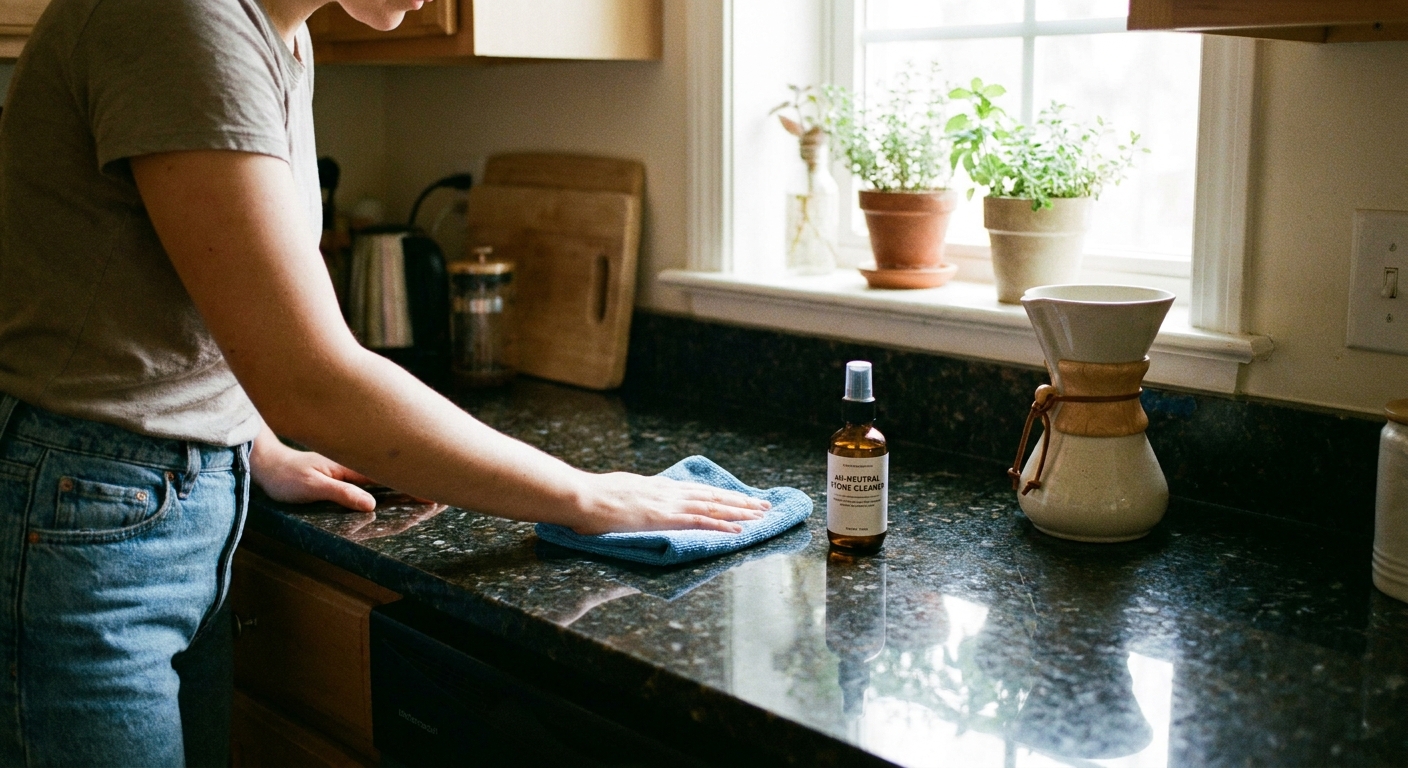
Granite 101: staining vs etching
Granite is an igneous stone made of interlocking minerals. That mineral structure is why it is generally harder and less reactive than marble. Most true granites do not etch the way marble does, because they are less calcite-heavy and less sensitive to acids.
Small caveat that saves big headaches: in the real world, “granite” can be used as a catch-all at stone yards. Some granite-like stones (or slabs sold under the granite umbrella) can contain acid-sensitive minerals and may etch. If you are not sure what you have, ask your fabricator or do a cautious spot test in an inconspicuous area.
What granite can do is absorb. Even polished granite has microscopic pores and natural fissures. If those pores are not well-sealed, oils, dyes, and sometimes water can darken the stone.
Sealing does not “coat” granite
A granite sealer is usually a penetrating product. It soaks into the pore structure and reduces absorption. It does not make your countertop invincible, and it does not turn granite into plastic. Think of it like a rain jacket for your stone, not shrink wrap.
How often to seal granite
Sealing schedules are tricky because granite varies wildly by quarry, finish, and even slab. A dense black granite may barely need help, while a lighter, more porous granite can drink up spills.
The simple water test
- Clean and dry a small area of your counter.
- Place a few drops of water on the surface and start a timer.
- If the water stays beaded and the stone does not darken for about 10 minutes, your seal is likely doing its job.
- If the stone darkens within about 5 to 10 minutes, plan to reseal.
A realistic sealing rhythm
- Most busy kitchens: every 1 to 3 years
- Very light or porous granite: about yearly, sometimes more often
- Dense, dark granite: every 3 to 5 years, or as needed after testing
If your installer told you “seal every six months,” do not panic. Test first. What people call “over-sealing” is usually too much product, the wrong product, or not buffing off the excess, which can leave a hazy or streaky film.
Sealing basics (keep it simple)
- Use a penetrating sealer made for natural stone.
- Work on a thoroughly clean, dry surface.
- Apply evenly, allow it to dwell as directed, then wipe off all excess.
- Do not let sealer dry on the surface unless the label explicitly says it is a leave-on product.
- Keep the counter dry and gentle for the recommended cure time.
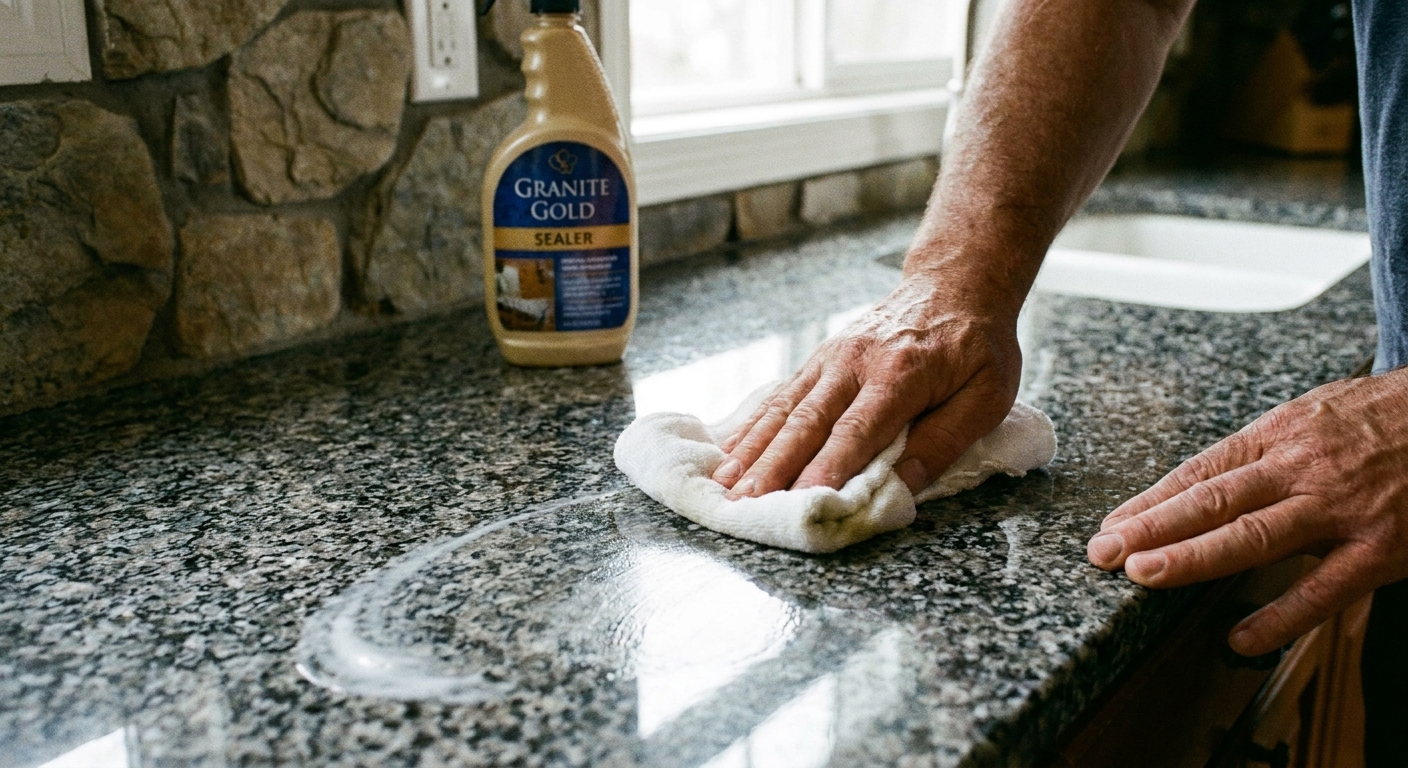
Acidic spills: blot, do not wipe
Here is the habit that saves countertops: blot first, then clean.
When you wipe a spill like red wine, lemon juice, vinegar, or tomato sauce, you can push liquid across the stone and into seams, micro-pits, and the edge around your sink. Blotting limits spread and keeps pigments and acids from traveling.
What to do in the moment
- Blot with paper towel or a clean cloth. Press down, lift up. Do not scrub.
- Rinse the area with water (or wipe with a clean damp cloth).
- Clean with a pH-neutral stone cleaner or a tiny amount of mild dish soap in warm water.
- Dry with a microfiber cloth, especially around sink edges.
Will acid “etch” granite?
Most polished granite will not show classic etching from everyday kitchen acids the way marble does. But acids can still:
- Dull the shine if your stone has more acid-sensitive minerals, or if there is topical buildup or a coating that reacts
- Wear down sealer performance over time, making the area more stain-prone later
- Leave residue that looks like a cloudy spot (often soap film or mineral deposits)
If you see a dull patch after an acidic spill, do not assume you “etched” the granite. It may be residue, a worn sealer, or a change in sheen that needs polishing rather than stain removal.
Stain or damage: tell the difference
This is the moment where most homeowners either overreact or waste days scrubbing the wrong thing. Let’s make it simple.
Signs it is likely a stain
- The spot is darker than the surrounding stone
- The shape looks like a splash, ring, drip, or “shadow”
- It changes slightly as it dries (some water marks lighten over 24 to 48 hours)
Signs it is likely surface damage
- The area looks lighter, hazy, or dull instead of darker
- You can see fine scratches in raking light
- The spot looks worse from certain angles, like the shine is interrupted
If it is darker, think stain. If it is dull or cloudy, think finish or residue.
Poultices: the stain tool
A poultice is basically a controlled way to pull a stain back out of the stone. It is not glamorous, but it is wonderfully effective when you match the method to the stain.
Common granite stains and what usually causes them
- Dark oily spot: cooking oil, butter, lotion, greasy takeout containers
- Pink or reddish shadow: wine, berries, juice, some spices
- Brownish ring: coffee, tea
- Rusty orange mark: cast iron pans, metal cans, ferrous minerals in the stone, or metal left on the surface (hard water can contribute if there is iron present)
How to do a basic poultice (step by step)
1) Clean first. Use warm water and a pH-neutral stone cleaner. Dry fully.
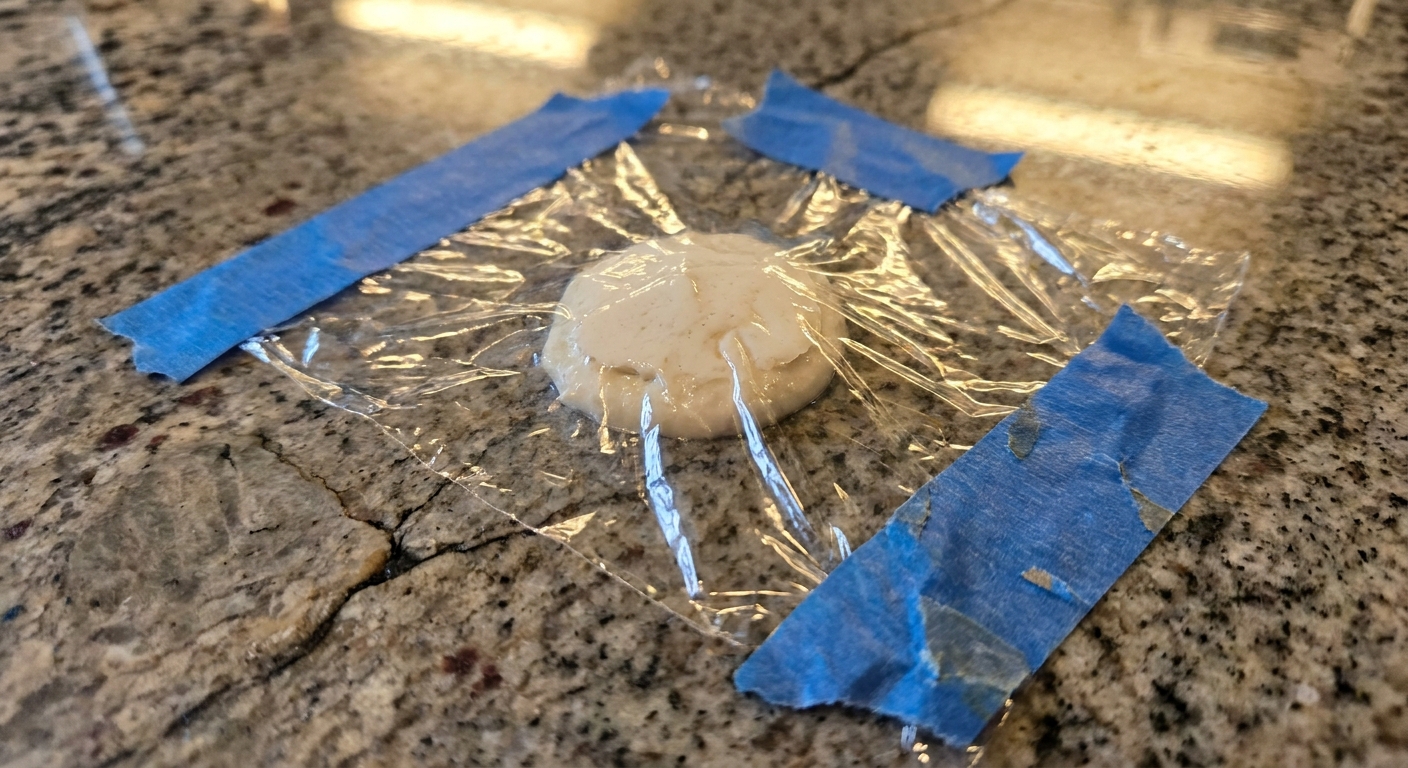
2) Mix your poultice. Many people use a stone-safe poultice powder. In a pinch, an absorbent white material like baking soda can work for some stains. The goal is a thick paste, like peanut butter.
Quick safety note: avoid colored powders and dyed paper towels. Stick with white, non-dye materials so you do not accidentally add pigment. If you are using any new product, test it in a low-visibility spot first.
3) Apply. Spread about 1/4 inch thick over the stain and slightly beyond it.
4) Cover. Use plastic wrap taped at the edges to slow drying. Poke a few tiny holes so it can breathe.
5) Wait. Leave 24 to 48 hours, or per product directions.
6) Remove and rinse. Scrape gently, wipe with clean water, then dry.
7) Let it dry, then reassess. Give the area time to fully dry (often a full day). Then do the water test again. If it darkens quickly, reseal once the stone is completely dry.
8) Repeat if needed. Deep stains sometimes take 2 to 3 rounds.
Daily cleaning that stays streak-free
Granite loves a simple routine. Most “my granite looks cloudy” problems come from product buildup, not the stone itself.
Your daily go-to
- Dry debris first: a quick pass with a dry microfiber cloth keeps crumbs from scratching.
- Wipe with: warm water plus a small drop of mild dish soap, or a pH-neutral stone cleaner.
- Rinse: a clean damp cloth if you used soap.
- Dry: buff with microfiber to prevent water spots and streaks.
What “pH-safe” really means
Look for cleaners labeled pH-neutral or specifically formulated for natural stone. Avoid acidic cleaners (like vinegar solutions) and avoid highly alkaline degreasers unless a stone professional has told you it is safe for your specific surface.
Skip these on granite (especially daily)
- Vinegar or lemon-based sprays
- Bleach used routinely or full strength
- Ammonia-heavy glass cleaners
- Abrasive powders and scrub pads
- “Shine” sprays that leave a waxy film (they can build up and look cloudy)
Heat and cutting basics
Granite is heat resistant, but it is not immune to thermal shock. Rapid temperature changes can stress stone, and the riskiest zones are often seams, edges, and any resin-filled fissures.
- Use trivets and hot pads for pans, slow cookers, and air fryers.
- Avoid setting hot cookware directly on seams or near sink cutouts.
- Use cutting boards. Granite can dull knives, and tiny grit under food can cause micro-scratching over time.
Disinfecting granite safely
Cleaning and disinfecting are different jobs. You do not need a disinfectant for everyday crumbs and coffee drips. Save it for raw meat spills, illness in the home, or when you want that extra peace of mind.
Safer ways to disinfect
- Use a stone-safe disinfectant labeled for natural stone and follow the dwell time exactly.
- Rinse and dry afterward so the product does not sit on the surface.
If you reach for a stronger disinfectant occasionally, keep it occasional. Frequent harsh chemicals can shorten the life of your sealer and leave the finish looking tired over time.
Quick fixes for common granite issues
My granite looks cloudy or streaky
- Often caused by soap residue, hard water minerals, or cleaner buildup.
- Try: wipe with warm water, then buff dry with microfiber. If it persists, use a stone-safe cleaner designed to remove buildup.
I have a dark ring near the sink
- Often water that has absorbed into worn areas, moisture trapped near seams, or water lingering around the sink edge.
- It can also be an undermount sink issue, failing caulk, or moisture wicking from the substrate below. If the cabinet area smells damp or the spot never lightens, investigate underneath.
- Try: keep it dry and give it 24 to 48 hours. If it lightens, reseal after it is fully dry and after confirming with a water test.
My counter darkens when wet, then lightens
- That is a classic sign your granite is more porous and would benefit from sealing.
DIY vs pro: when to stop
I love a confident DIY moment, but I love your countertops more.
You can usually DIY if:
- You are dealing with a fresh spill or a light stain
- The stone is intact and the issue is mostly absorption
- You are using a granite-safe poultice and patient repetition
- Your problem is streaks or haze from residue
Call a pro if:
- The spot is light and dull and will not clean off (finish restoration may be needed)
- You see chips, cracks, or failing seams near the sink
- You suspect rust coming from inside the stone or from metal underlayment
- The stain is spreading, returning, or covers a large area
- You are unsure what previous products were used (some coatings need professional removal)
Granite pros can deep-clean, hone, or polish to even out sheen in a way that is very hard to replicate at home. Think of it like tailoring: sometimes a small expert adjustment makes the whole piece look expensive again.