Dishes Still Greasy After a Dishwasher Cycle

Clara Townsend
There are few household betrayals more annoying than opening the dishwasher and pulling out a plate that feels… slick. Not “needs a quick rinse” slick. More like “did this just get basted in olive oil?” slick.
When dishes come out greasy, it usually comes down to one of three things: the water never got hot enough to melt and carry away fats, the spray could not reach what it needed to reach, or the detergent could not do its job (because of age, dose, or a dispenser that never opened). Let’s walk through it in a calm, practical order so you can pinpoint the culprit without randomly buying a dozen products.
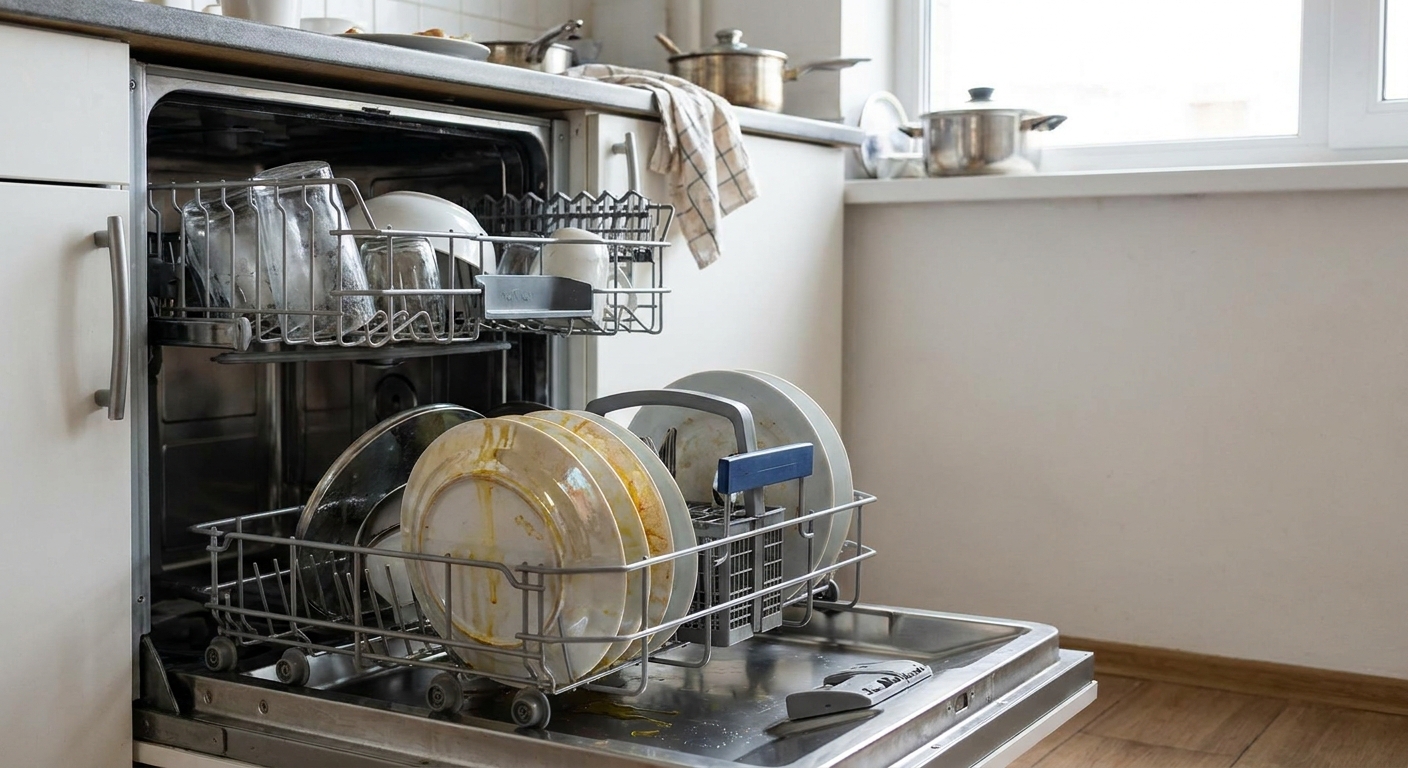
First, make sure it is actually grease
“Film” can be grease, but it can also be mineral residue. The fix is different, so do this quick check:
- Grease film: feels slippery or waxy, smears if you rub it, often has a faint food or detergent smell.
- Hard water film: looks cloudy or spotty, feels rough or chalky, doesn’t smear like oil.
If you are dealing with cloudiness and spots, you may have hard water. This article is for the slick, oily finish. (If you have both, it is common in rentals with older machines and hard water.)
Fast triage: the 10-minute checklist
If you want the biggest wins first, do these before you touch anything complicated:
- Run the hot water at the sink closest to the dishwasher until it is fully hot, then start the cycle.
- Skip heavy pre-rinsing. Scrape off solids, yes. But heavy pre-rinsing can reduce cleaning performance on modern machines, especially with enzyme detergents and soil-sensing cycles.
- Switch to a heavy cycle for one load, and turn on heated dry if you have it. This is not forever, just for diagnosis.
- Do not block the detergent door with a cutting board, sheet pan, or tall plate.
- Use rinse aid. It is not a degreaser by itself, but it helps water sheet off (and helps prevent residue from redepositing), especially on plastics.
If one of those fixes solves it immediately, amazing. If not, keep going.
Blocked spray: when water cannot reach
Grease is stubborn, but it is also predictable: it leaves when hot water and detergent actually hit it. If the spray arms are blocked or the load is packed in a way that creates dead zones, you will get a greasy film, especially on the top rack and on the inside faces of bowls.
1) Check the spray arms for clogs
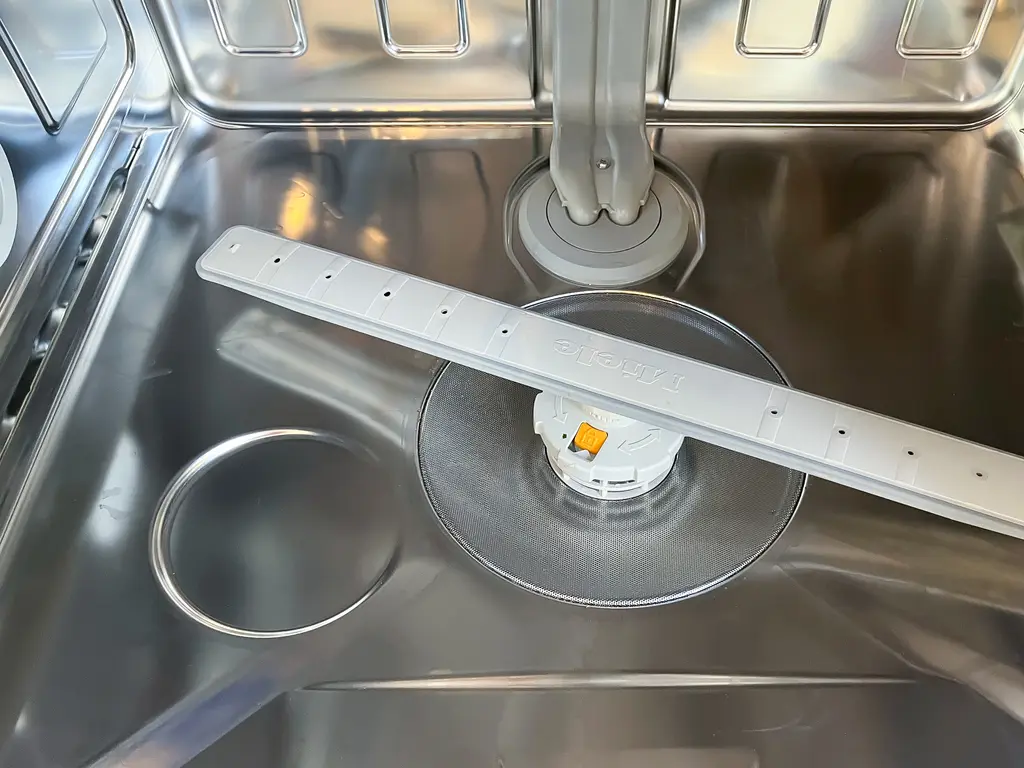
Open the dishwasher and spin the spray arms by hand. They should rotate freely. Then look closely at the tiny spray holes.
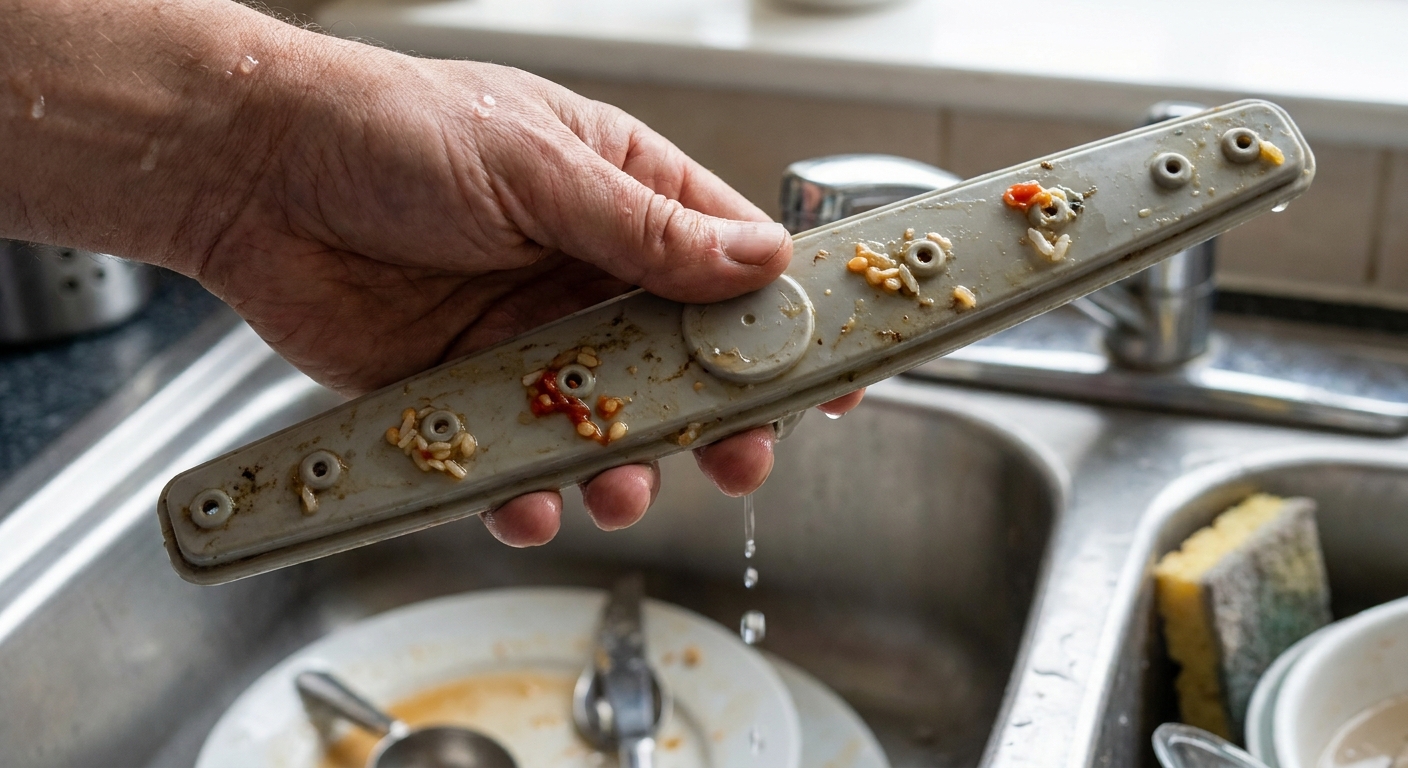
- If you see rice grains, seeds, lemon pulp, or bits of paper label, those holes are not spraying correctly.
- If one arm feels stiff or catches, it may be bumping dishes during the cycle.
Quick clean: Pop the spray arm off if your model allows it (many lift or unscrew). Rinse it under the tap. Use a toothpick or a wooden skewer to gently clear holes. For greasy buildup, soak the arm in warm water with a squirt of dish soap, then rinse.
2) Stop tall item shadowing
This is the sneaky one in small dishwashers and rentals with tight racks. One tall pan or cutting board can block a whole quadrant of spray.
- Keep sheet pans and boards at the sides and angled, not flat across the front.
- Do not let utensils or spatulas poke through and stop the spray arm from spinning.
- Place greasy items (like sauté pans) facing down toward the lower spray arm.
3) Clean the filter area
I’m not going to reroute you into a standing-water guide, but a dirty filter absolutely contributes to greasy redepositing. If your dishwasher has a removable filter at the bottom, take it out and wash it in hot, soapy water. Wipe the surrounding sump area with a paper towel.
Tip: If you pull out the filter and it smells like old fryer oil or feels slimy, that is your sign the machine has been washing with yesterday’s soup.
Low water heat: grease that never melts
Grease needs heat. Detergent performs best with heat. If your dishwasher is running lukewarm, you will often see a slick film and sometimes a faint detergent odor that clings because it never fully dissolves and rinses away.
What hot enough looks like
Many manufacturers recommend incoming tap water around 120°F (49°C). Some dishwashers heat water internally, but they can still struggle if the starting water is cold.
How to tell if low heat is the issue
- The cycle finishes and dishes are barely warm.
- Pods are partially dissolved or leave a gummy residue.
- Grease is worst on plastics and silicone (they cling to oils).
Rental-friendly fixes
- Run the kitchen hot tap for 30 to 60 seconds before starting the dishwasher.
- Avoid eco mode while troubleshooting. Eco often uses cooler water and less of it.
- Use the dishwasher’s Hi-Temp Wash or Sani option if available.
If your building’s hot water is inconsistent (hello, old boilers): try running the dishwasher at a time when showers and laundry are not competing for hot water. Not glamorous, but it works.
If you control your water heater setting: check that it is set appropriately. Be cautious, because higher settings increase scald risk. If you are not sure, stick to the dishwasher-side fixes above.
Detergent problems: when the cleaner cannot clean
In styling work, I talk about lighting revealing everything. Detergent is like that for dishwashers: if it is off, the whole scene falls apart.
1) The detergent door is not opening
If the dispenser door stays shut or only cracks open, detergent never hits the wash at the right moment.
- Check for a large plate or utensil blocking it.
- Look for sticky buildup around the latch. Wipe it with warm water and a little dish soap, then dry.
2) Pods in the wrong spot
If you toss a pod into the bottom of the tub instead of the dispenser, it can dissolve too early on cycles with a pre-rinse or pre-wash that drains before the main wash. That can leave grease behind.
- Use the dispenser cup unless your manual specifically says otherwise.
- If the dispenser is broken and you are in a rental, that is a maintenance issue. More on that below.
3) Old or damp detergent
Powder and tablets can clump with humidity. Pods can get tacky and stick together. Both lead to under-dosing.
- Store detergent sealed and dry, not under the sink next to the plumbing.
- If powder pours like damp sand, replace it.
4) Not enough detergent for the soil level
A lightly loaded dishwasher with tea cups can get away with less. A load with greasy cookware, mayo plates, and butter knives cannot.
- If you use powder or gel, try a slightly higher dose for a few cycles.
- If you use pods and still get grease, try switching brands or using a pod plus a small amount of detergent in the pre-wash area if your machine has one.
Low water level: not enough wash power
Dishwashers clean with a combination of heat, detergent, and pressure. If the tub is not filling to the right level, the spray can be weak and greasy residue stays put.
Signs of low water fill include:
- Quieter-than-usual washing sounds, more like a faint swish than a strong spray.
- Detergent not dissolving consistently.
- Grease and grit left behind even on the bottom rack.
Sometimes this is as simple as a kinked water supply line under the sink or a partially closed shutoff valve. If you are comfortable, check that the valve is fully open and the line is not bent sharply. If not, skip it and flag it for maintenance.
Detergent smell vs greasy film
These two problems love to show up together, but they are not the same.
When it is mostly detergent odor
- Dishes feel clean, not slick, but smell soapy or chemical.
- Glasses look clear, but you notice scent on silicone lids or plastic cups.
Try: Use less detergent, add rinse aid, and run an extra rinse. Also check that the rinse aid reservoir is not set to maximum if your dishes smell strongly.
When it is mostly grease
- Dishes feel slippery, especially plastics.
- You may see streaks that look like wiped oil.
Try: Focus on water heat, spray arm clogs, filter cleaning, and loading so the spray hits everything.
One deep-clean cycle for grease
If your dishwasher has been underperforming for a while, do a reset cycle:
- Remove the filter and wash it thoroughly.
- Wipe the door edges and the bottom area around the filter with a damp cloth.
- Run the hottest cycle empty with a dishwasher cleaner you trust, or occasionally with a bowl of white vinegar on the top rack (no dishes in the machine). If your manufacturer warns against vinegar use, follow their guidance.
Important: Do not mix vinegar with bleach-based products, and do not pour random cleaners into the tub together. Keep it simple and safe.
When a rental needs maintenance
I love a DIY moment, but I love a functioning appliance more. In a rental, these are the lines where it is reasonable to call it in:
- The detergent dispenser does not open even after cleaning and checking for blockage.
- The water is not heating (cycles finish stone-cold, repeated greasy loads, and you have confirmed your sink water is hot).
- Spray arms do not spin freely or are cracked.
- Water fill seems weak (especially if multiple cycles underperform and you hear only a faint trickle).
- Grease returns immediately after you clean the filter and spray arms, suggesting deeper buildup or a failing part.
When you message maintenance, be specific. “Dishes still greasy after cycle” is helpful, but even better is: “Top rack consistently comes out with oily film, detergent sometimes not fully dissolved, and spray arm holes were clogged then cleared with no improvement.” That gives them something actionable.
Habits that prevent greasy loads
- Scrape, do not heavily pre-rinse. Get rid of chunks. Avoid washing dishes squeaky clean first.
- Load for water access. Think in pathways, not in how many items you can cram in.
- Run hot water first if your kitchen line takes a while to warm up.
- Clean the filter monthly if you cook with oils often, or if you have a small dishwasher that works hard.
- Use rinse aid especially for plastics and silicone. It helps water sheet and rinse cleanly, which helps prevent residue from sticking around.
Quick FAQ
Why are my plastic containers always greasy?
Plastic holds onto oils more than ceramic or glass, and cooler cycles make it worse. Use the hottest practical cycle, avoid overloading so water can circulate, and use rinse aid. If your plastic is older and scratched, it may simply cling to grease more.
Why is the top rack worse than the bottom?
Top rack issues usually point to a blocked spray arm, low water pressure, or tall items blocking the spray path upward. It can also happen when the water is not hot enough and grease never fully emulsifies.
Can I put dish soap in my dishwasher to cut grease?
No. It will create too many suds, can cause leaks, and does not solve the underlying issue. Use dishwasher detergent only.
Why do I get grease and a lingering smell at the same time?
Old grease buildup in the filter area and along the bottom interior can both smell and redeposit onto dishes. Cleaning the filter and running a hot cleaning cycle usually helps. If smells persist but dishes feel clean, that is a different troubleshooting path.