Cloudy Glasses From the Dishwasher: Film or Etch?

Clara Townsend
I have a little ritual when I move into a new place: I unpack the wine glasses last. Not because I am fancy, but because nothing kills the vibe faster than pouring something sparkly into a glass that looks like it has been lightly fogged by a ghost.
If your glasses come out of the dishwasher cloudy, you are usually dealing with one of two things: a mineral or detergent film sitting on the glass (often removable), or etching (permanent damage to the glass itself). The good news is that most film is fixable. The slightly annoying news is that true etching is not.
Let’s diagnose which one you have, then I will walk you through renter-friendly changes you can make with detergent and rinse aid so your next load comes out clear.
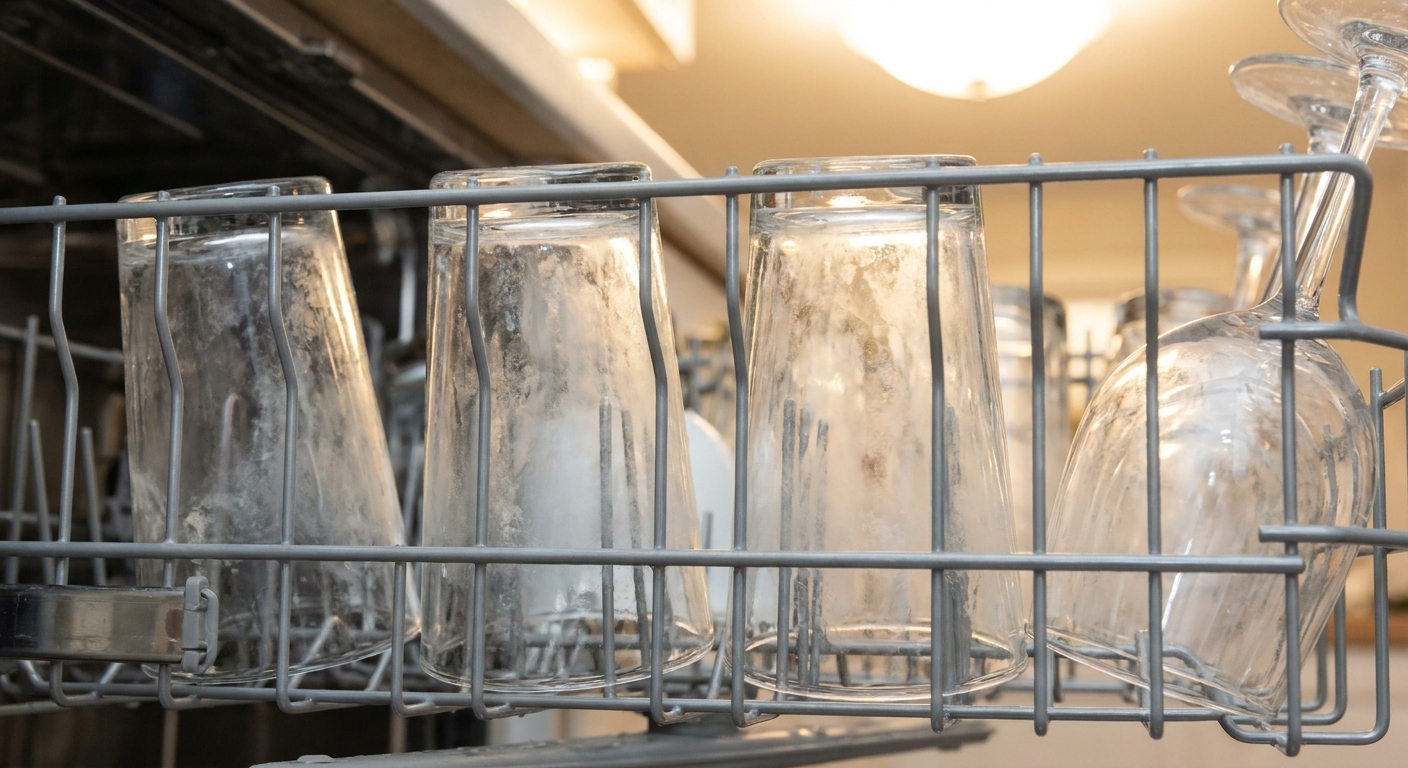
Film vs. etching
Mineral or detergent film (often removable)
This is a deposit on top of the glass. It is commonly from hard water minerals (calcium and magnesium), detergent residue, or a mix of both. Film tends to look like:
- Milky haze or a dull veil over the whole glass
- White spots or rings where water dried
- Cloudiness that looks worse after air-drying
Etching (permanent)
Etching is microscopic damage to the glass surface. It happens when wash conditions are too harsh for too long, like very hot water, too much detergent, soft water combined with strong detergent, or long cycles. Etching often looks like:
- A frosted or sandblasted look that seems “in” the glass, not on it
- Rainbow sheen in certain light (sometimes etching, sometimes a thin film, so we will test it)
- Cloudiness that does not change no matter what you wipe on it
The 60-second test
Before you go buying anything, do this quick check with one glass. It is a helpful shortcut, not a courtroom verdict.
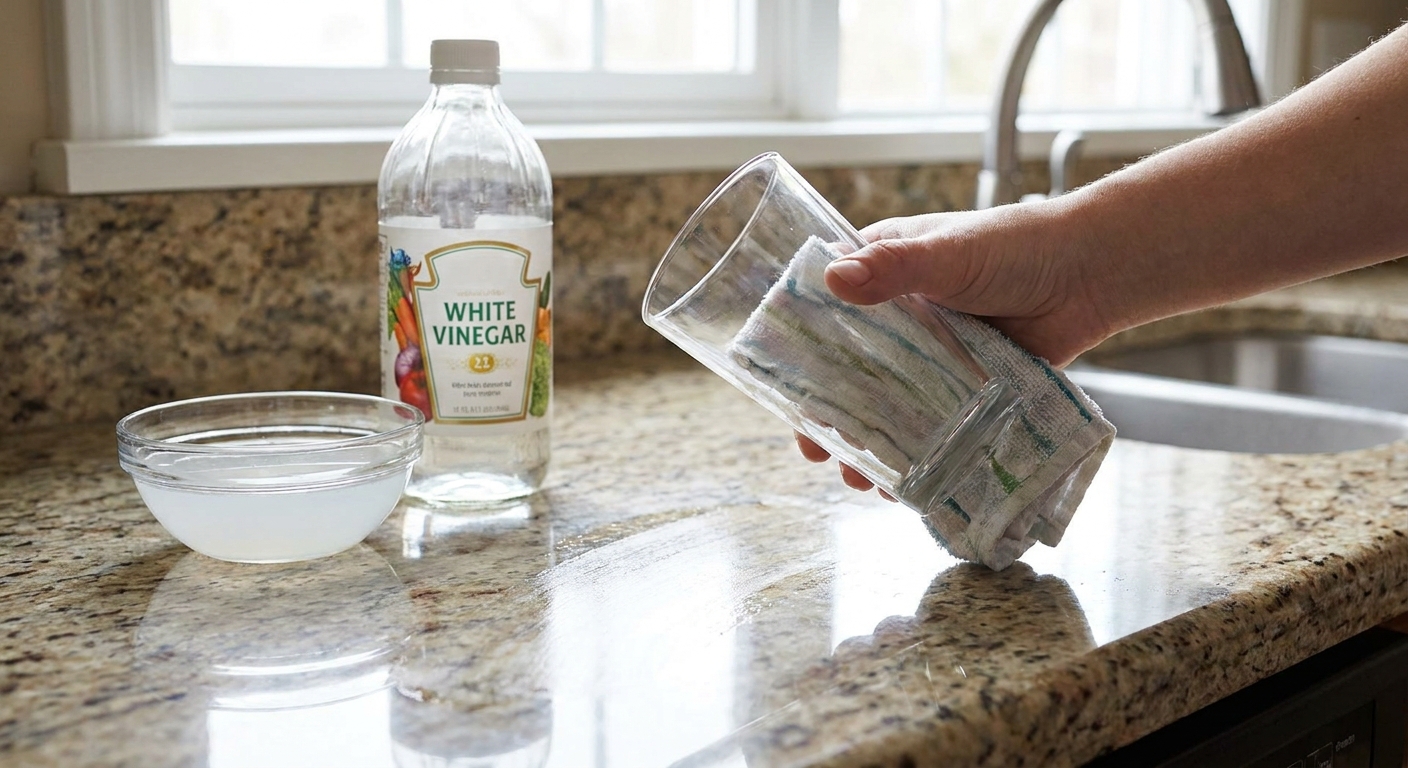
1) The vinegar rub test
Pour a little white vinegar on a soft cloth or paper towel and rub a small area of the cloudy glass for 15 to 20 seconds. Rinse and dry.
- If the spot clears or improves noticeably, you are likely dealing with mineral film.
- If nothing changes, it is more likely etching or a residue that vinegar does not touch (some greasy or silica-based haze can be stubborn).
2) The “squeaky” feel test
Clean glass has a certain squeak when you drag your fingers over it. Film can feel slightly waxy, chalky, or grippy. Etched glass tends to feel uniformly smooth, just visually frosted. This one is subjective, so treat it as a supporting clue, not the deciding vote.
3) The lighting test
Hold the glass near a window and rotate it slowly. If the cloudiness reads like a flat coating, film is more likely. If it looks like a diffuse frost embedded in the surface, that points to etching.
If it is film
Mineral or detergent film is the “you can fix this tonight” scenario. Start gentle, then level up only if needed.
Step 1: Vinegar soak
Fill a sink or basin with warm water and add 1 to 2 cups of white vinegar. Soak glasses for 15 to 30 minutes, then wipe with a soft sponge and rinse well.
Step 2: Baking soda polish
Make a paste of baking soda and a little water. Rub lightly with a soft cloth, then rinse thoroughly. This is mildly abrasive, so keep your pressure gentle.
Step 3: Citric acid soak or wash
If you live somewhere with very hard water, citric acid can be more effective than vinegar for mineral buildup.
- For a sink soak: dissolve about 1 to 2 tablespoons of citric acid in a basin of warm water, soak 15 to 30 minutes, then rinse well.
- For the dishwasher: run an empty hot cycle using a citric-acid based dishwasher descaler according to the label, or add roughly 2 to 4 tablespoons of citric acid to the detergent cup and run a cycle (skip this if your manufacturer advises against it).
Important: Never mix acids (vinegar or citric acid) with bleach. If you are using a commercial cleaner, check the label and keep it simple.
When film is coming from the machine
I promised I would keep the odor checklist out, but there is one overlap worth mentioning: if your dishwasher has visible gunk, standing water, or a funky residue inside, that grime can redeposit onto glassware as a dull film.
- Wipe the door edges and the rubber gasket with warm soapy water.
- Pull and rinse the filter if your model has one you can access.
- Run a hot empty cycle with a dishwasher cleaner made for machines. If you use vinegar in a bowl on the top rack, treat it as an occasional fix, not a weekly habit, and check your manufacturer guidance because some caution against routine vinegar use.
If it is etching
If your rub test did nothing, you are most likely looking at permanent etching. Once the surface of the glass is damaged, you cannot “un-etch” it back to factory shiny.
What you can do:
- Stop it from getting worse by adjusting detergent amount, rinse aid, and cycle choices (more on that below).
- Relegate etched glasses to daily water duty and keep your favorites for hand-washing.
- Lean into the look if you want to. Etched glass reads a bit like soft sea-glass. Not ideal for crystal, but not a moral failure either.
What not to do:
- Do not aggressively polish etched glass with harsh abrasives. You can add scratches and make it look even more dull.
- Do not keep increasing detergent hoping it will cut through. It will not, and it may worsen the damage.
Why it happens
Cloudiness is usually a chemistry and heat issue, not a brand-of-glass issue.
- Hard water leaves minerals behind as water evaporates.
- Too much detergent can leave residue, and in soft water it can push you toward etching.
- Not enough rinse aid means water clings and dries in droplets, leaving spots and haze.
- Very hot water and long cycles increase the risk of etching over time.
- Overcrowding prevents good rinsing and can trap detergent on surfaces.
Renter-friendly fixes
If you rent, you often cannot install a whole-house softener or swap out a dishwasher. But you can still make a big difference with the products you use and how you dose them.
Use less detergent, then adjust
This is the number one fix I see people resist, especially if they are using pods.
- If you use powder or gel, start by filling the detergent cup about halfway. If you still have greasy residue or stuck-on food, bump it up a little at a time.
- If you use pods and your water is soft or you suspect etching, consider switching to powder so you can control the amount. Pods are convenient, but they are often a one-size dose that can be too strong.
Do not over-pre-rinse
Modern detergents often rely on enzymes that work better when there is a little soil to grab onto. If everything is squeaky clean before it goes in, people tend to compensate by using more detergent or hotter cycles, and that is where cloudiness can start. Scrape, quick-rinse if you must, but you do not need to polish every plate like it is headed to a museum.
Match your approach to your water
You do not need a lab test, just a clue.
- If you get mineral spots on faucets or a white ring in kettles, you probably have hard water. You may need rinse aid consistently and periodic descaling.
- If soap seems to lather forever and you rarely see mineral spotting, you may have soft water. Use less detergent to reduce etching risk.
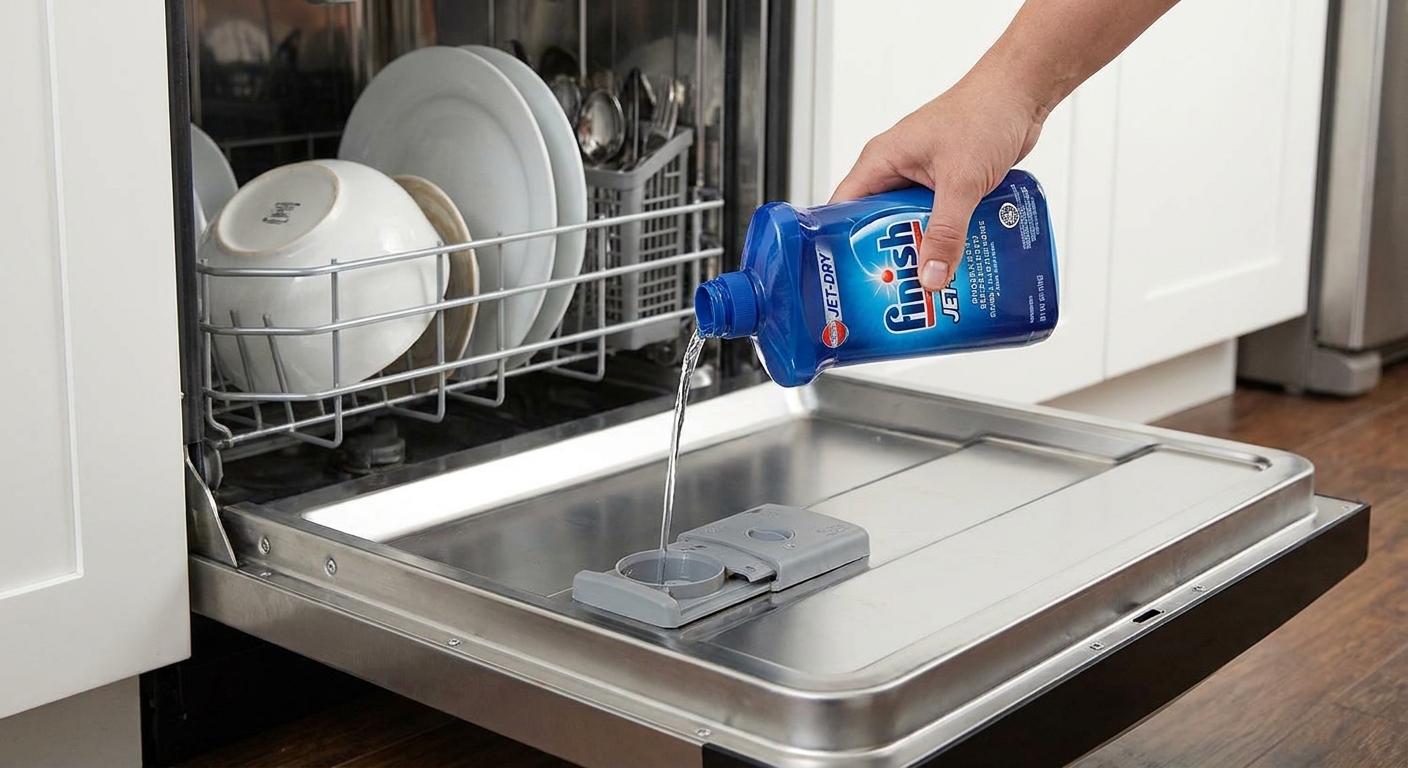
Always use rinse aid
Rinse aid helps water sheet off glass so it dries without droplets. That reduces spots and mineral haze. Yes, even if your detergent claims it has some.
- Fill the rinse aid reservoir and set the dispenser to a middle setting.
- If you still see spots, increase the setting one notch.
- If you see streaking or a bluish film, decrease it slightly.
Keep water temperature reasonable
For most homes, around 120°F (49°C) at the tap is a common target. Much hotter water and high-temp options can speed up etching over time, especially with soft water or heavy detergent doses. If your machine has a built-in heater, you can still reduce risk by skipping the extra-hot add-ons for everyday glassware.
Avoid extra-hot, extra-long cycles for delicate glass
Heat is a glass cloudiness accelerant.
- Choose Normal or a Glass cycle if your machine has it.
- Skip Sani Rinse and High Temp Wash for everyday glassware unless you truly need it.
- If your dishwasher has a heated dry, try turning it off and cracking the door open to air dry. Less heat, less risk.
Load like you want things to rinse
- Keep glasses from touching so water can circulate.
- Angle cups and glasses slightly downward so they drain.
- Avoid nesting bowls that block spray and trap detergent water.
If your dishwasher uses salt
Some dishwashers, especially European-style models, have a built-in softener that uses dishwasher salt to regenerate. If your machine has a salt reservoir, keep it filled with proper dishwasher salt and make sure the softener setting matches your local water hardness. A mismatched setting can contribute to both film (too hard) and etching (too soft paired with strong detergent).
When they will not clear
Here is the line in the sand, because I do not want you spending your Saturday scrubbing a lost cause.
Probably will not clear
- The vinegar rub test makes zero difference and other cleaning attempts do not change it.
- The cloudiness looks like a uniform frost across the whole bowl of the glass.
- You see a shimmery rainbow cast that does not change after a thorough cleaning and rinse.
- Only your oldest glasses are cloudy, and new ones are fine. That points to cumulative etching.
Might clear
- The haze lightens after vinegar or citric acid.
- You can remove it with a gentle baking soda paste.
- The cloudiness is mostly spots or rings rather than overall frosting.
Quick FAQ
Is cloudy glass from hard water permanent?
Hard water usually causes mineral film, which is often removable with vinegar or citric acid. Hard water can indirectly contribute to etching if you keep compensating with hotter cycles and more detergent, so it is worth adjusting your routine.
Can I use vinegar as rinse aid?
I do not recommend pouring vinegar into the rinse aid dispenser long-term. Vinegar is acidic and, over time, acidity can be rough on rubber seals and some internal parts. Use a proper rinse aid for day-to-day, and use vinegar as an occasional cleaning step if your manufacturer allows it.
Why are my glasses cloudy but my plates are fine?
Glass shows film and etching more dramatically than opaque ceramics. Also, glasses often sit in positions where water pools and dries in droplets, especially if they are slightly upright or crowded.
Will a dishwasher cleaner fix etched glass?
No. Cleaners can help if the cloudiness is film caused by minerals, detergent residue, or a dirty machine. Etching is damage to the glass itself.
A finishing touch
Once your glasses are genuinely clear, dry them with a lint-free towel and hold one up to the light. That little sparkle is a tiny home luxury that costs almost nothing, and it makes even a weeknight seltzer feel intentional.
If you want, tell me what kind of cloudiness you are seeing and whether vinegar helped. I can help you decide if you are in film territory or if it is time to retire the glasses to “everyday brave little soldiers.”