Yellow Sweat Stains on a Mattress
Gust
A little flutter. A cozier corner.
And then you pull back the sheets and find it: that familiar yellow shadow where a human has been doing their very human thing, existing warmly for hours at a time. Yellow sweat stains on a mattress are common, stubborn, and very fixable. The trick is lifting body oils and oxidized residue without turning your mattress into a damp sponge.
First, make sure it is actually sweat
Different stains like different treatments. Before you reach for a random bottle, do a quick reality check.
Typical sweat and body-soil stains
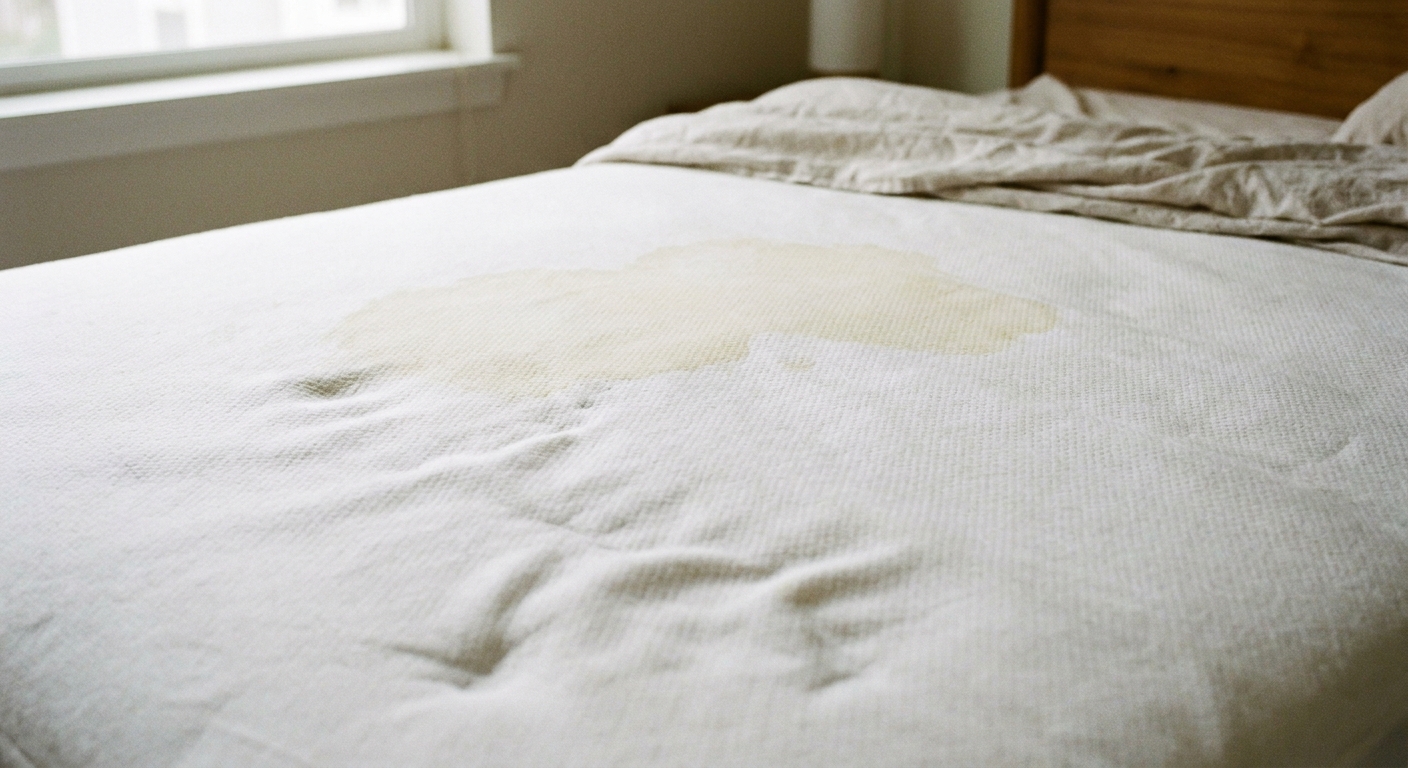
- Color: pale yellow to deeper yellow-brown, often diffuse with soft edges
- Location: where shoulders, back, or hips rest
- Smell: stale or sour when you get close, but usually not sharply ammonia-like
- Texture: can feel a bit stiff or waxy because body oils cling to fibers
How it differs from urine
- Smell: urine can develop an ammonia-like smell as it breaks down, especially if the area gets re-wet, but smell alone is not a perfect test
- Pattern: may form a more defined ring or a larger soaked area, depending on amount
If you strongly suspect urine, stop here and use a urine-specific cleaner approach (typically enzyme-based). Enzymes are designed for that problem and do it better than the methods below.
How it differs from mildew or mold
- Look: mildew often shows gray, green, or black speckling or fuzzy growth, not just yellow
- Smell: musty, basement-like, lingering in the whole area
- Cause: usually moisture trapped in the mattress, protector, or bed frame airflow
If you see active growth or smell strong mustiness that does not improve with drying, consider professional help. Mold inside a mattress is not a cozy roommate.
What to avoid
Mattresses are layered like cake, but the kind that hates being rinsed. The goal is minimal moisture and maximum blotting.
- Do not pour cleaner directly onto the mattress.
- Do not soak memory foam or latex. It can trap moisture deep inside and dry painfully slowly.
- Avoid steam-cleaning unless your mattress manufacturer explicitly allows it. Heat and moisture can over-wet the layers and raise the risk of lingering odor or mildew.
- Do not mix vinegar and bleach or hydrogen peroxide and bleach. Dangerous fumes are not part of the bedtime vibe.
- Do not scrub aggressively. It can rough up the cover fabric and push soil deeper.
Quick care note: Some mattresses have specialty covers or quilted natural-fiber tops (cotton, wool) with very specific instructions. Cleaning with soaps or peroxide may affect warranties or surface treatments, so it is worth checking your care tag or manufacturer guidance before you start.
Supplies
You do not need a chemistry lab, just a few basics and a light hand.
- Vacuum with upholstery attachment
- White or light microfiber cloths (or clean cotton rags)
- Spray bottle
- Cool water
- Dish soap (a grease-cutting type)
- Baking soda
- 3% hydrogen peroxide (common first-aid strength)
- Optional: soft brush (like a clean dish brush) for mattress covers with textured fabric
- Fans and, ideally, a dehumidifier
Patch test: If your mattress has a fabric face or a sewn-in cover, test any solution on a small hidden edge first. Hydrogen peroxide is an oxidizer and can permanently lighten some fabrics or affect certain finishes, so keep it spot-only, minimal, and discontinue if you see lightening or dye transfer.
Step by step
Think of this as a tidy little sequence: remove dry debris, lift oils, then brighten what is oxidized, then dry like you mean it.
1) Strip the bed and air it out
Remove sheets, protector, and pads. Set them aside for laundering. Give the mattress 10 to 20 minutes uncovered so any trapped humidity can escape before you start adding even a whisper of moisture.
2) Vacuum the area
Vacuum the stained area and a generous border around it. This removes skin flakes, dust, and dried residue so your cleaner is not working through extra grime.
3) Degrease first
In a spray bottle, mix:
- 1 cup cool water
- 1 to 2 drops dish soap
That tiny amount is intentional. Too much soap is hard to remove and leftover residue can attract more soil later.
Lightly mist a cloth, not the mattress. Then dab the stain from the outside edge inward. Flip to a clean area of cloth as it picks up yellowing.
Next, dampen a fresh cloth with plain cool water and dab again to remove soap residue. Keep everything slightly damp, never wet.
4) Brighten with peroxide (optional)
Hydrogen peroxide can help with yellowing because it is an oxidizer. Used carefully, it can lift discoloration without flooding the foam. It can also lighten fabrics, so this is where that patch test really earns its keep.
- Pour a small amount of 3% hydrogen peroxide onto a clean cloth.
- Dab the stained area lightly.
- Let it sit for 5 to 10 minutes.
- Blot with a dry cloth to pull moisture back out.
If the stain is old and stubborn, you can repeat once more after blotting and checking the fabric. More is not always better. We are aiming for gradual fading, not a soaked crater.
5) Pull moisture and odor up with baking soda
Sprinkle a thin, even layer of baking soda over the treated area. Let it sit for at least 4 hours, or overnight if your room is dry.
Then vacuum thoroughly. If the baking soda clumps, that is a sign the area was still damp, which brings us to the most important part.
Dry it fast
The stain is only half the story. A mattress that stays damp inside can develop odor, mildew, or a spreading ring.
Fast-dry setup
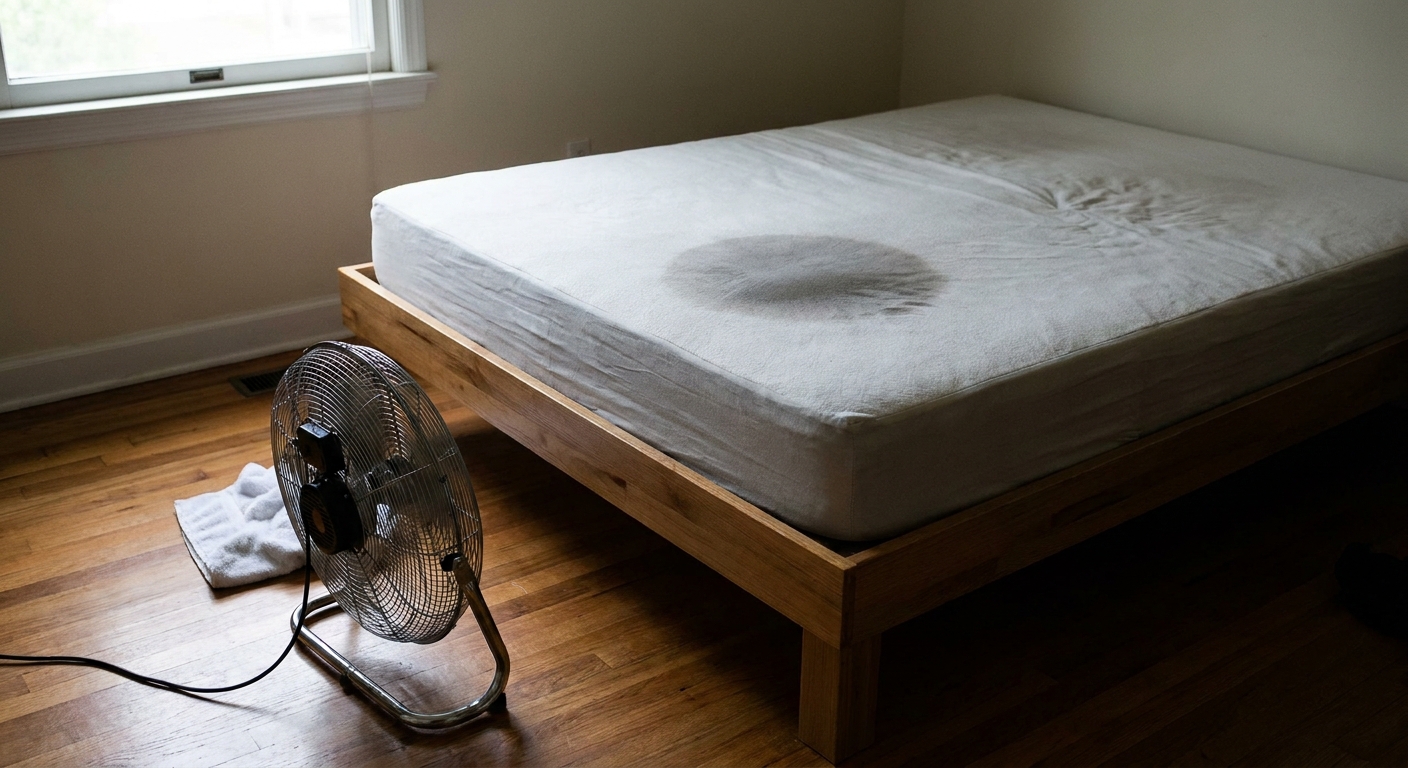
- Airflow: Point a fan directly at the spot for several hours.
- Dehumidify: If you have a dehumidifier, run it in the bedroom with the door mostly closed.
- Lift the mattress: If possible, prop it slightly so air can reach the underside too.
How long it usually takes
Plan on at least a few hours with a fan for a lightly damp spot. In humid climates, or if the stain needed multiple passes, it can take overnight. If you are unsure, keep drying. “Almost dry” is where mustiness likes to start writing fan fiction.
How to tell it is dry enough
- The fabric feels room-temperature dry, not cool or clammy.
- You cannot detect any damp smell when you press your nose near the spot.
- A paper towel pressed firmly for 30 seconds comes away dry.
If you are in a humid climate, give it extra time. Humidity turns “almost dry” into “mysteriously musty” in a hurry.
If there is still odor
If the stain looks better but a sweaty funk lingers after everything is fully dry, keep it simple.
- Vacuum the area again.
- Apply a fresh, thin layer of baking soda and let it sit 8 to 12 hours.
- Vacuum very thoroughly.
Avoid spraying perfumes or fabric refreshers onto the mattress. They tend to add moisture and leave residue, which can turn into a different problem later.
Removable mattress covers
Lucky day. If your mattress has a removable zip cover (common on some foam beds), follow the care label first. Many are spot-clean only even if they look washable.
Spot-clean the cover
- Lay the cover flat and support it with towels underneath.
- Dab with the same dish soap and water mix to lift oils.
- Rinse by dabbing with a cloth dampened with plain water.
- For yellowing, dab with 3% hydrogen peroxide, then blot dry.
- Air-dry fully before re-zipping.
If the label allows machine washing, use cool water and gentle detergent, skip heavy fragrances, and dry completely. Any lingering dampness inside a zipped foam mattress is an open invitation to musty odor.
Why sweat stains turn yellow
Sweat itself can dry nearly clear, but mattresses collect body oils, dead skin, lotions, deodorant residue, and minerals. Over time, oxygen and heat help these compounds oxidize, shifting them toward yellow or yellow-brown. That is why old stains often need a two-step approach: oil lift first, then gentle brightening.
When to stop
Sometimes the practical win is “clean, deodorized, and dry,” even if a faint shadow remains.
- If you have repeated twice and the stain is only slightly lighter, pause and let the mattress fully dry for a day before deciding what to do next.
- If the fabric starts to look faded or textured, stop. Mattress faces are not designed for endless spot chemistry.
- If there is a strong odor that returns after drying, reassess whether it is truly sweat. Urine and mildew behave differently.
Prevent new stains
I love a breathable, billowy bed moment, but I also love barriers that quietly do their job.
- Use a waterproof mattress protector that is also breathable. Wash it regularly.
- Add a washable mattress pad on top of the protector for comfort and easy laundering.
- Wash sheets weekly if you tend to sleep warm, use body lotions at night, or share the bed with a heat-generating pet.
- Keep airflow under the bed by avoiding solid, unventilated platforms if humidity is an issue.
Once the mattress is fully dry, put your protector back on right away. It is the easiest way to keep “freshly cleaned” from becoming “same stain, sequel.”
Quick FAQ
Will hydrogen peroxide damage my mattress?
It can lighten some fabrics, which is why a patch test matters. Used in small amounts on a cloth for dabbing (not soaking), 3% peroxide is a common choice for yellowing. It is still a bleach-like oxidizer, so keep it spot-only, use the smallest amount that works, and stop if you see color change.
Can I use vinegar for sweat stains?
Vinegar can help with some odors and mineral residues, but sweat stains are often oil- and protein-based. If you use vinegar, keep it very dilute and apply it to a cloth for dabbing. Do not combine vinegar with bleach, and do not layer vinegar and peroxide in the same step. Always prioritize thorough drying.
Why did a ring appear after cleaning?
Rings usually mean the area got too wet and the soil migrated outward as it dried. Use less liquid next time, work from the edge inward, and spend more effort blotting and drying with strong airflow.
Is it safe to sleep on the mattress the same night?
Only if it is fully dry. If there is any lingering dampness, keep drying. A slightly damp mattress can develop odor and mildew surprisingly fast, especially in humid rooms.