Memory Foam and Latex Mattress Smell

Clara Townsend
The first time I unboxed a foam mattress, I expected “fresh and clean” and got something closer to “new shower curtain meets permanent marker.” If you have a memory foam mattress, a latex mattress, or even just a topper that smells a little chemical right out of the packaging, you are not imagining it. The good news is that most new-mattress odor is temporary and manageable with airflow, patience, and one small strategy change: don’t trap the smell under a tight cover too soon.

Below, I will walk you through what that “new foam smell” usually is, why latex smells different from memory foam, how protectors and encasements can hold odor in, and a ventilation schedule that helps your whole room feel normal again. I will also help you separate new-product off-gassing from the very different smells of sweat, urine, or mildew in a mattress that has already been slept on.
What that new mattress smell is
Most “new mattress smell” comes from a combination of materials and processes: foam ingredients curing, glues used to bond layers, and packaging odors from plastic wrap and the shipping box. You will often hear this called off-gassing. In plain terms, some compounds (often described as VOCs, or volatile organic compounds) slowly release into the air once the mattress is unwrapped. How strong it is varies a lot by formulation, how long the mattress sat compressed, and the room conditions where you unbox it.
Memory foam odor
Memory foam and polyfoam are typically polyurethane foams that are petroleum-derived, although some use a small percentage of plant-based inputs. When they are made, cured, glued into layers, and then sealed in plastic, they can carry a noticeable “factory-new” smell at first. People describe it differently: paint-like, sweet, sharp, or just plain chemical.
Latex odor
Latex is different. Natural latex often smells mildly rubbery when brand new. Some people also notice a softer, almost sweet note. Latex cores can also carry trace scents from production steps (like washing agents or vulcanizing compounds), which can read as “rubber glove” at first. This is not unusual, and it often fades with fresh air.
Toppers can smell just as strong
Mattress toppers are often packaged even more tightly than a full mattress, so the first-day smell can feel intense. The same rules apply: open, unwrap, and let them breathe before you dress the bed.
How long the smell lasts
There is no single perfect timeline because it depends on foam type, room temperature, humidity, airflow, and even how sensitive your nose is. But in real homes, these are common patterns:
- First 24 to 72 hours: often the strongest odor, especially right after unboxing.
- First week: still noticeable, but usually improving with steady ventilation.
- Two to four weeks: for most people, the smell is faint or gone. Some mattresses clear in a few days, and a few linger longer.
A helpful rule of thumb: if the odor is clearly getting better day by day, you are usually on the normal path. If it is not improving at all, or it is causing irritation even with ventilation, take it seriously and contact the manufacturer.
How covers can trap odor
I love a good mattress protector. Spills happen, dust happens, life happens. But timing matters.
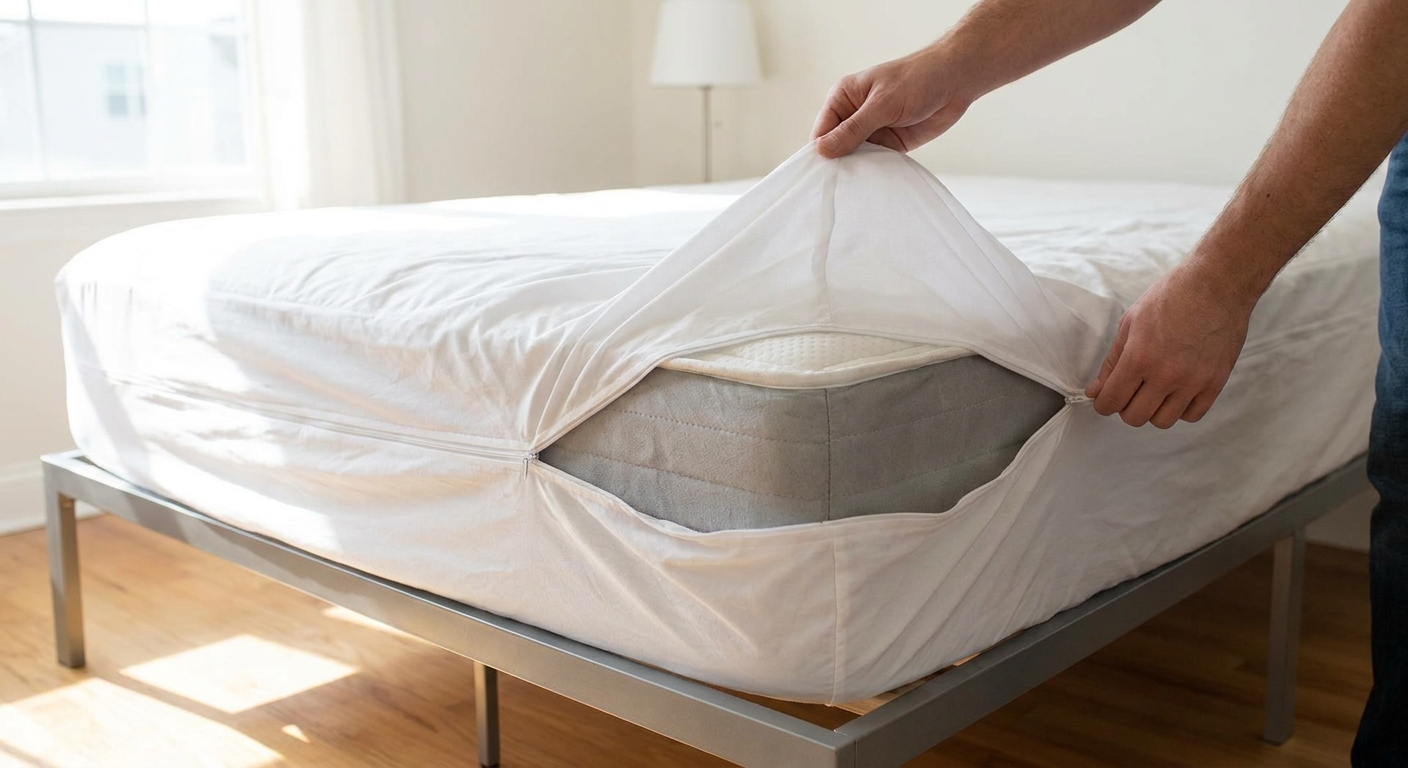
Many protectors and nearly all full encasements are designed to be very low-permeability to block liquids and allergens. An encasement is the zippered cover that fully encloses the mattress. That same “barrier” design can also reduce airflow.
If you put a waterproof protector or a zippered encasement on too early, you can essentially:
- trap off-gassing inside the mattress layers
- concentrate odor right at sleep level, especially under warm bedding
- slow the air-out process because less air is moving through the surface
If your mattress smells strong, consider delaying a tight, waterproof layer for a short window so the mattress can breathe first.
A ventilation plan that works
If you want the smell gone faster, think like a stylist trying to clear paint fumes from a freshly painted room. You need cross-breeze, circulation, and time.
Day 1: Unbox and ventilate
- Unwrap the mattress as soon as you can after delivery.
- Remove all plastic and packaging from the room.
- If possible, place the mattress on a bed frame or slats, not directly on carpet, so air can reach the underside.
- Open windows on opposite sides of the room (or bedroom plus a nearby room) for cross-ventilation.
- Run a fan aimed out a window if you can. This helps push odor-laden air outside instead of just stirring it around.
Days 2 to 3: Air it during the day
- Open windows for at least 2 to 4 hours daily.
- Keep bedding minimal while the smell is strongest (a washable sheet is fine).
- If drafts bother you at bedtime, ventilate earlier in the day, then close the windows at night.
Days 4 to 7: Move toward normal
- Air out 30 to 60 minutes daily, ideally after you get up and fold the bedding back.
- Fold bedding back for 20 minutes each morning to let the surface “exhale.”
Week 2: Add protection
If the odor has calmed down, this is a great time to add a protector. If you use a full zippered encasement, wait until the smell is faint. Your goal is to protect the mattress without locking in that “new foam” smell.
Tip: Warmer rooms often off-gas faster than cold rooms, but higher heat can also make odors feel more intense in the moment because more compounds are in the air at once. Aim for comfortably warm plus airflow, not “crank the heat and hope.”
Air it out outside the bedroom
If you have the space, it can be smart to let a new foam mattress or topper air out outside the bedroom for the first day or two, especially if:
- you are sensitive to smells or get headaches easily
- the bedroom is small with poor ventilation
- you have asthma or respiratory sensitivities
- you are setting up a nursery or child’s room
Good air-out spots include a spare room with windows, a living room with good cross-breeze, or a clean garage space with the door open and decent airflow (only if it is dry and not musty). Avoid damp basements. You do not want to trade “new foam smell” for moisture problems.
What not to do
- Do not douse the mattress in fragrance sprays. Perfume plus foam odor often creates a stubborn mix that lingers longer.
- Do not soak the foam with water, vinegar, or cleaner. Foam holds moisture, and trapped moisture is a fast track to mildew smells.
- Do not cover it with multiple layers right away. Thick pads, waterproof barriers, and heavy duvets can hold odor in.
- Do not assume strong smell equals mold. New-product odor is common. Mold has a different profile, and it comes with moisture history.
How to speed it up
Sometimes you have guests coming or you simply cannot live with the smell for a week. These gentle approaches help without introducing moisture:
Use moving air, not masking scent
- Add a second fan to create a wind tunnel effect: one pulling fresh air in, one pushing air out.
- Run an air purifier with activated carbon if you have one. Carbon can help with odors, especially models with a substantial carbon filter, but results vary by purifier design and the type of compounds involved.
Use sunlight carefully
Indirect sunlight in a well-ventilated room can help odors dissipate. Avoid leaving foam in harsh, direct sun for long periods because heat and UV can age materials over time. Think “bright room,” not “baking on the patio all afternoon.”
Try baking soda on the cover only
If your mattress has a removable fabric cover and the smell seems concentrated there, you can:
- remove the cover (if the manufacturer allows it)
- sprinkle a light layer of baking soda
- let it sit for a few hours
- vacuum thoroughly
Avoid getting baking soda into exposed foam pores where it can be hard to remove.

Off-gassing vs other odors
This is the part that saves a lot of worry. A new mattress smell is one category. A used-mattress smell is another. They behave differently, and the fixes are different too.
New foam or latex smell
- When it shows up: immediately after unboxing
- How it smells: chemical, plastic, rubbery, sweet, “factory-new”
- Where it’s strongest: right at the mattress surface, especially when warm
- What it does over time: fades steadily with ventilation
Sweat and body oil smell
- When it shows up: after weeks or months of sleeping on it
- How it smells: sour, salty, “stale linens,” sometimes like old gym clothes
- Where it’s strongest: at the sleeping area and pillow zone
- What it does over time: often returns quickly after airing unless cleaned and protected
Urine smell
- When it shows up: after an accident, and often again on humid days
- How it smells: sharp ammonia or cat-like, can reappear when warmed
- Where it’s strongest: a specific spot with a stain ring or damp history
- What it does over time: tends to linger unless treated at the source
Mildew or mold smell
- When it shows up: after moisture exposure (flooding, heavy humidity, a wet spill that did not dry)
- How it smells: musty, earthy, like a damp basement or wet towels
- Where it’s strongest: often on the underside or near walls if airflow is poor
- What it does over time: can worsen, especially if moisture is still present
If your mattress has already been slept on and smells musty or urine-like, airing out alone is rarely enough. That is a cleaning and moisture-control situation, not a “new mattress” situation.
VOCs and certifications
It is reasonable to be cautious, especially if you are sensitive to smells, pregnant, or setting up a room for a baby. Many mattresses are made to meet safety and emissions standards, but “low VOC” does not always mean “no smell.” Odor is a blunt tool. It can tell you something is present, but it does not reliably measure risk.
You may see certifications like CertiPUR-US (commonly associated with polyurethane foams) or GREENGUARD Gold (often used for finished products). In general, these programs test for certain chemical content and emissions thresholds, but they do not guarantee a mattress will be odor-free on day one.
What you can do, without spiraling:
- Ventilate well for the first several days.
- Delay tight encasements until the odor is faint.
- Trust your body. If you get headaches, nausea, or irritation that does not improve with airflow, pause sleeping on it and contact the manufacturer.
- Keep expectations realistic. A faint “new” smell that fades is common. A harsh smell that stays strong for weeks is not something you should just tolerate.
When to call or return
Most new-mattress odor is a normal inconvenience. Still, there are a few situations where I would stop trying to tough it out and escalate:
- The smell is not improving at all after a week of good ventilation.
- The smell stays strong after two to four weeks in a normally ventilated home.
- You experience persistent respiratory irritation, headaches, or nausea that does not ease when you leave the room.
- You notice visible residue (oily film, dampness that is not drying) or a sharp solvent-like or unusually fishy odor that seems abnormal and persistent.
At that point, contact the brand and document what you are noticing (when it started, how long you aired it out, and whether it is improving). A quality manufacturer will want to know, and you deserve a clear path forward.
Quick FAQ
Can I sleep on it the first night?
Yes, many people do. If the smell is strong and you are sensitive, it is better to let it air out for 24 to 48 hours in a well-ventilated space before sleeping on it.
Will a protector make the smell worse?
It can, especially if it is waterproof or a full encasement. Those reduce airflow and can trap odor close to you. Wait until the smell has faded, then add the protector.
My latex mattress smells like rubber. Is that normal?
Often, yes. New latex can smell rubbery at first. With airflow, it typically softens and fades. If the smell is extremely strong or causes irritation, reach out to the manufacturer.
Why does the smell come back with sheets?
Warmth and reduced airflow can make remaining odor more noticeable. Fold the bedding back each morning for 15 to 20 minutes and keep up daily ventilation for a few days.
When should I worry it is something else?
If the odor is musty (mildew-like), clearly urine-like, or gets worse over time, treat it as a different issue than off-gassing. Also, if a chemical smell is still strong after two to four weeks with good ventilation, contact the brand.
My “feel normal again” routine
When I am styling a room and a new item has a noticeable smell, I focus on restoring that calm, linen-and-light feeling fast. For a new mattress, my go-to routine is:
- Make the bed with one simple, washable layer for the first couple nights.
- Open windows for 30 minutes in the morning and again in late afternoon.
- Run a fan toward the window while you tidy or shower.
- Wait to zip on an encasement until the odor is faint.
Your bedroom should feel like a comforting hug at the end of a long day, not like the inside of a shipping box. A little air and a little time usually get you there.