Window Air Conditioner Smells Musty

Clara Townsend
A musty window air conditioner smell is one of those tiny apartment indignities that somehow takes over your whole mood. You turn it on hoping for crisp relief, and instead you get “wet dust” with a side of basement.
The good news is that most window-unit funk comes from just a few very fixable places: a dirty filter, moisture that is not draining the way it should, standing water in the base, mildew hiding in the accordion side panels, or microbial growth on the coil. If you rent, you can do a lot without “repairing” anything, and you can document the right details if your landlord needs to step in.
First, make it safe
Before you poke around, do a quick safety reset. Musty smells are usually moisture and dust, but you still want to be smart.
- Turn the unit off and set the mode to Off.
- Unplug it from the wall if you will remove the front cover or reach inside.
- Wait a few minutes until the fan fully stops.
- If you see heavy fuzzy mold (thick growth, widespread patches, or you have asthma), skip deep cleaning and go straight to the landlord section below.
The “wet dust” checklist (in the order I’d do it)
1) Pull and wash the filter
This is the number one culprit, and it is also the most renter-friendly fix. A filter coated in gray lint holds onto humidity like a damp sweater, and the smell blows right back into your room.
What to do:
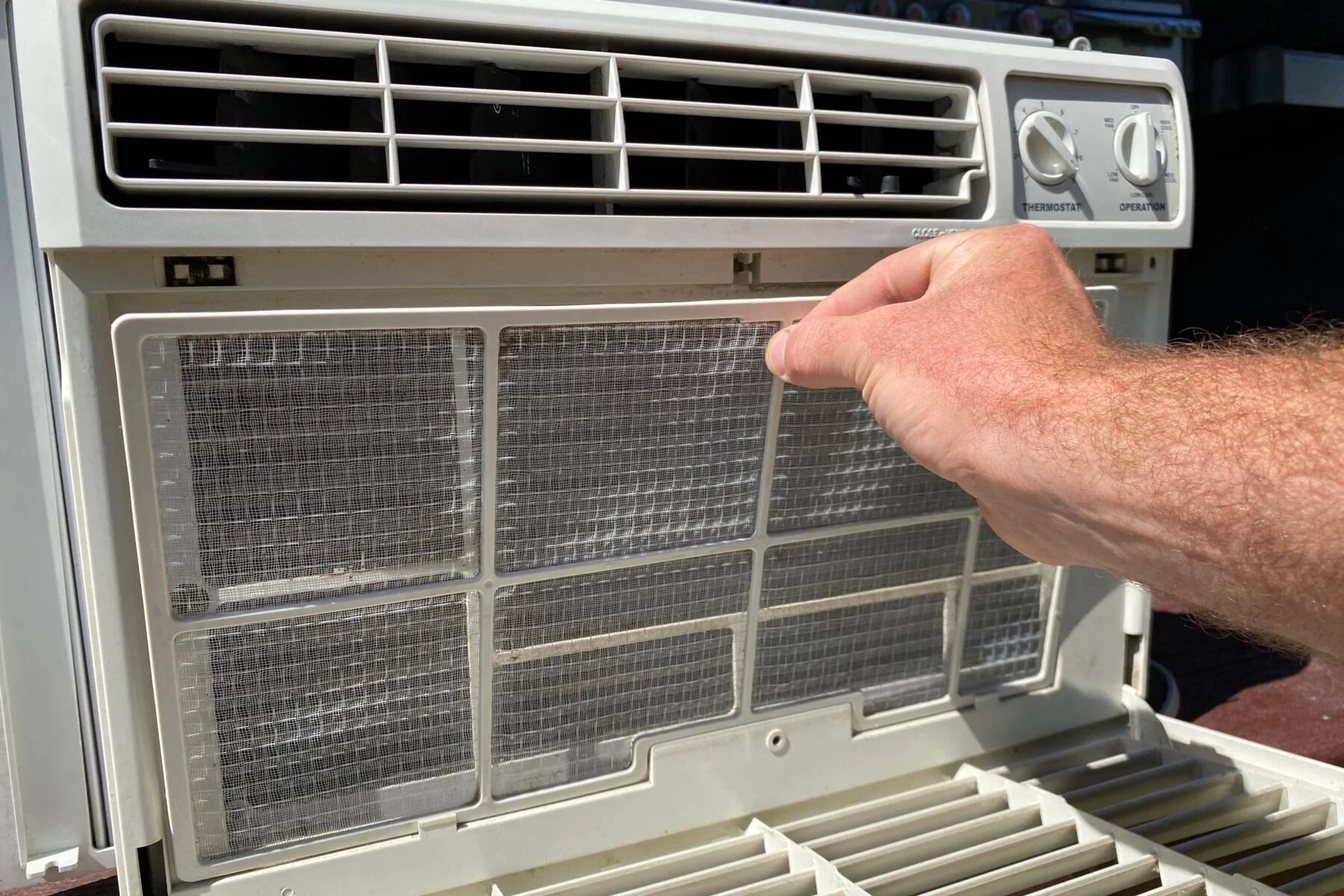
- Pop off the front grille (most window units have a simple snap front).
- Slide the filter out.
- Vacuum it gently first if it is very dusty.
- Wash with warm water and a small drop of dish soap.
- Rinse until the water runs clear.
- Let it dry completely before reinstalling. Damp filter equals instant musty comeback.
Small household tip from my own chaotic upbringing: my mom used to set washed filters on a towel near a sunny window, then flip them once halfway through. It is basic, but it works.
2) Dust the front grille and intake vents
If your room smells musty but the filter is not terrible, look at the front grille. Dust on the intake can get damp and smell stale, especially if the unit sits near a kitchen, a busy street, or a linty bedroom.
What to do:
- With the unit off and unplugged, wipe the front grille with a microfiber cloth lightly dampened with soapy water.
- Use a soft brush attachment on a vacuum for the vent slots.
- Let it dry, then run the unit for a few minutes to confirm the smell changes.
3) Check that the unit tilts slightly outward
A window unit needs a subtle outward tilt so condensation drains toward the exterior. If it is perfectly level or, worse, tipping inward, moisture can sit where you do not want it, and that “old towel” smell shows up fast.
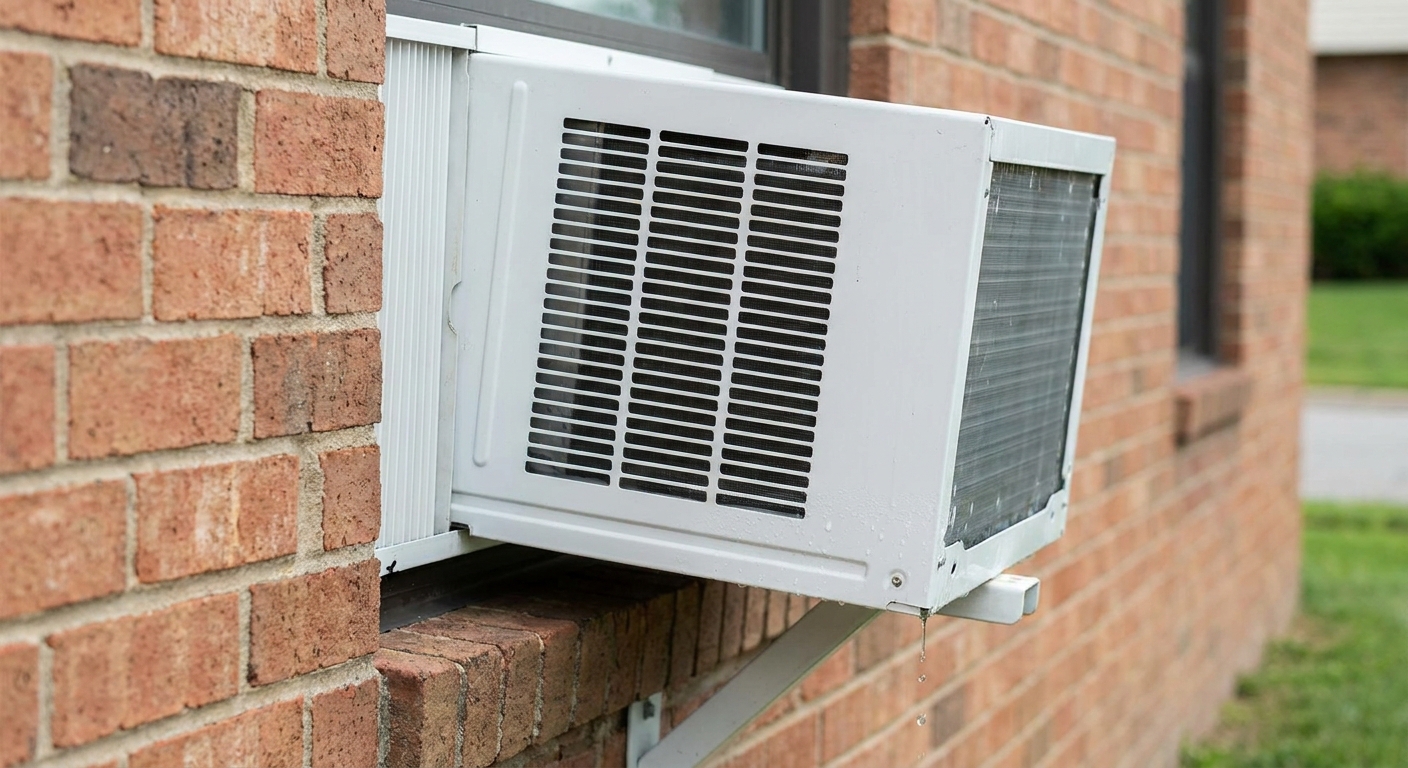
What you are looking for: the outdoor side should sit slightly lower than the indoor side. Think “barely noticeable,” not “ski slope.” A common target is around 1/4 to 1/2 inch lower outside.
- If you can see the side of the unit, eyeball whether it dips outward.
- If you have a phone level app, you can place your phone on the top surface and check for a small outward pitch.
- Do not start unscrewing brackets in a rental unless your lease allows it. If the unit seems to be tilting the wrong way, document it for the landlord.
- Also do not over-tilt. Too much angle can affect how the unit drains and runs.
4) Look for standing water in the base pan
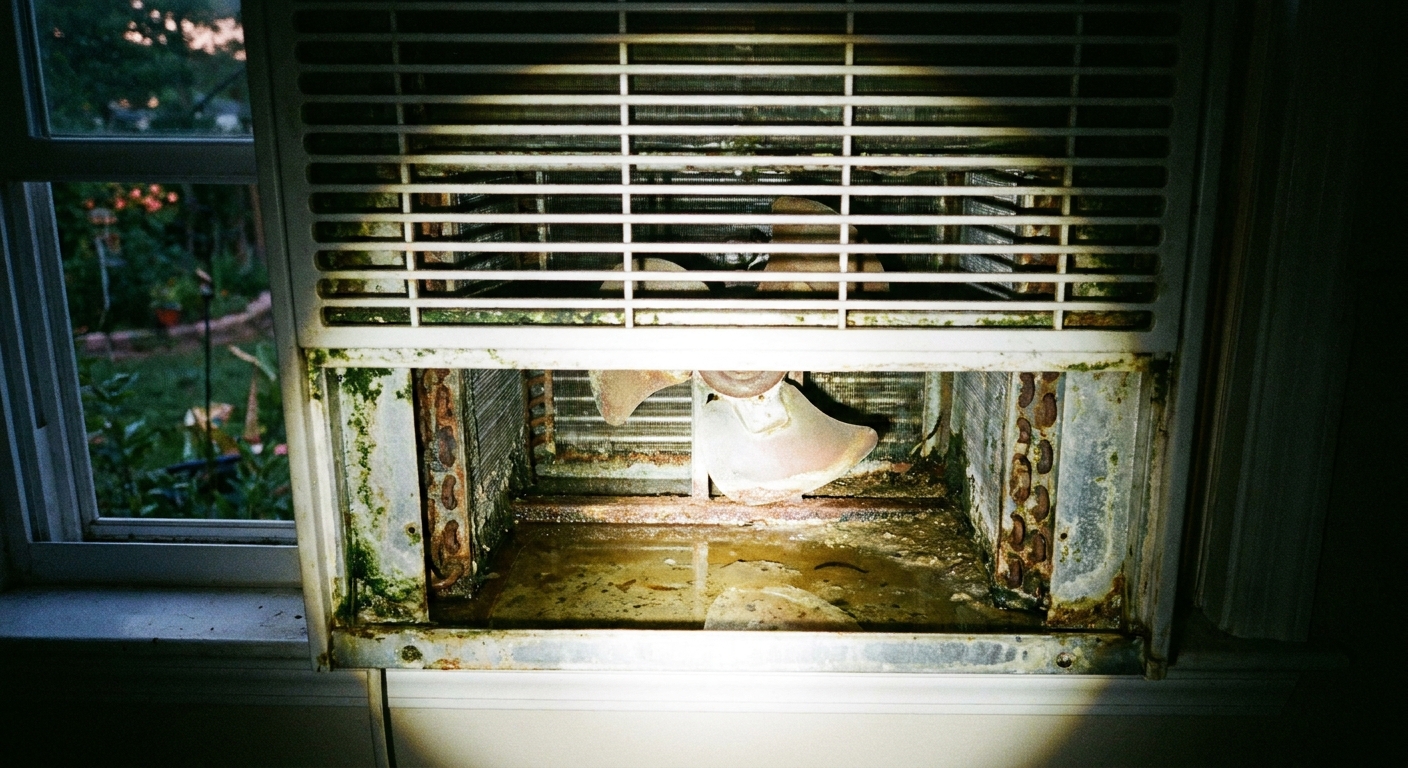
Many window units manage condensation in a way that leaves some water on the outdoor side, and some designs intentionally fling a little water onto the outdoor coil to boost efficiency. But stagnant water pooled inside the unit can turn musty quickly.
Signs this might be your issue:
- The smell is strongest right when the unit starts, especially after it has been off for a day.
- You hear a slosh or gurgle that sounds like a tiny aquarium.
- You notice extra humidity or a faint sour smell in the room.
What you can do safely:
- With the unit off and unplugged, remove the front grille and filter.
- Use a flashlight to look down into the interior bottom area you can access.
- If you see accessible grime, wipe only what you can reach easily with a cloth lightly dampened with soapy water, then wipe again with clean water.
- To dry it out: in drier weather, running Fan for 30 to 60 minutes can help. In very humid weather, Cool (or Dry, if your unit has it) for a short stretch often dries better than fan-only.
If water is clearly pooling where it should not, or you cannot access the area without removing the unit, this is landlord territory.
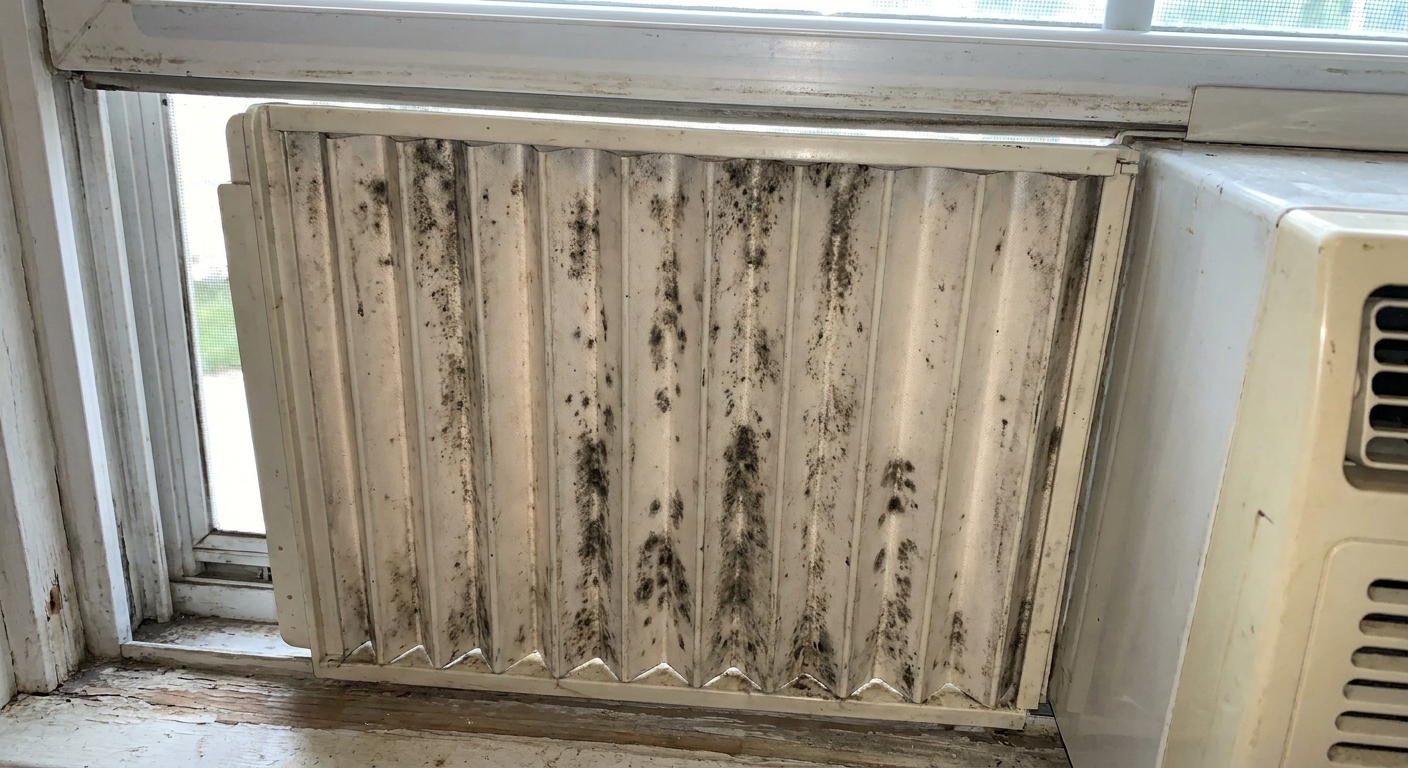
5) Inspect the accordion side panels for mold and wetness
Those expandable side panels are practical, but they are also the sneakiest little mildew trap in a rental. They collect outdoor humidity, indoor dust, and sometimes a bit of rain if the seal is imperfect. Musty smell can come from the panels even when the AC itself is fine.
Check for:
- Black or gray speckling along folds and corners
- Dampness or a soft, spongy feel
- Visible gaps where outside air and moisture can sneak in
Renter-safe cleanup:
- Wipe the panels with a cloth dampened in warm soapy water.
- Dry thoroughly with a clean towel.
- If the panels are brittle, heavily molded, or falling apart, do not fight them. Photograph and ask for replacement panels or a reseal.
If it still smells: quick clues
At-a-glance: symptom to likely cause
- Musty only for the first minute: damp dust on the blower or interior surfaces.
- Musty after rain or on muggy days: side panels, failed seal, or poor drainage.
- Musty even when the AC is off: moisture in the window cavity, sill, or wall around the unit.
- Sour or gym-sock smell on Cool: possible microbial growth on the coil (often called “dirty sock syndrome”).
The smell only happens for the first minute
This often points to damp dust sitting on the blower area and interior surfaces. Cleaning the filter plus letting the unit dry out between uses can help. If your unit has a Dry mode, that can be a nice option after long runs.
The smell is constant and gets worse in humid weather
That leans more toward ongoing moisture issues: poor tilt, water not draining, mildew in the unit or panels, or outside air sneaking in through a bad seal. At that point, I would document and loop in the landlord.
You smell a “dirty sock” or sour odor when cooling
This can happen when moisture and dust feed microbial growth on the evaporator coil. As a renter, you can keep it basic (filter, grille, drying routines), but coil cleaning is usually a maintenance job. Avoid spraying harsh chemicals inside the unit, since you do not want to breathe it in or corrode components.
You see visible mold inside the unit
If you can clearly see mold growth on interior plastic, foam, or metal you cannot fully access, treat it like a maintenance issue, not a DIY project. You do not want to aerosolize spores into your living space.
What not to do (renter edition)
- Do not drill extra drain holes. You can damage the pan or change how the unit is designed to manage condensate.
- Do not remove the chassis or pull the whole unit from the window unless your lease and setup make that clearly allowed and safe.
- Do not use bleach, strong solvents, or heavy fragrance sprays inside the unit. They can irritate your lungs and may corrode metal parts.
- Do not pressure-wash or “comb” fins aggressively. Bent fins restrict airflow and can make the smell and performance worse.
What to clean around the unit (because smells travel)
Sometimes the odor is not fully inside the machine. It is in the little ecosystem around it.
- Window sill and trim: wipe condensation, check for damp dust, and look for staining or soft wood.
- Curtains and blinds: fabric near the airflow can hold onto mustiness. A quick wash or wipe can make a bigger difference than you think.
- The wall under the unit: if you see bubbling paint or a faint tide line, photograph it and flag it.
What to photograph for your landlord
If you want action from a landlord or property manager, clear photos beat a long message every time. Here is what I would send in one email or portal request.
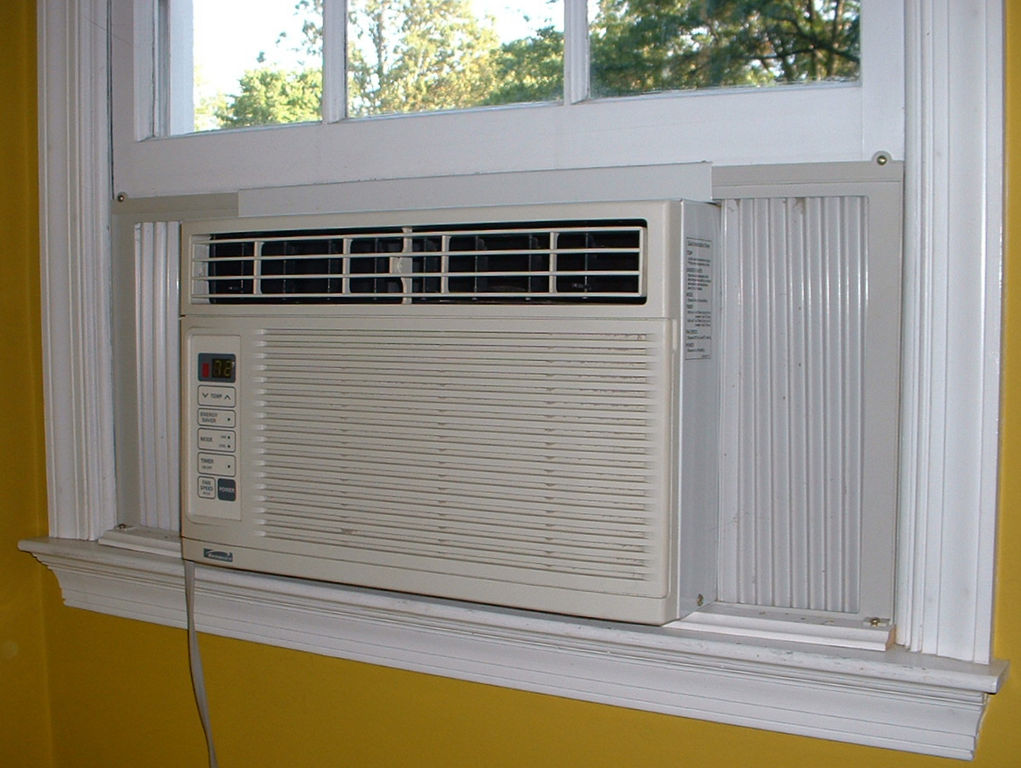
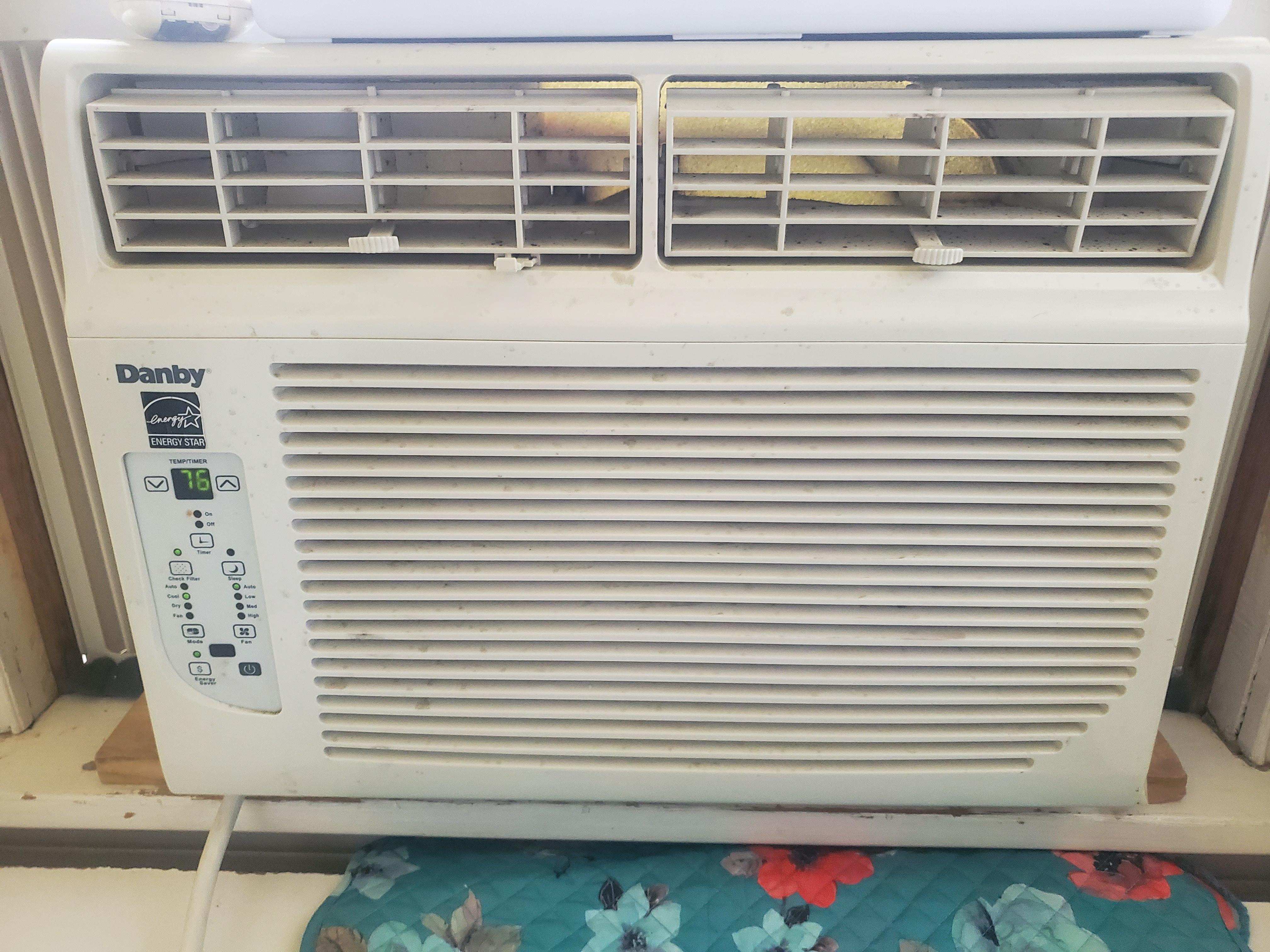
- The full unit in the window, straight on, showing how it is installed.
- A side-angle shot that shows whether it appears to tilt inward or outward.
- The filter before cleaning (dust buildup) and after cleaning (for proof of basic maintenance).
- Any standing water you can see in the base area (use a flashlight so it is obvious).
- Close-ups of the accordion side panels, especially corners and folds where mold spots appear.
- Any gaps or failed seals around the unit where rain or humid air could enter.
- A wide shot of the wall and sill area beneath the unit if you see staining, bubbling paint, or dampness.
In your message, include: when you first noticed the smell, whether it happens on Cool and Fan modes, and whether you have already washed the filter and wiped the grille.
When to stop DIY and request maintenance
As a renter, you are allowed to be practical, not heroic. Ask for help if:
- The unit is installed without an outward tilt and you cannot correct it without tools or removing brackets.
- There is persistent standing water you cannot access to clean or dry.
- You see significant mold growth inside the unit or the side panels are heavily mildewed.
- The room smells musty even when the AC is off, which can suggest moisture damage around the window opening.
- The odor seems like coil-related microbial growth and basic cleaning has not helped.
- You have respiratory issues and the smell triggers symptoms.
Musty AC odor is not just “annoying.” It is often a sign that moisture is lingering somewhere it should not, and that is exactly the kind of small problem that becomes a bigger one if ignored.
Keep it from coming back
- Rinse the filter monthly during heavy use. Mark it on your calendar like rent.
- Wipe the front grille every few weeks if your place gets dusty fast.
- Help it dry out: if startup smell is your pattern, run Fan for a bit in dry weather, or use a short Cool or Dry run when it is humid.
- Wipe the side panels a couple times each season, especially after humid weeks.
- Check the tilt at the beginning of summer and after any window or storm-related jostling.
A window AC will never smell like fresh linen sheets. But it also should not smell like a forgotten box in a damp basement. With a clean filter, decent airflow, proper drainage, and mildew-free side panels, you get back to what you wanted in the first place: cool air that makes your home feel like a comforting hug.