Mini Split Dripping Inside or Smelling Musty: First Checks for Renters

Clara Townsend
Clara Townsend is an interior stylist, vintage furniture enthusiast, and the creative voice behind Velvet Abode. With over a decade of experience transforming both cramped city apartments and sprawling fixer-uppers, she believes that a beautiful home is built on personal stories rather than massive budgets. When she isn't hunting for the perfect brass sconce at a local flea market, she can usually be found rearranging her living room for the third time this month.
A mini split is supposed to be the quiet, unobtrusive roommate of your apartment: cool air, warm air, no drama. So when it starts dripping inside or blowing a musty, damp-basement smell, it can feel equal parts gross and stressful, especially when you are renting and trying to do the right thing without getting blamed for a maintenance issue.
The good news: there are a handful of safe, renter-friendly first checks that solve a lot of mini split problems, or at least give you clear clues for your landlord or building maintenance team.
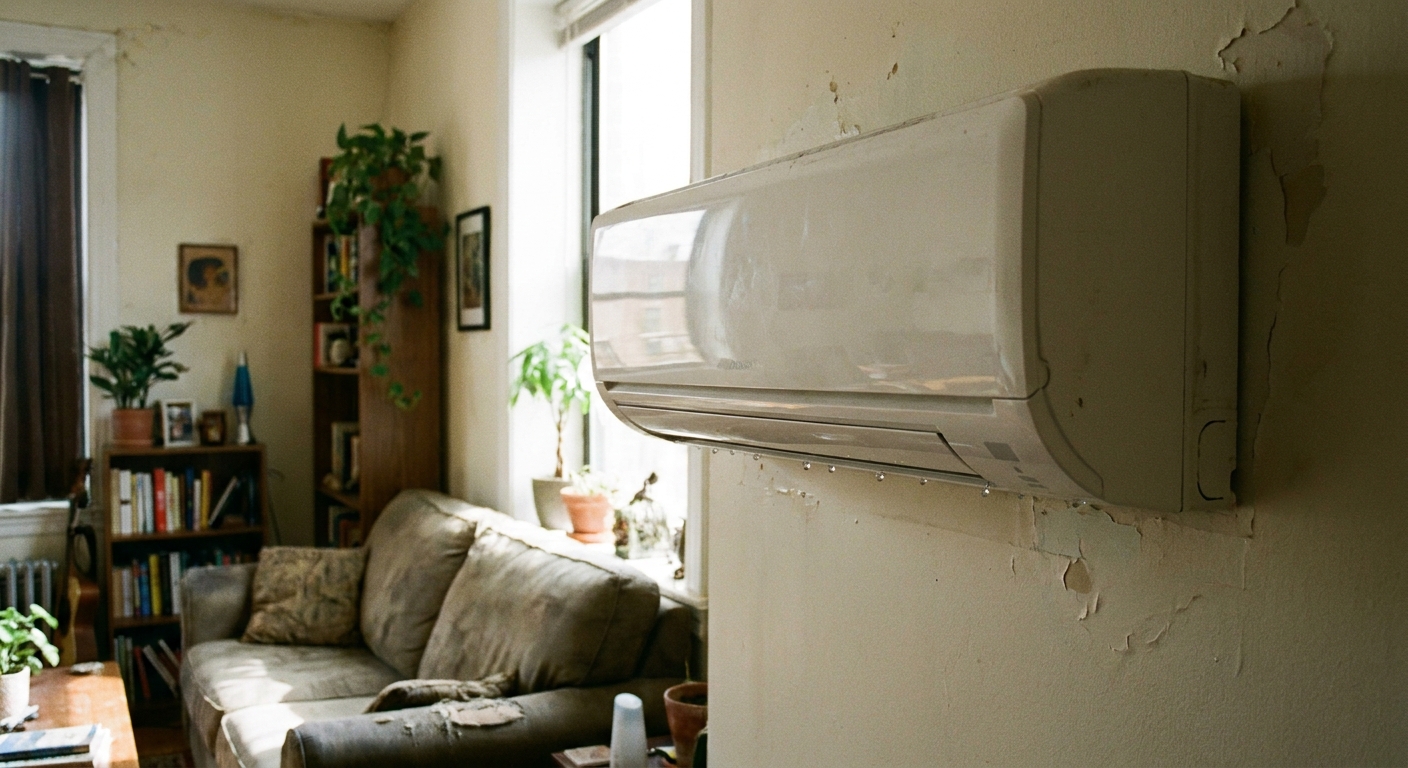
Before you touch anything: safety checks
Mini splits involve electricity, moving parts, and water. You can still do a few basic checks safely, but start here.
- Turn the unit off if you see active dripping, pooling water, or water tracking down the wall. Letting it run can overflow the drain pan and stain drywall.
- Do not open or service the outdoor unit beyond clearing obvious debris around it. Anything involving panels, wiring, or tools belongs to a licensed tech.
- Grab a towel and a shallow tray to protect floors while you inspect the indoor unit. If you have hardwood or laminate, lay down an old bath towel plus a trash bag underneath.
- Know what is typical: in cooling mode, the outdoor unit often drips water as it runs, especially on humid days. In dry weather or short run times, you may see little to no water. Water should not drip from the indoor unit.
Dripping inside: common renter-friendly causes
When the indoor unit (the wall-mounted head) leaks, it usually points to a drainage problem, airflow restriction, or an installation issue that is showing itself now. Here is how to narrow it down without doing anything risky.
1) Find the leak pattern
With the unit off, watch for a minute and note where water is appearing. If there is no active leak and you choose to test it, run it briefly while monitoring and shut it back off at the first sign of dripping.
- Water from the bottom edge or front flap often suggests the drain pan is filling and spilling over.
- Water from one corner only can happen if the indoor unit is slightly out of level, so the pan does not drain evenly. That is an installer or maintenance fix, not a renter fix.
- Misting or fine spray is less common and can indicate airflow or icing issues, especially if the filter is clogged, the fan is set very low, or the coil and vanes are dirty.
2) Check and clean the air filter
This is the single most renter-friendly fix, and it is often the root cause of “mystery water.” A dirty filter restricts airflow, which can lead to a cold coil, ice formation, and then a sudden melt that overwhelms the drain pan.
A practical routine for most apartments:
- Peak cooling or heating season: check every 2 to 4 weeks, clean as needed
- Off-season or light use: check every 6 to 8 weeks
- If you have pets, lots of cooking, or nearby construction dust: check closer to every 2 weeks
How to clean (usually safe for renters):
- Turn the unit off.
- Open the front panel and slide out the mesh filters.
- Vacuum with a soft brush attachment, then rinse with lukewarm water.
- Let filters dry fully before reinstalling.
If the filter is greasy or smells sour even after rinsing, note that in your message to maintenance. It can be a sign the coil and blower wheel need a deeper professional clean.
3) Check for condensate drain clues
Mini splits pull moisture from the air, and that water should drain out through a condensate line, usually to the exterior. If the line is partially blocked, kinked, or disconnected, water backs up into the indoor pan.
What you can safely look for:
- Do you see a small drain hose exiting the wall near the indoor unit, or running in a line set cover?
- Outside, can you find the drain outlet near the outdoor unit, a balcony edge, or a wall termination point?
- In cooling mode on a humid day, is the outside drain outlet dripping at all? A lack of dripping can be a clue, but it is not definitive. Some setups route condensate differently (including to a pump), and low humidity or short cycling can also mean no visible drip.
Do not blow into the hose or poke anything sharp into it. Avoid vinegar, bleach, or drain cleaners unless maintenance specifically instructs you to use them. If you can see a kinked section, take a photo and leave it for maintenance. If the drain exits onto a balcony, make sure it is not pressed against a mat, a planter, or a snow drift in winter.
4) Look for a condensate pump (if applicable)
Some apartments use a small condensate pump to move water to a drain. If it fails, the indoor unit can leak or shut down to prevent overflow.
- What you might notice: a small pump box near the indoor unit, an unusual buzzing/clicking, or intermittent leaking that seems to correlate with the unit running.
- What to do: document what you see and contact maintenance. Pump troubleshooting and replacement are not renter jobs.
5) Clear “easy obstruction” issues around the outdoor unit
For apartment dwellers, the outdoor condenser is often on a balcony, patio, or a narrow side walkway, which makes it extra vulnerable to well-meaning clutter.
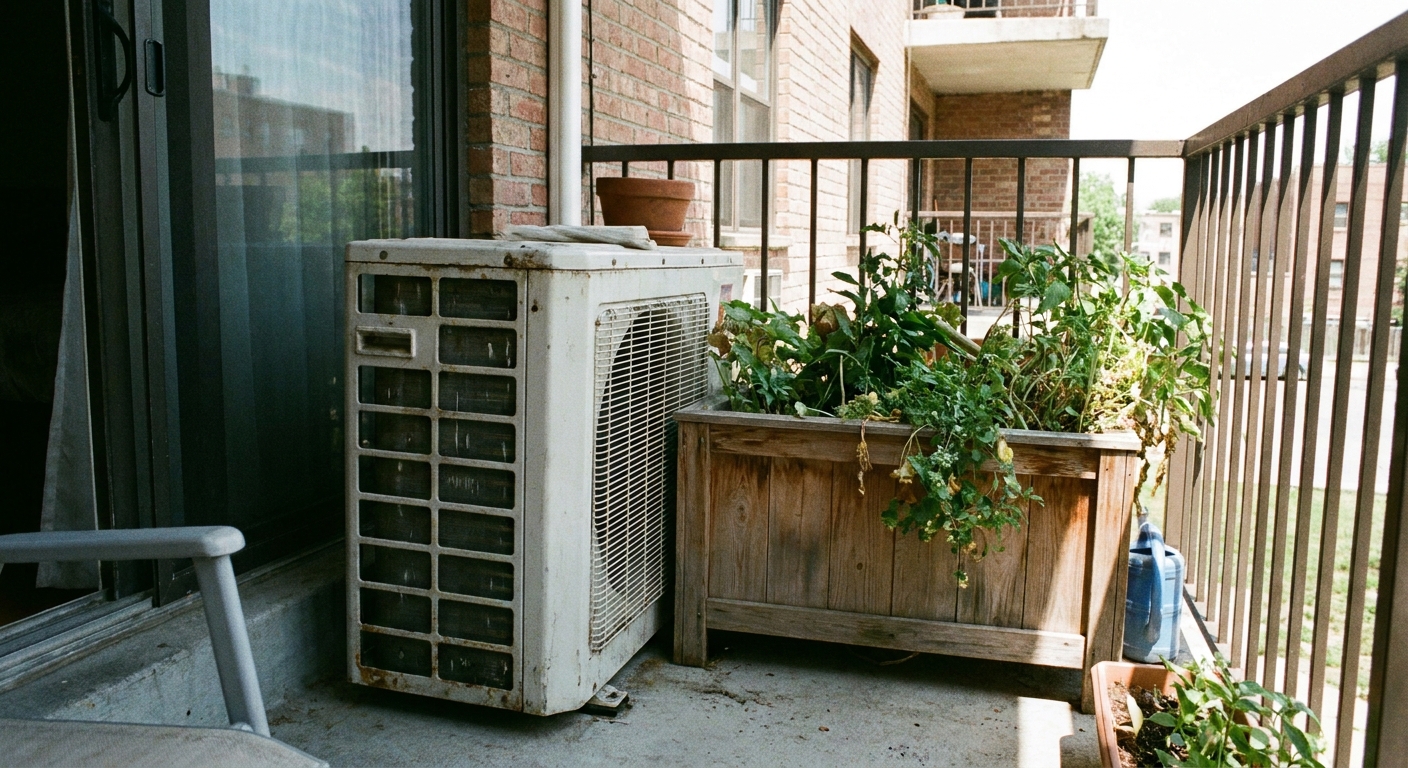
What to check:
- Is anything stored within about at least 12 inches of the coil grille (or whatever clearance your building or manufacturer specifies), like patio cushions, a storage bin, or a tall planter?
- Is the coil surface visibly blocked by lint, cottonwood fluff, or leaves?
- Is the unit tucked behind a privacy screen with no airflow gap?
You can gently clear leaves and obvious debris around the unit. Avoid bending fins or spraying aggressively with a hose unless your landlord specifically OKs it.
6) If you see ice, stop and document
If the indoor coil is icing up, it can later melt and overflow, leaving you with a puddle and a ceiling spot that looks like a sad watercolor.
Signs of icing:
- Weak airflow and the unit sounds like it is running normally
- Visible frost behind the front panel or on the louvers
- Water drip starts after the unit has been running a long time
Turn the system off and message maintenance. Icing can come from a dirty filter, but it can also involve refrigerant charge or sensor issues that renters should not troubleshoot.
Musty smell: blower funk vs drain issues
That musty scent is often just moisture hanging out where it should not. The trick is figuring out where it is lingering so you can describe it clearly to your landlord.
Blower smell (“dirty sock” odor)
This usually shows up when the unit first turns on, then fades a bit as it runs. It can be caused by biofilm on the blower wheel or coil, especially in humid climates. If the fan stops immediately after cooling (instead of running a short “coil dry” cycle), that can contribute by leaving the inside damp.
What you can do as a renter:
- Clean the filter, then run fan-only mode for 30 to 60 minutes to dry the inside.
- If your remote has a Dry or Self Clean function, use it.
- Wipe the exterior louvers and plastic housing with a lightly damp microfiber cloth. Do not spray cleaner into the unit.
What to ask maintenance for: a professional mini split deep clean of the coil and blower wheel. Mention “dirty sock smell” or “musty odor at startup” and that filter cleaning did not resolve it.
Drain or overflow smell (stagnant, swampy, sour)
If the smell is stronger near the indoor unit, and you also see dripping or water staining, the drain pan or condensate line may be holding standing water. That is when musty becomes sour quickly.
Clues that point to drainage:
- Odor is strongest when the unit is actively cooling
- You see drips, streaks, or bubbling paint under the unit
- The outside drain outlet is not dripping in cooling mode on a humid day (with the caveats above)
This is a landlord call. Standing water can damage walls and can lead to mold growth behind paint or inside the wall cavity, which is not your weekend project.
A quick note about heat mode
In heating mode, the outdoor unit can drip water during defrost cycles, and that can look dramatic on cold days. Indoor leaking in heat mode is still not normal and points back to drainage, icing, or installation issues.
Fast checklist: first 15 minutes
- Turn the unit off if water is actively dripping inside.
- Place a towel and tray beneath to protect floors.
- Check, clean, and fully dry the air filters.
- Check for obvious airflow obstructions on the indoor unit and around the outdoor unit.
- Locate the condensate drain outlet outside and see if it is dripping while cooling (keeping in mind not all setups drip visibly).
- Take photos of any staining, water paths, or ice.
What to document for the landlord
If you have ever tried to describe a smell over email, you know it turns into interpretive poetry fast. A little documentation makes your request clearer and helps you look like the calm, capable tenant you are.
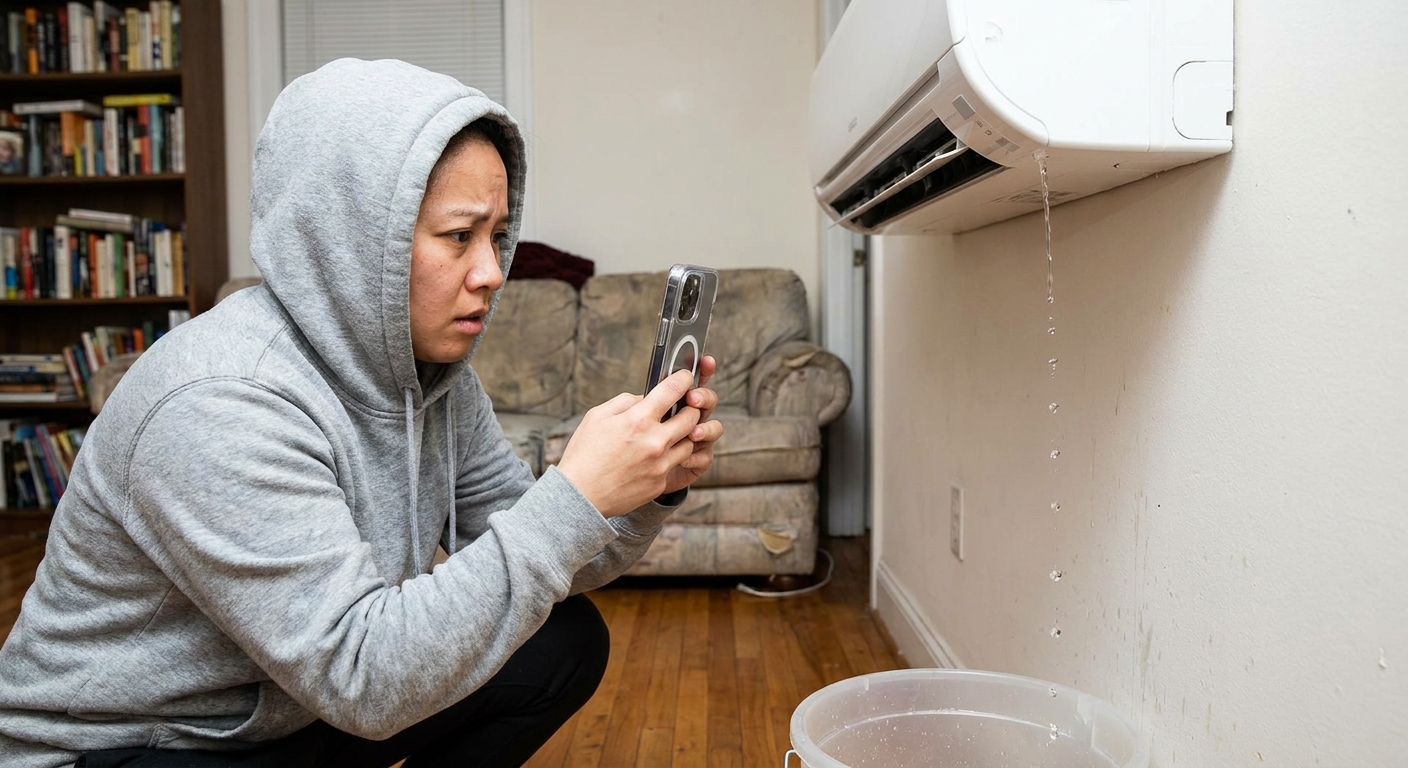
- Date and time, plus outside weather if relevant (humid day, heavy rain, freezing temps).
- Mode and settings: Cool, Heat, Dry, Fan, temperature set point, and fan speed.
- Where the water appears: center, left corner, right corner, wall staining, floor puddle size.
- Photos and a short video of dripping or the sound, plus a photo of the filter condition.
- Drain outlet status: “I found the drain outlet on the balcony wall and it is not dripping while cooling.”
- Any steps you already took: “I cleaned and dried the filters, ran fan-only for 45 minutes, smell remains.”
A copy-and-paste message you can use:
Hi, my wall-mounted mini split is dripping water from the indoor unit and there is a musty odor when it runs. I turned it off to prevent damage. I cleaned and dried the filters today, but the issue persists. I located the condensate drain outlet outside; I am not seeing dripping while in cooling mode (it is humid today). Photos and a short video are attached. Can maintenance please check the condensate line and drain pan (and pump, if applicable) and confirm the indoor unit is level?
When it is urgent
Contact your landlord or building maintenance promptly if any of the following are true:
- Water is dripping steadily or pooling on the floor.
- You see bubbling paint, soft drywall, or staining that grows over hours.
- You smell strong mildew that is getting worse day to day.
- The unit is icing up repeatedly.
- The system shuts off with an error code, or the breaker trips.
In the meantime, keep the unit off, keep the area dry, and run a small fan in the room if you have one. Moisture is the real villain here, not your taste in throw pillows.
Small habits that prevent leaks and funk
Mini splits are wonderfully efficient, but they are also a little like linen. They look effortless, and they reward gentle upkeep.
- Stick to a filter routine you can remember. Tie it to something you already do, like the first weekend of the month.
- Occasionally run fan-only for 30 minutes after heavy cooling days to dry the interior.
- Keep the outdoor unit breathing, especially on balconies where furniture tends to creep closer over time.
- Do not ignore early smells. A faint mustiness is often easier to fix than a full swamp situation.
If you end up contacting maintenance, the most helpful thing you can do is describe the smell (musty vs sour), the leak pattern (edge vs corner), and whether you see any ice or wall staining. Clear details get faster, better repairs.