Why Your New Rug Pad Smells Like Rubber or Chemicals

Clara Townsend
The first time I bought a thick rug pad for my own living room, I felt so grown up about it. Protected floors! Cushy underfoot! Then I unrolled it and my apartment immediately smelled like a mechanic’s waiting room. If your new rug pad smells like rubber, chemicals, or “new plastic,” you are not imagining things.
The good news is that a normal new-pad odor often fades with time and airflow. The more important news is that sometimes the smell is a red flag that the pad material is not a great match for your home, your floors, or your nose. Let’s sort out what you are smelling, how to tell if it’s the pad or the rug, and what to do next.
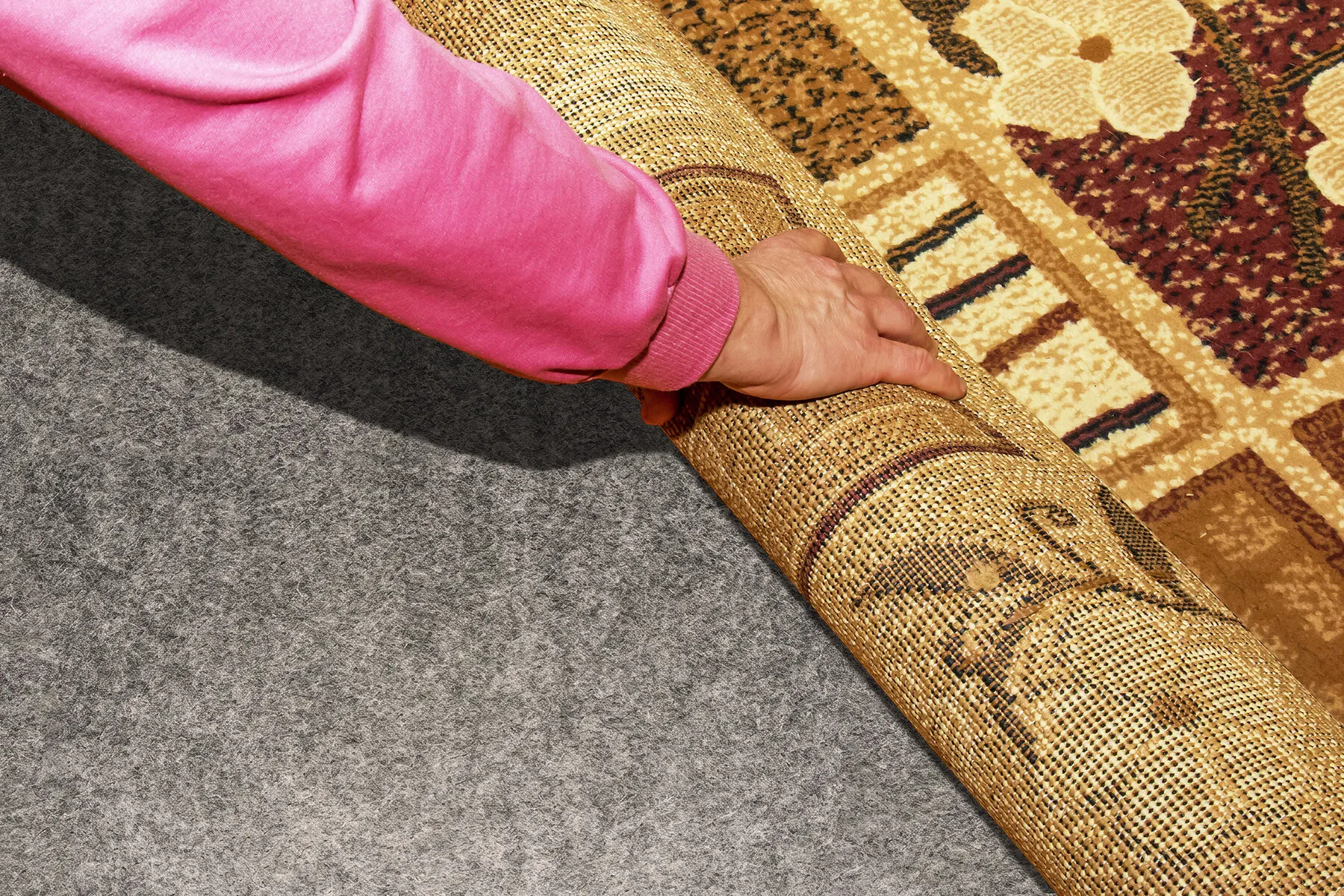
First, make sure it’s the pad
Rugs get blamed for everything, but pads are often the true scent culprit because they are made from dense polymers and binders that can hold odor from manufacturing and packaging.
A quick sniff test
- Separate them. Roll the rug up and move it to a different room. Leave the pad in the original room for 20 to 30 minutes. If you do this with a door closed, plan to ventilate afterward so you do not trap the smell in there.
- Sniff each item up close. Put your nose near the pad surface, then near the rug backing. Do not inhale deeply if it is strong.
- Swap locations. Put the pad alone in a garage, balcony, or laundry room. Put the rug alone back in the original room. If the smell moves with the pad, you have your answer.
- Check the packaging area. Sometimes the plastic wrap or shipping box holds the strongest odor. If the wrap smells worse than the pad itself, airing out may solve it quickly.
If the rug smells fine until it sits on the pad, that’s another clue. Pads can trap smell under the rug where there is less airflow, which makes a mild odor feel much more intense.
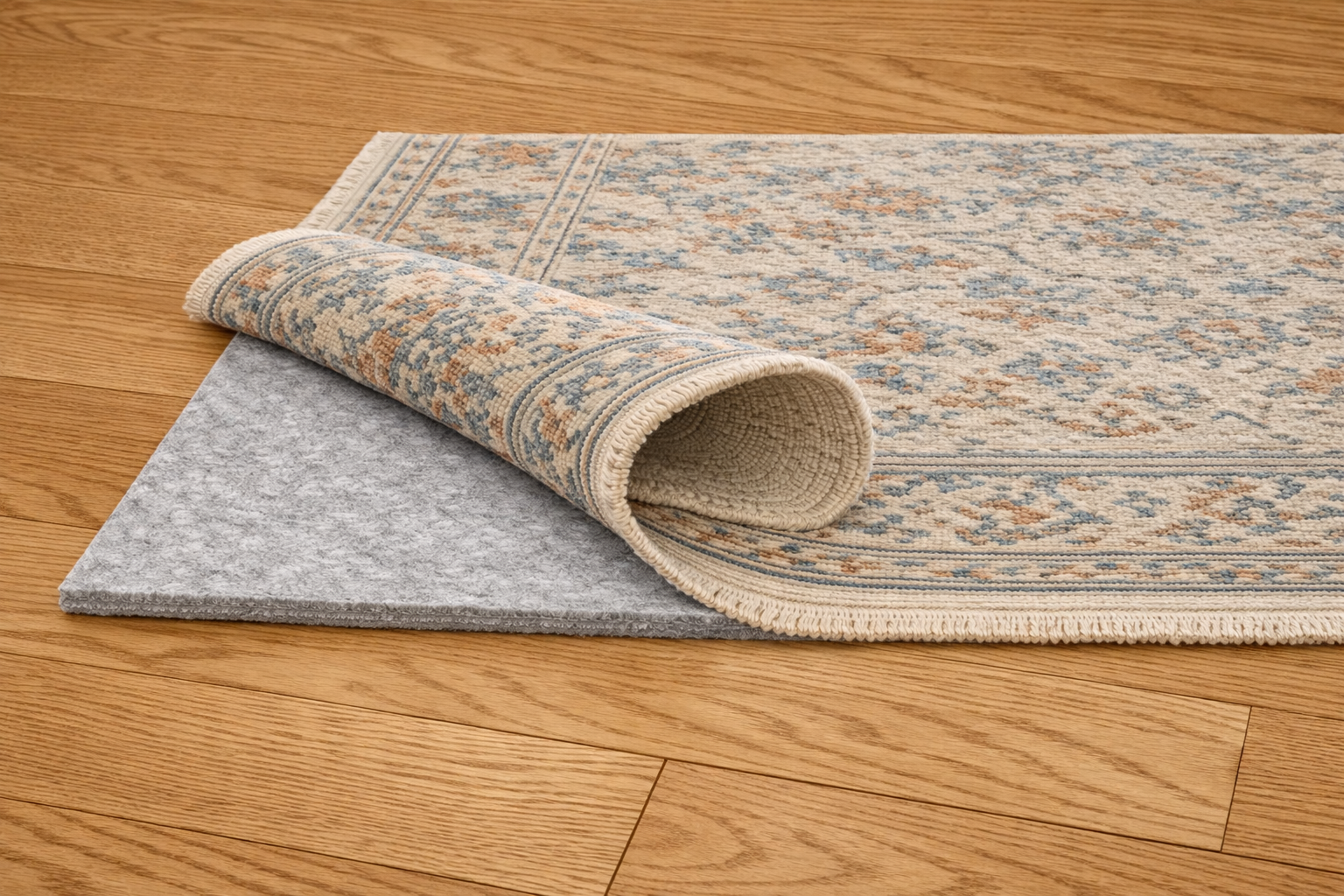
When it’s the rug instead
Sometimes the pad is innocent and the rug is the one bringing the funk. A few common culprits:
- Latex-backed rugs. Some latex backings have a noticeable rubbery smell when new, especially when warm.
- Natural fibers that got damp in shipping. Wool can smell earthy when it has been compressed. If it smells sour, musty, or like mildew, treat that as a moisture problem, not “new rug smell.”
- Dye or finishing odors. Some new rugs, especially synthetic ones, can have a chemical odor from dyes, stain guards, or backing compounds.
Quick mildew check: Run your hand across the backing. If it feels even slightly damp, or you see any spotting, get it off the floor and dry it with airflow right away. A musty smell that gets worse when the rug is warm or covered is not something I would wait out.
What different rug pads smell like
Not all “rubber smell” is the same. The pad’s material matters a lot for both odor and how long it lasts.
Recycled rubber
Typical smell: Tire shop, asphalt, strong rubber, sometimes slightly smoky.
Why it smells: Recycled rubber can contain a mix of rubber sources and processing oils. It is also dense, which can hold odor longer.
Will it fade? Often yes, but it can take days to a couple of weeks. In some cases the tire smell lingers longer, especially in warm rooms or under low-airflow rugs.
My take: If you are scent-sensitive, recycled rubber is the most common “I cannot live with this” pad type.
PVC or vinyl
Typical smell: Sharp plastic, “pool toy,” shower curtain, chemical.
Why it smells: PVC can release a noticeable plastic odor when new, especially if it was tightly packaged. Warmth can make the odor more noticeable.
Will it fade? It usually improves with airing out. If the smell is still sharp after about a week of good ventilation, I would not keep it.
Latex rubber
Typical smell: Mild rubbery scent, sometimes slightly sweet. Rarely, a stronger “balloon” smell.
Why it smells: Latex has its own distinct odor, plus any added stabilizers or adhesives. Coated felt pads may smell mostly like the latex layer.
Will it fade? Usually yes within several days. If you have a latex allergy, avoid handling and consider returning immediately.
Memory foam
Typical smell: Chemical, slightly fishy or sweet, “new mattress topper.”
Why it smells: Foam products can off-gas odor-causing compounds from manufacturing. A stronger smell does not automatically mean something is dangerous, but it is still reasonable to avoid living with an odor that makes you feel awful.
Will it fade? Often improves within a week with good ventilation. If it stays strong after 10 to 14 days, I would return it, especially if it triggers headaches or nausea.
Felt
Typical smell: Very low. Sometimes a faint “new textile” smell.
Why it smells: Felt is mostly fiber and tends to be less odorous, especially if it is not heavily treated. A fully felt pad may still smell like packaging for a day or two.
Will it fade? Quickly, usually within 24 to 72 hours.
Note: Pure felt does not grip like rubber. On slick floors it may shift unless it has a non-slip layer or you use rug tape designed for your flooring.
Air it out safely
If you do one thing, do this: air out the pad without the rug on top. The rug acts like a lid and keeps odor trapped in the room.
The best setup
- Go outdoors if possible. A covered porch, balcony, or shaded patio is ideal. Direct hot sun can warp some foam or vinyl pads.
- Hang it for airflow. Drape it over a railing or two sturdy chairs so both sides can breathe.
- Let it rest flat afterward. Once the smell drops, lay it flat indoors in a ventilated room for a few hours so it relaxes back into shape.
If you cannot take it outside
- Choose the breeziest room. Open windows on opposite sides if you can for cross-ventilation.
- Elevate it. Put it over a drying rack, chairs, or a clean shower rod so air hits both sides.
- Add a fan. Aim the fan so it moves air across the pad and through the room, not straight down at one spot.
- Give it time. 24 to 72 hours is often enough for mild odor. Strong rubber or foam can take longer.
Skip masking sprays. Scented fabric sprays tend to mix with the odor rather than solve it. Also skip sprinkling cleaners on a pad unless the manufacturer explicitly says it is safe. Some materials can degrade or get tacky.
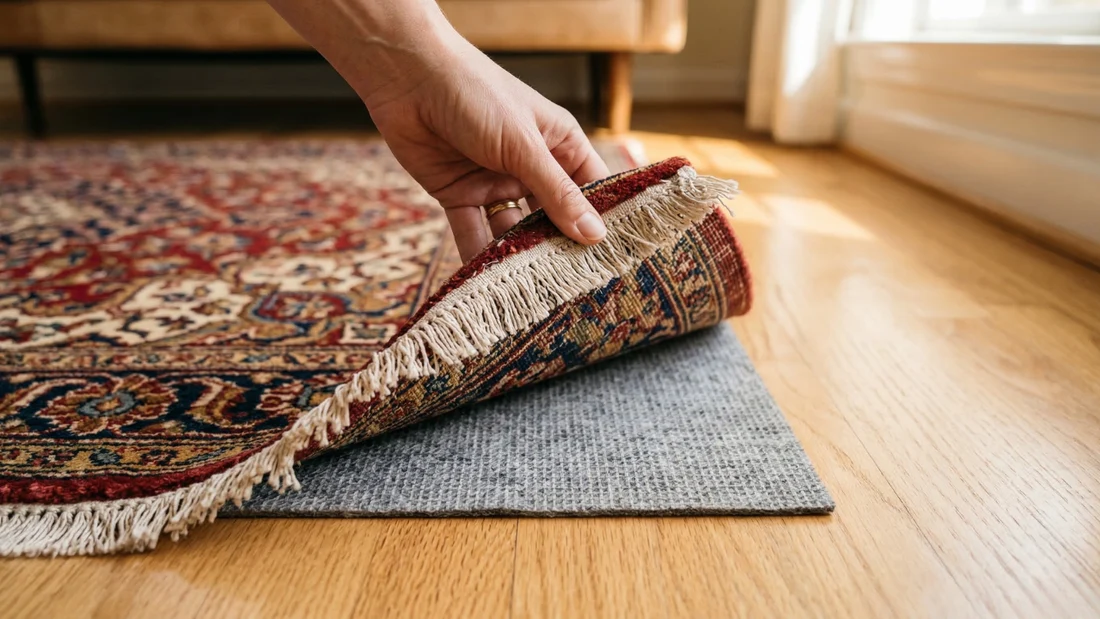
Floor safety matters too
Even if the smell fades, the wrong pad can be a long-term problem for certain floors. Some rubber and vinyl pads can react with finishes or leave discoloration, especially if heat and pressure are involved.
- Hardwood and engineered wood: Check your flooring or finish manufacturer’s guidance. If they warn against rubber, latex, or vinyl, believe them.
- Vinyl, LVP, and laminate: These can be sensitive to plasticizer migration from some PVC or rubber products. A pad that is labeled compatible with your exact floor type is the safer bet.
- When in doubt: Choose a felt-forward pad or a pad specifically marketed as non-staining for your flooring, and test it in a corner for a few days before committing.
When the smell will not fade
There is a normal “new product” smell, and then there is a smell that sets off your internal alarm bells. Here are the signs your pad is unlikely to improve enough, even with patience.
Red flags
- A sulfur or rotten-egg note. That is less typical. It can point to a manufacturing issue, contamination, or a pad that just does not belong in your living space. If it is strong, return it.
- It smells worse with warmth. If the odor spikes every time the heat kicks on or sunlight hits the rug, it may keep bothering you season after season.
- The smell persists past 10 to 14 days of real ventilation. Not “we cracked a window once,” but consistent airing out.
- You get symptoms. Headache, sore throat, watery eyes, dizziness, nausea. Your body is giving feedback. Listen.
- The pad is sticky, oily, or leaves odor on your hands. That may indicate plasticizer or adhesive migration, manufacturing residue, or material breakdown.
If you have babies crawling, pets that nap on rugs, or anyone in the household with asthma or chemical sensitivities, I lean conservative. A pad should not make your home feel unlivable.
When to return it
If you are within the return window and the odor is strong enough that you are rearranging your life around it, return it. You do not need to tough it out for a home basic.
I would return it immediately if:
- The smell is tire-like and intense right out of the package and fills the room within minutes.
- You notice sulfur, ammonia, or rotten-egg notes.
- The pad makes you feel unwell.
- The pad is marketed for your floor type but feels tacky or leaves residue during your first-day test.
Before you box it up
- Take photos of the pad, label, and any warnings or material claims.
- Write down dates of airing out and where you aired it (outdoors, ventilated room).
- Note the odor description (tire, sharp plastic, sulfur). Retailers often respond faster when you are specific.
One more practical tip: if you are unsure, do a short test run. Put the pad under the rug for a single afternoon, then remove it. If the room still smells the next morning with the pad gone, the odor is likely embedding into textiles and it is time to return.
What not to do
- Do not wash most rug pads unless the manufacturer says you can. Water can ruin adhesives and turn some pads gummy.
- Do not use harsh solvents. They can damage the pad and leave their own lingering odor.
- Do not “air it out” in a sealed plastic bag. That traps odor. You want airflow, not storage.
- Do not trap it under the rug and hope for the best. That is how a mild smell becomes a full-room problem.
Prevent it next time
I love a vintage rug moment, but I am picky about what lives underneath it. Here is how I shop for pads when I want comfort without the chemistry cloud.
- Look for felt-forward options if you are scent-sensitive. Felt tends to be the least smelly category.
- Avoid mystery materials. If the listing will not clearly say rubber, latex, PVC, felt, or foam, consider that a sign.
- Be cautious with very thick foam pads if smell bothers you. Plush often equals more noticeable odor at first.
- Order early. If you can, buy the pad before you need it so it can air out for a few days in a spare room.
- Check your floor guidance. Match the pad to your flooring type so you do not solve slipping and create a staining problem.
- Trust your nose in the first hour. Mild and “new” is one thing. Aggressive tire or chemical burn is another.
FAQ
Why does my rug only smell when it is on the pad?
Two things are happening: the pad is the odor source, and the rug is trapping it like a blanket. The smell concentrates under the rug where airflow is low, then seeps out around the edges.
Will baking soda help a smelly rug pad?
I do not recommend it unless the manufacturer suggests it. Powders can cling to grippy surfaces, get trapped in pores, and create mess without truly fixing the odor. Airflow is the safest first step.
Is a rubber smell dangerous?
“New rubber” odor is common, but “common” is not the same as “fine for everyone.” Smell alone does not tell you exposure levels, but if you feel symptoms, if the smell is extremely strong, or if it has a sulfur note, treat it as unacceptable for your home and return it.
How long should I wait before giving up?
For mild odor, 2 to 7 days of real ventilation often makes a noticeable difference. For stronger rubber or foam, I would not personally wait past 10 to 14 days. If you are already unhappy on day one and you can return it, returning is the simplest solution.