Shower Curtain Keeps Sticking to You
Gust
A little flutter. A cozier corner.
If your shower curtain liner keeps trying to hug you mid-rinse, you are not being haunted by bathroom spirits. Most of the time, it is a simple mix of air currents, warm steam, and a liner that is too light to hold its ground. The rod can be perfectly fine and the curtain can still drift inward like it has a mission.
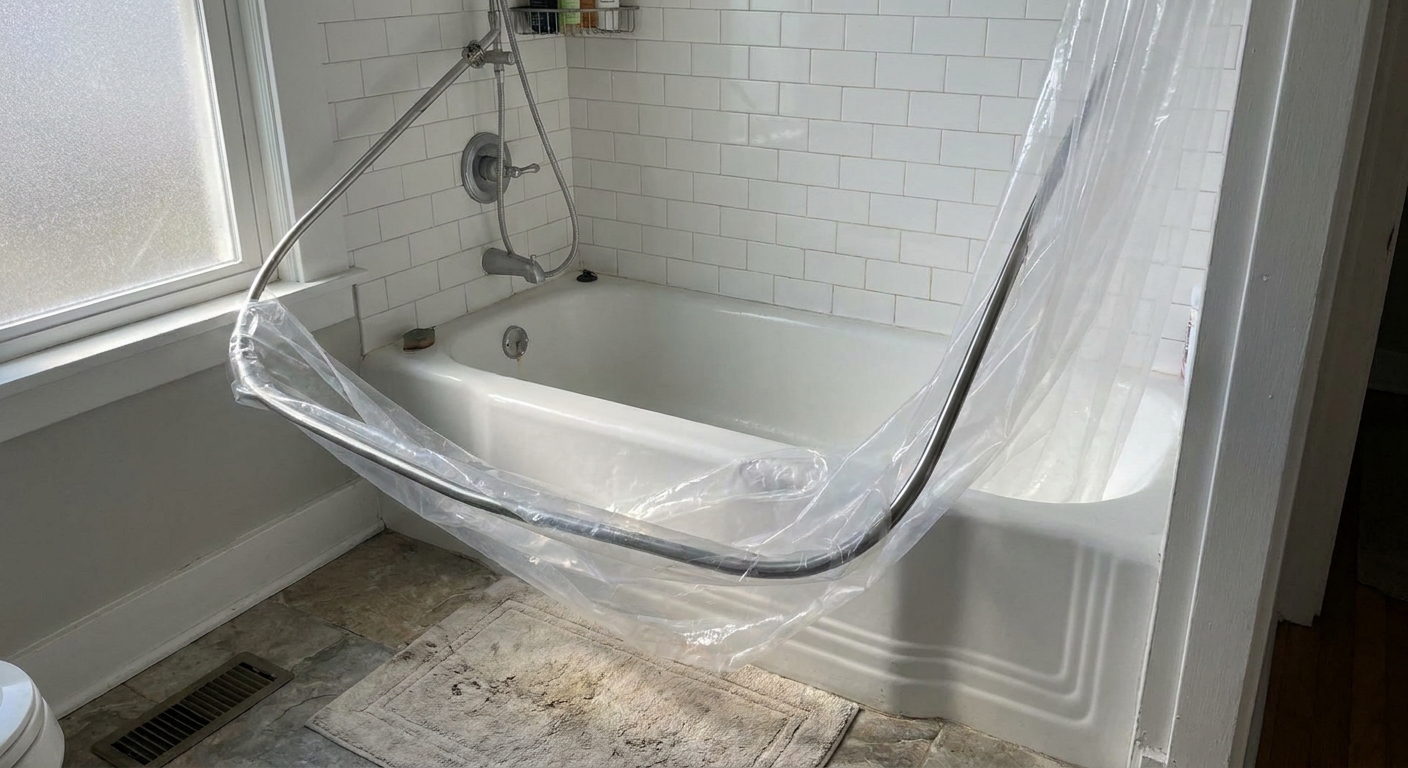
Why the liner pulls inward
That inward swoop is usually caused by shifting airflow inside the tub or shower. When water sprays, it drags and stirs the air around it, and hot shower air circulates differently than the cooler air outside the tub. The liner is the easiest thing to move, so it drifts toward the spray and then clings once it touches damp skin.
You will notice this more when:
- The liner is thin or lightweight. It reacts quickly to moving air.
- The bathroom is small or has limited ventilation. Air has fewer places to go, so it rushes under and around the curtain.
- The water is hot and steamy. Warm air rises and circulates, and condensation makes the liner tackier.
- The shower head is angled toward the curtain side. The spray can create a stronger inward pull.
Fast fixes
1) Add weight at the hem
If your liner feels like a crisp plastic bag, it likely needs more weight at the bottom edge. A heavier hem resists the inward draft and helps the liner hang straighter.
- Switch to a heavier gauge liner. Look for liners described as heavy duty or thick. Even a small upgrade in thickness can reduce cling. (Material-wise, thicker PEVA or EVA often behaves better than very thin vinyl.)
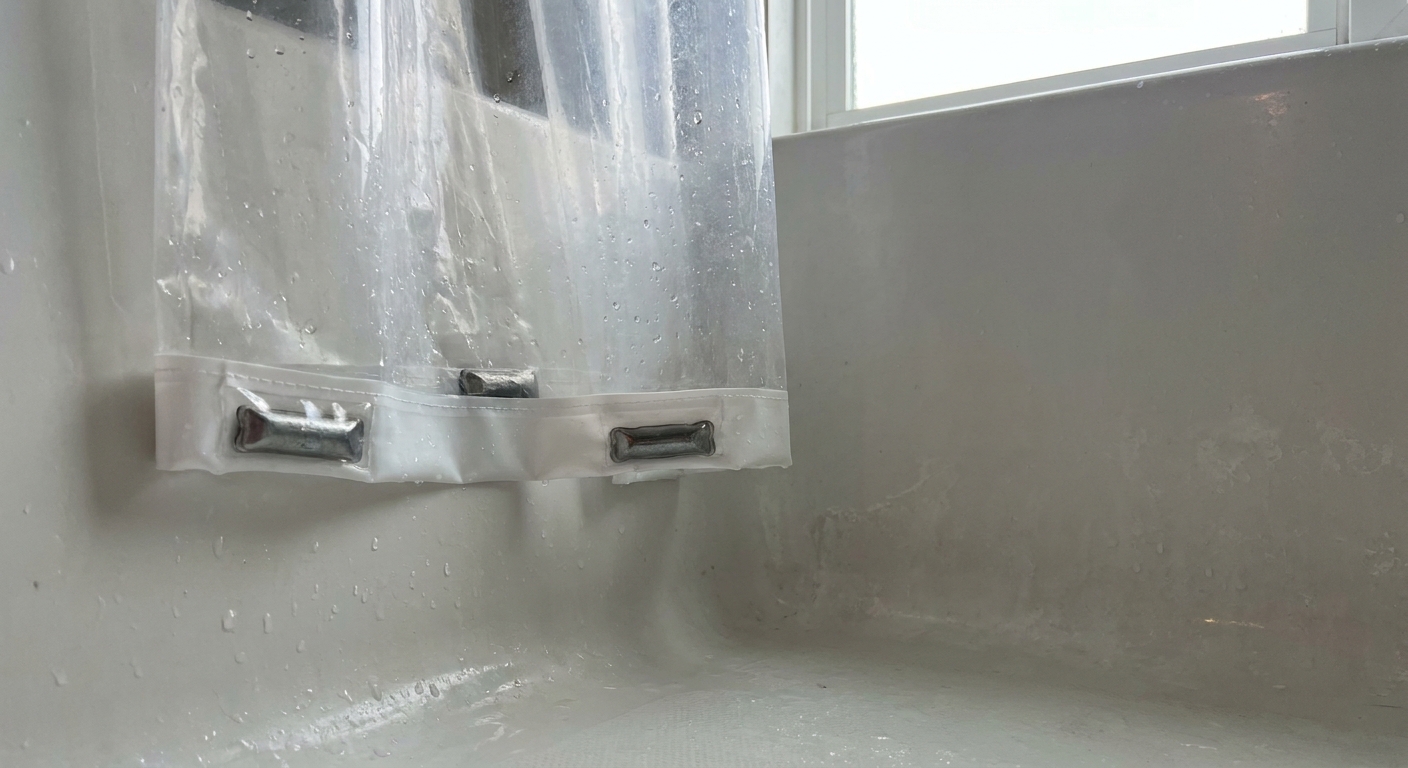
- Choose a liner with a weighted hem. Some liners have weights sealed into the bottom.
- Add clip-on curtain weights. These attach along the bottom edge and can be moved around until the liner behaves.
Small-space note from a drifting scrap of fabric: if your tub is narrow, weight matters even more because the liner has less room before it meets you.
2) Use magnets, but only if you have metal
Magnets are the tidy, low-effort fix when they work. The catch is that magnets need something magnetic. Many tubs are fiberglass or acrylic, which will not help a magnet at all.
- If your tub is cast iron or steel: a liner with magnetic bottom corners can hold the liner against the tub wall.
- If your tub is not magnetic: try adhesive weights or clip-on weights instead. You can also use suction cup style curtain clips designed for tile, but make sure they are meant for wet areas.
Maintenance tip: whatever you stick or suction to the wall, pull it off and clean behind it periodically so it does not trap soap scum and grime. Follow the manufacturer’s guidance to avoid damaging finishes.
3) Consider a curved rod
A curved shower rod bows outward, giving you a little more space between you and the liner. That added gap does two helpful things:
- It makes it harder for the liner to reach you in the first place.
- It reduces that claustrophobic “liner on leg” moment even if the liner still moves a bit.
If you already have a curved rod and the liner still clings, the issue is usually weight and moisture, not the rod shape.
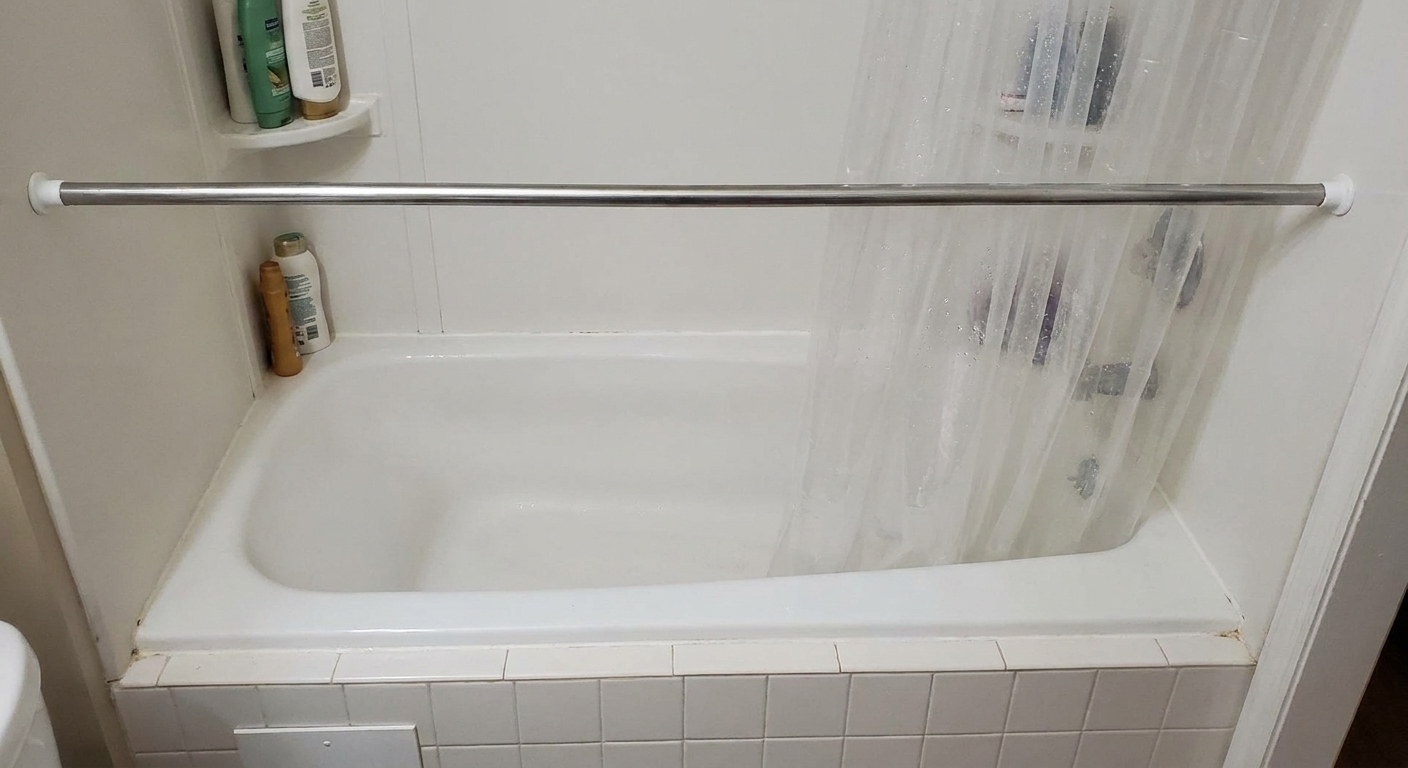
4) Tame steam and airflow
Moisture can make liners clingier because a thin film of water increases adhesion, turning the liner into a damp sticker. Reducing steam also helps the curtain hang more predictably.
- Run the exhaust fan early. Turn it on a few minutes before the shower, and let it run afterward.
- Crack the bathroom door. This gives incoming air a path that is not straight under your liner.
- Lower the water temperature a notch. You still get a warm shower, but you cut the steam load.
- Aim the shower head more toward the center. If the spray hits near the liner edge, it can intensify the inward pull.
- Check your edges. Make sure the liner is fully inside the tub and the ends are not gapping open, since those openings can invite a strong little draft.
If it clings only sometimes
Intermittent cling is usually a clue. Try this quick detective routine:
- If it clings more on very hot showers: steam and condensation are likely driving it. Prioritize ventilation and a heavier liner.
- If it clings when the fan is off: airflow may be getting trapped. Use the fan and crack the door.
- If it clings when the bathroom window is open: you might be creating a draft that pulls air under the curtain. Try opening the door instead, or open the window less.
- If it clings when the liner is freshly washed: some liners can pick up a bit of static. It often settles down after a few showers, and adding weight still helps. If you use an anti-static product, keep it off the inside where it could make the tub slippery.
Not mildew, not the rod
Cling vs mildew
A liner that blows inward is mostly an airflow and weight problem. Mildew is a moisture and drying problem. They can happen in the same bathroom, but you fix them differently.
- Cling symptoms: the liner moves toward you during the shower, especially with hot water and a light liner.
- Mildew symptoms: black or pink spotting, musty smell, slime along the hem, especially if the curtain stays bunched up and damp.
If mildew is your issue, the best habit is to fully spread the curtain and liner after showering so they dry faster, plus regular cleaning.
Cling vs rod trouble
If the rod is falling, slipping, or bowing down, that is a different story. A solid rod can still have a clingy liner. For cling, you are aiming at liner weight, hem control, and airflow management.
Quick shopping checklist
- Heavier gauge liner: look for thick, heavy duty language (often PEVA/EVA).
- Weighted hem: built-in weights are easy and invisible.
- Magnetic corners: only if your tub is magnetic.
- Curved rod: if you want more space and a calmer drape.
- Extra rings: smooth gliding rings make it easier to keep the liner fully closed, which can reduce the gap that lets air rush in.
FAQ
Why does my shower curtain liner cling to me when the water is on?
The spray and hot air circulation change airflow inside the tub area, and a lightweight liner can get pulled inward. Once the liner touches damp skin, it clings more easily.
Do weighted shower curtain liners really work?
They often help a lot, especially in narrow tubs. Weight at the hem gives the liner more stability against moving air.
Will a curved rod stop the liner from touching me?
It can reduce the problem by adding space, but it does not eliminate airflow changes. Many people get the best results by combining a curved rod with a heavier liner or added weights.
What if magnets do not work?
Your tub is likely fiberglass or acrylic. Try a weighted hem, clip-on weights, or suction cup clips made for wet areas instead.