Play-Doh Stuck in a Fabric Couch

Clara Townsend
I have a soft spot for a lived-in home, but there is a particular kind of chaos that arrives with a tiny tub of Play-Doh and an upholstered couch. If you have that neon little blob pressed into fabric right now, take a breath. The safest method is not to rub, not to soak, and definitely not to panic-clean. With Play-Doh, patience is what keeps you from grinding it deeper into the weave.
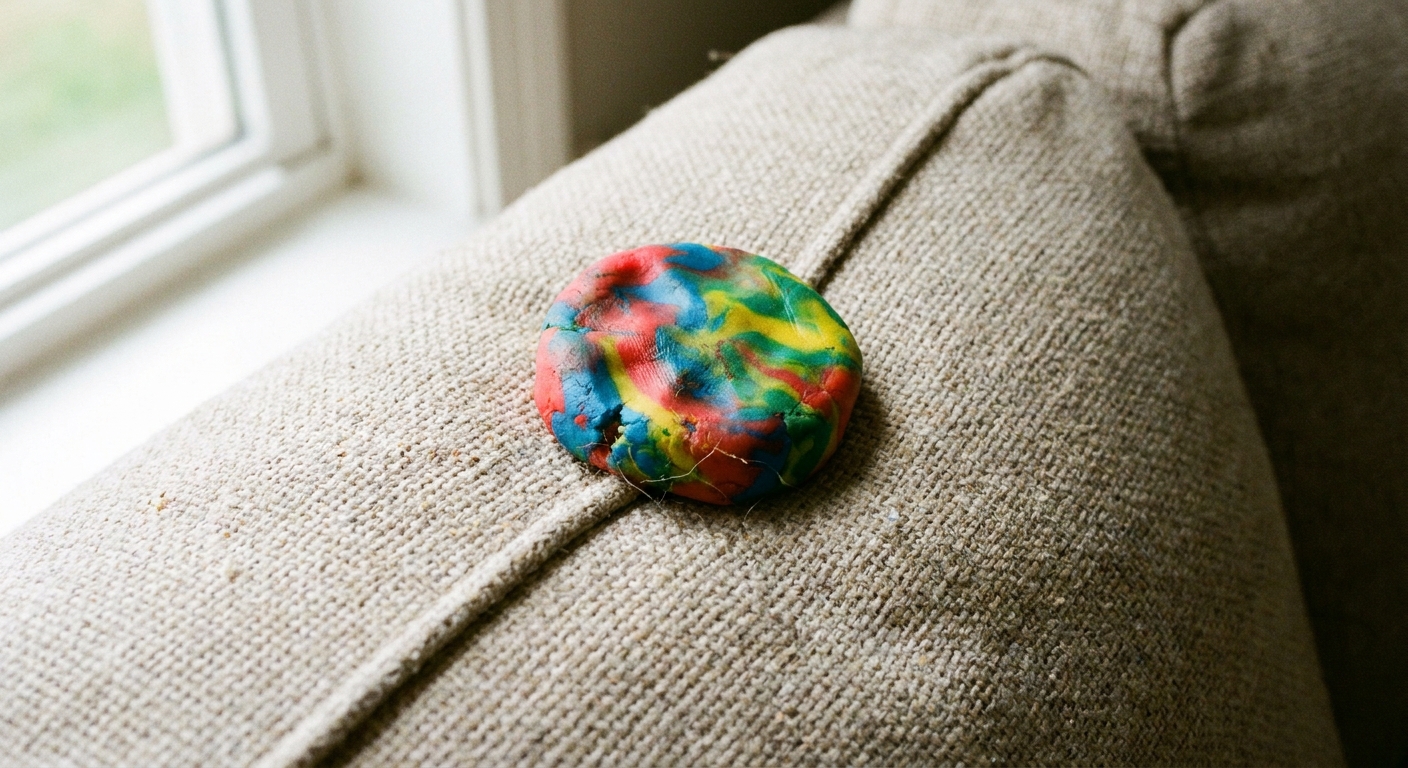
Why Play-Doh needs a different approach
Play-Doh is a salt-based, dough-like modeling compound with binders, a little oil, and dyes. That matters because it behaves more like a crumbly paste as it dries, not like stretchy slime or wax. Methods that work for slime and wax can backfire here:
- Vinegar tricks meant for slime add moisture. Moisture turns Play-Doh back into paste, which can smear through the fibers and spread dye.
- Freeze-and-pop methods meant for candle wax are inconsistent with Play-Doh. You might snap off the top while leaving colored, oily residue behind.
- Rubbing alcohol and strong solvents can pull color, cause dye bleeding, or leave rings and halos depending on your upholstery.
The goal is simple: get the solids out dry first, then spot-treat what remains.
What you will need
- Spoon, dull butter knife, or old credit card
- Soft-bristle brush or old toothbrush
- Vacuum with upholstery attachment
- Painter’s tape or packing tape
- Clean white cloths or white paper towels
- Clear dish soap
- (Optional) 3% hydrogen peroxide for light, W-coded fabric only
Check your upholstery care code
Before you introduce any liquid cleaner, find the care tag. It is often under the seat cushions or on the underside of the sofa.
- W: Water-based cleaners are generally safe.
- S: Use a solvent-based cleaner. Avoid water.
- WS: Either water-based or solvent-based can be used with care.
- X: Vacuum only. No liquids. For stains, a pro upholstery cleaner is the safest call.
If you cannot find a tag, treat your sofa as “unknown” and be extra conservative: dry removal first, then the gentlest spot cleaning possible, always patch-testing in a hidden area.
What to do right now
This matters most if the Play-Doh is still soft.
Step 1: Lift the excess
Use a spoon, dull butter knife, or an old credit card to gently lift the bulk of the Play-Doh off the surface. Work from the outside edge toward the center so you do not spread it.
- Do not scrub.
- Do not add water “just to loosen it.”
- If the dough is mashed into the weave, stop once you have removed what lifts easily.
Step 2: Let the rest dry
Let the remaining Play-Doh air-dry until it is fully hard. Depending on thickness and humidity, this can take anywhere from a few hours to overnight. If you are tempted to speed it up with a hair dryer, use cool air only. Heat can encourage oils to migrate into fabric and can make some dye stains harder to lift.
How to remove dried Play-Doh
Step 1: Crumble it out
Once it is dry, use your fingers to lightly crumble the Play-Doh. If it is embedded, use a soft-bristle brush (an old toothbrush works) to flick crumbs up and out of the fibers.
Tip: Hold your vacuum hose close by as you work so crumbs do not travel deeper into the sofa or onto the floor.
Step 2: Vacuum thoroughly
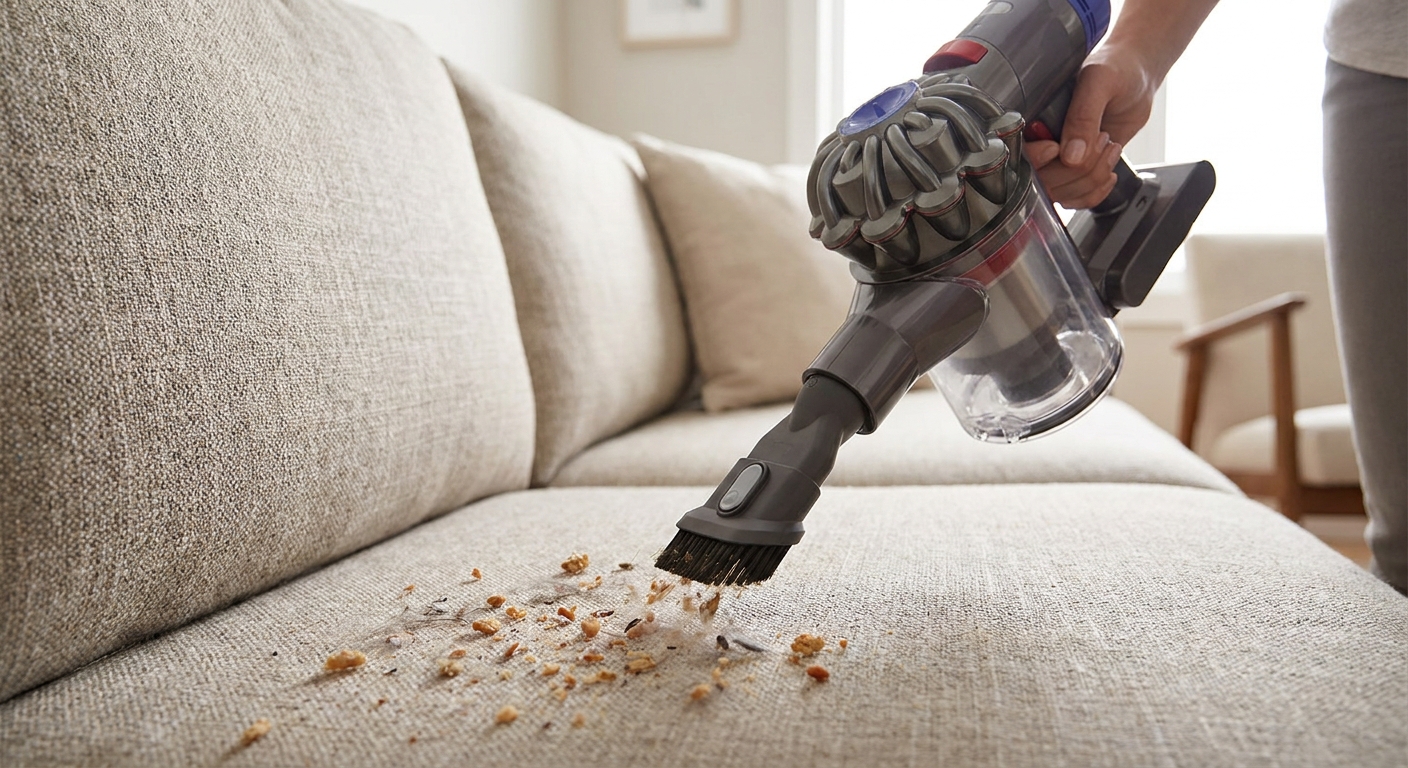
Vacuum the area using the upholstery attachment, then vacuum again from a different direction. Play-Doh loves to lodge between yarns, so changing direction helps.
Step 3: Pick out stubborn bits
If tiny pieces remain:
- Use a piece of painter’s tape or packing tape, pressed and lifted gently, to grab crumbs.
- Use a blunt toothpick to tease bits out of a heavy weave, but be careful not to snag threads.
If the cover is removable
If your cushion cover unzips, check the care label before you do anything else. Even if it is machine-washable, remove the solids first. Washing while dough is still present can smear it and spread dye.
- Scrape and air-dry the Play-Doh, then crumble and vacuum as much as possible.
- If the label allows washing, launder the cover according to the tag, ideally inside out.
- Air-dry if you are worried about heat setting a faint stain, or follow the label if tumble-drying is permitted.
If the cover is not removable, stick with the spot-cleaning steps below.
Microfiber and suede-like couches
If your couch is microfiber, performance velvet, or a suede-like fabric, it can show shading if you scrub or over-wet one spot. The dry-first steps are the same, but take extra care with the nap.
- Brush gently in one direction to lift crumbs, then finish by brushing the area to match the surrounding nap.
- When spot cleaning, use a lightly damp cloth and blot, keeping the wet area small.
- Let it dry fully, then brush again to restore the texture.
If an oily spot is left behind
Some Play-Doh formulas leave an oily or slightly darkened patch even after the solids are gone. Your safest next step depends on the care code.
For W or WS fabrics
- Mix a few drops of clear dish soap into a cup of lukewarm water.
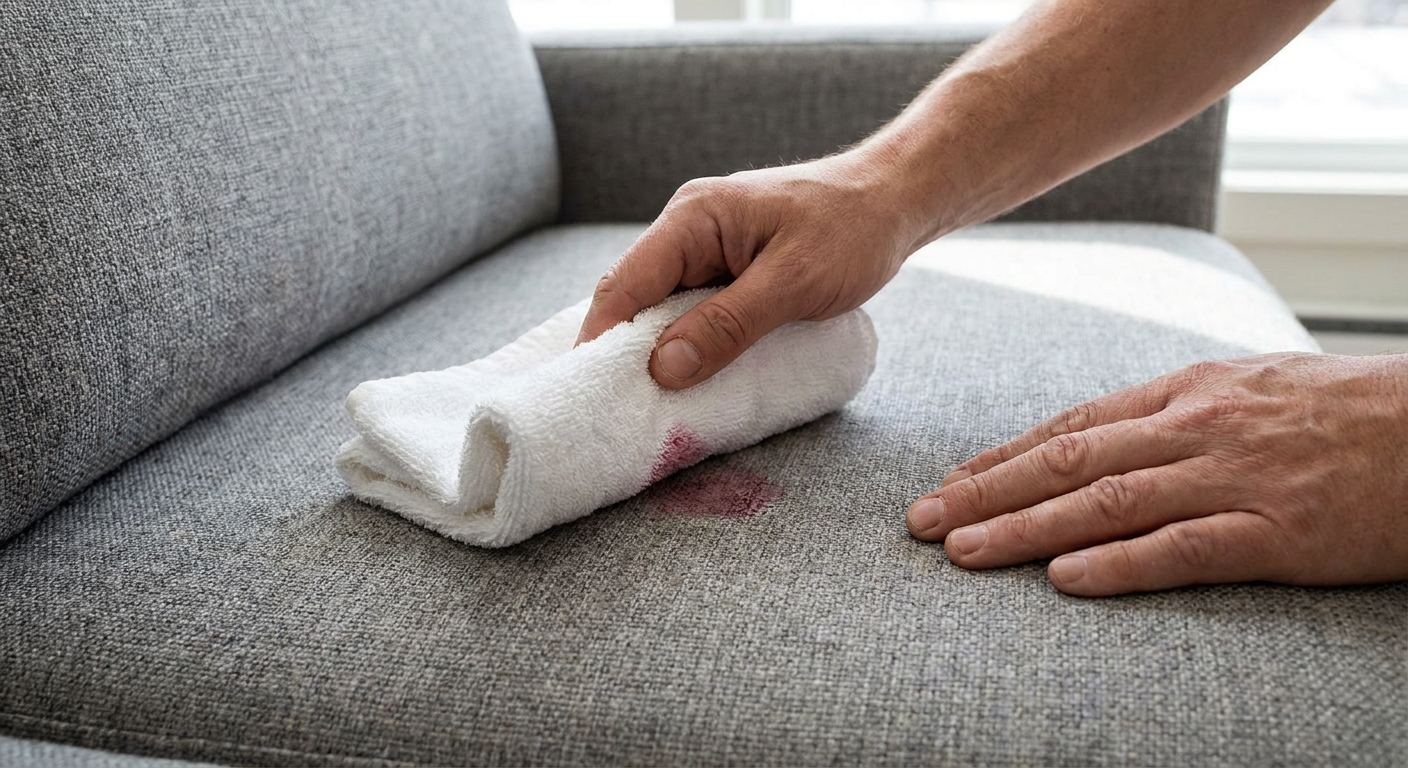
- Dampen a clean white cloth (do not soak it) and blot the spot from the outer edge inward.
- Switch to a fresh damp cloth with plain water and blot to remove soap.
- Press with a dry towel to absorb moisture, then let air-dry.
Keep the wet area as small as possible. Over-wetting can leave a water ring, especially on natural fibers and some microfiber blends.
For S fabrics
If your tag says S, skip water-based soap. Use a solvent-based upholstery cleaner and follow the product directions exactly, including ventilation and patch-testing. Apply to a cloth first, not directly onto the couch, and blot gently.
For X fabrics
Vacuum and dry brushing are your limits. If an oily mark remains, that is the moment to call a professional upholstery cleaner. Trying to “just dab a little” cleaner on an X-coded sofa is how small stains turn into big, pale patches.
If there is a bright dye shadow
After the Play-Doh is gone, you might notice a faint pink, blue, or green stain. That is usually dye, not leftover dough. The key is to treat it like a dye stain: gentle, slow, and with minimal spreading.
For W or WS fabrics: mild soap first
Start with the dish-soap-and-water blotting method above. You may be surprised how much lifts with patient blotting and clean cloth swaps.
If color remains: peroxide, only with care
For light-colored, W-coded fabrics, a small amount of 3% hydrogen peroxide can help with lingering dye stains, but it can also lighten fabric. Patch-test in a hidden spot and wait 10 minutes to check for color change before you touch the visible area.
- Apply peroxide to a white cloth, not directly to the cushion.
- Blot lightly, then pause and let it work for a few minutes.
- Blot with a cloth dampened with plain water to remove residue.
- Air-dry fully and reassess before repeating.
A few cautions: avoid peroxide on wool or silk, avoid it on S- or X-coded upholstery, and do not mix it with other cleaners.
If your sofa is deeply colored, vintage, or you have no care code, I would skip peroxide and consult a pro. Dye stains can be deceptively stubborn, and you want to avoid creating a lighter clean spot that is more noticeable than the stain.
What not to do
- Do not add water while the Play-Doh is still soft. It turns into paste and spreads.
- Do not scrub with a brush while it is wet. Scrubbing pushes pigments and oils deeper.
- Do not use vinegar as a first step. It introduces moisture and can spread dyes here.
- Do not iron or apply heat. Heat can lock in staining and encourage oily residue to wick outward.
- Do not over-wet the cushion. Too much liquid can leave rings, distort cushion inserts, or cause mildew in slower-drying interiors.
When to call a professional
If any of the following are true, a pro upholstery cleaner is worth it:
- Your sofa is labeled X.
- The fabric is delicate, vintage, or has unknown cleaning history.
- The Play-Doh was bright red, purple, or teal and left a strong dye stain.
- The stain is on a high-visibility area and you are worried about bleaching or water rings.
Professionals can use controlled moisture, extraction tools, and fabric-safe chemistry that is hard to replicate at home.
Quick FAQ
Should I freeze Play-Doh?
Usually no. Freezing is reliable for wax, but Play-Doh is a dough-like compound with oils and dyes. Letting it air-dry and crumble out is typically cleaner and causes less smearing.
Can I use a steam cleaner?
I would avoid it unless you are experienced and your fabric is clearly W or WS. Steam adds heat and moisture, which can spread dye and make staining harder to remove.
What if it is in the seam or piping?
Let it dry, then use a soft toothbrush and vacuum hose held close to the seam. Work slowly so crumbs lift out instead of packing in.
How do I prevent a water ring?
Use as little liquid as possible and feather your blotting slightly beyond the stain edge so there is not a hard wet circle. Then press with a dry towel and let it air-dry completely. If your cushion has a removable cover, check the tag before removing or washing it.