New Fabric Headboard Smell: What It Is and How to Get Rid of It

Clara Townsend
The first time I bought a brand-new upholstered headboard (instead of dragging home some glorious flea-market orphan), I was so proud I made the bed immediately. Then I climbed in, leaned back to read… and got hit with that sharp, sweet, plasticky “new furniture” smell. Not dirty, not dusty. Just aggressively new.
If your headboard smells chemical right out of the box, you are not imagining it. Upholstered headboards can off-gas for a bit because the foam, fabric, adhesives, and the way it was packaged can trap and release odor. The good news is that, in many cases, it fades with the right kind of fresh air exchange, even if your headboard is strapped to the wall or bolted to a frame.

Why a new upholstered headboard smells
That chemical odor is usually a mix of a few sources, all doing the same general thing: releasing VOCs and other odor-causing compounds into the air as materials finish curing, warm up, and adjust after manufacturing and shipping. Sometimes it is also plain old packaging smell that transferred to the fabric.
- Foam and padding: Many upholstered headboards use polyurethane foam or fiberfill. Foam can have a noticeable odor at first, especially if it was wrapped tightly for shipping.
- Adhesives: Spray adhesives and contact glues are often used to bond foam to wood and fabric to padding. If the headboard was boxed soon after assembly, the smell can get trapped and then bloom when you open it.
- Fabric finishes: Some fabrics are treated for stain resistance, wrinkle resistance, or flame retardancy. Even when these are common and compliant, they can smell “new” until they air out.
- Packaging and plastic wrap: Plastic, foam sheeting, cardboard, tape, and ink can leave a warehouse-like odor that clings to textiles.
- Tight shipping: A headboard that arrives tightly bagged, tightly boxed, or heavily wrapped can smell stronger because airflow was basically zero for days or weeks.
In many cases, the odor is strongest in the first few days, then noticeably improves over the first week if you give it airflow. Warm conditions can make odor more noticeable in the moment, even when the overall trend is “getting better.”
Quick triage: normal or not?
Before you start rearranging your life to air it out, do a quick reality check.
Likely normal off-gassing
- Smell is noticeable up close, but not making your whole home feel unlivable.
- Odor is strongest right after unboxing and gradually improves each day.
- No oily residue, no dampness, no visible discoloration.
Potential problem signs
- Eye-watering fumes that sting your nose or throat even across the room.
- A strong solvent or gasoline-like smell that does not change after several days of ventilation.
- Headaches, dizziness, nausea that start when you are in the room and ease when you leave.
- Visible wet glue, tacky spots, or chemical residue on fabric.
- Mildew or “wet basement” odor (this points to moisture during storage or shipping, not typical off-gassing).
If you are seeing the problem-sign list, jump to “When to return the headboard” below. Your comfort matters, and so does your indoor air.
How to air it out safely
With off-gassing, the goal is simple: move fresh air across the upholstery and let trapped odors escape. You are not trying to cover the smell. You are trying to remove it.
Step 1: Unbox it like you are airing out a winter coat
- Remove all plastic wrap and foam sleeves immediately.
- Pull out and toss (or recycle) any cardboard inserts, corner protectors, spacer blocks, and plastic bags. Those are often the stinkiest pieces in the whole setup.
- Take off any slipcover pieces that shipped separately and air those out too.
- Keep the room ventilated: open windows if weather allows.
Step 2: Create cross-ventilation
- Open two windows, or a window and a door on opposite sides if you can.
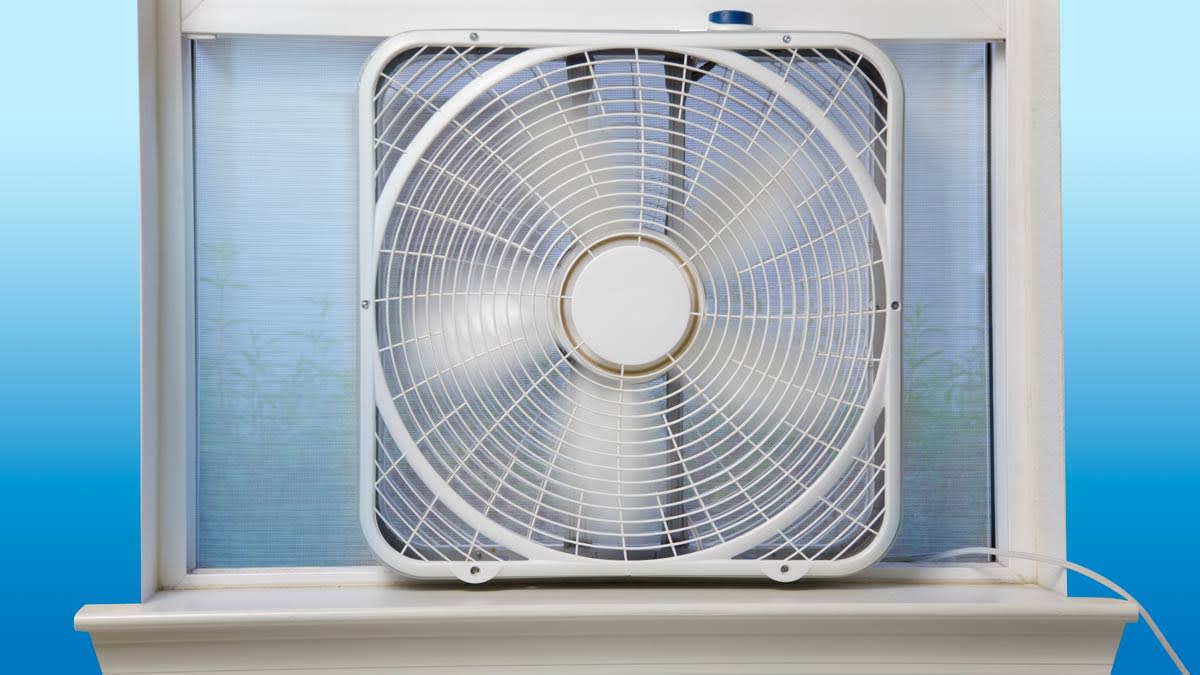
- Use a fan pointed out one window to push indoor air outside. This helps pull fresh air in from the other opening.
- If you can, add a second fan on the other side to help draw fresh air in, so you get a steady flow instead of a lazy swirl.
- Run ventilation for a few hours at a time, especially during the first two days.
Step 3: Give it space to breathe
Even a few inches helps. Off-gassing slows down when upholstery is pressed flat against a wall with no airflow.
- If it is not installed yet, stand it upright in a room with airflow and leave space behind it.
- If it is already installed, do what you can to increase airflow behind and around it for the first week.
If it is wall-mounted
Wall-mounted upholstered panels are gorgeous, but they can trap odor because the back side and foam layer sit close to the wall.
If it is on cleats or brackets
- Best option: Take it down for 24 to 48 hours and lean it upright in a ventilated room, leaving several inches behind it.
- If removal is annoying, try loosening it and spacing it off the wall temporarily with small blocks or rubber bumpers so air can pass behind it. Only do this if it remains secure and stable.
If it is strapped or adhered
- Ventilate the room daily with a cross-breeze.
- Pull the bed slightly forward for a few days so air can circulate behind the headboard.
- Run an air purifier in the room if you have one. Place it near the headboard side of the bed.
In practice, many wall-mounted headboards calm down within a week or two with steady fresh air exchange. The first few days are where you can make the biggest dent by moving air.
If it is bolted to a bed frame
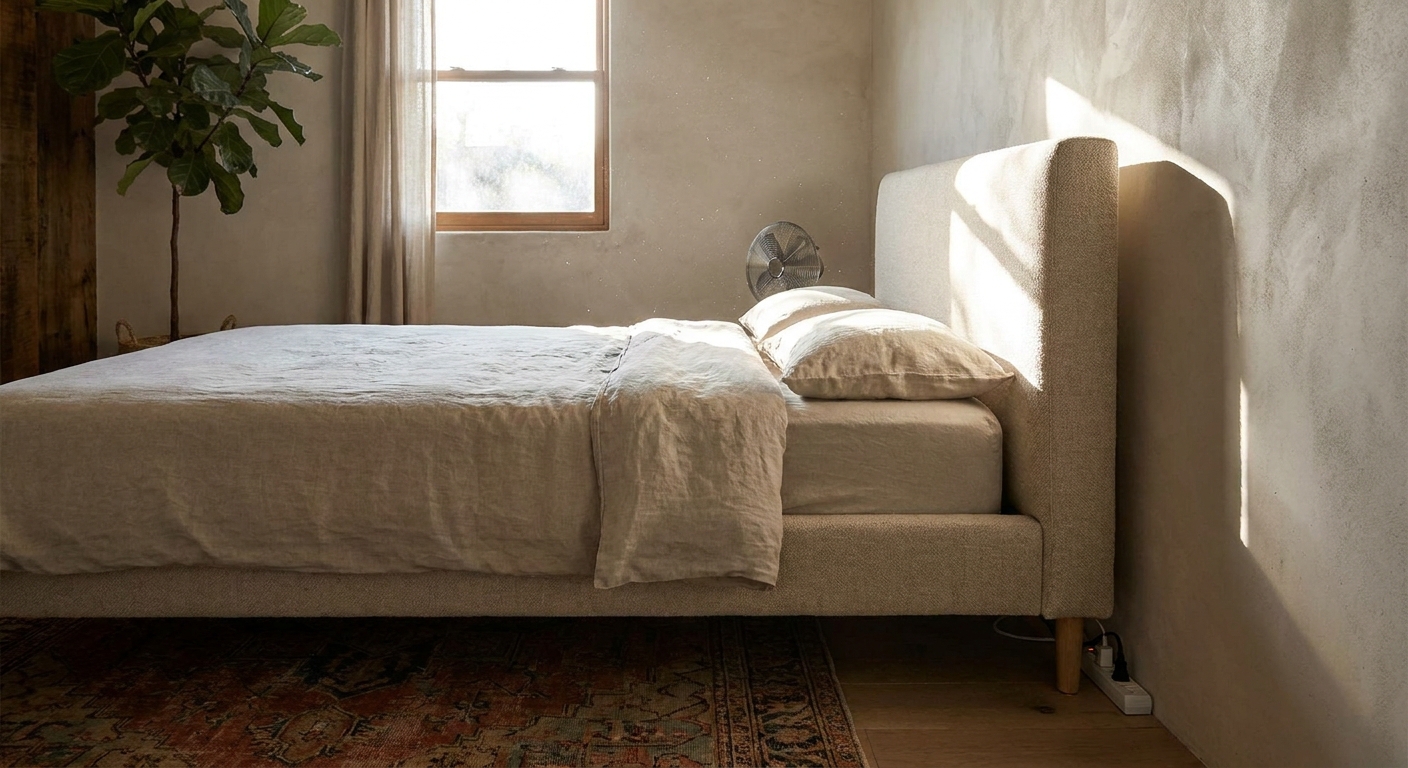
When a headboard is attached to a frame, the tricky part is that the bed often sits flush to the wall, creating a no-air pocket.
- For the first few nights: Pull the bed 4 to 8 inches away from the wall if your layout allows.
- Ventilate during the day: Open windows, run a fan, then close up at night if you need to.
- If you can: Briefly unbolt and lean it upright for a day. Even one day of “free breathing” can help.
Use an air purifier (the right kind)
If you own an air purifier, this is a good time to actually let it earn its keep. For odors, the helpful part is activated carbon (sometimes called charcoal), often paired with a HEPA filter. HEPA is great for particles, but carbon is what targets a lot of the smell.
- Look for a purifier that mentions a carbon filter or activated carbon.
- Run it near the headboard side of the room, not hidden in a corner behind a curtain.
- Keep expectations realistic. Purifiers can help, but they do not replace ventilation.
When bedding makes it worse
This is the part that surprises people: sometimes the headboard is improving, but your bedding setup is trapping the last of the odor right where your face goes.
Common smell traps
- A headboard cover or slipcover: If you put a cover on immediately, it can hold odors close to the fabric and slow down airing out.
- Pillows stacked upright: Pillows pressed against the headboard act like a lid on a pot, trapping the smell at nose level.
- Heavy duvets tucked tightly: Tight, hotel-style tucking can reduce airflow around the upholstery.
What to do instead
- Skip the decorative cover until the smell fades.
- Keep pillows slightly forward, not mashed flat against the headboard.
- Loosen the bedding during the day so the headboard has more exposure to moving air.
Kids, pets, and sensitive sleepers
I am not a medical professional, but I am very pro common sense. Off-gassing odors are usually strongest right after unboxing, and little bodies (and some adults with asthma or chemical sensitivities) can be more reactive to airborne irritants.
A cautious approach many people use looks like this:
- Day 0 to 2: If the smell is strong, ventilate heavily and keep kids and pets out of the room as much as you can.
- Day 3 to 7: If the odor has clearly improved and the room smells mostly normal with windows closed, many households resume normal use.
- After 1 to 2 weeks: A lot of “new headboard” smells that are going to resolve have faded significantly by now with airflow.
If anyone is reacting with coughing, watery eyes, headaches, or refusing to sleep in the room, treat that as useful information. Consider sleeping elsewhere while it airs out, and if symptoms feel significant or persistent, checking in with a clinician is never a bad call. Your home should not feel like a chemistry lab at bedtime.
Mildew smell: do this instead
If the odor reads more like damp towels, wet basement, or musty cardboard, do not treat that like normal off-gassing.
- Inspect the packaging for signs of moisture, staining, or damp corner protectors.
- Check the back of the headboard and seams for discoloration or dampness.
- Do not try to “fix” suspected mold on a new upholstered piece with sprays. That can drive moisture deeper.
- Document it with photos and contact the retailer right away. This is usually a return or replacement situation.
What not to do
- Do not spray perfume or fabric freshener to mask the smell. It often creates a layered odor situation that is harder to live with.
- Do not seal it immediately with covers or plastic in an attempt to “lock in” the odor. Trapped off-gassing tends to linger longer.
- Avoid intentionally heating it with a space heater to “speed it up.” Higher temperatures can increase emissions and make the room feel unbearable. If you want warmth, do it gently and prioritize ventilation.
- Do not soak or saturate upholstery in an attempt to wash out odor. New headboard smell is usually inside the materials, not surface grime, and over-wetting can create new problems.
How long will it last?
Every brand, fabric, and foam is different, but here is a realistic range you can use for planning (not a promise):
- Mild “new” smell: commonly 2 to 7 days.
- Moderate smell that is obvious at bedtime: often 1 to 2 weeks with steady ventilation.
- Strong, sharp chemical odor: should start improving within the first few days with fresh air exchange. If it is not improving, that is a red flag.
Humidity, room temperature, and ventilation make a big difference. A sealed-up room in a hot climate can make a headboard smell stronger and longer. Fresh airflow usually does more than any gimmick.
When to return the headboard
I am all for giving a new piece a fair chance, but I am also a big believer in honoring your senses. If a headboard makes your bedroom feel uninhabitable, it is not the cozy upgrade you paid for.
Consider returning it if:
- The odor is overpowering after 72 hours of strong ventilation.
- You have physical symptoms (headache, nausea, throat irritation) that track with being in the room.
- The smell is getting worse, not better, after unboxing.
- You notice dampness, mildew odor, or staining that suggests improper storage or shipping damage.
- You cannot ventilate the room adequately (tiny bedroom, no windows), and the smell is affecting sleep.
Return tips that save your sanity
- Keep the packaging until you are confident it is a keeper.
- Take a quick photo of any tags, labels, or lot numbers and any visible adhesive seepage or discoloration.
- If you contact customer service, describe it clearly: “strong chemical or solvent odor that persists after X days of ventilation” is more useful than “smells weird.”
Quick FAQ
Is the smell coming from the fabric or the foam?
Often both. Foam and adhesives are frequent culprits, and packaging can also leave a “warehouse plastic” note that clings to textile surfaces.
Can I just wait it out?
If the smell is mild and improving daily, yes. Still, airing it out speeds things along and makes the bedroom more comfortable faster.
My headboard is mounted and I cannot move it. Am I stuck?
No. Focus on daily cross-ventilation, pull the bed slightly away from the wall for a few days, run a carbon-equipped air purifier if you have one, and avoid trapping the headboard behind pillows or covers while it airs out.
Why does it smell stronger at night?
Bedrooms are often closed up at night with less airflow. Your face is also closer to the headboard when you are in bed, so you notice it more.
Final stylist note
The goal is not to make your room smell like a candle aisle. The goal is to make it smell like nothing at all, just clean sheets and quiet. Give your new headboard air, a little time, and some breathing room from tight covers. If it still feels harsh and chemical after a real airing-out effort, it is completely reasonable to call it and return it. Bedrooms should feel like exhale spaces.