New Carpet Smell After Installation

Clara Townsend
The first time I walked into an apartment after fresh wall-to-wall carpet went in, I understood why people describe the smell as a “wall.” It hits the back of your throat, clings to your hair, and makes the whole place feel less like home and more like a hardware store aisle. The tricky part is this: some odor is a short break-in period, and some odor is a clue that a material is reacting badly, installed incorrectly, or still curing in a way that is not safe or comfortable.
Let’s break down what you are smelling, what’s normal, what’s not, and what you can do when you cannot exactly drag the carpet outside to “air it out.”
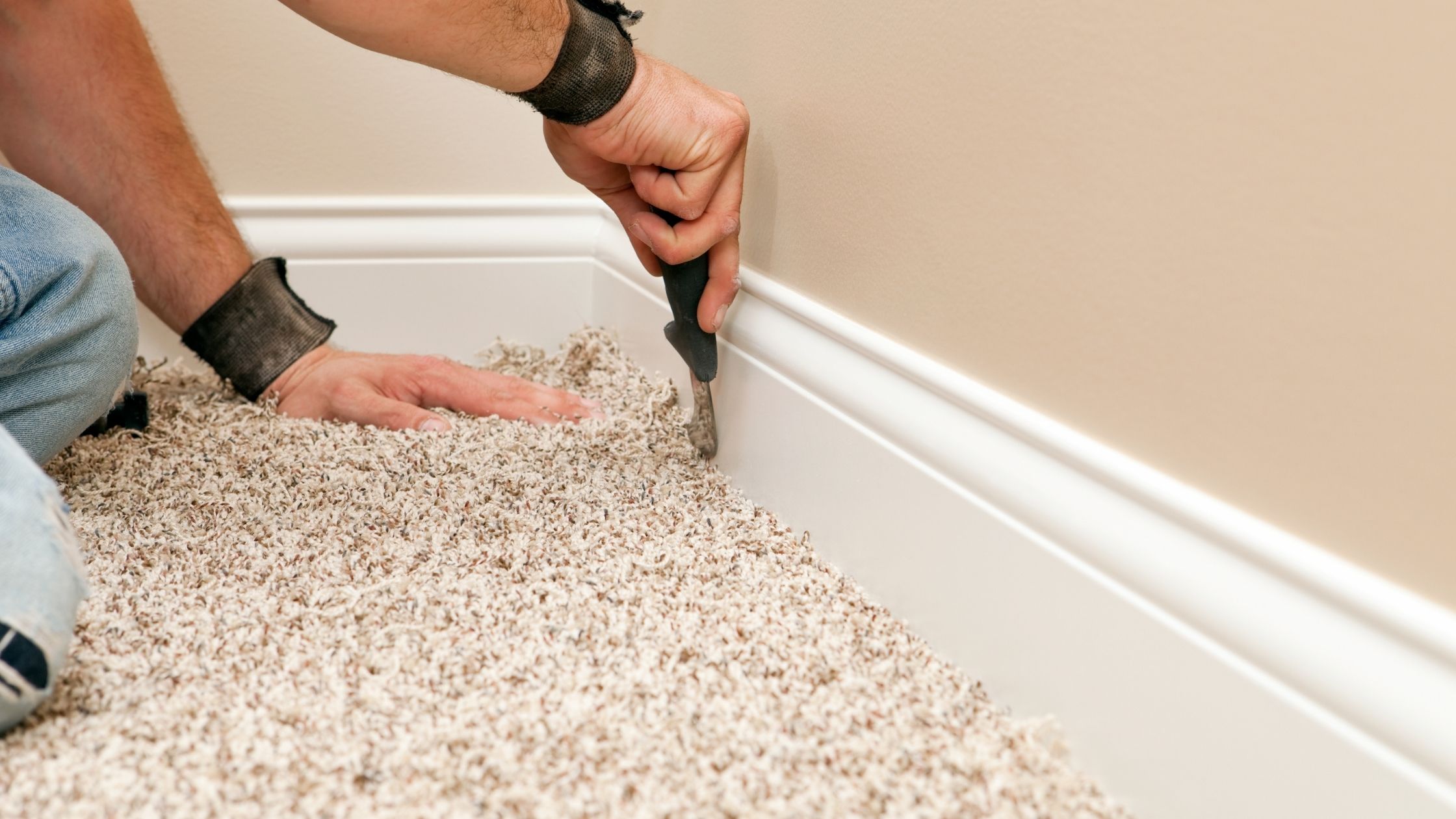
Where the smell comes from
“New carpet smell” is usually a mix of off-gassing from several layers and products used together. Even if the carpet itself is low-odor, the cushion, seam tape, and adhesives can add their own chemical notes.
1) The carpet face (the fibers you walk on)
Most installed carpet is synthetic, often nylon, polyester, or olefin. These are made with chemicals that can release volatile organic compounds (VOCs), especially right after unpacking and installation.
- Typical smell: “new plastic,” sweet-chemical, sometimes rubbery.
- Common timeline: many people notice a big improvement in 48 to 72 hours, with a faint odor that can linger for 1 to 2 weeks. Some products can take longer, especially in closed-up or humid spaces.
2) The cushion or pad underneath
Carpet pad is a huge player in odor because it is a big, porous slab that can hold onto manufacturing smells. Common pads include rebond foam (often made from recycled foam), foam, felt, or rubber.
- Typical smell: rubbery, “gym mat,” sometimes musty-chemical.
- Common timeline: similar to carpet, but pad odor can hang on longer if the room stays closed up.
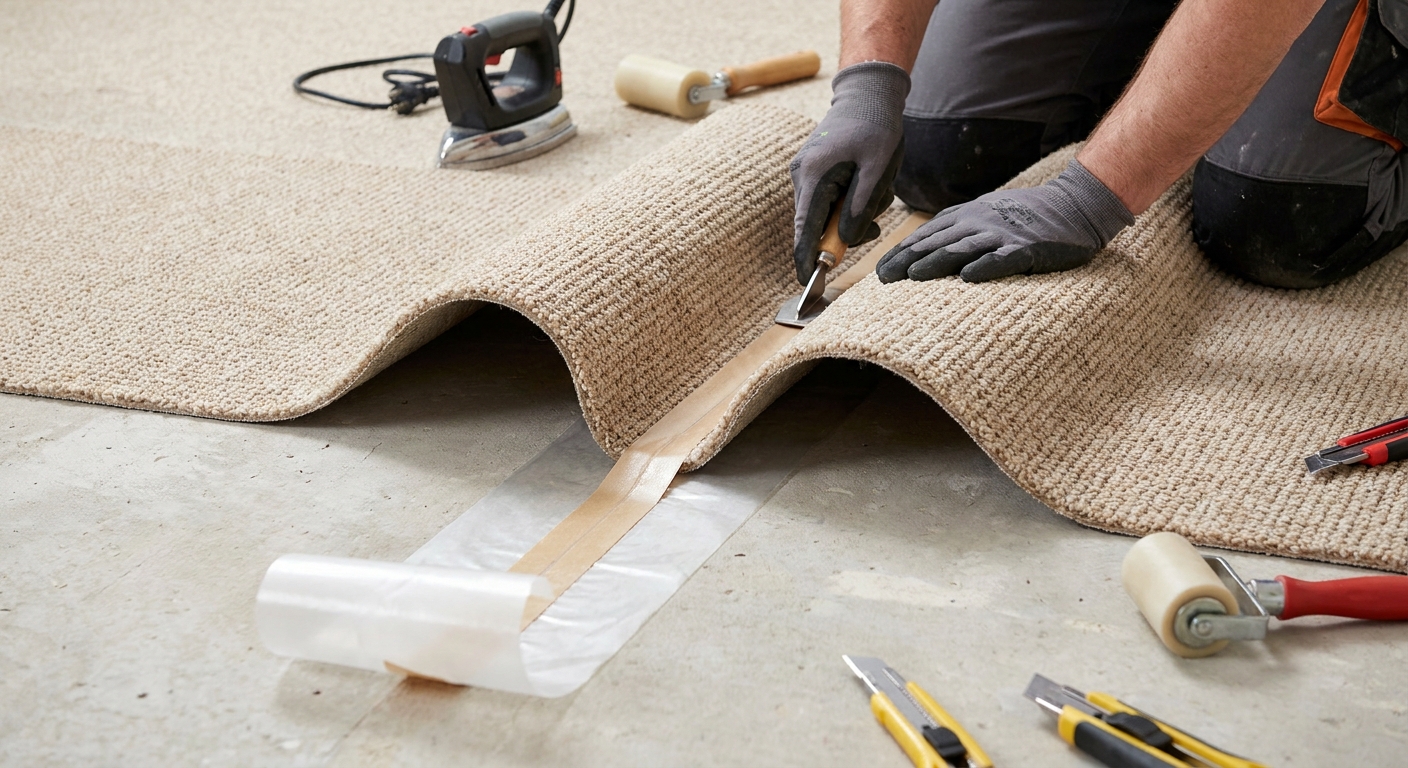
3) Seam tape and hot-melt seam sealer
If your room is carpeted wall-to-wall, seams are often joined with seam tape and heat. The hot-melt glue and seam sealer can smell sharp while they cool and cure.
- Typical smell: hot glue, tar-like, sharp chemical near seams.
- Common timeline: strongest the day of install, usually calms down within a few days.
4) Adhesive (if it was a glue-down install)
Many residential wall-to-wall installs use tack strips around the perimeter rather than full glue-down, but apartments and some basements use adhesive. Adhesives vary widely. Some are labeled low-VOC, others are not, and curing time depends on humidity and airflow.
- Typical smell: solvent-like, paint thinner-ish, strong chemical that feels “wet.”
- Common timeline: can take several days to settle, sometimes longer if the space is humid or closed up.
Important: Your nose is not a lab instrument, but it is a good early-warning system. If the smell is mild and steadily improving, that is usually a break-in. If it is intense, worsening, or causing symptoms, treat it like a real indoor air quality issue and escalate.
How long is normal?
In a typical, well-ventilated home, new carpet odor often follows a pattern like this:
- First 24 hours: strongest odor. This is when many adhesives, seam materials, and packaging smells are most noticeable.
- Days 2 to 3: big improvement for many people if you ventilate consistently.
- Days 4 to 14: lingering odor should fade gradually. You might notice it most when you return home after being out.
What stretches the timeline: closed windows, high humidity, lots of square footage installed at once, glue-down installation, thicker pad, and rooms without cross-breezes. Some products and adhesives can also off-gas longer than two weeks.
When it is not normal
Consider it a red flag if:
- The smell is still intense after 5 to 7 days of consistent ventilation.
- You notice headaches, dizziness, nausea, burning eyes, wheezing, or new irritation that starts after the installation.
- The odor is musty rather than chemical, especially if the carpet feels cool, clammy, or damp.
- The odor seems strongest near one wall, one seam, a closet, or a single corner, suggesting localized adhesive, moisture, or contamination.
Ventilation for renters
If you rent, you may not be able to remove the carpet, change the HVAC setup, or disappear for a week. These moves help most, starting with the easiest.
Create cross-ventilation
Off-gassing clears faster when you move air out and bring fresh air in. If you can, open windows on opposite sides of the unit for even 20 to 30 minutes at a time.
- Open two windows or a window and a door (if safe).
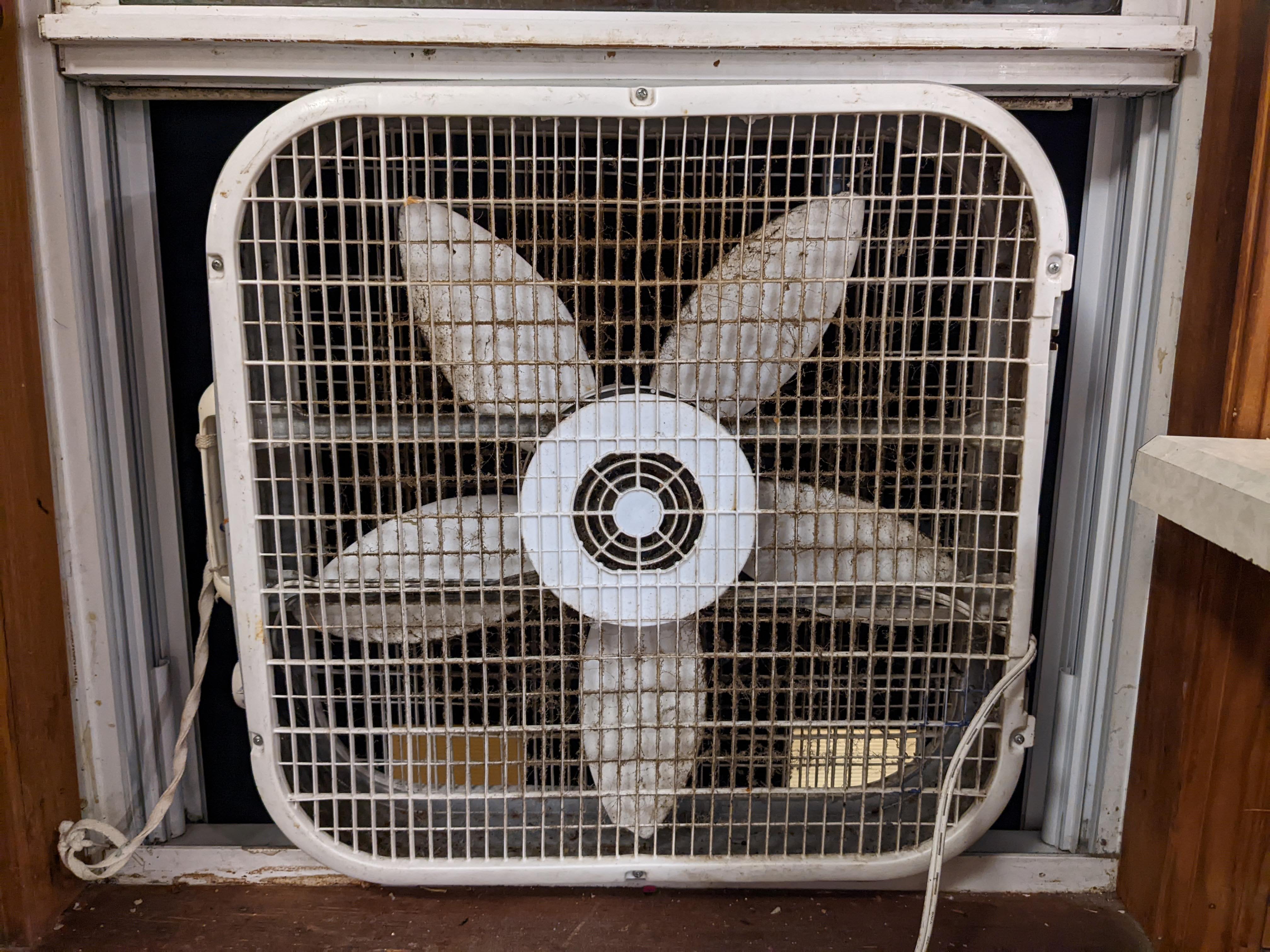
- Use a box fan facing out in the smelliest room window to exhaust air.
- If you have a second fan, aim it in from a different window to feed fresh air.
Run exhaust fans longer
Even if the carpet is in a bedroom, bathroom and kitchen exhaust fans can help pull indoor air out. If your fan has a timer, use it. If it is loud, run it in blocks during the day and early evening.
Humidity matters
High humidity can slow curing and make odors hang around. If it is muggy, use AC or a dehumidifier (if you have one) while you ventilate in shorter bursts.
HVAC: use it strategically
- If you have central air: run the fan setting (circulate) to keep air moving, and replace the filter if you are allowed to. Use a filter your system can handle.
- If you have a window AC: it mostly recirculates indoor air. It can help with comfort, but it is not a substitute for fresh air exchange.
- If you have heat: warmth can increase off-gassing in the moment, so you may notice a temporary spike. At the same time, reasonable warmth can help materials cure and move through the process faster. Keep the room comfortable, but avoid overheating it.
Air purifier: helpful, with realistic expectations
A HEPA purifier is great for dust and fibers, but VOCs require activated carbon to be reduced in a meaningful way. If you shop for one, look for a purifier with a substantial carbon filter, not just a thin “carbon sheet.” If you already own a purifier, run it continuously in the carpeted room, but do not expect it to erase odor on day one.
What not to do
- Do not shampoo or steam-clean brand new carpet to “wash out” smell unless the manufacturer or installer specifically recommends it after a certain waiting period. Extra moisture can trap odor, loosen seams, or create mustiness if the pad gets damp.
- Do not sprinkle baking soda wall-to-wall unless you are 100% sure you can vacuum it thoroughly with strong suction. Fine powder can stress some vacuums and linger in the pile.
- Do not mask with heavy fragrance (plug-ins, incense, fogging sprays). Mixing smells can make headaches worse, and it complicates figuring out what is actually happening.
- Do not seal the room and hope it stays contained. If a door is shut, air still migrates. The goal is dilution and exhaust, not containment.
Kids, pets, and sleeping there
I am not a medical professional, but I have styled homes for families for years, and I take the cautious route when there is a strong chemical odor.
When it is usually okay
For many standard installs with odor that is clearly improving:
- Day of installation: keep kids and pets out if possible, especially away from seams and edges where adhesives are freshest.
- First 48 to 72 hours: prioritize ventilation and supervised time only. If the smell is strong enough that you would not want to nap in there, do not let a toddler roll around on it for an hour.
- After 3 days: if odor is fading and there are no new symptoms, most families resume normal use.
When to wait longer
- Any child with asthma or sensitivities.
- Small pets that spend time nose-to-floor (cats, small dogs, rabbits).
- Rooms that were glue-down installed and still smell “wet.”
If you are choosing between being polite and breathing comfortably, choose comfort. A sleeping space should not smell like solvents.
Bad install or normal break-in?
When you cannot remove the carpet, your best tool is observation. The difference between normal break-in and a problem is usually pattern: where the smell is strongest, how it changes with time, and what the carpet looks and feels like.
Signs of normal break-in
- Smell is strongest right after install and steadily improves each day.
- Odor is fairly even across the room, not concentrated in one spot.
- Carpet feels dry, seams lie flat, and the room does not feel humid or clammy.
Signs something is off
- Localized odor: one closet or corner smells dramatically stronger.
- Musty, sour, or mildew-like smell: can suggest moisture trapped in the pad or a damp subfloor.
- Edge issues: carpet pulling away from the wall, rippling, or feeling loose can point to stretching or attachment problems. It can also coincide with adhesive used in patches.
- Seam problems: visible seam tape, fraying seam, lumps, or sticky residue near the seam line.
- Persistent wet-glue smell beyond a week: curing may be slowed by humidity, the wrong adhesive, or too much adhesive.
A quick sniff map
It sounds silly, but it works. Slowly walk the perimeter and the seams and note where the odor spikes. If you can identify one area that is dramatically worse, that is useful information for management and for the installer to troubleshoot.
If you suspect moisture
A musty smell is a different problem than chemical off-gassing. If anything seems damp or swampy, focus on getting answers quickly.
- Check for recent leaks: a window that was left open in rain, a radiator issue, a pet accident, a spill, or an upstairs leak.
- Press a clean paper towel firmly into the carpet in the smelliest area. If it comes up damp, that is a strong clue.
- Ask management to have the installer check the subfloor and pad. A moisture meter reading beats guessing.
What to document
If you rent, documentation keeps the conversation factual. You are not complaining about a vibe. You are reporting a condition.
- Date and time of installation (or when you first noticed the odor).
- Which rooms were carpeted and whether doors were kept shut during install.
- Odor description: sharp chemical, rubbery, musty, solvent-like, sweet.
- Intensity and trend: better each day, unchanged, worse at night, worse when heat runs.
- Symptoms: headaches, nausea, coughing, watery eyes, asthma flare-ups, or any new or unexplained symptoms after the installation. Note who is affected (adult, child, pet).
- Photos: seams lifting, wrinkles, visible tape, gaps at baseboards, damp spots, staining, or adhesive residue.
- Ventilation steps you took: windows open, fans running, purifier used.
If you can locate them, ask for product info on the carpet, pad, and adhesives used. Management may have spec sheets or invoices. You do not need to argue chemistry. You simply want to know what was installed in your home.
Labels and info to ask for
If you want a simple script, ask whether the carpet, pad, and adhesive have third-party indoor air emissions certifications (for example, programs commonly referenced in flooring like Green Label Plus for carpet). If management cannot provide anything, ask for the exact product names so you can look up the manufacturer’s documentation yourself.
When to escalate
Ventilation is the first step, but there are times to stop DIY-ing and push for action.
Escalate same day if:
- You smell an extremely strong solvent odor that makes you dizzy within minutes.
- You suspect a gas leak or burning smell that is not “new carpet.” Leave and contact the appropriate emergency or utility service.
- Anyone has significant breathing trouble.
Escalate within a few days if:
- The smell is intense and not improving after 72 hours of real ventilation.
- The smell is musty or you see dampness, suggesting moisture trapped under the carpet.
- Your pet has new or unexplained behavior changes, avoids the room, or seems unwell.
In many cases, the fix is not ripping everything out. It can be re-seaming, addressing a wet subfloor, swapping pad, or ensuring the correct adhesive and cure conditions.
Make it livable while it fades
While you wait for the odor to calm down, you can make the space feel less harsh without trapping smells.
- Keep soft goods minimal in that room for a few days. Drapes, bedding, and throw blankets absorb odors.
- Use washable barriers if you must use the room: a clean cotton sheet on the floor for baby playtime, or a washable pet blanket where your dog likes to flop.
- Vacuum lightly after 24 to 48 hours if the installer recommends it. New carpet can shed loose fibers, and removing them can make the air feel cleaner. Use a vacuum appropriate for your carpet type.
I know it is tempting to nest right away. Give it a beat. Let the new materials exhale first, then bring in your linens and layered textures.

FAQ
Why does my new carpet smell worse at night?
Two common reasons: windows are closed (less fresh air exchange), and temperatures shift. Warmer indoor temps can increase off-gassing in the moment. You also notice it more when you walk back into a closed room.
Is the smell coming from the pad or the carpet?
Often it is both, plus seam materials. If the odor seems strongest near seams or along the edges, seam tape or adhesive may be contributing. If the smell feels rubbery across the whole room, pad can be a big culprit.
Can I sprinkle something on the carpet to absorb the odor?
It is safer to focus on ventilation and air exchange first. Powders can be hard to fully remove from wall-to-wall carpet, and heavy fragrance products can make irritation worse.
Should I ask for the carpet to be replaced?
If the odor is intense and not improving after a week of proper ventilation, or if there are clear install defects or moisture issues, you have a reasonable case to ask management for next steps. Start with documentation and a request for an inspection and product details.
What is the simplest first-day plan?
- Open windows and create a cross-breeze.
- Put a fan in the window facing out.
- Run exhaust fans.
- Keep kids and pets out of the room that first day if you can.
- Take photos and notes in case the smell does not fade.