Melted Chocolate in an Area Rug: Scrape vs Blot
Gust
The particular heartbreak of chocolate on a rug is that it is two problems wearing one delicious disguise: fat and brown pigment (cocoa solids). And when it has been ground into the pile, panic-blotting can make it worse by pressing softened oils and residue deeper into the fibers and toward the backing and pad, where it can creep back up later like a tiny, sticky ghost.
I have cleaned this exact mess off a vintage rug after a movie night that involved truffles, a fluffy throw, and one very confident footstep. The fix is not complicated, but the order matters.
First, soft or hard?
Your whole approach hinges on temperature. With chocolate, you want to remove the bulk with as little friction as possible, then address the oily residue, then any lingering brown tint.
- If it is soft or melted: firm it up before you do anything wet.
- If it is hard: you can go straight to careful scraping and vacuuming.
Why not blot first? Because blotting a soft, oily solid is basically a gentle way of mashing it deeper. Rugs have pile and a porous structure under that pile. Once the fat and residue work their way down, full removal gets harder and you are more likely to see rewicking after it dries.
What you need
- Dull butter knife or spoon (for lifting, not slicing)
- Paper towels or clean white cotton cloths (use white to avoid dye transfer)
- Vacuum with hose attachment
- Ice cubes in a bag, or an ice pack wrapped in cloth
- Liquid dish soap that is dye-free and gentle
- White vinegar (optional but useful)
- Warm water (not hot)
- Spray bottle or small bowl
- A fan and something heavy and flat (a book with plastic under it works)
Before any cleaner: spot test in an inconspicuous area (a corner or under furniture). Dab your chosen solution with a white cloth and check for color transfer, fading, or texture change once it dries.
If your rug is wool, viscose, or a plant fiber like jute or sisal, read the fiber cautions below before you add moisture.
Order matters: scrape, vacuum, then blot
Step 1: Chill it (if soft)
Put ice in a bag and hold it over the chocolate for 2 to 5 minutes. You are aiming for brittle, not wet. If condensation forms, dab around it with a paper towel so you are not adding water into the pile.
Step 2: Scrape and lift
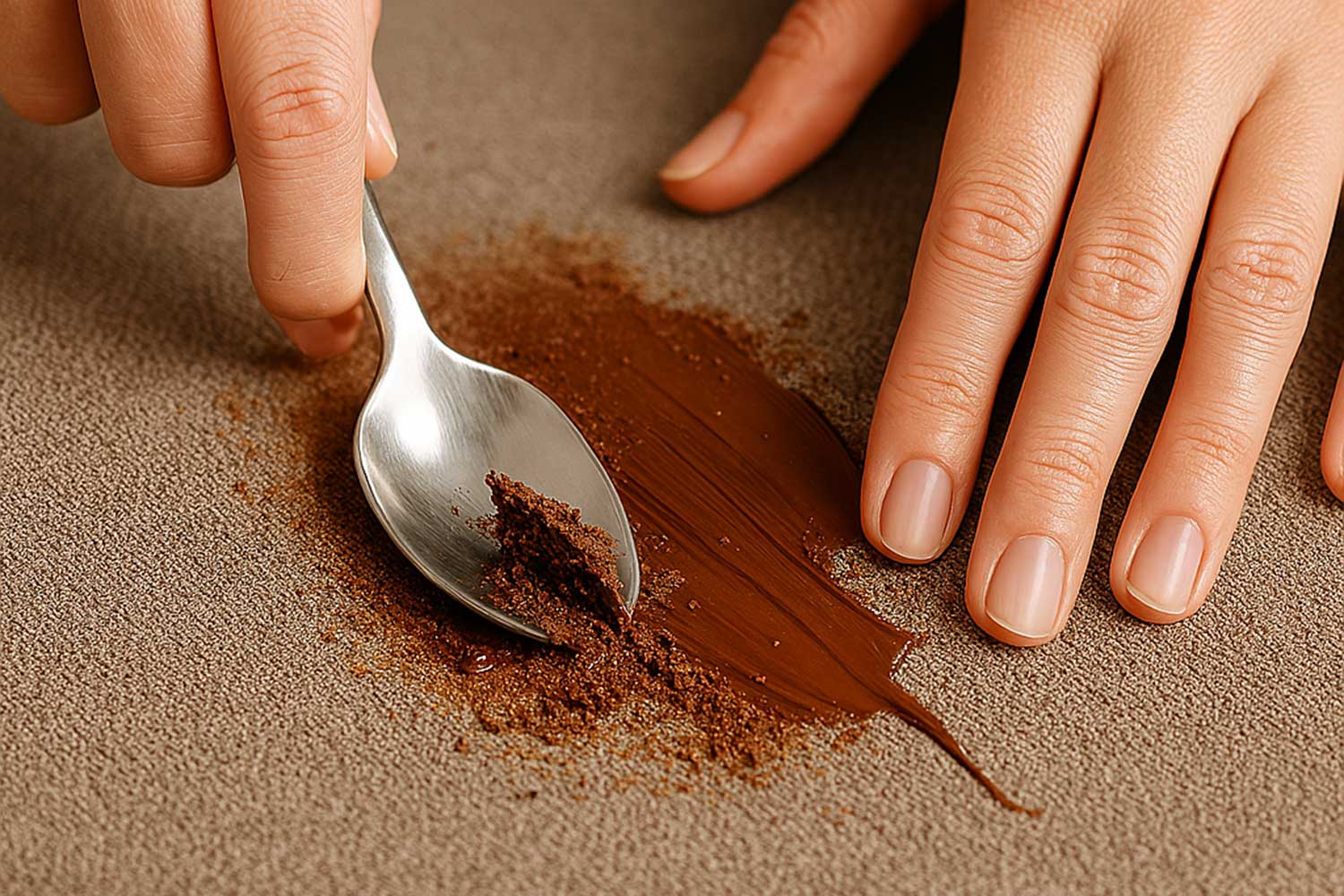
Use a dull knife or spoon to lift the chocolate off the tips of the fibers. Work from the outside edge toward the center so you do not spread it. Keep your tool almost parallel to the rug, like you are skimming, and use light pressure.
Important: do not grind, rub, or saw at the fibers. If the rug pile is tall, separate the fibers gently with your fingers and lift chunks out in layers.
Step 3: Vacuum crumbs
Vacuum the loosened bits using the hose. If your vacuum has an aggressive beater bar, turn that off. You want suction, not agitation.
Step 4: Blot to pull oil up
Now you can blot. Place a folded white cloth over the spot and press straight down with your palm. Lift. Move to a clean area of cloth and repeat. The motion is press and lift, not scrub.
If the rug is a plush cut pile and you can clearly part the fibers, you can slide a few dry paper towels just under the surface and press down to help keep residue from migrating downward. Avoid this on loop pile and Berber styles, where tugging can cause pulls or runs.
Clean the residue
Mix a mild degreaser
In a bowl or spray bottle, combine:
- 1 cup warm water
- 1 to 2 drops dish soap
Less soap is better than more. Too much soap leaves a sticky film that attracts dirt.
Apply to the cloth, not the rug
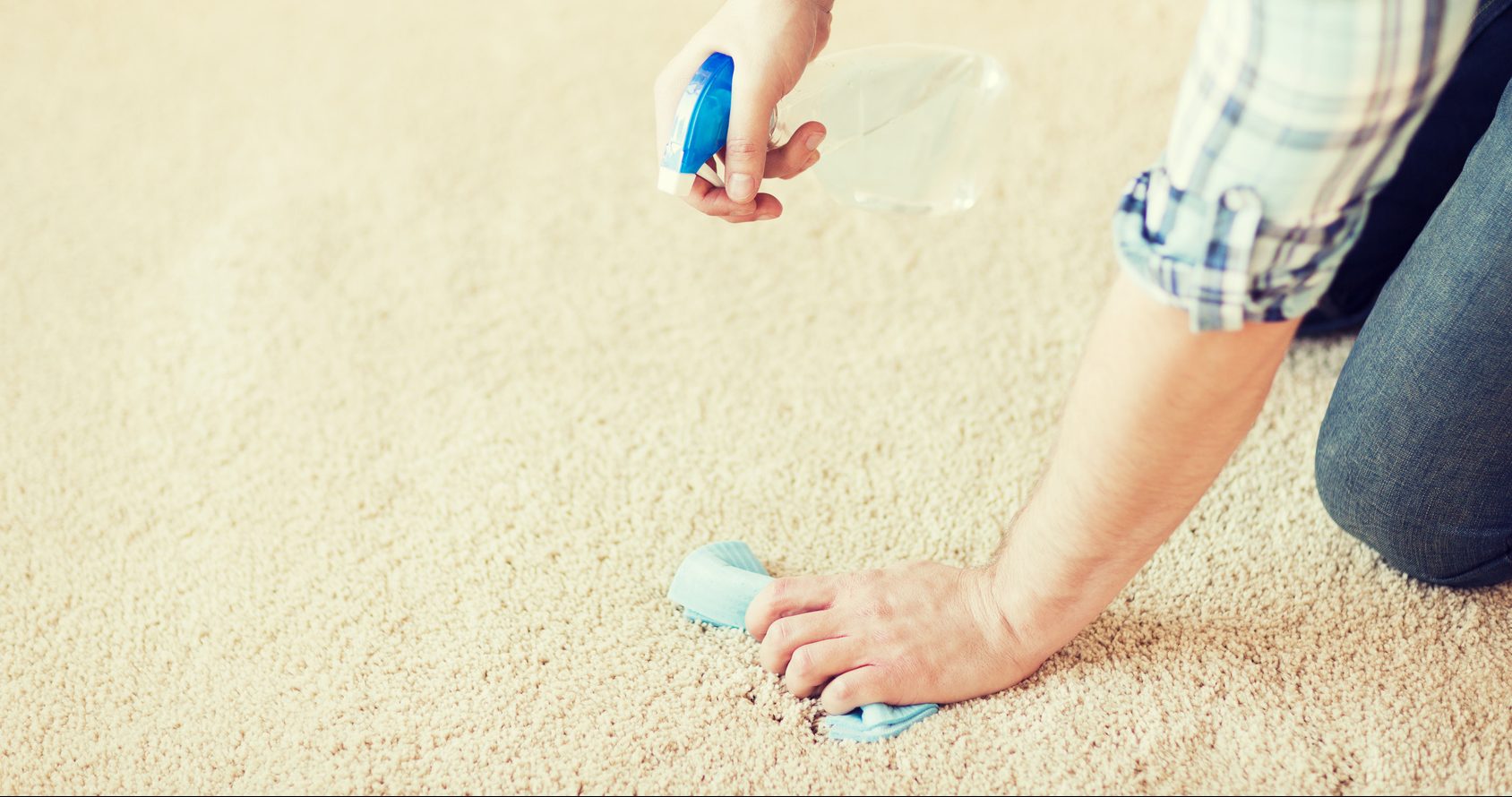
Dampen your cloth with the soapy water and blot along the pile direction. With rugs, you will often see the fibers lay a certain way. Blotting with the grain helps you avoid fuzzing and distortion.
Work in small passes. After each pass, switch to a dry cloth and blot again to pull moisture back out.
Rinse lightly
Once the oily feel is gone, dampen a fresh cloth with plain water and blot the area to remove soap. Then blot dry.
If a brown shadow remains
Chocolate can leave a light brown cast even after the grease is lifted. Try this mild step:
- Mix 1 cup water with 1 tablespoon white vinegar.
- Dampen a cloth and blot the stained fibers, then blot with plain water, then blot dry.
Vinegar is not magic, but it can help loosen a stubborn film so you can lift it, especially when you follow with a clean-water rinse.
If your rug is wool or viscose, do a spot test first and keep the cloth only lightly damp. The goal is controlled blotting, not soaking.
Fiber cautions
Wool rugs
- Avoid hot water. Heat can set stains and can also encourage distortion in some wool constructions.
- Keep moisture shallow. Wool holds water and can take a long time to dry. That increases the chance of rewicking from the pad and can cause odor.
- Avoid high-alkaline cleaners and bleach. They can damage fibers and shift color.
- Be cautious with oxygen bleach. Some “color-safe” oxygen bleaches can still stress protein fibers depending on concentration, temperature, and dwell time. Only use if the rug maker specifically allows it.
Viscose rugs (bamboo silk, art silk)
- Be extremely cautious with water. Viscose is notorious for water marking, texture change, and permanent shading.
- Do not scrub. Even light agitation can rough up viscose and create a pale, fuzzy patch that looks like wear.
- When in doubt, stop early. For viscose, it is often smarter to remove the solids and oil gently, then call a pro if any stain remains rather than chasing perfection with more moisture.
If your rug is viscose and the chocolate is widespread or deeply ground in, professional cleaning is genuinely the safest path because the risk is not just a stain. It is a texture change you cannot unsee.
Synthetics (nylon, polyester, polypropylene)
- These are generally more water-tolerant than wool and viscose, and mild dish soap and water is usually a safe starting point.
- Even so, avoid over-wetting the backing and pad. That is where lingering odor and rewicking tend to start.
Plant fibers (jute, sisal, seagrass)
- Use minimal moisture. These fibers can brown, stain, or water mark easily.
- Focus on dry removal first. Chill, scrape, vacuum, then only lightly blot if needed.
- If the stain is significant, consider professional help sooner rather than later.
Dry it so it does not rewick
Rewicking happens when moisture and dissolved residue sink down, then travel back up as the surface dries. Rugs are especially prone to this because the backing and pad act like a sponge.
Do this right after cleaning
- Blot dry with pressure. Stand on a thick white towel over the spot for 30 seconds, then replace with a dry towel and repeat.
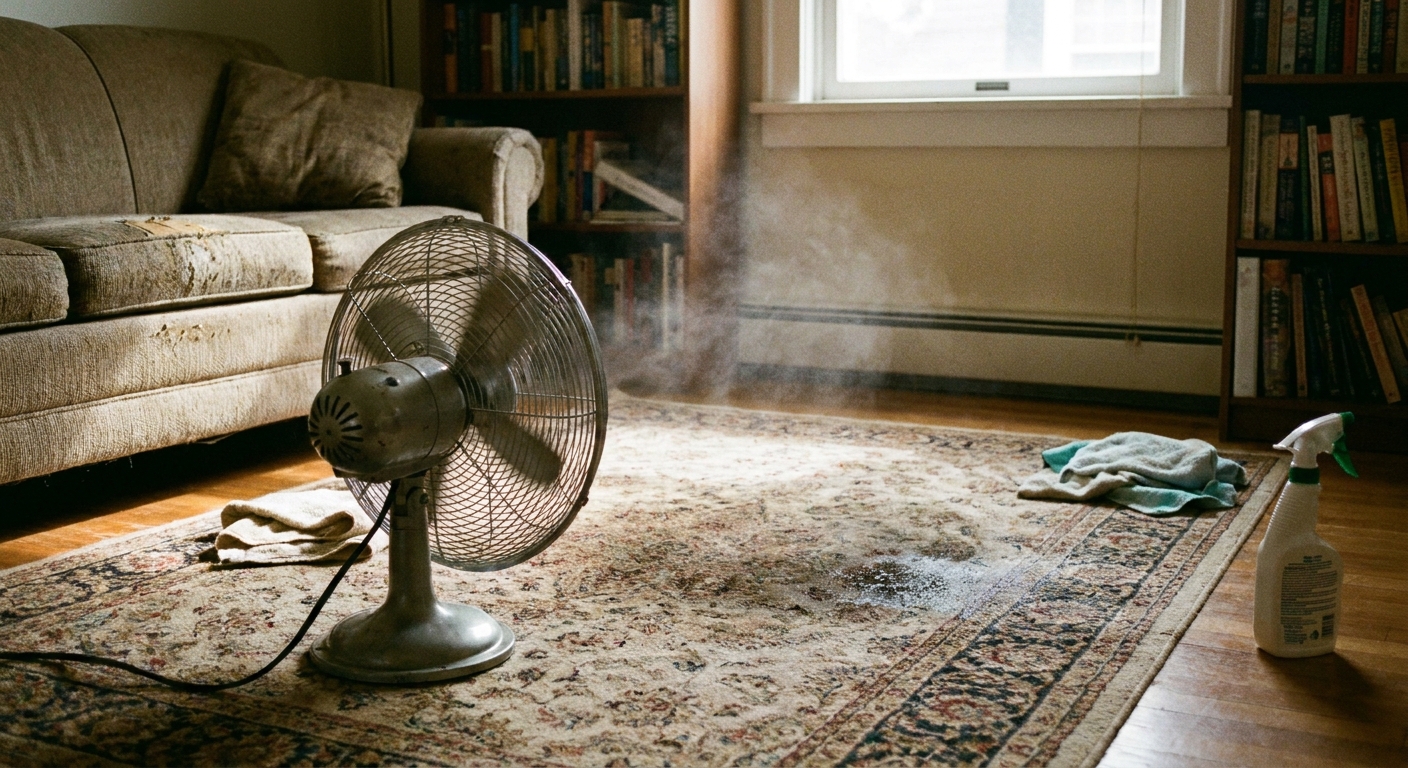
- Create airflow. Aim a fan at the area for several hours.
- Lift the rug if you can. If the rug is small enough, prop it so air can circulate underneath. Even sliding a couple of wooden spoons under the edge helps.
- Avoid foot traffic. Try not to walk on the spot until it is fully dry.
- Use a light weight. Once it is nearly dry, brush the pile up with your fingers, lay a clean dry towel over it, and place a book on top for 20 minutes to help the fibers settle without staying damp.
If you suspect the pad got wet, keep the fan going longer than feels necessary. The backing should feel cool-dry, not just surface-dry.
What not to do
- Do not rub or scrub. It pushes fat and pigment deeper and can distort pile.
- Do not pour cleaner directly onto the rug. Over-wetting is how you end up with rewicking and pad smells.
- Do not use hot water or high heat. Heat can set residue and can damage certain fibers.
- Do not use oxygen bleach on wool or viscose unless the manufacturer explicitly allows it and you have spot tested first.
- Do not keep repeating wet steps for an hour. If you have done two careful rounds and the stain is still obvious, you are likely into backing or pad territory.
When to call a pro
I am very pro DIY, but rugs have a different anatomy than upholstery. Consider a professional cleaner if:
- The chocolate soaked through and the pad feels tacky or damp
- The rug is viscose, bamboo silk, art silk, jute, sisal, seagrass, or an unknown fiber
- The rug is a valuable antique or heirloom
- The stain covers a large area or has been there for days
- You see repeated rewicking after drying
- The spot still feels greasy after two careful rounds
A good rug cleaner can flush and extract from the backing side in a way you cannot do safely at home.
Quick FAQ
What if it has nuts or caramel?
Still start by chilling and scraping. Caramel adds sticky sugar and syrupy residue. After the grease step, a light vinegar-water blot can help lift that tacky film, followed by a plain-water rinse blot and thorough drying.
What if I used water first and now it looks worse?
That is usually spreading plus partial rewicking. Blot dry aggressively, run a fan, and reassess when fully dry. If a brown ring appears, do one gentle vinegar-water blot, rinse blot, then dry with airflow.
Can I use a carpet machine?
For a small chocolate spot, I would avoid it. Most machines add more water than you need, which increases the chance of pushing oils into the backing and waking up the pad later. Controlled cloth blotting is slower but safer.