How to Hang Curtains on an Arched Window

Clara Townsend
Arched windows are the overachievers of the window world. They bring in that soft, churchy light and make even a plain room feel like it has a point of view. They also make people freeze mid-project with a drill in hand because the usual curtain rules assume a nice, straight line at the top.
The good news: there are a few clean ways to dress an arch, and none of them require you to ruin what makes it special. The trick is deciding whether you want to follow the curve, stop beneath it, or let the arch breathe and treat it like architecture, not a problem.
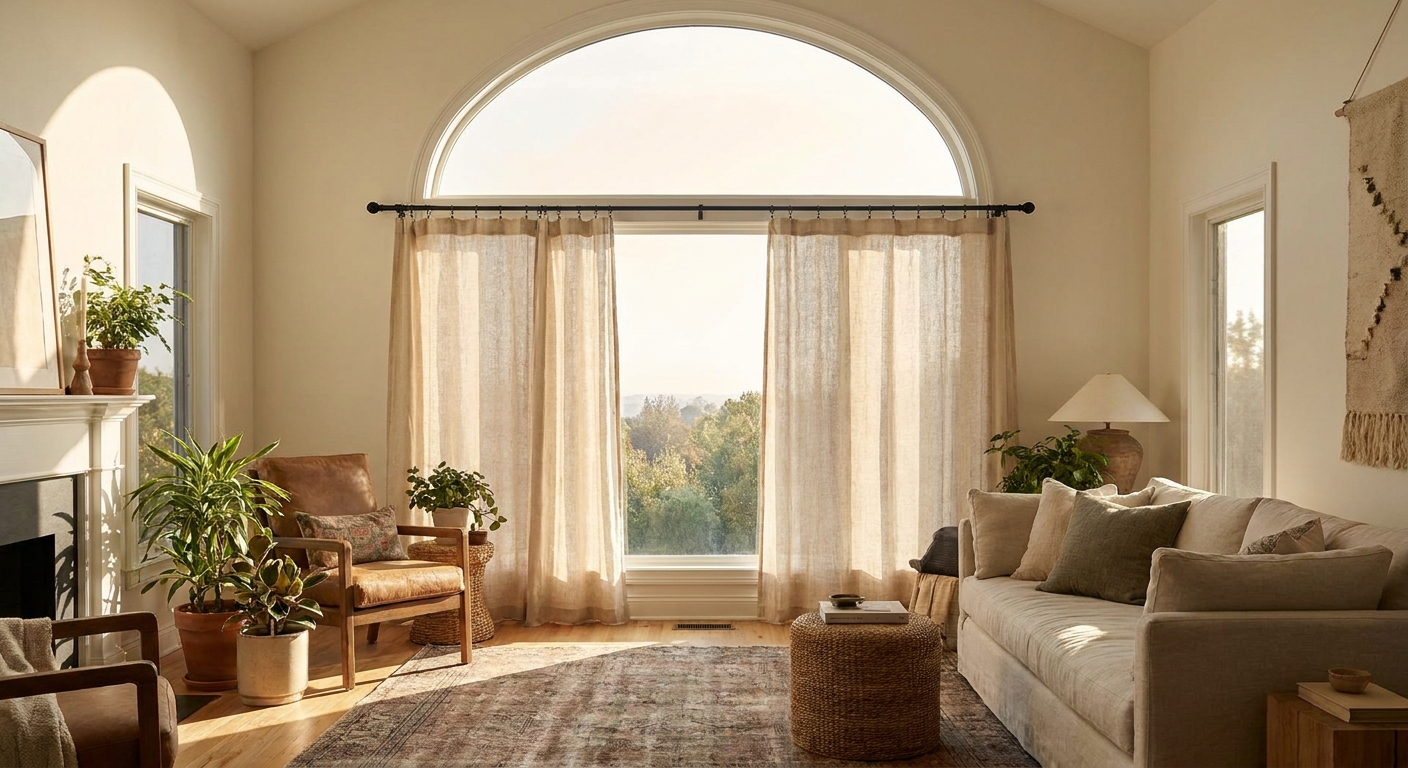
Choose your approach first
Before you measure anything, pick the look. It will dictate your hardware, your curtain fullness, and how functional the curtains can be.
Option 1: A bent rod that follows the curve
This is the most custom-looking option and the most finished if you want the arch itself covered sometimes. It works best when:
- You need privacy or light control across the entire window, including the curved top.
- The arch is large and visually dominant, and you want curtains to feel integrated rather than tacked on.
- You are comfortable with specialty hardware or professional help for bending.
Option 2: Hang panels on a straight rod under the arch
This is my most-used solution in real homes because it is simple, pretty, and forgiving. You keep the arch bare, then treat the lower rectangular portion like a standard window. It works best when:
- You love the shape and want to show it off.
- You still want curtains for softness, insulation, or evening privacy at eye level.
- You prefer off-the-shelf rods and standard panels.
Option 3: Leave the arch bare and add a shade below
If the arch is purely decorative or the privacy need is only for the lower section, skip curtains entirely on the arch. Use a shade, blind, or cafe-style solution on the rectangle beneath. It works best when:
- The window is in a kitchen, bath, stair landing, or anywhere curtains would feel fussy.
- You want a cleaner, more minimal look.
- The arch sits high and does not need coverage.
Know your arch type
Not all arches behave the same, and this affects what you can cover and how easy it is to get a tidy result.
- Half-round: the classic semicircle. Easiest to match with bent tracks and templates.
- Elliptical: more stretched and subtle. Beautiful, but it can be trickier to approximate with segmented rods.
- Eyebrow: a gentle curve that looks like a little lid over a window. Often best treated as an architectural feature you leave bare.
Also check whether you have one unit (a single arched window over a rectangle) or two separate units (an arched transom above a standard window). If they are separate, you can usually shade or curtain the bottom without touching the arch. If it is one unit, you are making a design choice more than a mechanical one.
Measure an arched window the right way
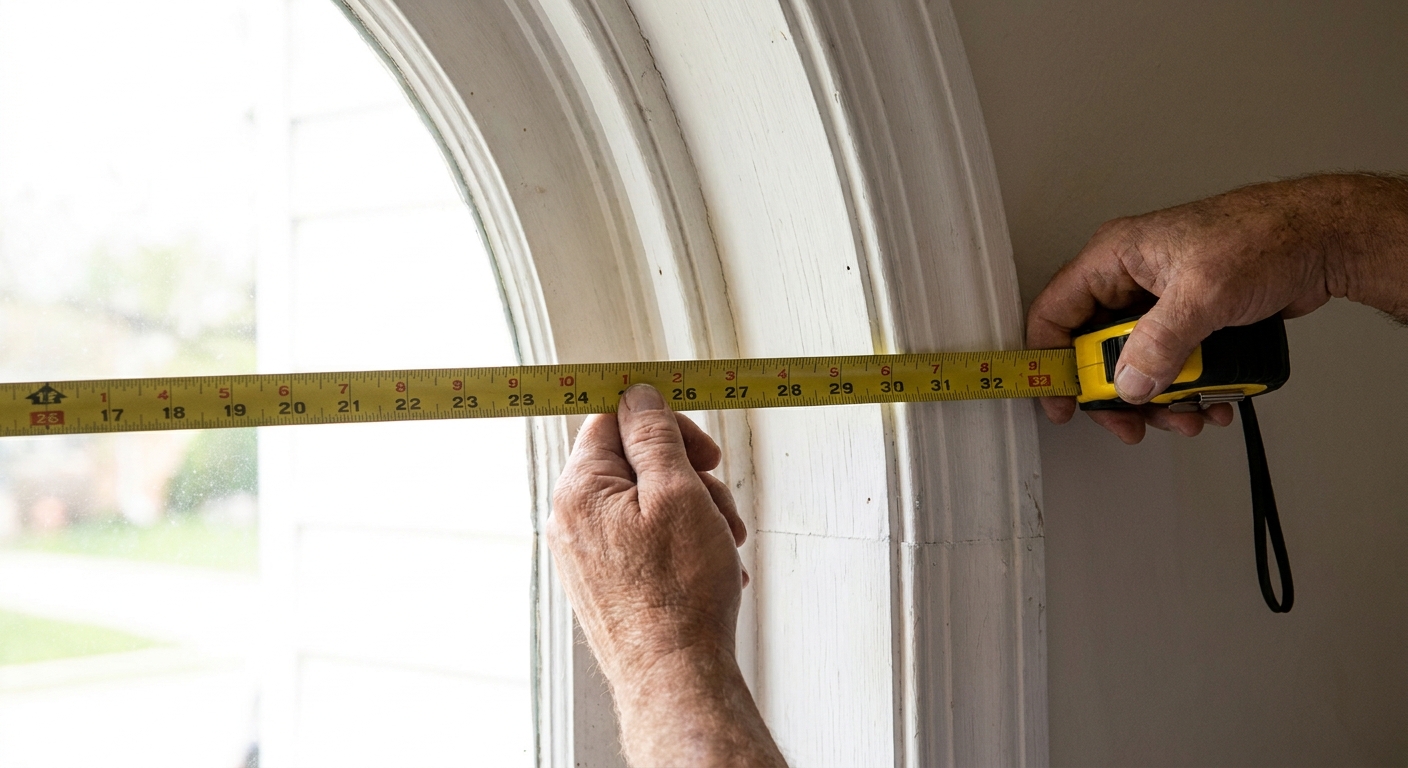
Arches invite close-enough measuring, and that is how you end up with panels that look oddly skimpy or a rod that blocks the prettiest part of the curve. Grab a tape measure, a pencil, and take these:
- Overall width: measure the widest point of the window trim (or the window frame if there is no trim).
- Height to the spring line: this is where the curve begins, where the arch springs from the vertical sides. That point matters if you plan to hang a straight rod below the arch.
- Arch height: measure from the spring line to the top of the arch.
- Wall space left and right: you need enough room for brackets, finials, and stack-back.
If you are doing a curved rod, also measure the curve itself. The easiest homeowner-friendly method is to use a piece of flexible craft wire or string: press it along the arch, mark the ends, then measure the length. That gives you the arc length, which is useful for ordering track or estimating how much hardware you need, but follow your manufacturer instructions for bracket spacing and final layout.
How to hang curtains on a curved rod
A rod that follows the curve looks dreamy when it is done well, like the curtains were always meant to be there. It also introduces two practical challenges: returns and stack-back.
Hardware that actually works
- Bendable curtain track: This is often smoother than a traditional rod for curves. Gliders usually move more easily around bends than rings do.
- Custom bent rod: Some metal rods can be bent by a drapery workroom or a specialty hardware shop.
- Segmented rods: Some systems use small angled connectors to approximate a curve. From a distance it reads as curved, but movement can be less fluid.
Returns on an arch
A return is what helps the curtain sit closer to the wall instead of floating forward. People use the word in two ways: a return rod is a rod that turns back to the wall, and a return bracket is hardware that pulls the rod closer to the wall so the fabric hugs in tighter.
On a straight window, returns are simple. On an arch, the top is changing direction constantly, so the goal becomes: keep the curtain as close to the wall as possible along the curve.
Look for brackets designed for a tighter profile, and consider a track system if you want the fabric to sit neatly and consistently around the curve. If the curtains are gapping near the wall at the top, it can look like the drapery is hovering, especially at night with lights on indoors.
Stack-back changes with a curve
Stack-back is where the fabric lives when the curtains are open. On a curved rod, the stack-back can creep into the arch visually because the rod itself is occupying the curved space.
- If you want the arch to feel open most of the time, choose lighter-weight fabric and less fullness than you might on a straight window.
- If you are using rings, test movement. Rings can catch around bends and make daily opening and closing annoying.
- Plan for tiebacks or holdbacks placed slightly lower so the open curtains do not obscure the prettiest top curve.
Step-by-step install overview
- Locate studs if possible. Curved systems can require more brackets, and the load adds up fast with lined panels.
- Mark bracket positions along the curve, following the manufacturer guidance for spacing and placement.
- Install center support if your rod or track calls for it. Long spans need help to avoid sagging.
- Hang curtains and test glide before calling it finished. Adjust bracket alignment if movement is sticky.
If you want blackout-level function on an arched window, this route can get you closest, especially paired with lined drapery and a track system. Just know that arches are hard to seal perfectly, so you may still see some light leakage unless you add extra measures like overlap, magnetic edges, or a separate shade for true darkness.
How to hang curtains under the arch
This option keeps the arch uncovered and celebrates it. It also makes your life easier because you can use standard rods and standard panels, and you get a clean rectangle to work with.
Where the rod should go
Mount the rod just below the spring line so you are not slicing awkwardly through the curve. As a simple starting point, aim for about 1 to 3 inches below where the curve begins, then adjust based on trim thickness and what looks balanced in your room.
From there, treat it like a regular window:
- Hang the rod wider than the window so the panels stack on the wall, not on the glass.
- Hang the panels high enough to feel intentional, but keep a little breathing room so the curve still reads clearly.
Returns: use them to look custom
Even with a straight rod, returns matter more on an arch because your eye is already noticing the shape. If the panels flare away from the wall, it can make the whole window treatment feel temporary.
- Choose a rod with a return or add return brackets so the panels sit closer to the wall.
- If you are doing blackout lining, returns help reduce light leaks at the sides.
Stack-back: how wide to go
Because your rod is below the arch, you want the open curtains to reveal as much glass as possible. A good rule is to extend the rod so that when the curtains are open, most of the fabric sits on the wall.
- For pinch pleat or tailored panels with a fuller stack, plan more wall space.
- For ripplefold or softer headings, you can often get away with slightly less extension.
If your wall space is tight (hello, city apartments), you can still make it work. Choose a less bulky heading, skip overly thick lining, and use holdbacks to control the stack.
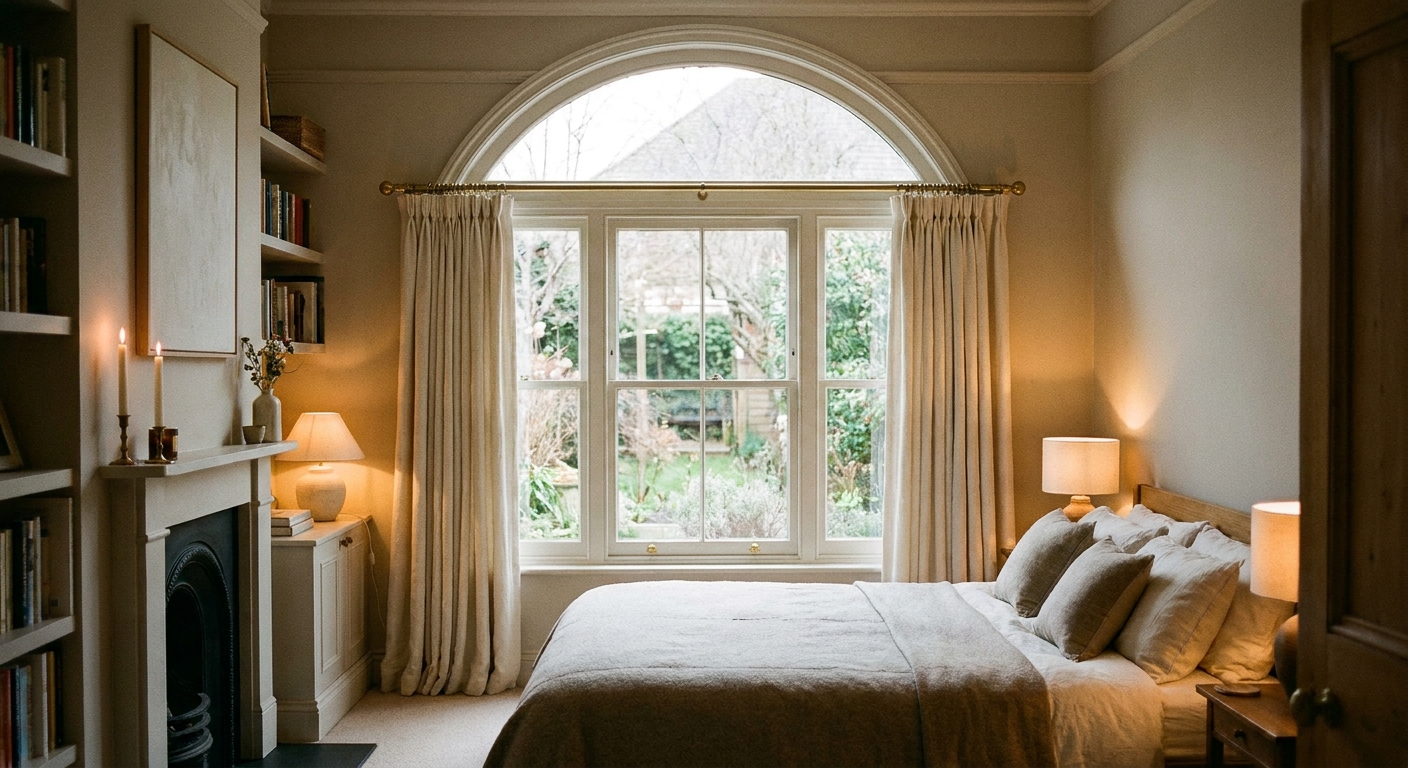
Leaving the arch bare
Sometimes the best way to decorate a feature is to stop decorating it. If the arch is high, decorative, or simply too beautiful to interrupt, let it shine and focus on function below.
Good pairings for the lower section
- Roman shade: soft and tailored, great for living rooms and bedrooms.
- Roller shade: clean and minimal, perfect if you want the trim and architecture to lead.
- Woven wood shade: warm, textural, and especially lovely with vintage pieces and warm metals.
If privacy is your main goal and the arch sits high, this solution can feel airy by day and practical by night. If glare is your issue, consider a light-filtering shade below and leave the arch untouched.
Special cases
Two arched windows side by side
If you have matching arches next to each other, decide early if you want them to read as two windows or one big statement. A single rod or track spanning both can look more tailored, but only if you have enough wall space for proper stack-back. If the wall space is tight, treat them separately and keep the treatments consistent.
Arched transoms over doors
An arched transom is often more about light than privacy. Leaving it bare usually looks intentional. If you need privacy, consider a shade on the door glass itself, then keep the transom clean so you do not end up with fabric fighting the curve in a narrow area.
Mounting tips
Arched windows love to live in annoying wall conditions: narrow strips of drywall, plaster, masonry, or spots where studs are not where you want them.
- Drywall: use the right weight-rated anchors if you cannot hit studs, especially for lined drapery.
- Plaster: pre-drill carefully and anchor properly. If the wall is crumbly, you may need a heavier-duty anchor than a basic plastic sleeve.
- Masonry: you will need masonry bits and anchors designed for brick or concrete.
- Metal studs: use anchors appropriate for metal studs, not standard wood screws.
If you are unsure, especially with a curved system or heavy fabric, it is worth asking a pro. Nothing ruins a beautiful arch like a sagging rod.
Fabric and header choices
An arched window already has movement built in, so I like fabrics that drape gracefully rather than fight for attention.
Best fabrics
- Linen or linen blends: breathable, soft folds, and a little texture that makes an arch feel romantic instead of formal.
- Velvet: gorgeous if the room can handle the drama, but use sturdy hardware and expect more stack-back.
- Cotton twill: structured enough to look tailored under an arch.
Headers that behave well
- Ripplefold on a track: smooth movement and consistent waves, especially helpful on curves.
- Pinch pleat with carriers: classic, controlled stack-back, great if you want a more traditional look.
- Rod pocket: pretty but less practical on curves, and it can bunch and resist movement.
If you are using a curved rod and you want to actually open and close the curtains daily, prioritize a system designed to glide. Pretty is wonderful. Friction is not.
Quick troubleshooting
My curtains look like they are eating the arch
If you hung a straight rod under the arch and the panels visually crowd the curve, you likely mounted too high or used too much fullness. Lower the rod slightly or choose a less bulky heading so the top of the treatment feels lighter.
There is a gap between the curtain and the wall
Add returns or switch to brackets that bring the rod closer to the wall. For maximum snugness, a track system often outperforms a round rod.
The rod sags
Wide spans need support, which is common with arched combinations and big statement windows. Add a center bracket (or additional brackets along the curve) and make sure your anchors are appropriate for your wall type.
I cannot get enough privacy at night
Consider layering: leave the arch bare for daytime charm, then add a shade below for nighttime privacy, or use lined drapery with returns to reduce side light leaks.
FAQs
Do I need a special curtain rod for an arched window?
Only if you want the curtains to follow and cover the curve. If you are happy leaving the arch bare, a standard straight rod mounted below the arch is usually the easiest and most affordable route.
Should curtains cover the arch?
It depends on what you need most. Cover the arch if you need full light control or privacy. Leave it uncovered if you want to highlight the architecture and keep the room feeling open and bright.
How do I calculate stack-back for an arched window?
Think in terms of what you want revealed when the curtains are open. On a straight rod below an arch, extend the rod so the open panels sit mostly on the wall. On a curved rod, expect the stack-back to take up more visual space and choose lighter fabrics or less fullness if that bothers you.
Can I hang two panels on a curved rod?
Yes, but movement can be trickier, especially with rings. A curved track with gliders is often smoother for a center-opening pair.
If you are torn, here is my gentle nudge: in most homes, a straight rod hung just under the arch with generous side extension gives you the prettiest mix of practicality and wow. You get the softness of curtains, the function you need, and you still let that curve do what it was born to do.